A Fascinating Foray into the World of Whetstones and Hones
Tanaka’s last position before taking over as museum director was at a consulting firm in Europe, supporting Japanese manufacturers expanding overseas. She found international business travel from her base of operations in Tokyo very fulfilling – and yet when she learned one day that the Natural Whetstone and Hone Museum was recruiting for the position of director, she applied immediately.
“Sharpening and honing are vital parts of Japanese manufacturing, and they ensure precision and aesthetic perfection. This is just as true with kitchen cutlery maintenance as with automobile and semiconductor manufacturing. It’s an ancient heritage that still retains its cutting edge in high tech manufacturing. I sought this position because I appreciated that and wanted to dig deeper into it.”
*In this article, the term “whetstone” is used to refer to the broader category to which hones also belong. Per Tanaka, “whetstones” actually refers to the rougher-grained variety suited for doing the brunt of the blade sharpening, and “hone” refers to the finer-grained variety with which blade surfaces can be finished to a mirror sheen.
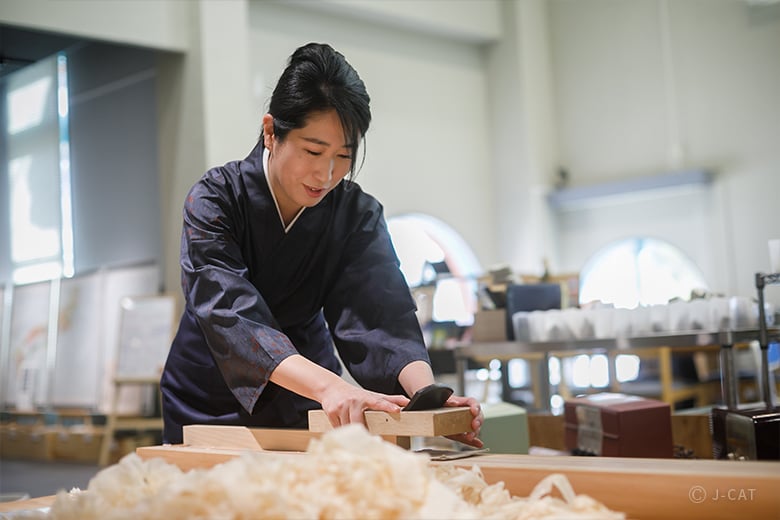
Museum Director Aki Tanaka, with abundant knowledge and experience in the history and cultural background of natural whetstones
As a mother, Tanaka also thought the rich natural environment of Kyoto Prefecture’s Kameoka City – a world-class historic natural whetstone production region, and the home of the museum – seemed an attractive place to raise children. “Time with your children is precious,” she says, “and I wanted us to learn and grow together.”
“Relocating to Kameoka from Tokyo stimulated not only my intellectual curiosity, but inspired my children and enriched our relationship as well. The deeper my research on natural whetstones takes me, the more I learn about the natural, technological, and cultural history of my own country. The Natural Whetstone and Hone Museum is a wonderful place, and I am lucky to be here.”
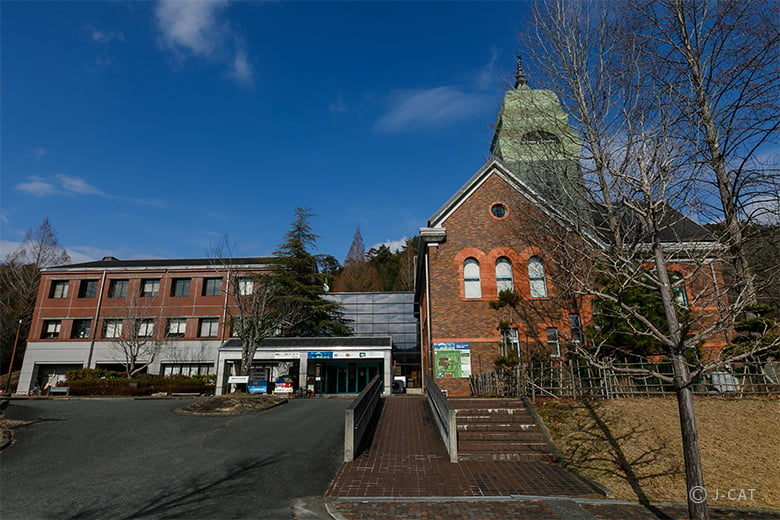
The Natural Whetstone and Hone Museum, located in the wooded city of Kameoka, Kyoto – a historic center of world-class whetstone production
A Director Driven to Disseminate Japan’s Cultural Charms
Tanaka’s passion for sharing the wonder of these tools with the wider world began in high school, when she worked as a volunteer guide on Wakayama Prefecture’s Kumano Kodo Trail. Her hometown sat along this crisscross of ancient pilgrimage trails, part of the broader UNESCO World Heritage Site comprising “Sacred Sites and Pilgrimage Routes in the Kii Mountain Range,” gateway to the hallowed Three Grand Shrines of Kumano. Tanaka’s experience offering English guidance to international tourists lit a fire in her for “sharing the nature and culture of Japan with the world.”
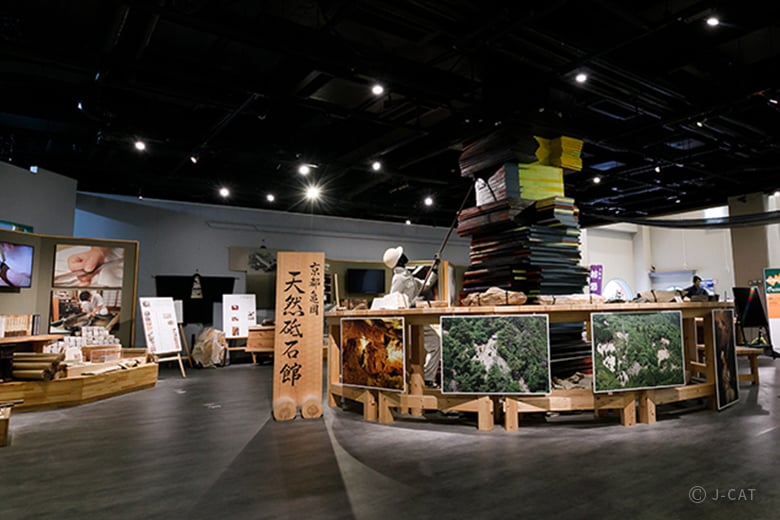
Models inside the Natural Whetstone and Hone Museum depict geological strata and mines
The history of natural whetstones in Japan goes back some 250 million years to the tectonic formation of the archipelago itself, and continues to thrive today as a foundation of Japanese technology and culture, from architecture to cooking to precision manufacturing.
Tanaka is fueled by her passion for seeing – and sharing – whetstones as a window into the natural, cultural, and technological history of her country. This passion is why the Wabunka plan at the museum includes getting hands on with a traditional Japanese wood planer and even handling a real Japanese sword.
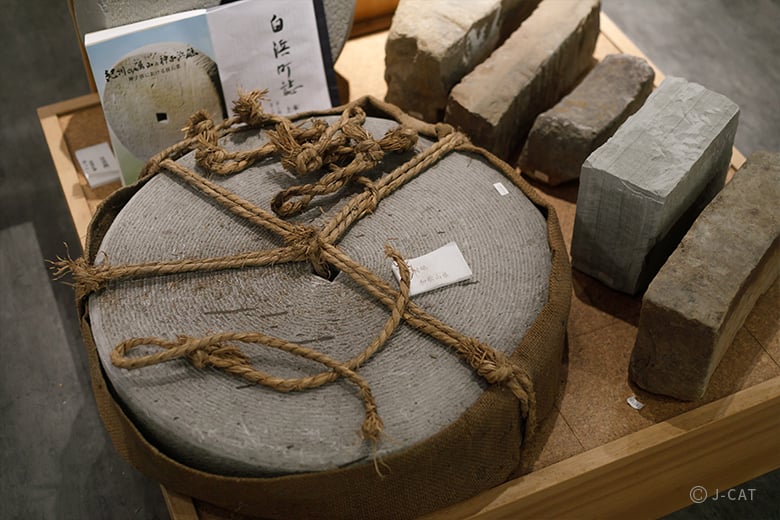
An assortment of characteristic whetstones from various regions of Japan
Whetstone and Knife: the Hidden Marriage Behind all Expertly-Presented Culinary Fare
Perhaps most famously, whetstones are a commonplace tool for maintaining Japanese kitchen knives – and a well-maintained cutting edge is essential for masterful cuisine.
“Japanese culinary arts utilize a variety of knives, from usuba to yanagiba to deba blades, each with a specialized use for which sharpness is paramount. When you see such flourishes in Japanese food as delicate ornamental cuts to highlight the beauty of vegetables, and keep the good flavor of seafood, what you are really seeing is how vital great knives are to the craft.”
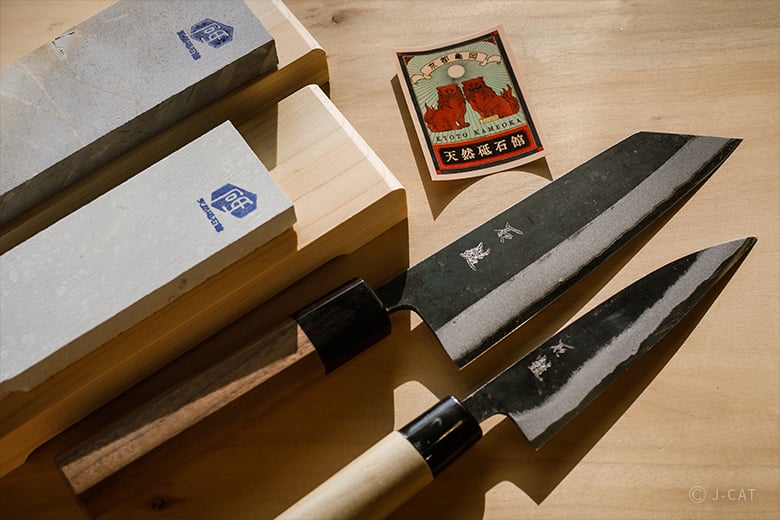
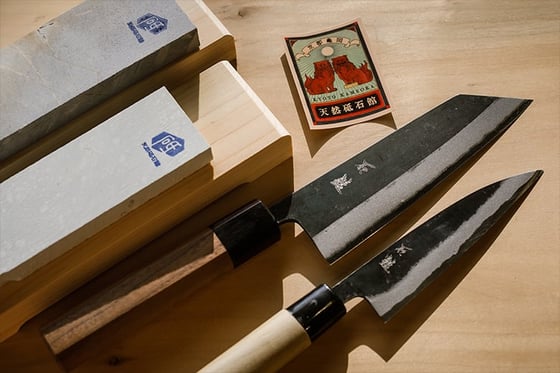
Japanese knives, whetstones and hones that can be made in this Wabunka workshop
The Natural Whetstone and Hone Museum is a Mecca for specialists from various fields whose work utilizes precision blades, and chefs make up no small number of those who visit seeking hones. “In Japan’s culinary world, they say that not only a chef’s skill but in fact their entire attitude toward their craft is reflected in a glance at their knife.”
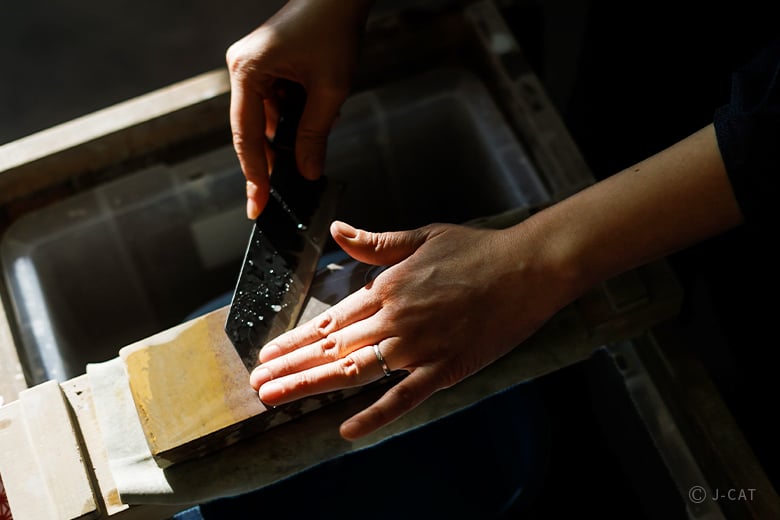
Traditionally, even Japanese home cooks practice attentive knife maintenance as part of the family routine
Precise sharpening and honing brings out a knife’s true potential and ensures its longevity. For Tanaka, the very act of honing kitchen knives with natural whetstones has an almost ritualistic significance, embodying the Japanese spirit of respect for one’s tools, resources, and the little details as encapsulated in the term “mottainai,” literally a caution against waste in every sense which has blossomed from ancient roots into a resurgent modern cultural phenomenon.
Gates Open: Welcoming and Inclusivity
One of Tanaka’s major projects since assuming her position at the museum has been to transform it into a welcoming space with exhibits accessible to people from all walks of life. Previously, natural whetstones represented an esoteric and cloistered realm of specialist artisans and rarified connoisseurs. Recently however – and thanks in no small part to her efforts – they are beginning to attract wider global attention.
“Whetstones are products of nature, and as such they are individuals. Even two stones cut from the same mountain will have their own characteristics and finishes, owing to their respective positions in their geological strata and in the thermal metamorphosis that formed them.”
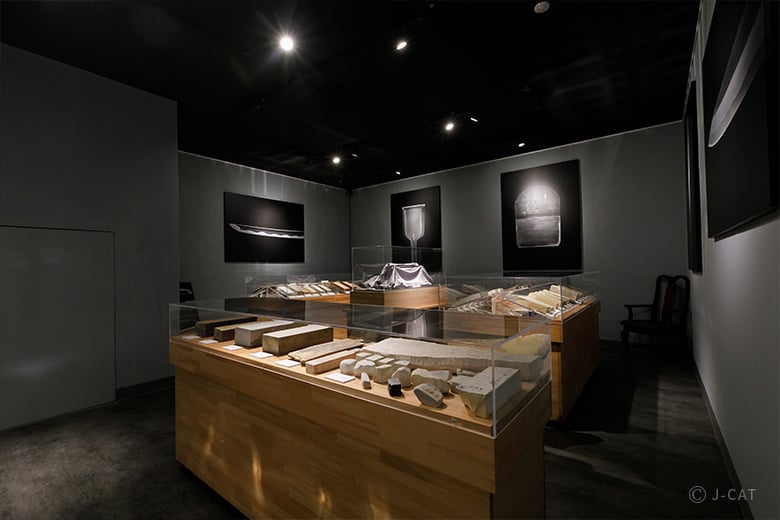
The wide variety of whetstones that have acted as vital behind-the-scenes support to the grand stage of Japanese traditional culture
The Natural Whetstone and Hone Museum offers the opportunity for visitors to make their own whetstone/hone to take home with them. And yet for many the initial selection process can be daunting: where to even start? Tanaka prepares helpful hands-on guidance with examples to understand the characteristics of the various types, listens carefully to get an idea of each person’s needs and habits, and guides them in choosing a well-suited whetstone/hone with confidence. Not only are her explanations accessible to the novice and expert alike, but she even has a microscope on hand to demonstrate the real life effects of sharpening and honing techniques at the smallest scale.
What it Means to be Japanese, as Told through a Whetstone
Tanaka wants people to get to know whetstones not as abstract exhibits, but as real living things with a place in the world. That is why at the close of 2023 she opened her “Kiri no Kobo,” a renovated folk house outfitted with a Goemon-buro traditional small bathing cauldron, firewood for the bath, and of course natural whetstones, hones, knives, and even axes. Try sharpening a wood-splitting ax and chopping wood yourself to prepare a bath the old-fashioned way.
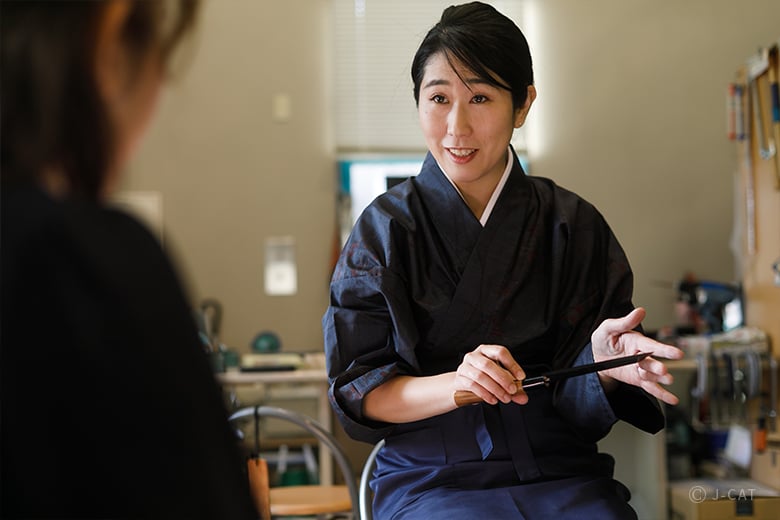
Tanaka’s approach to her exhibits is nothing if not inventive, communicating the appeal and significance of whetstones in a way that anyone can appreciate
“On my first visit to this old house, I happened by pure chance upon an aoto stone from Kameoka, and an omura stone from my home prefecture of Wakayama, within. It felt like fate.” Visitors can enjoy a leisurely stay in Kameoka steeped in nature, luxuriating the Goemon-buro bath, and planting and harvesting in the fields – coming away with firsthand experience in the traditional Japanese way of life.
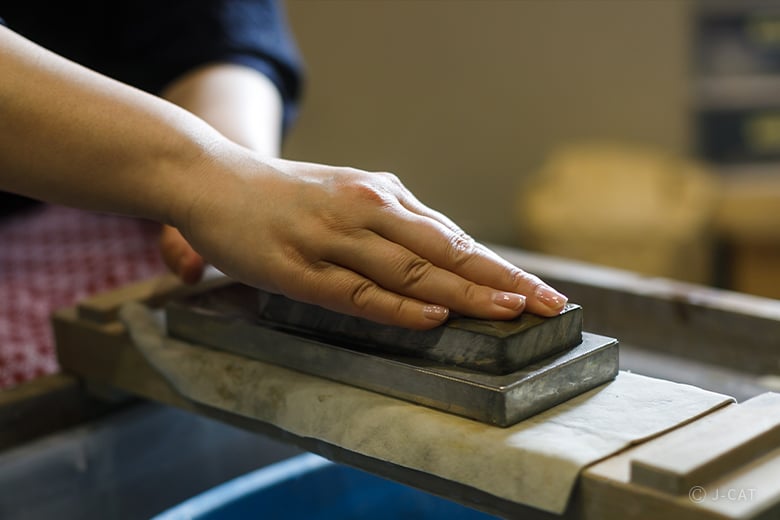
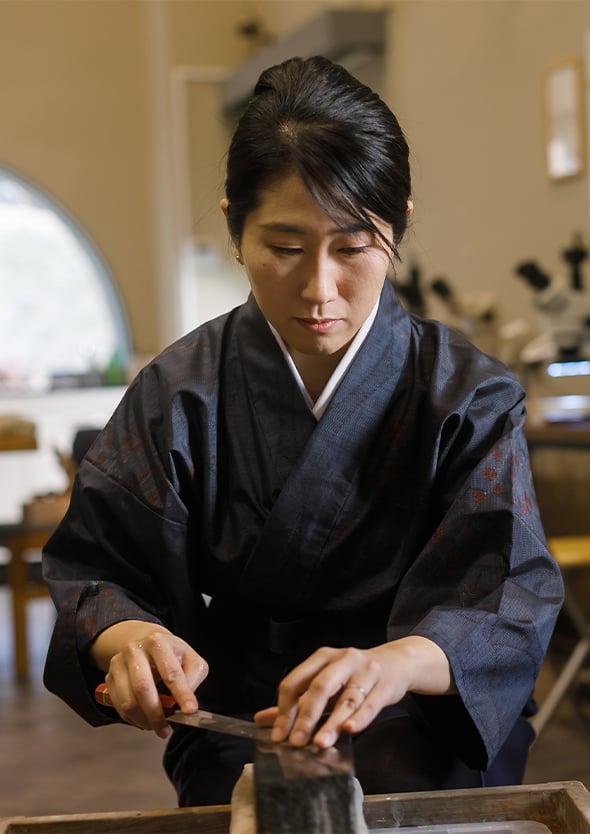
All notions of time evaporate as focused sharpening yields an almost meditative state of mind
Tanaka’s passion for her work is boundless, and there is always more to come. “Right now I’m undertaking a geo-cultural study of whetstones, and also in the process of producing a documentary footage.” Wabunka visitors at the Natural Whetstone and Hone Museum can enjoy having the entire facility and the director’s full attention to themselves for a guided tour. Looking into the face of a 250-million-year-old whetstone with an awareness of the journey it and its techniques took to reach you as you sharpen your knife in the quiet of the museum is a profound experience that lends itself to a liminal, almost meditative mindfulness. This is no coincidence: letting go of all distractions and finding a singular focus within yourself is said to be a vital step in proper knife sharpening.
“The ultra-fine-grain hone used for putting the very final polish on knives is known as an Awasedo, in which the character for Awase describes a harmony, chemistry, or affinity between two people or things – in this case, between the knife and the stone or the person using it. I think this is important, and it’s why visitors at our museum are encouraged to try it out, find their match, and build that bond.”
For Tanaka, her work itself is the whetstone on which she sharpens her own sensibilities and hones her knowledge anew daily. And maybe that’s why her passion for sharing with the world these wonderful tools – and the deep traditions behind them – never seems to lose its luster.
Natural Whetstone and Hone Museum
This hands-on interactive whetstone and hone museum in Kameoka City, Kyoto Prefecture exhibits the city’s famous Tamba Aoto and Awasedo alongside precious natural whetstones and hones from all over Japan and the wider world alongside works from the city’s various traditional industrial crafts, and aims to spread Japan’s traditional artisanal craftwork to future generations around the world.