Available Today: Sharpen and Personalize Your Own Japanese Knife in a Premier World Hone Production Region
'%3e%3cpath%20id='location_on_2'%20d='M11.9998%2019.7748C13.8331%2018.2081%2015.3123%2016.554%2016.4373%2014.8123C17.5623%2013.0706%2018.1248%2011.5748%2018.1248%2010.3248C18.1248%208.49147%2017.5456%206.9748%2016.3873%205.7748C15.229%204.5748%2013.7665%203.9748%2011.9998%203.9748C10.2331%203.9748%208.77064%204.5748%207.6123%205.7748C6.45397%206.9748%205.8748%208.49147%205.8748%2010.3248C5.8748%2011.5748%206.4373%2013.0706%207.5623%2014.8123C8.6873%2016.554%2010.1665%2018.2081%2011.9998%2019.7748ZM11.9998%2020.3248C11.8665%2020.3248%2011.7331%2020.304%2011.5998%2020.2623C11.4665%2020.2206%2011.3415%2020.1498%2011.2248%2020.0498C10.6248%2019.4998%209.9748%2018.8456%209.2748%2018.0873C8.5748%2017.329%207.92064%2016.5248%207.3123%2015.6748C6.70397%2014.8248%206.19564%2013.9415%205.7873%2013.0248C5.37897%2012.1081%205.1748%2011.2081%205.1748%2010.3248C5.1748%208.3248%205.82897%206.65397%207.1373%205.3123C8.44564%203.97064%2010.0665%203.2998%2011.9998%203.2998C13.9331%203.2998%2015.554%203.97064%2016.8623%205.3123C18.1706%206.65397%2018.8248%208.3248%2018.8248%2010.3248C18.8248%2011.2081%2018.6206%2012.104%2018.2123%2013.0123C17.804%2013.9206%2017.2998%2014.804%2016.6998%2015.6623C16.0998%2016.5206%2015.4498%2017.3248%2014.7498%2018.0748C14.0498%2018.8248%2013.3998%2019.4748%2012.7998%2020.0248C12.6891%2020.1248%2012.5634%2020.1998%2012.4226%2020.2498C12.2816%2020.2998%2012.1406%2020.3248%2011.9998%2020.3248ZM12.0043%2011.6498C12.418%2011.6498%2012.7706%2011.5025%2013.0623%2011.2078C13.354%2010.9133%2013.4998%2010.5591%2013.4998%2010.1453C13.4998%209.73164%2013.3525%209.37897%2013.0578%209.0873C12.7633%208.79564%2012.4091%208.6498%2011.9953%208.6498C11.5816%208.6498%2011.229%208.79714%2010.9373%209.0918C10.6456%209.3863%2010.4998%209.74047%2010.4998%2010.1543C10.4998%2010.568%2010.6471%2010.9206%2010.9418%2011.2123C11.2363%2011.504%2011.5905%2011.6498%2012.0043%2011.6498Z'%20fill='%23756E66'/%3e%3c/g%3e%3c/g%3e%3c/svg%3e)
'%3e%3cpath%20id='Vector'%20d='M9%206L17.897%204.12695C18.2078%204.06152%2018.5%204.29864%2018.5%204.61622V7.5M4%2011.5V8C4%207.72386%204.22386%207.5%204.5%207.5H20.5C20.7761%207.5%2021%207.72386%2021%208V18C21%2018.2761%2020.7761%2018.5%2020.5%2018.5H11M9.74522%2016.7492C9.90952%2016.9809%2010%2017.2343%2010%2017.4997C10%2018.6043%208.433%2019.4997%206.5%2019.4997C4.567%2019.4997%203%2018.6043%203%2017.4997C3%2017.2338%203.09077%2016.9801%203.25558%2016.748M3.25555%2015.248C3.09076%2015.4801%203%2015.7338%203%2015.9997C3%2017.1042%204.567%2017.9997%206.5%2017.9997C6.84749%2017.9997%207.18315%2017.9707%207.5%2017.9168M9.74576%2015.2499C9.90972%2015.4814%2010%2015.7345%2010%2015.9997C10%2016.5446%209.61859%2017.0386%209%2017.3994M4%2015.8997C3.38141%2015.539%203%2015.0449%203%2014.5C3%2013.3954%204.567%2012.5%206.5%2012.5C8.433%2012.5%2010%2013.3954%2010%2014.5C10%2015.6046%208.433%2016.5%206.5%2016.5C6.15251%2016.5%205.81685%2016.4711%205.5%2016.4172'%20stroke='%23756E66'%20stroke-width='0.8'%20stroke-linecap='round'%20stroke-linejoin='round'/%3e%3c/g%3e%3c/g%3e%3c/svg%3e)
'%3e%3cpath%20id='schedule_2'%20d='M12.3498%2011.8498V7.3498C12.3498%207.25064%2012.3161%207.16756%2012.2488%207.10056C12.1816%207.03339%2012.0983%206.9998%2011.9988%206.9998C11.8995%206.9998%2011.8165%207.03339%2011.7498%207.10056C11.6831%207.16756%2011.6498%207.25064%2011.6498%207.3498V11.8498C11.6498%2011.9426%2011.6665%2012.0325%2011.6998%2012.1193C11.7331%2012.2063%2011.7915%2012.2915%2011.8748%2012.3748L15.4998%2015.9998C15.5665%2016.0665%2015.6456%2016.104%2015.7373%2016.1123C15.829%2016.1206%2015.9165%2016.0831%2015.9998%2015.9998C16.0831%2015.9165%2016.1248%2015.8331%2016.1248%2015.7498C16.1248%2015.6665%2016.0831%2015.5831%2015.9998%2015.4998L12.3498%2011.8498ZM12.0041%2020.6998C10.8012%2020.6998%209.67014%2020.4716%208.61081%2020.0151C7.55147%2019.5586%206.63005%2018.939%205.84655%2018.1563C5.06289%2017.3736%204.44255%2016.4534%203.98555%2015.3956C3.52839%2014.3376%203.2998%2013.2071%203.2998%2012.0041C3.2998%2010.8012%203.52805%209.67014%203.98455%208.61081C4.44105%207.55147%205.06064%206.63005%205.8433%205.84655C6.62597%205.06289%207.54622%204.44255%208.60405%203.98555C9.66206%203.52839%2010.7926%203.2998%2011.9956%203.2998C13.1984%203.2998%2014.3295%203.52806%2015.3888%203.98456C16.4481%204.44106%2017.3696%205.06064%2018.1531%205.8433C18.9367%206.62597%2019.5571%207.54622%2020.0141%208.60405C20.4712%209.66205%2020.6998%2010.7926%2020.6998%2011.9956C20.6998%2013.1984%2020.4716%2014.3295%2020.0151%2015.3888C19.5586%2016.4481%2018.939%2017.3696%2018.1563%2018.1531C17.3736%2018.9367%2016.4534%2019.5571%2015.3956%2020.0141C14.3376%2020.4712%2013.2071%2020.6998%2012.0041%2020.6998ZM11.9998%2019.9998C14.2165%2019.9998%2016.104%2019.2206%2017.6623%2017.6623C19.2206%2016.104%2019.9998%2014.2165%2019.9998%2011.9998C19.9998%209.78314%2019.2206%207.89564%2017.6623%206.3373C16.104%204.77897%2014.2165%203.9998%2011.9998%203.9998C9.78314%203.9998%207.89564%204.77897%206.3373%206.3373C4.77897%207.89564%203.9998%209.78314%203.9998%2011.9998C3.9998%2014.2165%204.77897%2016.104%206.3373%2017.6623C7.89564%2019.2206%209.78314%2019.9998%2011.9998%2019.9998Z'%20fill='%23756E66'/%3e%3c/g%3e%3c/g%3e%3c/svg%3e)
Overview
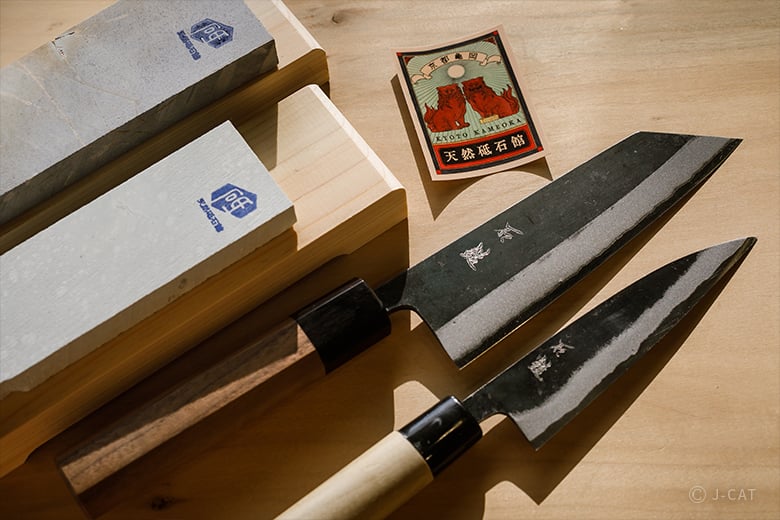
The Tennen Toishi-kan, or Natural Whetstone and Hone Museum, is an interactive museum situated in the lush forests of Kyoto Prefecture’s Kameoka City, known for its world-class natural whetstone and hone production. This plan includes various hands-on experiences such as natural hone processing, knife sharpening, and test cutting – as well as a private tour from museum director Aki Tanaka, who does not usually make herself directly available for tours. Get up close and personal with traditional Japanese swords, kitchen knives, and carpentry tools like hand planes. As a keepsake, take home a natural hone paired with a highly sought-after Japanese culinary knife.
Key Features
- Dive deep into Japan’s artisanal culture, learning about Kyoto’s traditional natural hones and what makes them such prized tools among cutlery enthusiasts the world over.
- Enjoy an exclusive private tour from museum director Aki Tanaka, who is not typically available for tours
- Craft your own natural hone/whetstone and sharpen an engraved Japanese knife with it – then take both items home with you as keepsakes of the experience.
Details
An Interactive Whetstone and Hone Museum in the Mecca of Natural Whetstones and Hones
Kyoto Prefecture’s Kameoka City has long been an important hub bridging the urban centers of Kyoto and Osaka with the surrounding countryside. In the Nara period, it grew as the political and economic center of old Tamba Province, and by the Heian period, it was a key crossroads connecting the capital with the San’in, Settsu, and Tango regions. It later sprouted up around Tamba Kameyama Castle, founded by the samurai general Akechi Mitsuhide during the 15th-16th Century Warring States Period. Here in a quiet forested area sits the Natural Whetstone and Hone Museum, a world rarity for both its focus on natural whetstones and its interactive exhibits. The whetstones and hones mined in Kyoto’s nearby Tamba Highlands are so highly regarded that Kameoka has come to be called the “Holy City of Whetstones and Hones” for both quality and variety. Visitors will find exhibits covering some 500 natural whetstone and hone specimens from not only Kameoka but other whetstone and hone regions of Japan and the wider world.
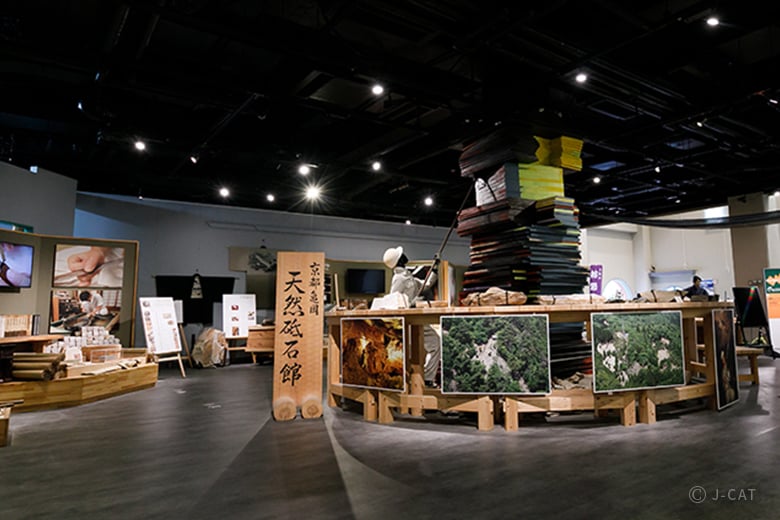
Visitors are greeted by a monument to whetstones and hones, adorned with motifs of mining and geological strata
Before she became the museum’s director, Aki Tanaka worked for a consultancy seeking to support overseas expansion of Japan's manufacturing industries. Upon learning that the museum’s previous director was retiring, she saw the clear next step for her experience and passions. “Natural whetstones and hones are an integral part of traditional Japanese artisanal life across such diverse fields as construction, woodworking, cuisine, and sword production and upkeep,” she says, “but despite this, modern mechanization has driven the natural whetstone and hone industry into decline with low-cost, mass-produced, and disposable alternatives to traditional tools. Still, I feel there is immense value in increasing people’s familiarity with natural whetstones and hones.”
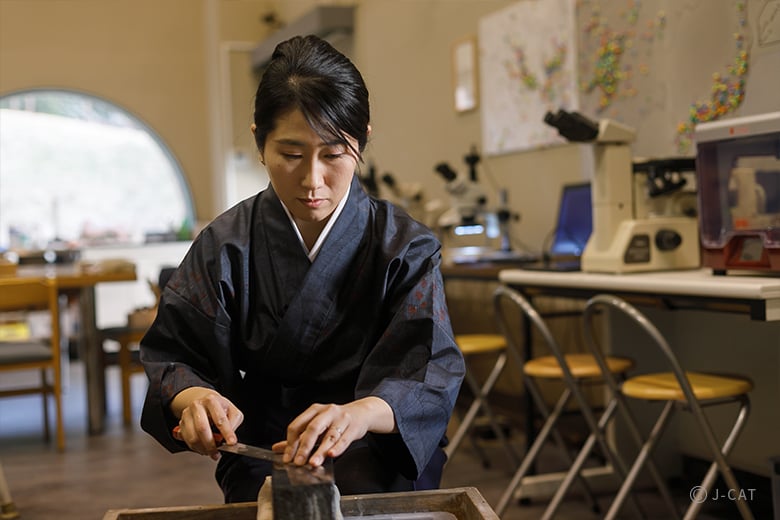
Museum director Aki Tanaka continues to research the history and traditions of natural whetstones and hones
A Private Tour with the Director Herself into the History of Natural Whetstones and Hones
Visitors are greeted at the entrance by an installation evoking a natural whetstone and hone mine, in homage to the prominent role that such mining played in Kameoka’s history. Tanaka begins the tour here with the origins of this industry, dating back not several centuries but millions – 250 million years, to be exact – when sediments began accumulating deep down on the seafloor at a rate sometimes as gradual as a single millimeter per millennium. Eventually, plate tectonics thrust these sediments up to the surface of the present-day Japanese islands and transformed them under the awesome heat of molten granite.
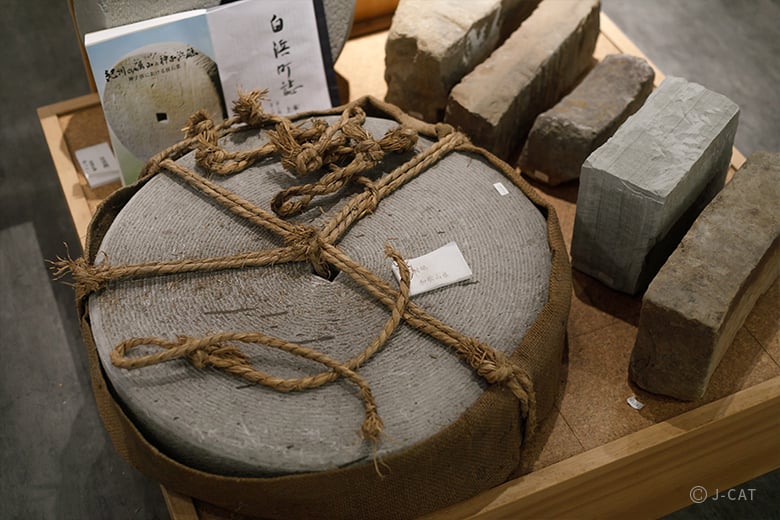
An array of whetstones and hones from all over Japan attests to just how widespread such mining regions are in the country
Layered, fine rock hones known as awasedo, mined in Kyoto’s Tamba Highlands, are a resource that many a chef, imperial carpenter, and sword sharpener – to name just a few professions – will readily tell you they cannot do their work without.
In the museum displays, find exhibits on traditional Japanese swords, carpentry tools, and knives – all tools where precision sharpening is paramount – alongside displays of the world-class whetstones and hones themselves. Tanaka will shed light on each with her commentary, deepening your understanding of the crucial influence of such natural whetstones and hones on the development of Japanese bladed tools. Exclusive to this plan, you will also get a chance to hold a real Japanese sword, and use a traditional woodworker’s tool to experience planing high-quality Japanese cypress.
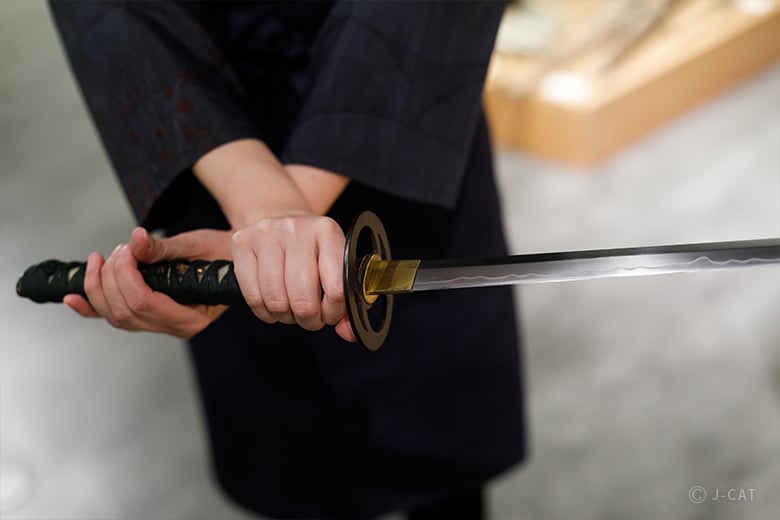
A rare opportunity to take a real Japanese sword into your own hands
At the display of world whetstones and hones, Director Tanaka introduces international visitors to whetstones and hones from their home countries or neighboring regions, among others, explaining the various characteristics of each in such a way that even those previously unfamiliar with the tools and craft can easily appreciate. The museum also has a microscope available for visitors to peer down at the tiny fossils embedded in the rock of the whetstones and hones, deepening their mysterious allure.
Fashioning a Finished Hone/Whetstone "Facing"
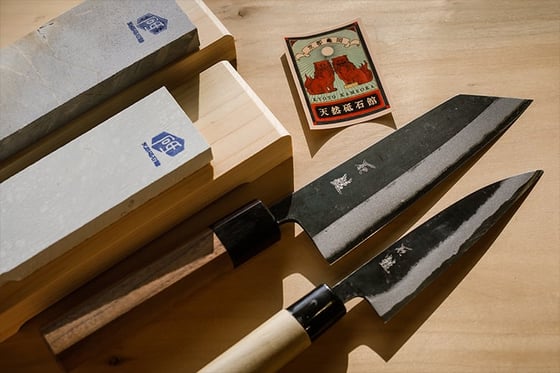
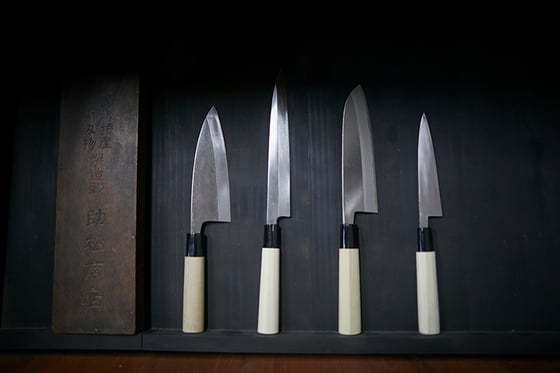
The Museum offers some 200 natural whetstones and hones for trial, along with traditional kuro-uchi forged kitchen knives. You can select from several types—such as the versatile santoku, the vegetable-cutting nakiri, or the slender koyanagi—depending on your cooking style. The stones include fine Kyoto hones once used for polishing Japanese swords, elegant white finishing stones from Fukushima prized worldwide, and mid-grit stones from Kumamoto with striking wood-grain patterns.
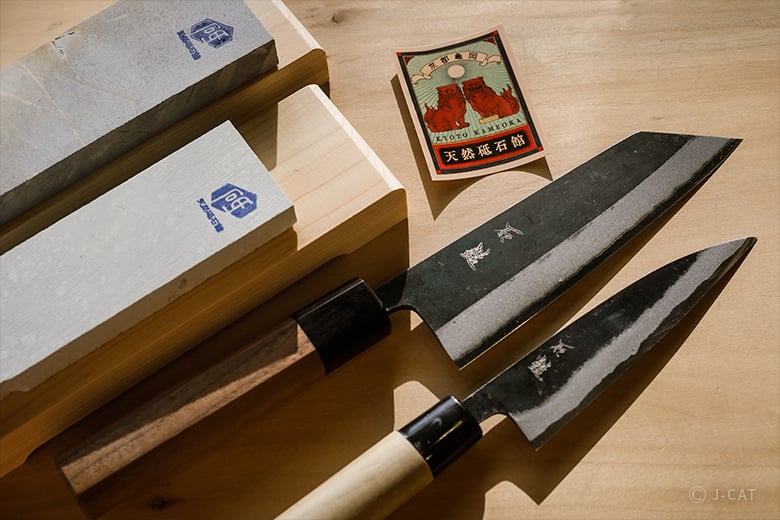
Choose your option on site after an explanation from Tanaka
Hones are produced by “facing,” or filing the raw rock on a diamond grindstone. This process causes purple spots to appear on the surface, often said to resemble lotus flower shapes. When the surface is flat and smooth, the stone is then attached to a cypress base made by a local carpenter, taking its finished form.
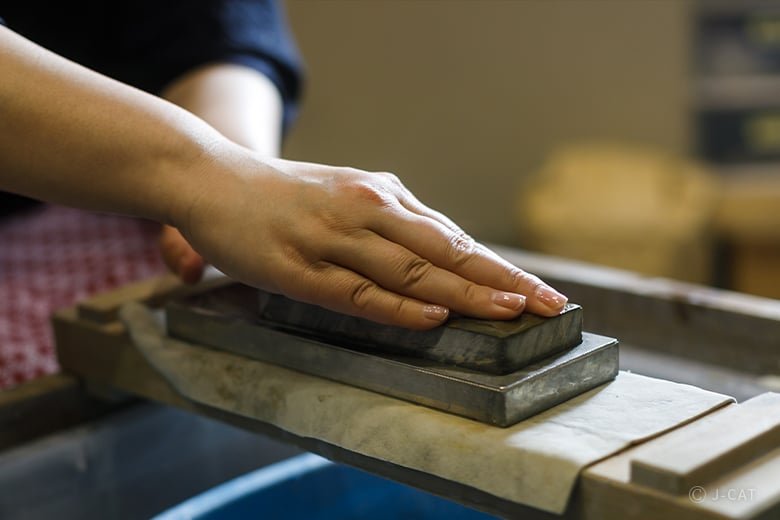
Lose yourself in the meditative act of filing the stone
By Sharpening and Polishing the Traditional Way, Discover the True Sharpness of Japanese Blades
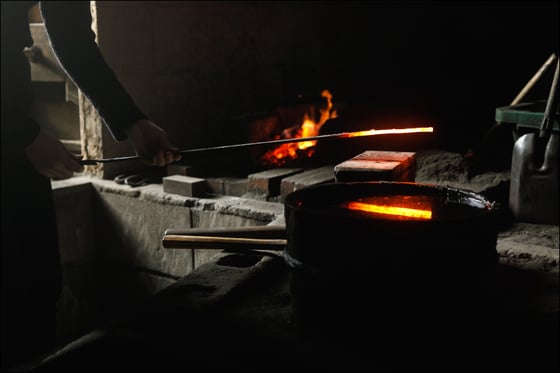
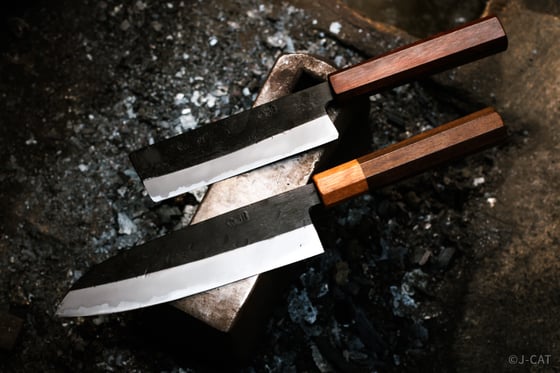
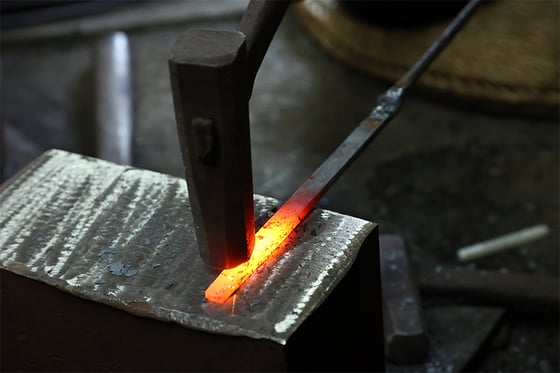
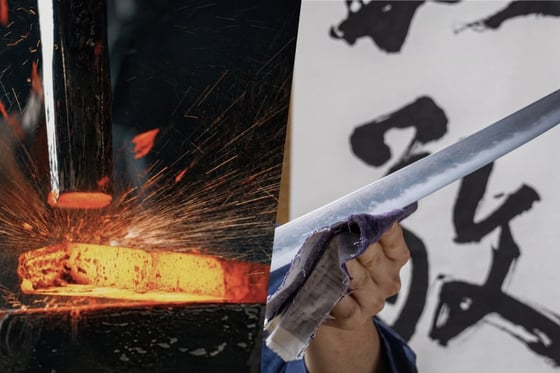
The knives available to sharpen are both black-hammered blades of hagane steel from Yasuki, Shimane Prefecture, known for its historical roots in producing tamahagane sword steel. Black-hammered blades are hammered the old-fashioned way, by hand, and retain the oxide top layer produced in the forging and quenching process to provide better rust-resistance.
In this Wabunka original plan, have your knife handle laser engraved with your favorite characters. Choose your engraving on site from kanji, hiragana, the English alphabet, numbers, and so on. Engraving makes your knife a true one-of-a-kind original.
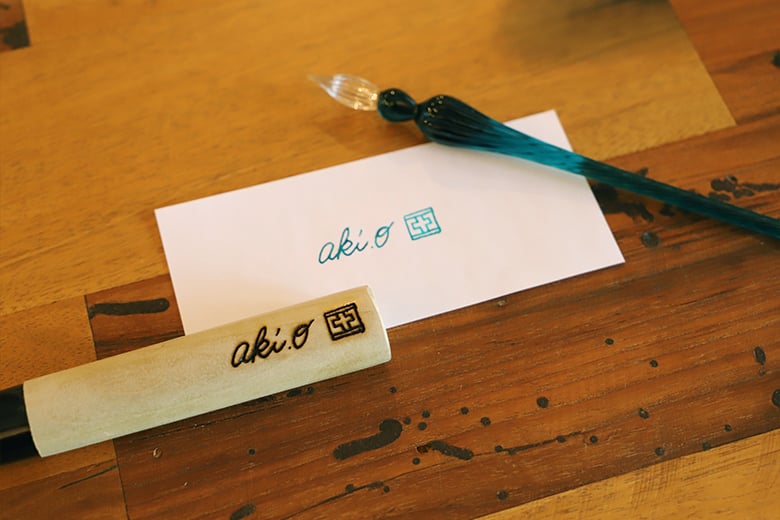
A knife made special with engraving
In finishing your knife, receive attentive instruction on how to hold it, position the hone, and sharpen effectively, so that even complete beginners can feel at ease.
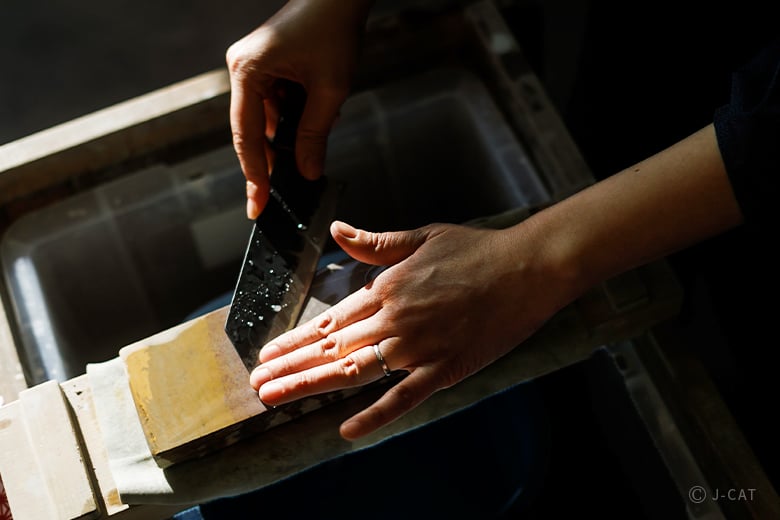
Tanaka teaches you how to sharpen and finish the blade with your own hands
Test-cut a sheet of paper to measure the sharpness of your knife. The way a properly-finished blade glides straight through the paper with even the gentlest touch is incredibly satisfying. Next, receive advice on how to maintain your knife and hone, such as by using oils or other rust inhibitors.
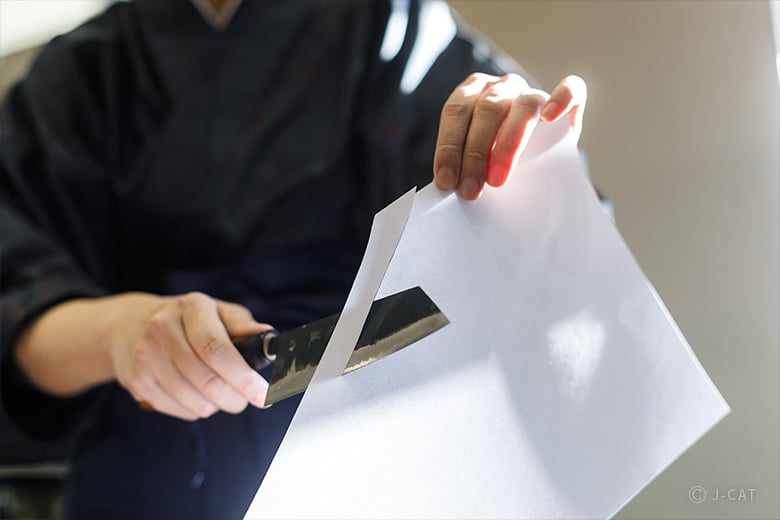
Test-cutting a sheet of paper to measure sharpness
The Quiet Beauty of the Natural Whetstone and Hone: Foundation of Japanese Traditions from Swords to Cuisine, Architecture, and More
In recent years, Japanese culinary knives have charmed professional chefs and kitchen staff the world over with their high-performance quality, and the natural whetstones and hones traditionally used to maintain them have thus begun to follow suit. In this experience, learn all about these wonderful tools, make one of your own, and practice using it to sharpen your own knife.
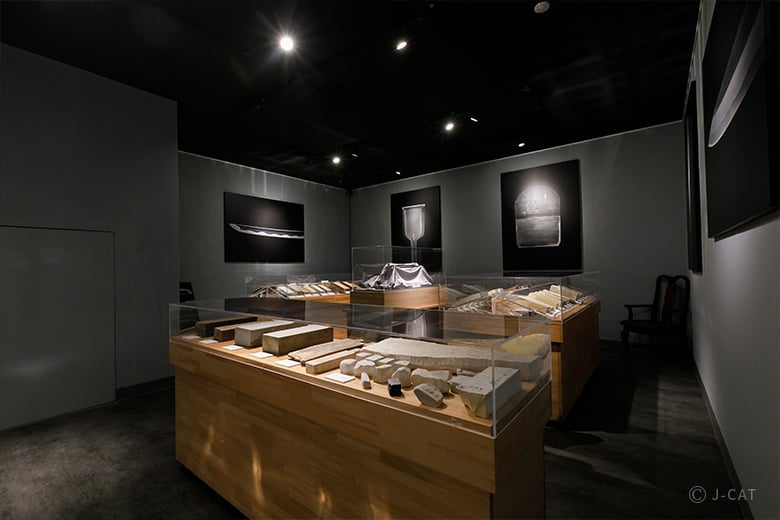
Natural whetstones and hones, long an unsung but vital linchpin of Japan’s traditional cultural arts and industry
Japan’s volatile plate tectonics have blessed the land with top quality whetstone and hone material since time immemorial. Says Tanaka: “High quality natural whetstones and hones made possible traditions of high quality swords, culinary arts, architecture, and various other artisanal techniques, despite the whetstones and hones themselves taking a quiet supporting role. I hope to finally spotlight these vital tools and share them with the world.” Come and discover for yourself the beauty, power, and mystery of these ancient blessings cut from the living rock of the earth.
Natural Whetstone and Hone Museum
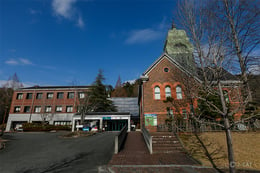
Natural Whetstone and Hone Museum
This hands-on interactive whetstone and hone museum in Kameoka City, Kyoto Prefecture exhibits the city’s famous Tanba Aoto and Awasedo alongside precious natural whetstones and hones from all over Japan and the wider world alongside works from the city’s various traditional industrial crafts, and aims to spread Japan’s traditional artisanal craftwork to future generations around the world.
Location
'%3e%3cpath%20d='M12.504%2011.7308C12.9492%2011.7308%2013.3291%2011.5723%2013.6438%2011.2552C13.9586%2010.9383%2014.116%2010.5572%2014.116%2010.112C14.116%209.66683%2013.9575%209.28683%2013.6403%208.972C13.3233%208.65733%2012.9422%208.5%2012.497%208.5C12.0519%208.5%2011.672%208.6585%2011.3573%208.9755C11.0425%209.2925%2010.885%209.67358%2010.885%2010.1188C10.885%2010.5639%2011.0436%2010.9439%2011.3608%2011.2587C11.6778%2011.5734%2012.0589%2011.7308%2012.504%2011.7308ZM12.5005%2019.677C14.38%2018.041%2015.866%2016.3772%2016.9583%2014.6855C18.0506%2012.9938%2018.5968%2011.5307%2018.5968%2010.2962C18.5968%208.46675%2018.0176%206.95675%2016.8593%205.76625C15.701%204.57592%2014.248%203.98075%2012.5005%203.98075C10.753%203.98075%209.30013%204.57592%208.1418%205.76625C6.98346%206.95675%206.4043%208.46675%206.4043%2010.2962C6.4043%2011.5307%206.95046%2012.9938%208.0428%2014.6855C9.13513%2016.3772%2010.621%2018.041%2012.5005%2019.677ZM12.5005%2021.0193C10.1505%2018.9411%208.38038%2017.0029%207.19005%2015.2048C5.99955%2013.4067%205.4043%2011.7706%205.4043%2010.2962C5.4043%208.18075%206.09313%206.43583%207.4708%205.0615C8.8483%203.68717%2010.5249%203%2012.5005%203C14.4762%203%2016.1528%203.68717%2017.5303%205.0615C18.908%206.43583%2019.5968%208.18075%2019.5968%2010.2962C19.5968%2011.7706%2019.0015%2013.4067%2017.811%2015.2048C16.6207%2017.0029%2014.8505%2018.9411%2012.5005%2021.0193Z'%20fill='%231A150E'/%3e%3c/g%3e%3c/svg%3e)
Natural Whetstone Museum
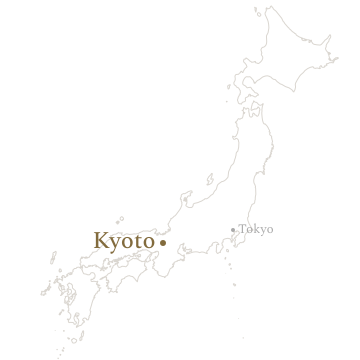
Kameoka, Kyoto
Request for booking
Select first preferred date (JST)
October 2026
Sun
Mon
Tue
Wed
Thu
Fri
Sat
This experience is not available from Monday to Wednesday.
Instant Booking
Request Booking

17
Full

17
Unavailable
- Instant Booking: Your reservation is confirmed immediately upon payment.
- Request Booking: You will receive confirmation after the host reviews your request.
If your preferred dates are not available, you can explore recommended experiences or .
'%3e%3cpath%20d='M12.504%2011.7308C12.9492%2011.7308%2013.3291%2011.5723%2013.6438%2011.2552C13.9586%2010.9383%2014.116%2010.5572%2014.116%2010.112C14.116%209.66683%2013.9575%209.28683%2013.6403%208.972C13.3233%208.65733%2012.9422%208.5%2012.497%208.5C12.0519%208.5%2011.672%208.6585%2011.3573%208.9755C11.0425%209.2925%2010.885%209.67358%2010.885%2010.1188C10.885%2010.5639%2011.0436%2010.9439%2011.3608%2011.2587C11.6778%2011.5734%2012.0589%2011.7308%2012.504%2011.7308ZM12.5005%2019.677C14.38%2018.041%2015.866%2016.3772%2016.9583%2014.6855C18.0506%2012.9938%2018.5968%2011.5307%2018.5968%2010.2962C18.5968%208.46675%2018.0176%206.95675%2016.8593%205.76625C15.701%204.57592%2014.248%203.98075%2012.5005%203.98075C10.753%203.98075%209.30013%204.57592%208.1418%205.76625C6.98346%206.95675%206.4043%208.46675%206.4043%2010.2962C6.4043%2011.5307%206.95046%2012.9938%208.0428%2014.6855C9.13513%2016.3772%2010.621%2018.041%2012.5005%2019.677ZM12.5005%2021.0193C10.1505%2018.9411%208.38038%2017.0029%207.19005%2015.2048C5.99955%2013.4067%205.4043%2011.7706%205.4043%2010.2962C5.4043%208.18075%206.09313%206.43583%207.4708%205.0615C8.8483%203.68717%2010.5249%203%2012.5005%203C14.4762%203%2016.1528%203.68717%2017.5303%205.0615C18.908%206.43583%2019.5968%208.18075%2019.5968%2010.2962C19.5968%2011.7706%2019.0015%2013.4067%2017.811%2015.2048C16.6207%2017.0029%2014.8505%2018.9411%2012.5005%2021.0193Z'%20fill='%23756E66'/%3e%3c/g%3e%3c/svg%3e)
Kyoto

120 mins

'%3e%3cpath%20id='group_2'%20d='M3.0752%2016.9584C3.0752%2016.5251%203.1877%2016.1626%203.4127%2015.8709C3.6377%2015.5792%203.94145%2015.341%204.32395%2015.1561C5.14145%2014.7743%205.94603%2014.4626%206.7377%2014.2209C7.52936%2013.9792%208.54186%2013.8584%209.7752%2013.8584C11.0085%2013.8584%2012.021%2013.9792%2012.8127%2014.2209C13.6044%2014.4626%2014.4089%2014.7743%2015.2264%2015.1561C15.6089%2015.341%2015.9127%2015.5792%2016.1377%2015.8709C16.3627%2016.1626%2016.4752%2016.5251%2016.4752%2016.9584V17.5084C16.4752%2017.6751%2016.4044%2017.8417%2016.2627%2018.0084C16.121%2018.1751%2015.9419%2018.2584%2015.7252%2018.2584H3.8252C3.60853%2018.2584%203.42936%2018.1876%203.2877%2018.0459C3.14603%2017.9042%203.0752%2017.7251%203.0752%2017.5084V16.9584ZM20.1752%2018.2584H18.3502C18.3835%2018.1417%2018.4127%2018.0201%2018.4377%2017.8934C18.4627%2017.7666%2018.4752%2017.6382%2018.4752%2017.5084V16.9584C18.4752%2016.4251%2018.3839%2015.9252%2018.2014%2015.4589C18.0191%2014.9926%2017.7604%2014.5924%2017.4252%2014.2584C17.8085%2014.3584%2018.1835%2014.4876%2018.5502%2014.6459C18.9169%2014.8042%2019.2919%2014.9751%2019.6752%2015.1584C20.0585%2015.3417%2020.3627%2015.5931%2020.5877%2015.9124C20.8127%2016.2317%2020.9252%2016.5804%2020.9252%2016.9584V17.5084C20.9252%2017.7251%2020.8544%2017.9042%2020.7127%2018.0459C20.571%2018.1876%2020.3919%2018.2584%2020.1752%2018.2584ZM9.7752%2011.2584C9.0327%2011.2584%208.39711%2010.9941%207.86845%2010.4654C7.33961%209.93657%207.0752%209.3009%207.0752%208.5584C7.0752%207.8159%207.33961%207.18023%207.86845%206.6514C8.39711%206.12273%209.0327%205.8584%209.7752%205.8584C10.5177%205.8584%2011.1533%206.12273%2011.6819%206.6514C12.2108%207.18023%2012.4752%207.8159%2012.4752%208.5584C12.4752%209.3009%2012.2108%209.93657%2011.6819%2010.4654C11.1533%2010.9941%2010.5177%2011.2584%209.7752%2011.2584ZM16.2252%208.5584C16.2252%209.3009%2015.9609%209.93657%2015.4322%2010.4654C14.9034%2010.9941%2014.2677%2011.2584%2013.5252%2011.2584C13.8305%2010.8791%2014.0652%2010.4581%2014.2292%209.99565C14.3932%209.53331%2014.4752%209.05323%2014.4752%208.5554C14.4752%208.0574%2014.3877%207.5834%2014.2127%207.1334C14.0377%206.6834%2013.8085%206.2584%2013.5252%205.8584C14.2677%205.8584%2014.9034%206.12273%2015.4322%206.6514C15.9609%207.18023%2016.2252%207.8159%2016.2252%208.5584ZM3.7752%2017.5584H15.7752V16.9584C15.7752%2016.7084%2015.7127%2016.4917%2015.5877%2016.3084C15.4627%2016.1251%2015.2252%2015.9417%2014.8752%2015.7584C14.1752%2015.3751%2013.4252%2015.0792%2012.6252%2014.8709C11.8252%2014.6626%2010.8752%2014.5584%209.7752%2014.5584C8.6752%2014.5584%207.7252%2014.6626%206.9252%2014.8709C6.1252%2015.0792%205.3752%2015.3751%204.6752%2015.7584C4.3252%2015.9417%204.0877%2016.1251%203.9627%2016.3084C3.8377%2016.4917%203.7752%2016.7084%203.7752%2016.9584V17.5584ZM9.7752%2010.5584C10.3252%2010.5584%2010.796%2010.3626%2011.1877%209.9709C11.5794%209.57923%2011.7752%209.1084%2011.7752%208.5584C11.7752%208.0084%2011.5794%207.53757%2011.1877%207.1459C10.796%206.75423%2010.3252%206.5584%209.7752%206.5584C9.2252%206.5584%208.75436%206.75423%208.3627%207.1459C7.97103%207.53757%207.7752%208.0084%207.7752%208.5584C7.7752%209.1084%207.97103%209.57923%208.3627%209.9709C8.75436%2010.3626%209.2252%2010.5584%209.7752%2010.5584Z'%20fill='%23756E66'/%3e%3c/g%3e%3c/g%3e%3c/svg%3e)
'%3e%3cpath%20id='record_voice_over_2'%20d='M22.0748%209.05862C22.0748%2010.092%2021.8831%2011.067%2021.4998%2011.9836C21.1165%2012.9003%2020.6081%2013.717%2019.9748%2014.4336C19.8915%2014.517%2019.7998%2014.5711%2019.6998%2014.5961C19.5998%2014.6211%2019.5066%2014.5904%2019.4201%2014.5039C19.3399%2014.4237%2019.3036%2014.3336%2019.3113%2014.2336C19.319%2014.1336%2019.3651%2014.042%2019.4498%2013.9586C20.0498%2013.292%2020.5206%2012.542%2020.8623%2011.7086C21.204%2010.8753%2021.3748%209.99196%2021.3748%209.05862C21.3748%208.12529%2021.204%207.24195%2020.8623%206.40862C20.5206%205.57529%2020.0498%204.82529%2019.4498%204.15862C19.3665%204.07529%2019.3206%203.98204%2019.3123%203.87887C19.304%203.7757%2019.3441%203.68404%2019.4328%203.60387C19.5108%203.5237%2019.5998%203.49612%2019.6998%203.52112C19.7998%203.54612%2019.8915%203.60029%2019.9748%203.68362C20.6081%204.40029%2021.1165%205.21695%2021.4998%206.13362C21.8831%207.05029%2022.0748%208.02529%2022.0748%209.05862ZM17.3248%209.05862C17.3248%209.44546%2017.2581%209.81712%2017.1248%2010.1736C16.9915%2010.5303%2016.8081%2010.8503%2016.5748%2011.1336C16.5081%2011.217%2016.429%2011.2628%2016.3373%2011.2711C16.2456%2011.2795%2016.1566%2011.2404%2016.0701%2011.1539C15.9899%2011.0737%2015.9498%2010.9878%2015.9498%2010.8961C15.9498%2010.8045%2015.9831%2010.717%2016.0498%2010.6336C16.2331%2010.4003%2016.3748%2010.151%2016.4748%209.88562C16.5748%209.62012%2016.6248%209.34446%2016.6248%209.05862C16.6248%208.74196%2016.5732%208.45821%2016.4701%208.20737C16.3669%207.95637%2016.2268%207.71512%2016.0498%207.48362C15.9831%207.40029%2015.9498%207.31279%2015.9498%207.22112C15.9498%207.12945%2015.9899%207.04354%2016.0701%206.96337C16.1566%206.87687%2016.2456%206.83779%2016.3373%206.84612C16.429%206.85445%2016.5081%206.90029%2016.5748%206.98362C16.8116%207.27129%2016.9959%207.58487%2017.1276%207.92437C17.2591%208.26387%2017.3248%208.64196%2017.3248%209.05862ZM8.6248%2011.7586C7.88231%2011.7586%207.24672%2011.4943%206.71806%2010.9656C6.18922%2010.4368%205.9248%209.80112%205.9248%209.05862C5.9248%208.31612%206.18922%207.68045%206.71806%207.15162C7.24672%206.62295%207.88231%206.35862%208.6248%206.35862C9.3673%206.35862%2010.0029%206.62295%2010.5316%207.15162C11.0604%207.68045%2011.3248%208.31612%2011.3248%209.05862C11.3248%209.80112%2011.0604%2010.4368%2010.5316%2010.9656C10.0029%2011.4943%209.3673%2011.7586%208.6248%2011.7586ZM1.9248%2018.0086V17.4586C1.9248%2017.0253%202.03314%2016.6628%202.2498%2016.3711C2.46647%2016.0795%202.7748%2015.842%203.1748%2015.6586C3.9748%2015.2753%204.85814%2014.9628%205.8248%2014.7211C6.79147%2014.4795%207.7248%2014.3586%208.6248%2014.3586C9.52481%2014.3586%2010.4581%2014.4795%2011.4248%2014.7211C12.3915%2014.9628%2013.2748%2015.2753%2014.0748%2015.6586C14.4748%2015.842%2014.7831%2016.0795%2014.9998%2016.3711C15.2165%2016.6628%2015.3248%2017.0253%2015.3248%2017.4586V18.0086C15.3248%2018.2253%2015.254%2018.4045%2015.1123%2018.5461C14.9706%2018.6878%2014.7915%2018.7586%2014.5748%2018.7586H2.6748C2.45814%2018.7586%202.27897%2018.6878%202.1373%2018.5461C1.99564%2018.4045%201.9248%2018.2253%201.9248%2018.0086ZM2.6248%2018.0586H14.6248V17.4586C14.6248%2017.1586%2014.5373%2016.917%2014.3623%2016.7336C14.1873%2016.5503%2013.9748%2016.392%2013.7248%2016.2586C13.0915%2015.9253%2012.304%2015.642%2011.3623%2015.4086C10.4206%2015.1753%209.50814%2015.0586%208.6248%2015.0586C7.74147%2015.0586%206.82897%2015.1753%205.8873%2015.4086C4.94564%2015.642%204.15814%2015.9253%203.5248%2016.2586C3.2748%2016.392%203.0623%2016.5503%202.8873%2016.7336C2.7123%2016.917%202.6248%2017.1586%202.6248%2017.4586V18.0586ZM8.6248%2011.0586C9.17481%2011.0586%209.64564%2010.8628%2010.0373%2010.4711C10.429%2010.0795%2010.6248%209.60862%2010.6248%209.05862C10.6248%208.50862%2010.429%208.03779%2010.0373%207.64612C9.64564%207.25445%209.17481%207.05862%208.6248%207.05862C8.0748%207.05862%207.60397%207.25445%207.2123%207.64612C6.82064%208.03779%206.6248%208.50862%206.6248%209.05862C6.6248%209.60862%206.82064%2010.0795%207.2123%2010.4711C7.60397%2010.8628%208.0748%2011.0586%208.6248%2011.0586Z'%20fill='%23756E66'/%3e%3c/g%3e%3c/g%3e%3c/svg%3e)
English-speaking host
'%3e%3cpath%20id='event_available_2'%20d='M10.9498%2016.4586L14.9498%2012.4586C15.0165%2012.3919%2015.0956%2012.3544%2015.1873%2012.3461C15.279%2012.3378%2015.3665%2012.3753%2015.4498%2012.4586C15.5331%2012.5419%2015.5748%2012.6253%2015.5748%2012.7086C15.5748%2012.7919%2015.5331%2012.8753%2015.4498%2012.9586L11.4748%2016.9336C11.3248%2017.0836%2011.1498%2017.1586%2010.9498%2017.1586C10.7498%2017.1586%2010.5748%2017.0836%2010.4248%2016.9336L8.5498%2015.0586C8.48314%2014.9919%208.44564%2014.9128%208.4373%2014.8211C8.42897%2014.7294%208.46647%2014.6419%208.5498%2014.5586C8.63314%2014.4753%208.71647%2014.4336%208.7998%2014.4336C8.88314%2014.4336%208.96647%2014.4753%209.0498%2014.5586L10.9498%2016.4586ZM5.7998%2020.7586C5.36647%2020.7586%205.00814%2020.6169%204.7248%2020.3336C4.44147%2020.0503%204.2998%2019.6919%204.2998%2019.2586V6.85859C4.2998%206.42526%204.44147%206.06693%204.7248%205.78359C5.00814%205.50026%205.36647%205.35859%205.7998%205.35859H7.7998V3.45859C7.7998%203.34193%207.8373%203.24609%207.9123%203.17109C7.9873%203.09609%208.08314%203.05859%208.1998%203.05859C8.31647%203.05859%208.4123%203.09609%208.4873%203.17109C8.5623%203.24609%208.5998%203.34193%208.5998%203.45859V5.35859H15.4998V3.40859C15.4998%203.30859%2015.5331%203.22526%2015.5998%203.15859C15.6665%203.09193%2015.7498%203.05859%2015.8498%203.05859C15.9498%203.05859%2016.0331%203.09193%2016.0998%203.15859C16.1665%203.22526%2016.1998%203.30859%2016.1998%203.40859V5.35859H18.1998C18.6331%205.35859%2018.9915%205.50026%2019.2748%205.78359C19.5581%206.06693%2019.6998%206.42526%2019.6998%206.85859V19.2586C19.6998%2019.6919%2019.5581%2020.0503%2019.2748%2020.3336C18.9915%2020.6169%2018.6331%2020.7586%2018.1998%2020.7586H5.7998ZM5.7998%2020.0586H18.1998C18.3998%2020.0586%2018.5831%2019.9753%2018.7498%2019.8086C18.9165%2019.6419%2018.9998%2019.4586%2018.9998%2019.2586V10.8586H4.9998V19.2586C4.9998%2019.4586%205.08314%2019.6419%205.2498%2019.8086C5.41647%2019.9753%205.5998%2020.0586%205.7998%2020.0586ZM4.9998%2010.1586H18.9998V6.85859C18.9998%206.65859%2018.9165%206.47526%2018.7498%206.30859C18.5831%206.14193%2018.3998%206.05859%2018.1998%206.05859H5.7998C5.5998%206.05859%205.41647%206.14193%205.2498%206.30859C5.08314%206.47526%204.9998%206.65859%204.9998%206.85859V10.1586Z'%20fill='%23756E66'/%3e%3c/g%3e%3c/g%3e%3c/svg%3e)
Cancel free up to 6 days prior
Reviews & Reflections
45 Reviews
Our hosts were knowledgeable and friendly. We learned alot.

L.O. United States
I love the place of the experience! I feel so grateful!
B.C.V. Mexico
It was great! I love learning more about topics that are directly applicable to me. AlLearning about the whetstone and history of it's use and application was very fascinating!
C.C. United States
Really fun and informative experience and really friendly and helpful staff.
C.L. United States
We had a great experience. It was truly great to learn from an experienced master and she was very nice.
A.S. United States
Amazing experience. It was engaging, educational and fun!
R.R. Canada
Everyone was so nice. The session was very informative. It was great. The instructors taught us well and ensured we had good technique. This will be a long lasting memory of our trip to Japan.
R.P. Qatar
I was in Japan for two weeks and tried so many things. This experience was my favorite! Aki San was amazing! Aki San gave an amazing class, let us pick our knives and stones, then taught us about the edge geometry and how to shape bevels. Then she gave us some cheap kitchen knives to practice on, before we were allowed to touch our own blades. We had the best time and I am so glad we chose this experience.
N.W. Qatar
I was in Japan for two weeks and tried so many things. This experience was my favorite! Aki San was amazing! Aki San gave an amazing class, let us pick our knives and stones, then taught us about the edge geometry and how to shape bevels. Then she gave us some cheap kitchen knives to practice on, before we were allowed to touch our own blades. We had the best time and I am so glad we chose this experience.
R.P. United States
The history that accompanied the activity was the perfect balance. We had an awesome time, learned while we did it, always felt engaged, and left with the best knife any of us own to show for it
J.B. United States
The experience was great! Worth every penny! The host was great and wewent home with some fun gear!
F.B. United States
Aki Tanaka was amazing. We loved her very engaging way of teaching about whetstones, and her personal way of being.
N.B. Qatar
Experience was very informative and fun. I could’ve spent a hours there learning about the history of the knife work and the stones. I loved the sharping skills being taught and learning about the regions the stone and craftsman are from.
R.C. United States
I took my son for his birthday as he has a growing interest in cooking. We were made to feel welcome and enjoyed the detail as knowledge provided. Our knives and whetstones were unique keepsakes of our trip to Japan and a great alternative to impersonal, mass produced products.
G.H. Australia
The experience was absolutely incredible. My group booked a private tour with a knife sharpening lesson at the Natural Whetstone Museum in Kameoka, Japan. The teacher, Aki-san, is an expert in the field and skilled at sharing her knowledge. She was such a pleasure to work with - knowledgeable, funny, and kind. It was also really nice to receive all the information straight from the source, as Aki-san speaks English; she communicated all the information about whetstones and knives directly to us - no interpreter necessary. It was also really cool to be able to see our knives before and after sharpening under a microscope. And of course, we were all super excited to be able to take home a hand-crafted knife and a whole whetstone with us. This experience was undoubtedly the best part of our entire trip to Japan. Thank you so much, Aki-san!
N.Y. United States
Because as a whole experience was amazing, the explanation, the friendliness of the host, me having questions and being answered, and talking about Japanese culture in general. I couldn’t be more satisfied
E.P. Greece
It was a great experience! We learned so much about knifes, hones and the region. So so nice, we were very thankful. We’ve already recommended the experience to our friends and will continue for the future!
I.K. Germany
The private tour and lesson on the day the museum is normally closed was really interesting and fun. Aki-san was a generous and entertaining host.
R.M. Australia
Wonderful! Absolutely one of the most interesting and unique experiences I have ever had while traveling. It was great to learn a new art and skill in knife sharpening, and even got to learn some carpentry techniques as well. The artisans involved are all so talented and it was a privilege to learn more about their work. Thank you Tanaka-san! Arigato gozaimasu!
K.M. United States
The experience was really amazing. Aki-san was so personable and engaging, making the entire event with her exciting, fun, and really welcoming. She was patient and supportive in the crafting process, and endlessly knowledgeable. She even helped us find a more scenic route back into Kyoto so that we could see the bamboo forest and went above and beyond in making sure that we enjoyed the experience. From the booking all the way through to the experience itself I felt there was attention to detail, a warm and engaging customer service, and a fantastic relay of information.
D.R. United States
The experience with Aki-San was amazing. She is a wonderful host and incredibly knowledgeable.
R.M. United States
The experience is priceless because I can never forget about it. I can use it for my life. It has been passed down generations and Ms Tanaka was so kind and informative. I learned a life long lesson.
S.K. United States
We found the class really helpful. We learned a lot and got to take knives back with us - a great souvenir from our trip! It educated me on how Japanese knife culture became so popular.
J.K. United States
This was incredible to be part of the knife sharpening experience - understanding the art of the sharpening, the stones that are used and the history associated with it. Would highly recommend it was so unique and enriching on so many levels. Very professional. The people were so knowledgeable and passionate too.
J.R. South Africa
Great tour, very nice staff.
V.L. Greece
Incredible experience that you should definitely visit when coming to the Kyoto region. It was quite expensive, however worth it, seeing all the work that was done to craft such a knife and the stones. It gave a good view on the evolving use of the wet stone and the craftsmanship that comes into place when making these knifes.
L.H. Netherlands
Informative, a great learning opportunity, fun, very enjoyable and overall extraordinary way to spend a day in Japan. Everyone was so nice and there was a good mix of cultural exploration and hands on craft. The experience deepened our interest in the culture and artisans of the country.
J.G. United States
The one on one time with a master craftsman. We learned about the tradition of knife making, the traditions it is rooted in as well as the origin of the materials. It was fun with an interesting educational element.
C.L. United States
I can't express enough how kind, respectful, and knowledgeable the women we worked with were. The two ladies we worked with were absolutely amazing! They were so informative, understanding, kind, and supportive! I appreciate more of the history and the rural location that we were in. There is so much love and tradition that comes from Japan's culture. I am glad I got to learn about how whetstones take a part in that. 11/10 need to do in Japan! It is worth the travel. Unforgettable.
S.W. United States
Deep dive into Japanese culture to learn more about whetstones, knifes and the environment they come from. We went with a group of three and were greeted very cheerfully at Tennentoishikan. The director of the museum explained about the history of whetstones as well as the specialties of the region. After that, we were guided to another room to choose our knifes and whetstones. We specifically asked to follow the explanation in simple Japanese and the director was happy to do so. For more difficult terms, English was used, so we understood all the explanations and instructions while also practicing and improving our Japanese listening and speaking skills. Very special with this experience were several things. First we were asked to choose kanji, katakana or hiragana for the engraving of the knife handle. When we discussed that those kanji would look nice on a hanko, the director consulted one of the employees and made it possible for us to also get a hanko handcrafted by an artisan (paid at the location). Wow, we did not expect that! Second, while the hanko was made and we had finished sharpening our knifes, the director showed us how to shave bonito flakes and made us a bonito flake drink. Very tasty! Third, we went to the little shop on the second floor and checked out the local produce as well as eating a few packed sweet breads from the shop. We felt like kings (well, queens actually), everyone was really nice and genuinely happy to have us around and to share their knowledge with us. Next to that, the director was so kind to call a taxi for us to bring us to the nearest station. It showed how appreciative Japanese people are if foreigners are trying to speak Japanese and trying to act conform the norms and values of Japanese society. Japanese are genuinely friendly and happy to share their culture with others. This experience made me feel invited to join and come back at another occasion. Worth the time and money (we spent more time there than anticipated, but it was worth it), a once-in-a-lifetime experience.
L.K. Germany
Top rating all the way because we really felt like important visitors. The whole experience was calm, informative and great fun. I always wanted to learn about how to sharpen a Japanese knife with a whetstone. This visit gave is that and so much more. I knew that cutting techniques and different blades was important for chefs, but I learned that different blades have had influence in many ways to many occupations.
A.R. Norway
Everything was great! I think the most memorable part was receiving our completed knives at the end. This definitely helped us better understand the craftsmanship and history of knife/sword making in Japan. A great way to stay cool, learn a new skill, and experience Japanese culture and hospitality.
R.L. Canada
Memorable, enjoyable, full of information, entertaining. I would recommend this experience to all my friends who would visit Japan. Is probably not the first thing to do or see while for a short trip in Japan, but for us it was a memorable activity during ours. It was also a very good match of our expectations and reality. I considered it a bit expensive when I booked it, but considering that we had (accidentally or not) exclusivity in the museum and that we also got to leave with an engraved good quality knife & whetstone, in the end it did not seem excessive at all.
A.H. Romania
Memorable and the staff were so friendly. It broadened my knowledge and allowed me to understand the intricate levels of workmanship that go into Japanese katanas and knifes.
N.B. Australia
We thought this event was good value for the money. The instructors were very kind and taught us a lot. They were very caring. We learned how to sharpen knives and also got a set ourselves. We learned a lot about the history of whetstones and how important they were in the history of japan. Very fun and you learn a lot.
L.L. Canada
The Wabunka experience at the Whetstone Museum was an amazing experience. We learned about the long history of whetstones and sword / knife making in Japanese culture. The detailed tour and hands on instruction from the staff made this a highlight of our time in Japan. We'd definitely book with them again.
S.L. United States
An opportunity to work with people in love with their craft and with a gift for sharing it. They explained every step thoroughly and allowed us to ask a lot of questions. The way the hosts prepared our names to engrave onto the knives, and the care and joy with which they presented each aspect of the workshop was memorable.
B.V. Belgium
Content was exactly as expected with a few pleasant surprises (additional speaking on carpentry tools), duration was also as promised around two hours which was perfect timing for transportation. No issues with customer service or English interpretation, excellent english across the board and very easy to understand. Price was great value, I expected higher. Sharpening was the most fun hands on activity, simply because I had never done it before and hadn't considered something as simple as a knife to be used with long term maintenance in mind. It was a lot of fun having my skills refined and checked by Aki-san, and I will continue investing in sharpening and maintenance as a hobby. The distinct difference in treatment of knives in the west and in Japan are made very clear, and the historical significance of how that came to be through the different material properties of the sharpening stones and knife construction processes embodies Japan's insistence on cultural and material preservation. Getting the knife is the main appeal, because not only is the knife exceptional quality but it's also exciting knowing that it was forged by masters of the craft. Learning about cultural significance of the sharpening stones, how they develop, and why Japan is notorious for sharpening stones ranging from war time relevance to maintaining every day tools was also extremely insightful, and gave a lot more weight to sharpening and maintaining your new knife. I highly recommend anyone that has the opportunity to go.
J.P. United States
All top-notch. The guide, she was so charming and spoke perfect English. I learned a lot about the history of knife making and also how to sharpen a knife in accordance with Japanese customs.
W.R. United States
Authentic, personalised, insightful and highly recommended. Every aspect of our experience was well-conceived and delivered. The knife sharpening and personalisation of the knife was outstanding. The staff at the Whetstone Museum were wonderful.
N.I. Australia
Loved it. Great experience worth the trip to learn about knives and whetstones. The two workers running the tour were very helpful and realized I struggled getting a taxi so they helped me find the bus and offered to call a taxi for me to get back if needed. Shows me how kind and friendly people are. When I left I forgot something and one of the ladies came running after me shouting tie sit and she had me the things. I was so appreciative.
T.J. United States
Definitively worth it.
R.E. France
It was very difficult to given anything below the top ratting. Everything from the actually experience, to customer service was beyond amazing. The most memorable moment of my experience is getting a chance to do the sharpening class privately. I’ve learned so much from the best instructors I can possibly ask for, and it made my experience more especial because I was able to share it with my husband. It allowed me to see deeper into a piece of this country’s culture, not only showing me what has Japan done to influence other countries. But as well as seeing how Japan has taken inspiration and made something their own and perfecting it. I was a very educational and beyond fun Hands on experience.
A.G. United States
Historical, therapeutic, interesting, and fun!I genuinely couldn't be more thankful and I believe this experience was the best part of our entire trip! The craftsmanship is unmatched! It showed us how Japan as a whole takes even the most every day objects such as knives as a piece of art! No detail is made without intention and I find that a beautiful symbolic representation of the county and its people.
M.A. United States
This experience was a highlight of our Japan trip! I can't speak more highly of this experience. We felt so welcome and truly enjoyed the opportunity. Having the one on one focus with Director Tanaka and her team was a special experience and this became a top memory from our whole Japan trip! Having the chance to be guided by their experience and to learn from each of them was a real treat! This gave us a great understanding of both the physical landscape/geology of Japan and the cultural significance of each blade. It's importance in developing flavors in the kitchen, as art pieces and in the history of moving from weapons into the practical tools we got to take home. It was a great mix of learning about the culture & the geology of Japan and being interactive with us learning to skill of whetstone blade sharpening. And to top it off we now each have our own special knives to use at home and pass down in the family, providing a lasting memory from our trip.
K.S. United States
Things to Know
Price
Maximum number
Experience itinerary
Payment
Booking deadline
Cancellation policy
Guest requirements
Clothes
Further remarks
Contact Us
If you have any questions, please contact us using the form below.
We also accept bookings from corporate clients and travel agencies.
Recommended Experiences
Explore by Destination & Theme
'%3e%3cpath%20d='M7.13478%2019.0769L8.13478%2015.0769H4.51953L4.76953%2014.0769H8.38478L9.42328%209.92285H5.80803L6.05803%208.92285H9.67328L10.6733%204.92285H11.6348L10.6348%208.92285H14.904L15.904%204.92285H16.8658L15.8658%208.92285H19.481L19.231%209.92285H15.6158L14.5773%2014.0769H18.1925L17.9425%2015.0769H14.3273L13.3273%2019.0769H12.3658L13.3658%2015.0769H9.09653L8.09653%2019.0769H7.13478ZM9.34653%2014.0769H13.6158L14.654%209.92285H10.3848L9.34653%2014.0769Z'%20fill='%23756E66'/%3e%3c/g%3e%3c/svg%3e)
You Might Also Like



'%3e%3cpath%20d='M17.7232%2016.0003L11.5898%209.86701L12.5335%208.92334L19.6105%2016.0003L12.5335%2023.0773L11.5898%2022.1337L17.7232%2016.0003Z'%20fill='%231A150E'/%3e%3c/g%3e%3c/svg%3e)
'%3e%3cpath%20d='M17.7232%2016.0003L11.5898%209.86701L12.5335%208.92334L19.6105%2016.0003L12.5335%2023.0773L11.5898%2022.1337L17.7232%2016.0003Z'%20fill='%23826B3D'/%3e%3c/g%3e%3c/svg%3e)
Last Minute Availability