Ogijima, Nestled in a Beautiful Archipelago of the Seto Inland Sea
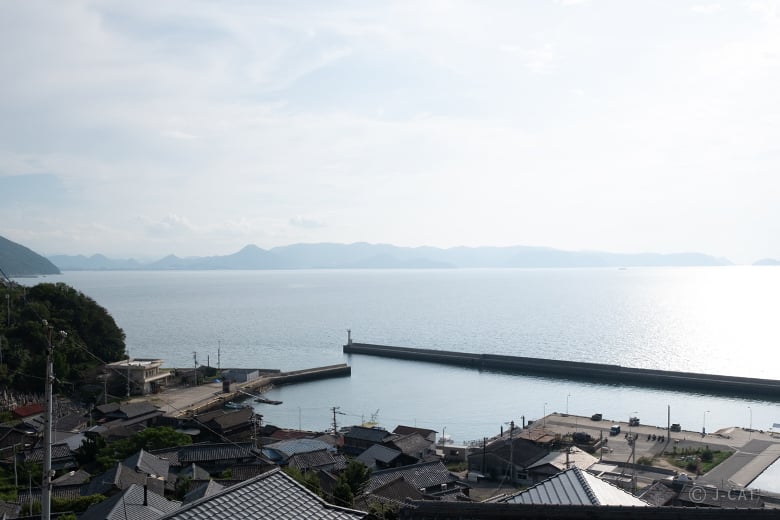
The Seto Inland Sea is often likened to Greece’s Aegean. Tranquil island landscapes dotting the deep blue of the sea make it a natural tourist draw that invigorates and inspires its visitors. Among the many islands here, Ogijima (“Ogi Island”) features a topographically unique and complex townscape characterized by narrow lanes crisscrossed with sloping hill streets. The island can only be reached by ferry, from Takamatsu Port in Kagawa Prefecture’s mainland.
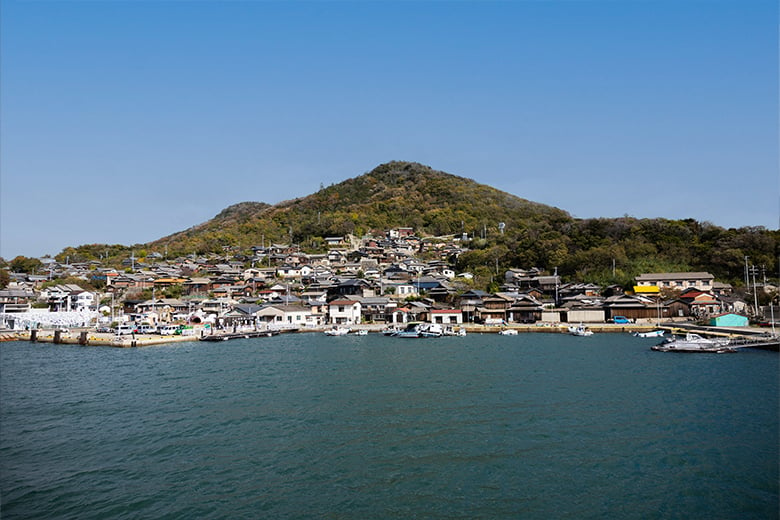
Ogijima as viewed from the ferry, a 40-minute trip from Takamatsu Port via the neighboring island of Megijima
After disembarking at the port, visitors climb a slope leading to the village, from which the serene sparkling sea is never more than a glance away. Alleycats laze, occasionally brushing up against human passersby. An atmosphere of soothing, slow-living tranquility pervades. This island also serves as a venue for the Setouchi Triennale, an internationally renowned contemporary art festival held across the archipelago. Under the influence of the festival, Ogijima is dotted year-round with installations that seamlessly blend into the townscape.
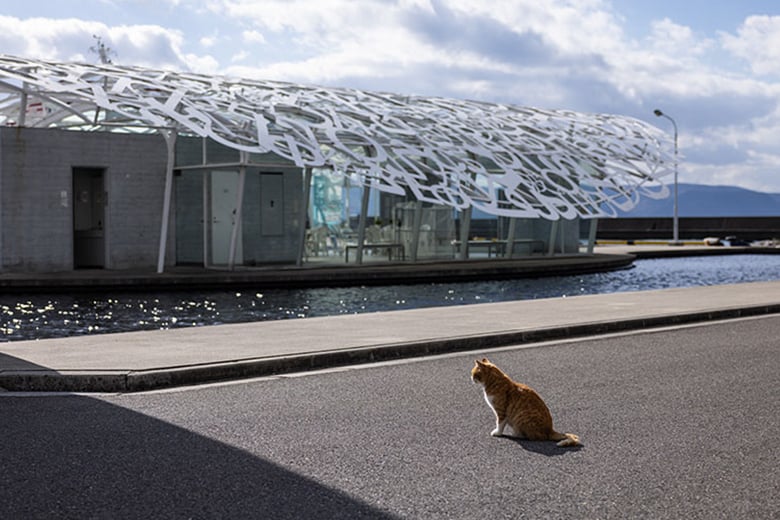
Welcoming visitors to the island, the Ogi Exchange Center is a piece of artwork unto itself – known as “Ogijima's Soul,” it was created by Spanish contemporary artist Jaume Plensa for the first Setouchi Triennale in 2010
The Lacquerwork Techniques of Kagawa Tradition
Furukawa: So this place we’re in, Maison de Urushi, is called “The House of Lacquer,” but what exactly is it?
Kitaoka: Maison de Urushi was founded in preparation for the first Setouchi Triennale in 2010, as part of a prefectural initiative to create a nexus for the promotion of Kagawa Lacquerware. Actually, this house itself was the birthplace of Mr. Hayato Otani, who of course is with us here now and is a distinguished master of Kagawa lacquerware. Our feeling was that this would be an excellent base for visitors to learn more about Kagawa’s lacquerware traditions and techniques, as well as for promoting the passing on of those traditions to future generations, who can further develop them.
*Author’s note: Maison de Urushi is in Japanese known by the name Urushi no Ie – both names translate to “The House of Lacquer”
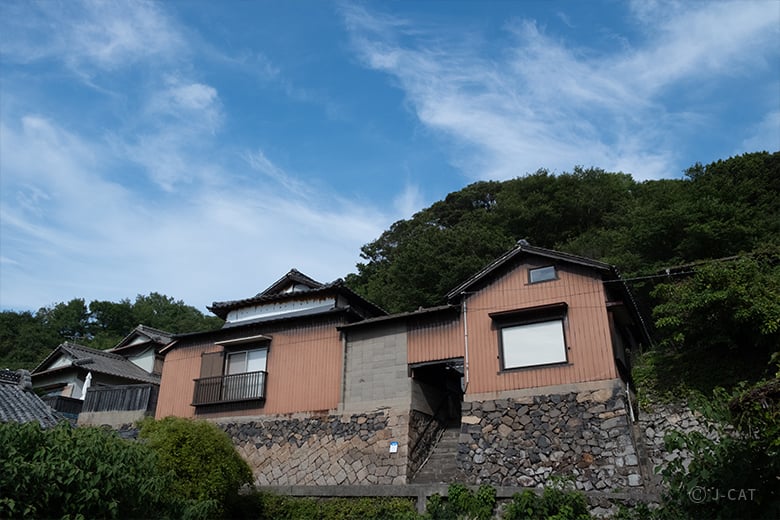
Maison de Urushi sits atop a narrow hillside approach from the Ogi Port ferry terminal
Otani: Before that, this house had actually been vacant for decades. It’s about a century and a half old. Mr. Kitaoka and I personally worked with many other up-and-coming lacquer artists to renovate it, pulling it back from the brink of abandonment and reviving it as a place for new connections.
Thanks to those efforts, the building is now a work of art in itself. It features two notable spaces – known simply as the “Black Room” and the “White Room.” The Black Room is a fanciful space that showcases Kagawa Prefecture’s distinctive choshitsu carved lacquer techniques, overseen by Mr. Kitaoka himself. Subtle layers of color emerge through rich black, evoking stars twinkling in the night sky or fireflies heralding the first nights of summer. Some visitors have also likened the feeling of the room as standing in snowfall on a winter’s night, so I think it speaks to different people differently.
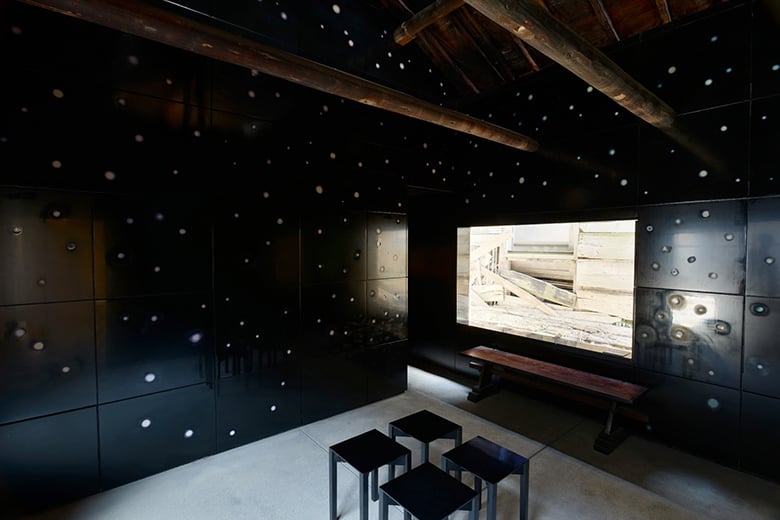
The black room, where circular patterns made up of layered colors evoke stars or falling snow (Maison de Urushi Project “Maison de Urushi” Photo: Kimito Takahashi)
Furukawa: The White Room, on the other hand, was Otani-sensei’s work.
Otani: I conceived of this room around the idea of “the enchantment of weaving” – referring to the wooden latticework which forms the base structure for certain kinds of lacquerware. Lacquered wooden tape was woven together to create the art wall, inspired by the serene evening scenery of Ogijima, which has been close to me since my childhood. Having moved away from the island, I have come to appreciate its charm all the more each time I return.
Every room in Maison de Urushi has also been coated in lacquer, from the floors and ceilings to the walls. This gives it a character that gracefully ages with exposure to sunlight beaming in from the windows and with the touches of visitors, giving it a rich character that only increases over time. I think it’s probably rare to see lacquerware tradition and modern architecture so seamlessly blended.
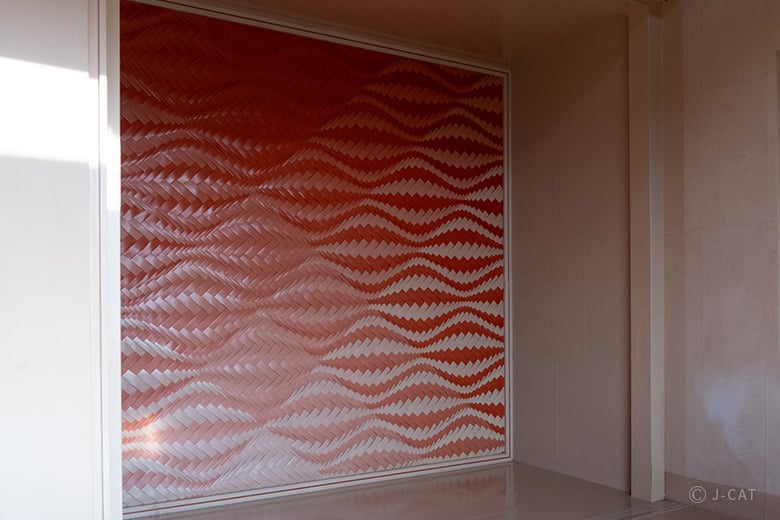
The white room, with an art wall that centers the beauty of woven patterns
The Stunning Beauty and Chromatic Variety of “Choshitsu” Lacquerware
Furukawa: Can you both say a little bit about your specialties, and their place in Kagawa lacquerware generally?
Kitaoka: The founder of Kagawa’s lacquerware traditions was Zokoku Tamakaji (1806-1869), who combined a deep study of lacquerware techniques from China and other parts of Asia with his own innovations to introduce an original new style of lacquerware. The three techniques that this tradition is most known for are called “kinma,” “zonsei,” and “choshitsu.”
Prior to that, lacquered art was typically only made using the maki-e technique of sprinkling gold, silver, or pigmented powder onto lacquer surfaces. Zokoku made a clean break from this orthodoxy and perfected his own original, highly artistic style.
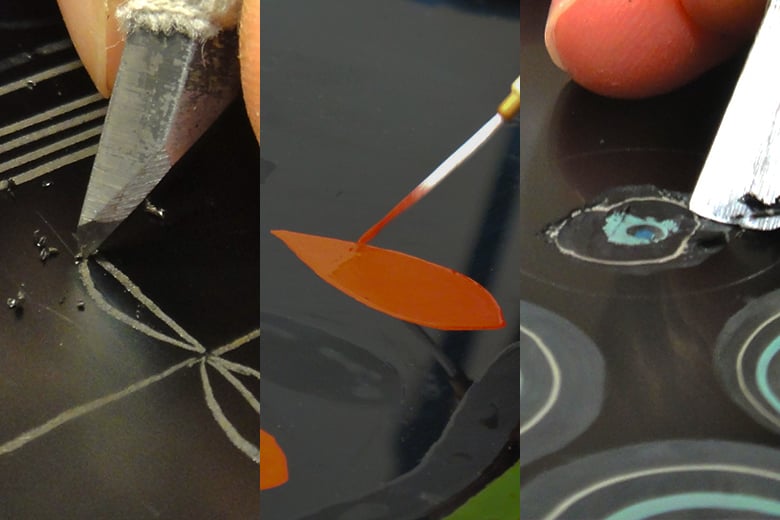
From left: the techniques of kinma, zonsei, and choshitsu
Kitaoka: A diverse use of color is another characteristic of Kagawa lacquerware. The choshitsu technique, which I have specialized in carrying on, involves painstaking applying dozens to hundreds of layers of different colored lacquers. It takes a hundred coats to achieve just a 3 millimeter layer.
In my work, I generally go with an average thickness of 6 to 7 millimeters, which takes at least 130 coats. Each coat takes a full day to apply – and that’s before you factor in the time it takes for each to set before you can continue – so just getting the desired thickness is no small task. Only after that are you ready to carve three-dimensional patterns into the lacquer, the depth and shape of which create unique and beautifully profound variations and shadows in the cutaway color layers.
Furukawa: It’s an incredibly long process. It can take months or years just to build up the layers, so it’s not uncommon for a single piece to be the work of several years.
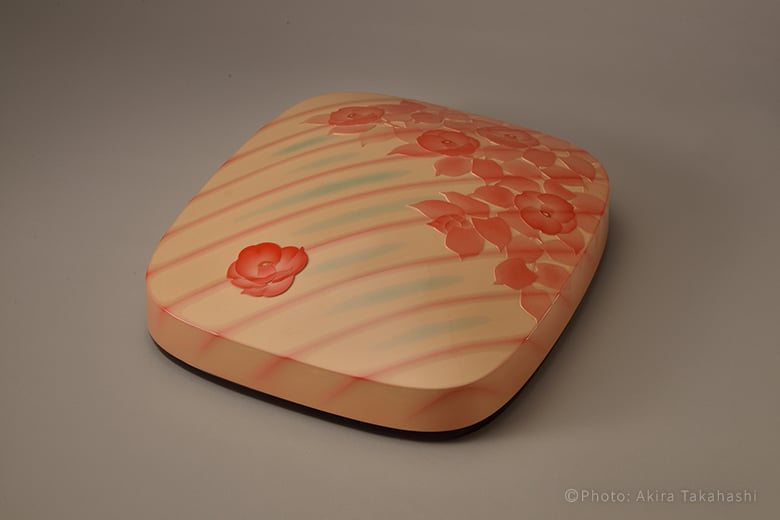
Soshunfu, or “Early Spring,” a choshitsu lacquered box by Shozo Kitaoka
Kinma and Zonsei: The Artisan’s Exquisite Craftsmanship Told in Intricate Patterns and Colors
Furukawa: The aesthetic three-dimensionality of choshitsu is part of its unique expressiveness. Otani-sensei, you specialize in the kinma technique, isn’t that right? Could you say a word about it?
Otani: Kinma lacquerware also involves multiple coats – 10 to 15 coats of lacquer on the vessel, in this case. After that, we carve the pattern with a tool called a kinma ken*, and fill in the carved areas with a different colored lacquer before sanding the whole piece to merge the layers. It’s a process of cyclical repetition – lacquering, carving, lacquering, and sanding.
(*Note: Ken literally means “sword.”)
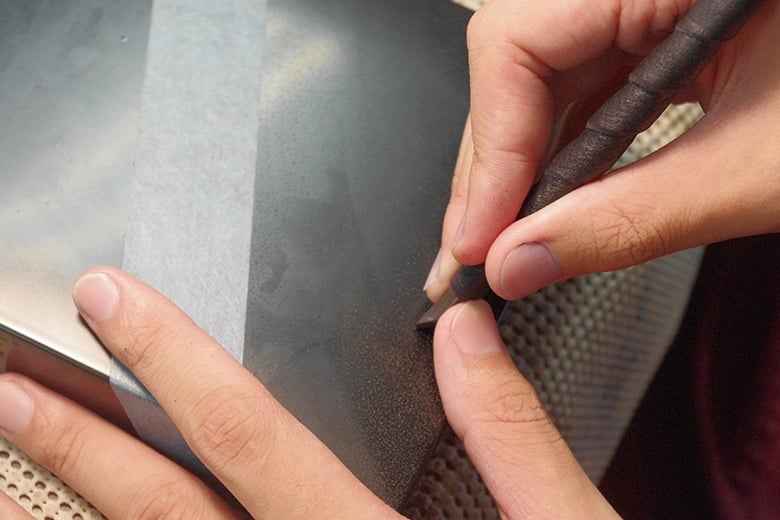
Tenbori, one element of the kinma technique
I use a technique of carving three or four lines per millimeter of surface, filling them using a brush, and then sanding. It creates unique designs with color in the carved sections. The technique is very expressive, and even with simple materials different artists can create very different forms.
Furukawa: Going back to the topic of the White Room, you’re also quite accomplished in techniques for creating the base structures for your lacquerware. Having watched your process of weaving bamboo for rantai lacquerware, I was surprised that it starts all the way at the beginning, with you yourself cutting the bamboo strips. This approach, doing everything from scratch instead of dividing the labor, seems like another peculiarity of Kagawa’s lacquerware.
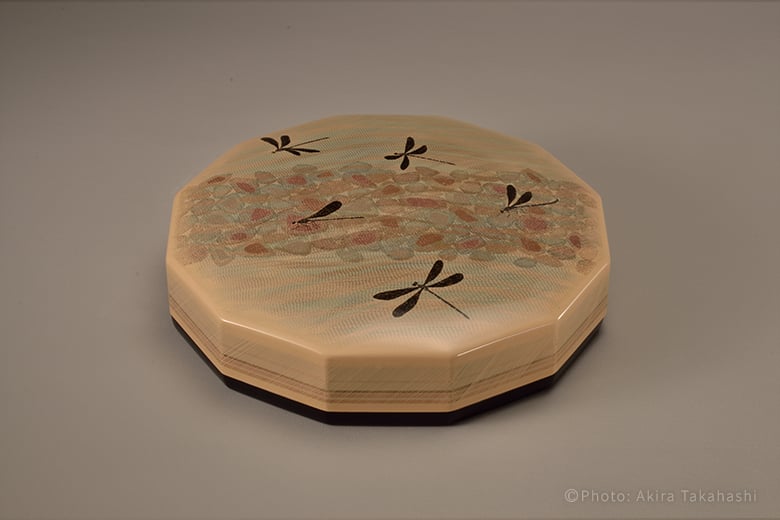
Kawase (“Rapids”), a rantai kinma bamboo and carved lacquer confectionery box by Hayato Otani
Otani: There’s another distinctive Kagawa lacquerware technique, and that’s called Zonsei. Zonsei was introduced from China over five centuries ago, and it involves brush-painting colored lacquer onto the surface of a vessel over the course of multiple coats to create patterns. Colored images are drawn over a black, red, or yellow lacquered surface, and then the outline and main elements of it are engraved with lines using the ken. Fine details are finished using the kebori technique*. Zokoku himself is said to have popularized this technique in Kagawa.
(*Note: “Kebori” literally means (“hair carving,” referring to the thinness of the lines)
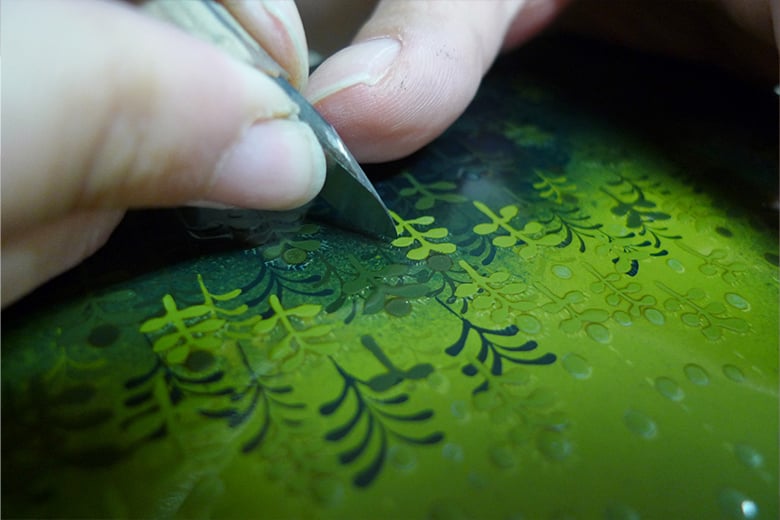
Zonsei in progress work, using a special carving knife known as a ken (“sword” to carve patterns one millimeter at a time
The Research Institute Behind 70 Years of Kagawa Lacquerware Development
Furukawa: Across Japan and beyond, when people hear “lacquerware” they often think of Wajima in Ishikawa or Aizu in Fukushima. But Kagawa lacquerware is a national treasure in its own right on par with these in technique and artistic achievement alike. I wanted to hear from both of you about the history and current activities of the Kagawa Urushi Lacquerware Institute, which was founded to connect Kagawa’s lacquer traditions with future generations.
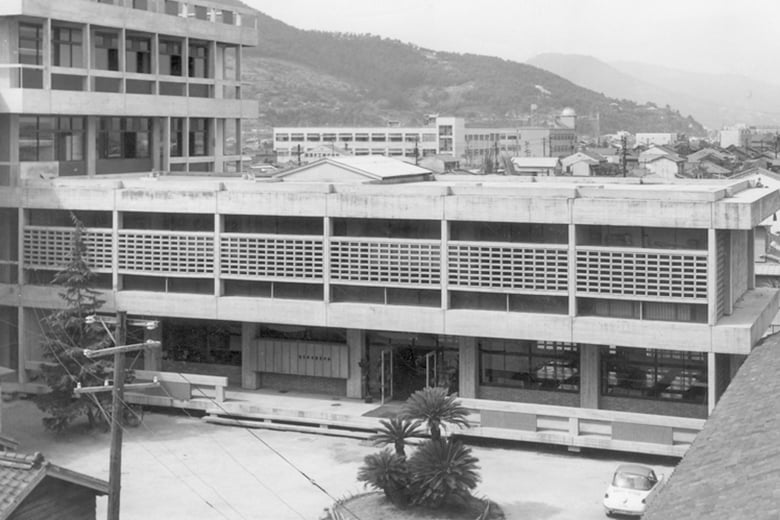
The Kagawa Urushi Lacquerware Institute, newly constructed in 1960
Kitaoka: Yes, the institute was founded in 1954. It was the first such facility in the country devoted to preserving the techniques of Kagawa’s traditional handicrafts, and includes kinma, zonsei, and choshitsu in its scope. It also focuses on training apprentices and developing their skills.
Students today come from all over Japan, many after graduating from art universities aspiring to reach the next level. With the techniques they acquire here, most return to their respective home regions and continue their artistic activities there, showing their work at exhibitions and galleries. And more than just technique, the connections between alumni of the institute often live on long after graduation, creating an ever-expanding community.
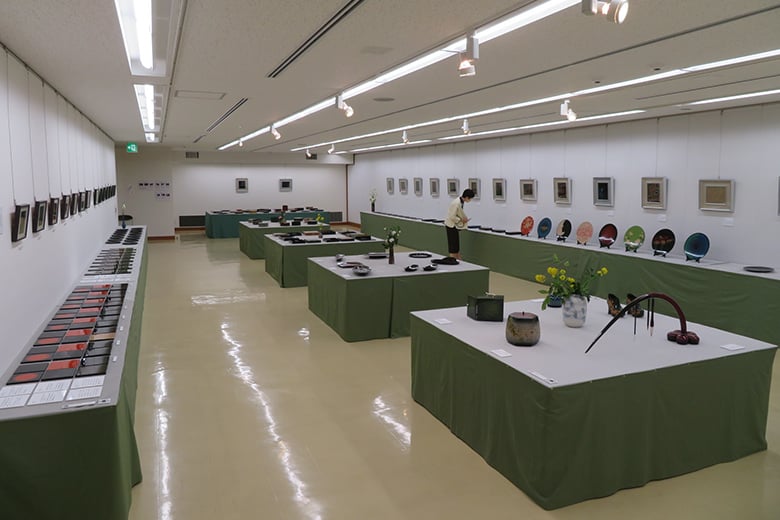
A graduate exhibition is held every March, showcasing works by student and faculty researchers over the course of that year
Otani: Kagawa Prefecture does not produce the raw materials for lacquer crafts locally, but its lacquerware traditions and techniques have reached the present day largely intact from their historical roots. At this point we can say this is entirely thanks to the efforts of the institute, which honors Kagawa lacquerware as a prized local tradition.
In collaboration with the prefectural government, the institute also organizes collaborations between its alumni and world-renowned brands to develop unique pieces. Many of these works have seen full release, growing brand prestige in the form of such items as tea sets for leading Danish ceramics brand Royal Copenhagen, or chairs for Danish furniture brand Fritz Hansen.
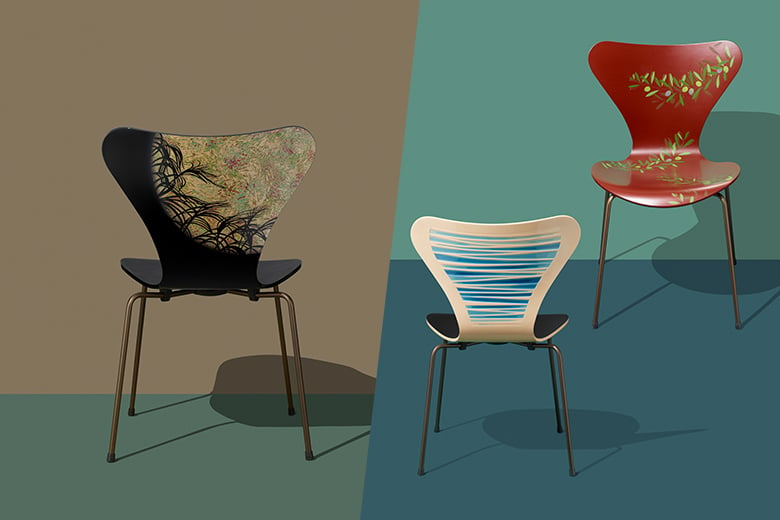
A collaborative work between Fritz Hansen and a Kagawa lacquer artist
Striving to Expand the Reach and Possibility of Art
Furukawa: Both of you are actively working Kagawa lacquerware artisans. What would you say are the challenges facing the industry?
Otani: The first one is the need to expand the recognition of Kagawa lacquerware. These are largely artistic pieces rather than everyday-use utensils, which already makes it rather more difficult for the artists making them to sustainably earn a living. But I think that by raising awareness of the profound depth and beauty of these pieces across Japan and beyond, we can elevate the industry as a whole and help the people who want fine artistic creations like these to find them.
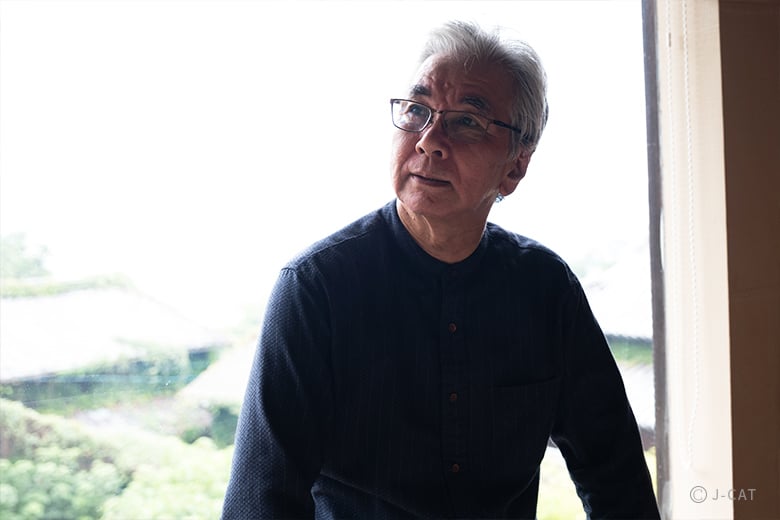
“My hope is that Maison de Urushi will be a place where people can think deeply about lacquer, its craft, and its connections to daily life,” says Otani
Kitaoka: With the support of the prefectural government, I feel that it’s essential to take Kagawa lacquerware from traditional craft to full-on local industry. I think an artist’s greatest satisfaction comes from creating work that is unique to them. Even now in my late 70s, that’s still what drives me, and even as my health and energy are in decline, I still push to create works that are authentic and personal to me, that will live on past me.
It is certainly a lot of pressure to put on yourself, but I think that that’s what artisanry is. We’re still barely at the midpoint of our challenge here. I hope that the next generation of Kagawa lacquer artists will be even more driven and aggressive than I have been.
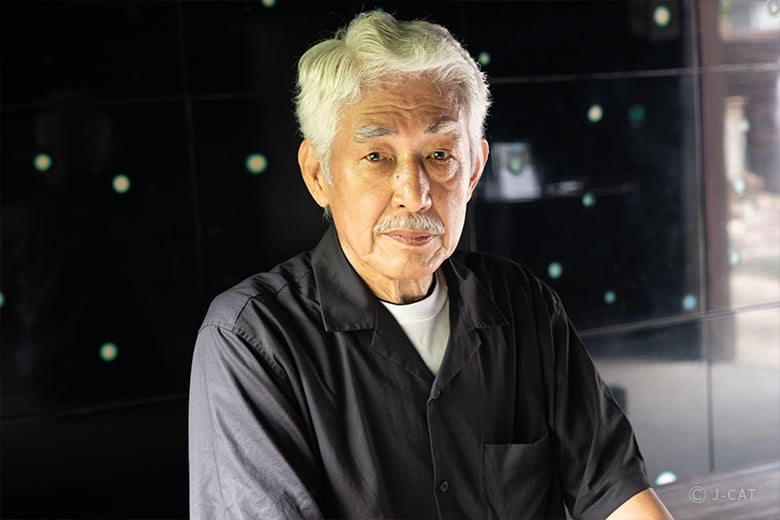
Grinning spryly, Kitaoka says he is still driven by simple personal passion for his own creations
Furukawa: I myself served as director of the Kagawa Lacquerware Research Institute, so the concerns that you two share resonate strongly with me – even the sense of urgency. The declining number of apprentices to succeed the current generation is a universal problem across the traditional crafts, but at the same time we have students coming to take up these crafts all the way from China and Taiwan.
It’s hard not to be proud of the fact that the culture of lacquerware originated in the great Asian power of China, but it was Japan that preserved and passed them down to the present day to be learned anew. I think these international exchanges are a great opportunity to showcase our “Japanese spirit” of cherishing ancient heritage. That’s the mentality I really want to impart to future generations.
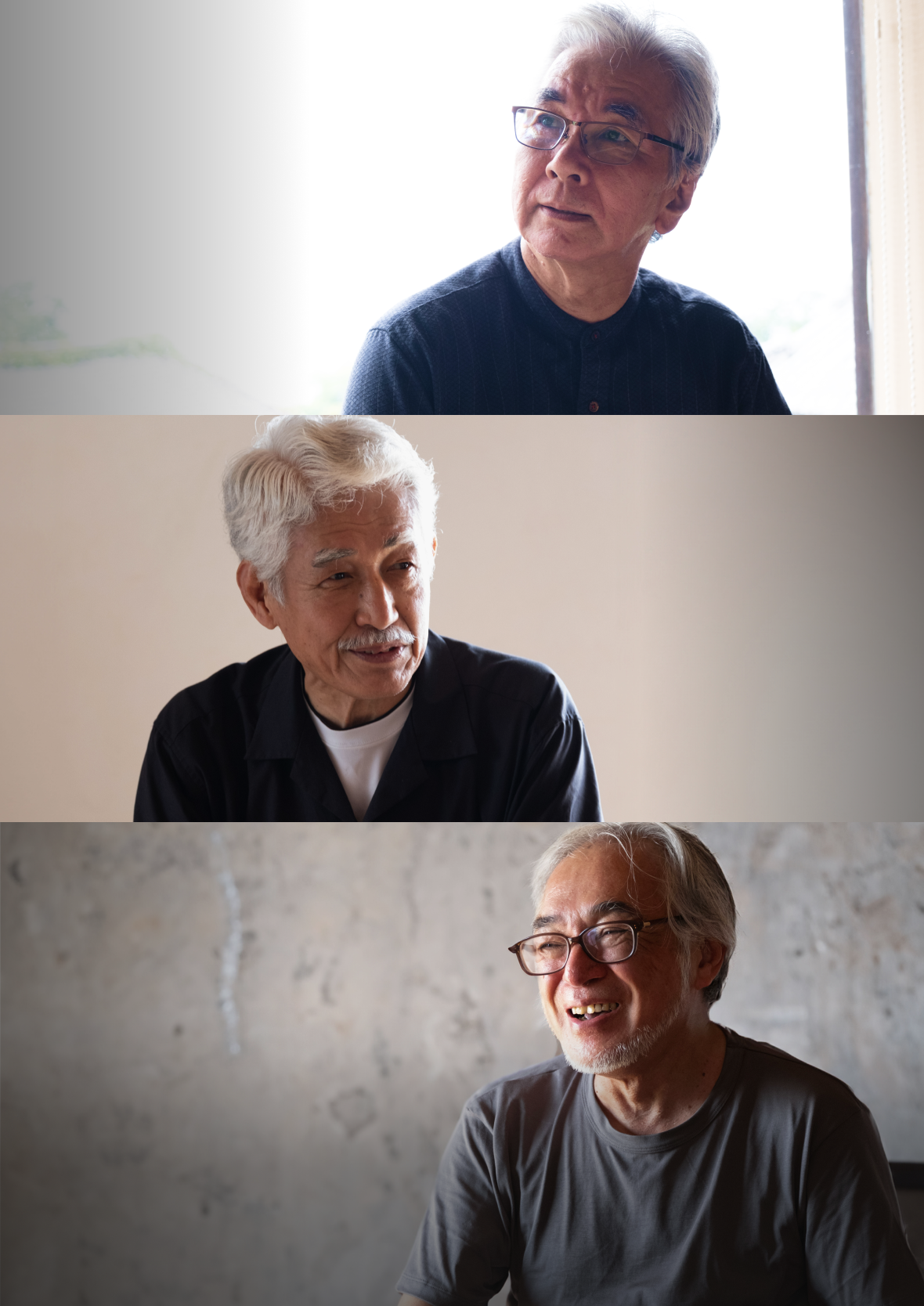
We held this roundtable panel discussion with luminaries of Kagawa lacquerware backdropped by the rich natural scenery of Ogijima Island
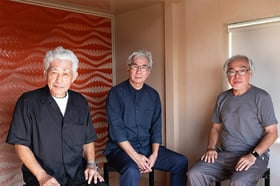
Shozo Kitaoka / Hayato Otani / Kyoji Furukawa / Maison de Urushi
Shozo Kitaoka, Lacquer Artist and Kagawa Prefecture Intangible Cultural Property Holder
Born in Takamatsu City in 1949, Kitaoka studied lacquer craft under Living National Treasure Kodo Otomaru (1898–1997) and is today recognized as one of the foremost experts in the choshitsu carved lacquer technique. He has received both national and international accolades, including the Minister's Award from MEXT (the Ministry of Education, Culture, Sports, Science, and Technology) at the Japan Traditional Lacquerware Exhibition. Even as he works to train the next generation of lacquerware artists at the Kagawa Urushi Lacquerware Institute, he continues to passionately create his own works.
Hayato Otani, Lacquer Artist and Living National Treasure (Holder of the Kinma Technique, an Important Intangible Cultural Property)
Born in Takamatsu in 1954, Otani studied under Living National Treasure Hitoshi Ota (1931-2019), going all the way back to primary school when the latter was assigned to Ogijima schools to introduce students to the charms of lacquerware. In 2009, Otani was awarded the Medal with Purple Ribbon, an honor that recognizes individuals who have made distinguished contributions to the nation and its people, and who have achieved outstanding accomplishments in various fields. In 2020, Otani was also recognized as a holder of the Important Intangible Cultural Property of the kinma technique, earning him recognition as a Living National Treasure.
Kyoji Furukawa, Senior Advisor at Kagawa Urushi Lacquerware Institute
A former civil servant in the Kagawa Prefectural Government, Furukawa is a pioneer in promoting Japan’s regional culture abroad. He has also served in many key positions in the fields of tourism, culture, and international affairs: head of the 2010 Setouchi Triennale Committee Secretariat, director of the Tourism Promotion Division, deputy director of the Bureau of Culture and Arts, and director of the Kagawa Urushi Lacquerware Institute. Fluent in English, Furukawa has played a key role in promoting Kagawa lacquerware overseas. In addition to his expertise in lacquerware, he is well versed in inbound tourism and art festival management.
Maison de Urushi
(Interview Venue)
Registered as both a venue and installation for the Setouchi Triennale art festival, this approximately century-and-a-half-old wooden house has been reborn thanks to renovations by leading artists in Kagawa’s lacquerware community, including Hayato Otani and Shozo Kitaoka. Open to the public during the festival, it also hosts workshops where visitors can practice traditional techniques such as lacquer carving, as well as exhibiting works by emerging artists. It also stocks a wide range of lacquerware for everyday use.
Maison de Urushi
1747 Ogicho, Takamatsu City, Kagawa Prefecture, 760-0091