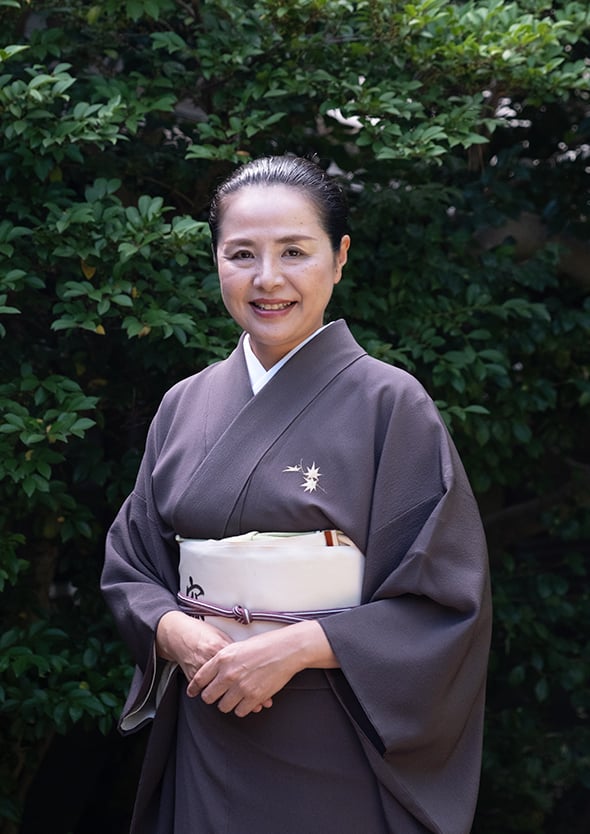
Ryokan Kurashiki – A Storehouse of Local Memory
Right in the heart of Kurashiki’s most scenic area, Ryokan Kurashiki is a historic Edo Period rice and sugar storehouse renovated into a luxurious traditional inn by its founder and previous proprietress, according to the wishes of local dignitary Soichiro Ohara (1909-1968), who had dreamt of a tranquil local ryokan that would attract travelers from all over the world. The historic traditional structure made it a prime target for local townscape preservation efforts, and in the past this same building was beloved by such cultural figures as hanga artist Shiko Munakata (1903-1975) and craft dyer Keisuke Serizawa (1895-1984).
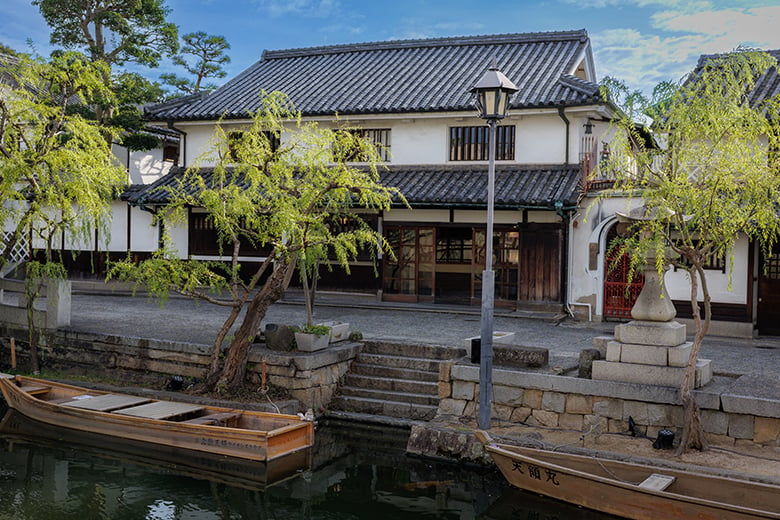
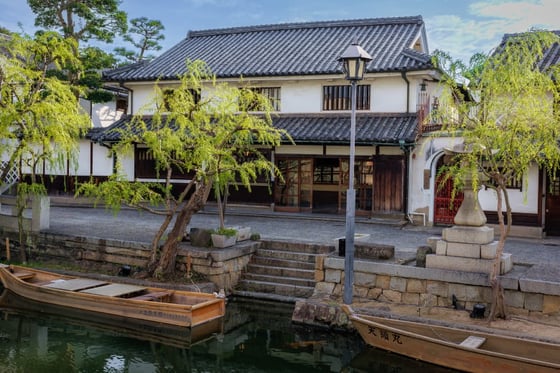
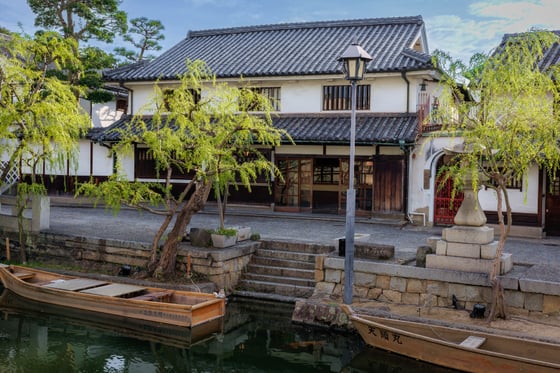
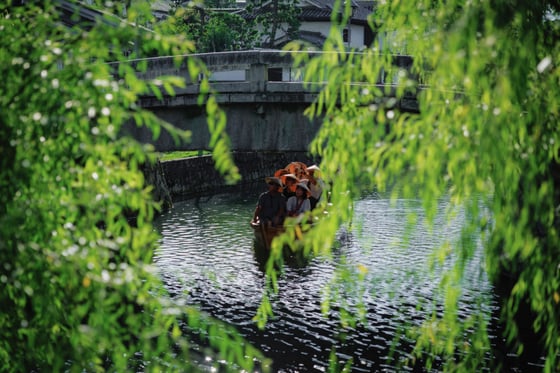
Ryokan Kurashiki sits on the Kurashiki River, once a bustling waterway of commercial shipping
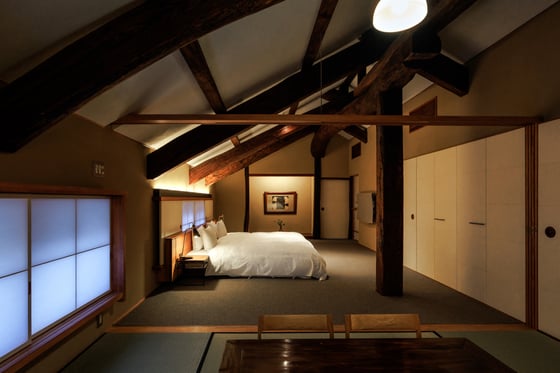
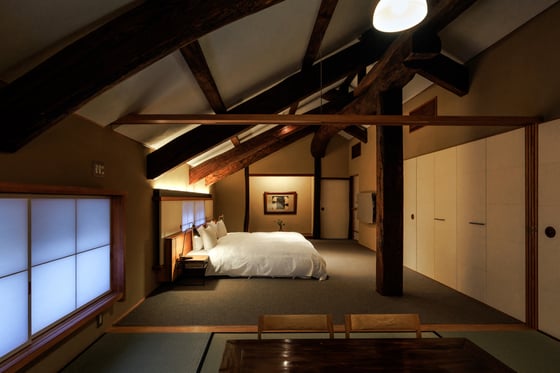
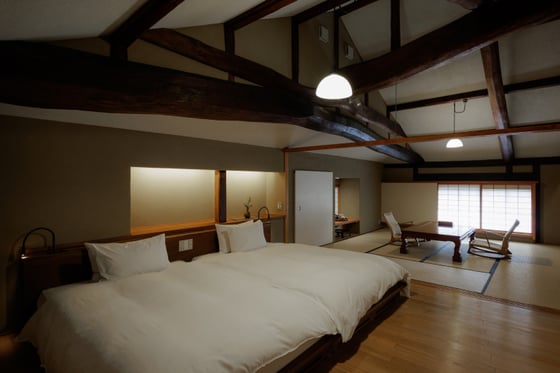
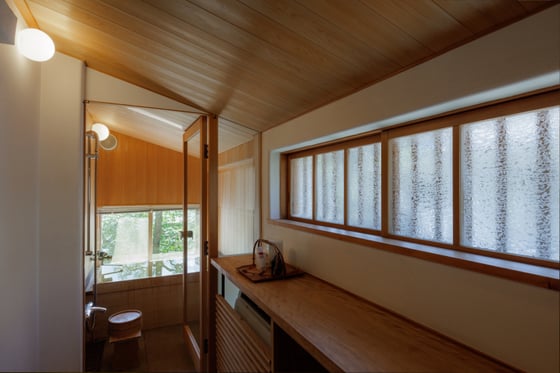
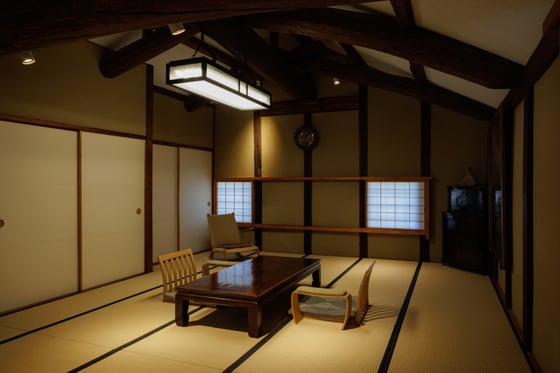
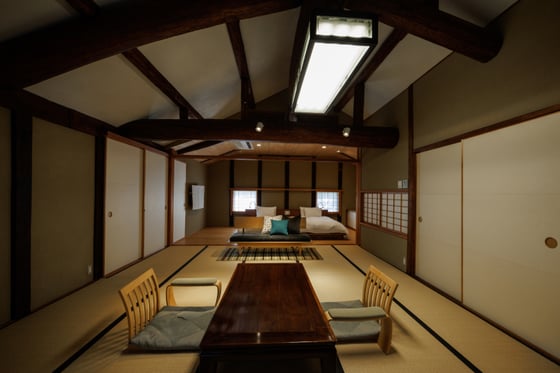
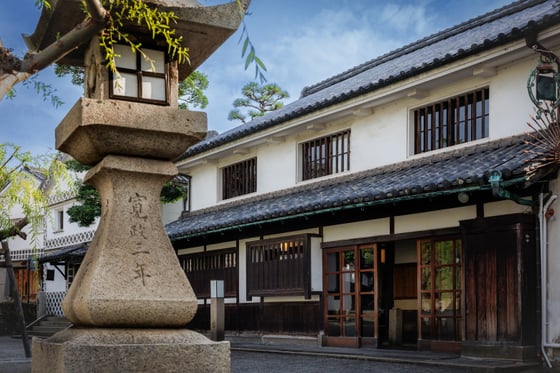
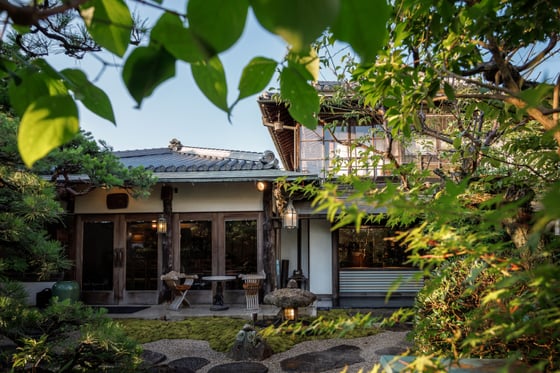
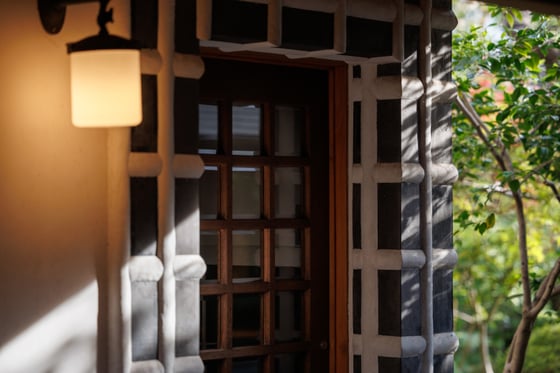
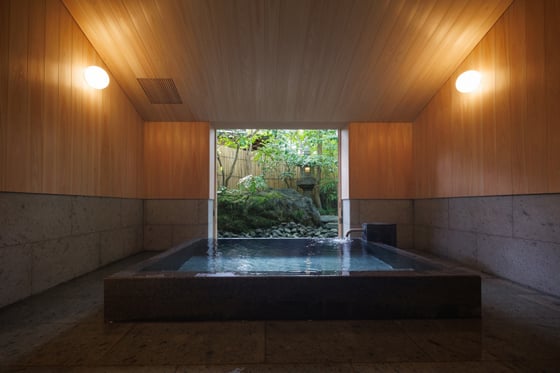
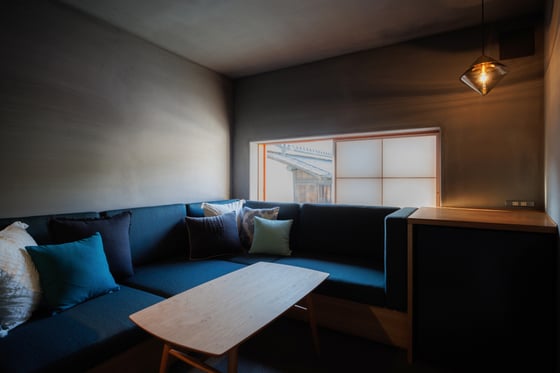
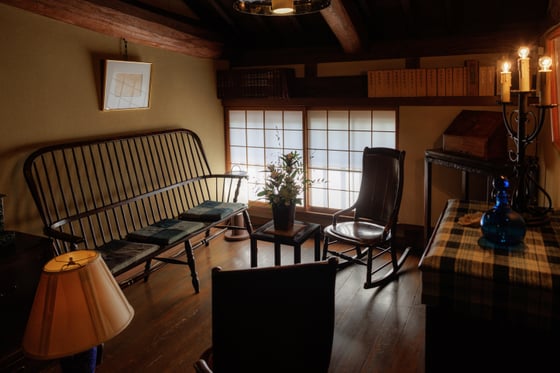
The building exterior retains the iconic white walls, lattice windows, and other architectural design elements of the quarter, as well as the interior pillars and beams that undergird this historical craftsmanship. Inside, visitors are greeted by an atmosphere defined by the fragrance of wood and earthen walls, and the soft glow of lantern light. The high ceilings and deep rooms of this former storehouse allow for a spacious coziness.
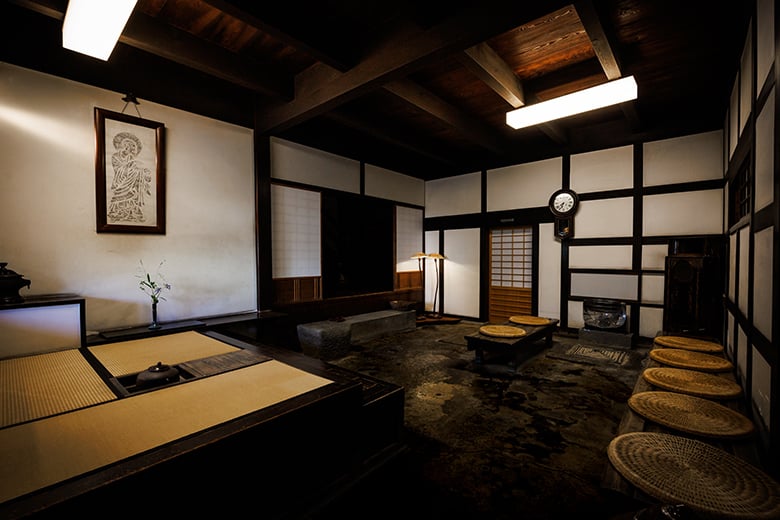
Just inside the entrance is a cozy, earthen-floored spot for relaxation called the ro-no-ma, or “hearth-space”
Despite this architectural beauty and historic value, institutions are nothing without people. As the foundational proprietress prepared to retire, the lack of a successor threatened the survival of the ryokan. The real estate company Anabuki Kosan stepped in to safeguard the property, agreeing to manage it in accordance with the proprietress’s vision, melding this tradition with modern comfort. In this new phase of the inn’s life, longtime employee Ritsuko Nakamura was chosen to helm the inn.
Rising to the Challenge of Carrying on a Legacy
Ritsuko Nakamura assumed responsibility for the ryokan in 2005, after a storied career in sales and various other company departments. Originally from Kagawa Prefecture, Nakamura had seen Ryokan Kurashiki as a child, and aspired to one day stay in this icon of the Kurashiki Bikan Historical Quarter. She never imagined she’d be managing the property. But she brought her natural cheerfulness and positive spirit to the task, breathing new life into the inn.
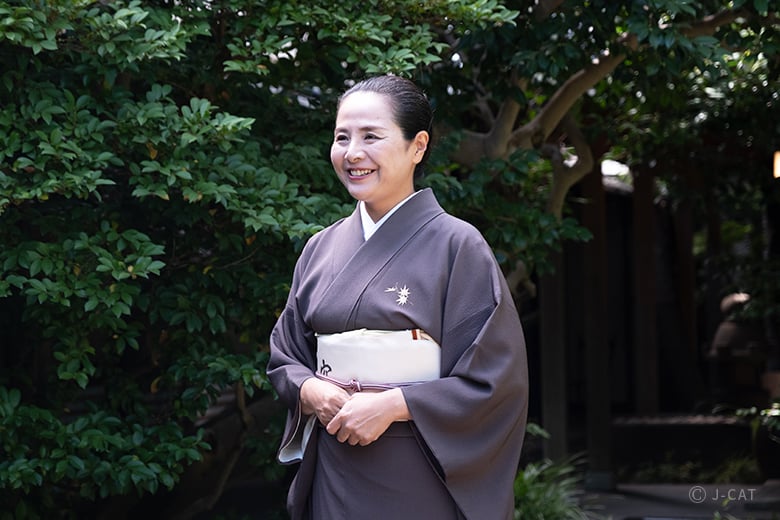
Second-generation proprietress Nakamura’s friendly, cheerful smile belies the hard work she has put into making Ryokan Kurashiki what it is today
“I spent my first few years in Kurashiki just getting to know the area,” says Nakamura. “I started with training sessions at other old ryokans, trying to understand the legacy and mindset of my predecessor. I was honestly taken aback by the scale of the facility and the regional peculiarities, and eventually had to accept that my predecessor was a unique woman who couldn’t really be replaced.” She recalls author Junichi Watanabe (1933-2014), who visited the inn, pulling her out of her slump with a single thought: “Even longstanding local fixtures can’t survive forever just repeating the same thing over and over.”
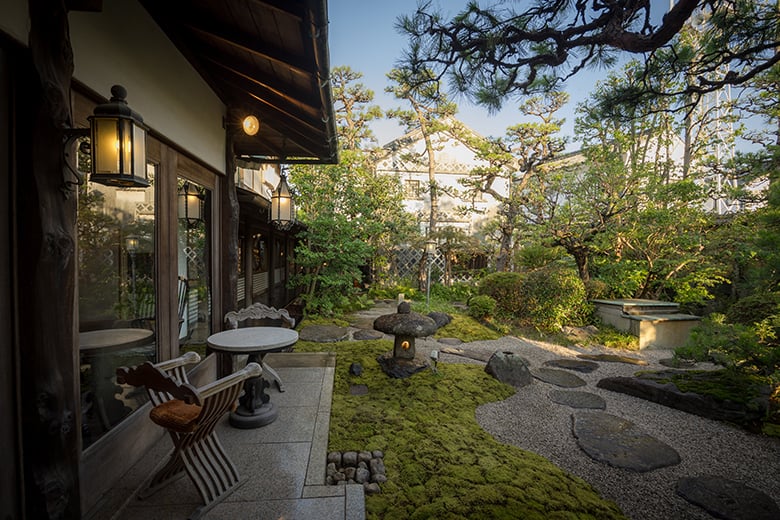
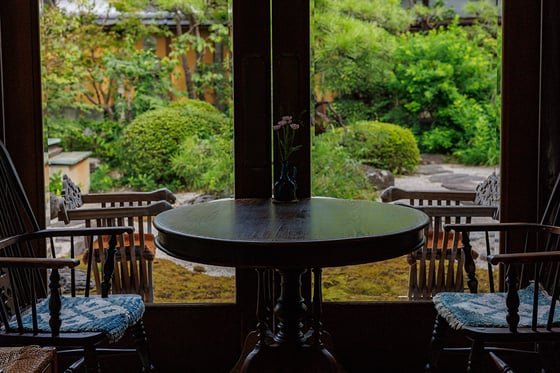
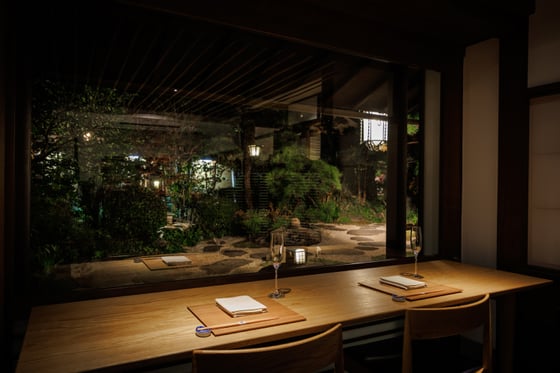
Ryokan Kurashiki’s Edo Period heritage garden, Yozen no Niwa, or “Sun Garden,” soothes weary travelers with an aura that changes with the season and time of day
“I had a lot of doubt and insecurity about taking over the inn as an outsider, rather than keeping it a family business,” Nakamura continues, “but it felt as though Watanabe was telling me to just focus on doing what I thought was good for the guests, and good for the inn.” That was the advice that liberated her from having to live under the pressure of constant comparisons to her predecessor and to other inns, and opened up a direction that was uniquely her and distinct from the approach of her predecessor, if still honoring the same spirit of warmly welcoming guests, eschewing performative pretense, and connecting with the hearts of travelers on their own terms.
A Lodging with the Comfort and Security of Home
Nakamura describes the aim of hospitality as, “gently enveloping our guests’ day-to-day with a fluffy warmth during their travels.” The ryokan’s time-honored guiding principle – being a place where guests can “slip out of their shoes into serenity” – is not about a journey of glamorous photo-ops, but rather about providing a place for travelers to take a break and relax. “People around here are fond of the word sumitsugu,” (meaning, “to carry on living in and caring for an inherited home,”) “and we hope to make our guests feel the joy of it too, so that Kurashiki becomes a place they will want to return to.”
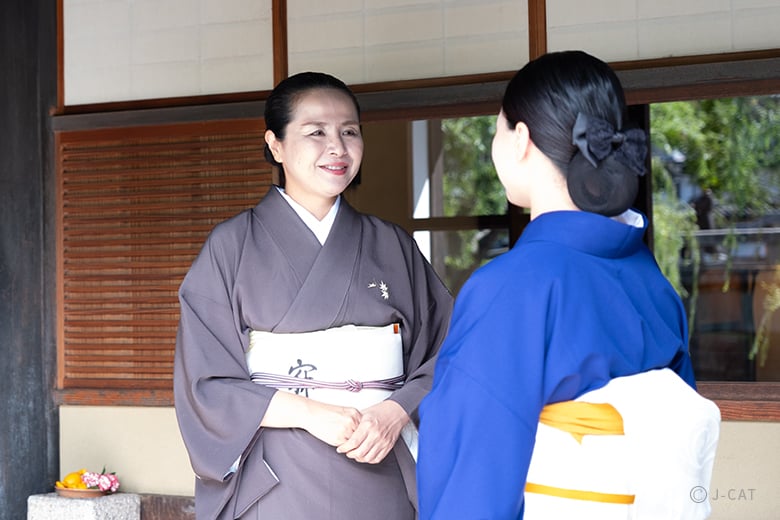
Nakamura and the rest of the team at Ryokan Kurashiki have long nurtured and embraced a naturalistic, welcoming hospitality at the inn
To that end, Nakamura strives for a naturalistic humanity in her customer service. With foreign tourism in Japan on the rise, she imagines those visitors to Kurashiki who, caught up in the excitement and anxieties of traveling in a foreign country and visiting new places, just wish they had a local friend. “We prioritize really being there for our guests.”
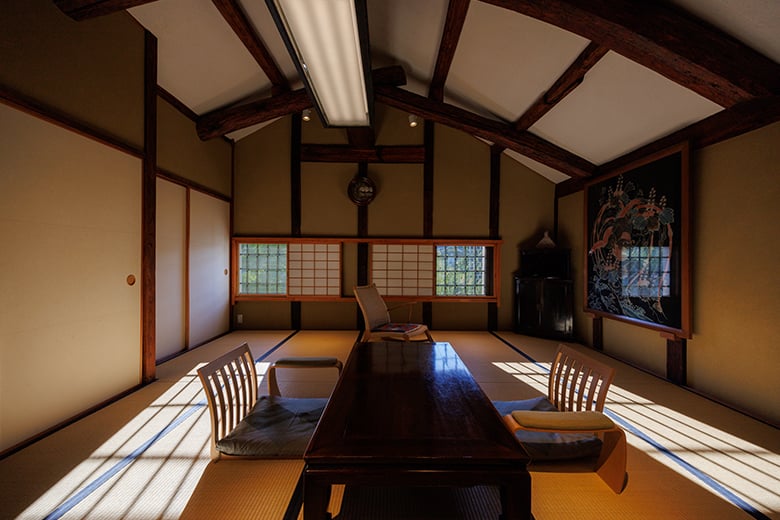
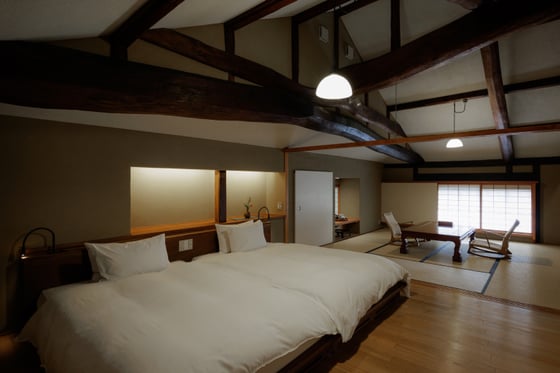
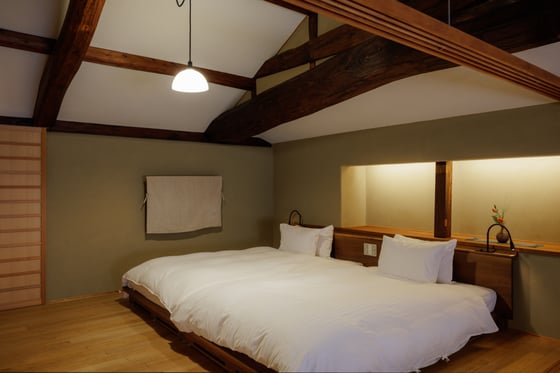
Ryokan Kurashiki offers a homey warmth, perfect for guests from overseas who want to try a traditional accommodation – or even sleep on a futon
This spirit of new friendship underlies Nakamura’s whole approach to hosting international guests. If requested, she shows them around local sake breweries and folk art spots, making restaurant reservations for longer-term guests. She welcomes travelers not just to her ryokan, but to the whole of Kurashiki, creating an enveloping sense of security that extends the feeling of connection to the broader region, as well as its culture, handicrafts, and folk art.
The Kurashiki Dyeing and Weaving Institute – Showcasing the Beauty Behind the Everyday
The Kurashiki Dyeing and Weaving Institute near the inn is one of the facilities that Nakamura likes to take her guests to. “Most of the textiles we use in the inn were made here,” says Nakamura. This includes the seat cushions on the inn’s chairs, providing splashes of color with their simple designs, as well as the woven coasters, table runners, and other textiles that decorate the inn – which many guests have asked where to buy for themselves.
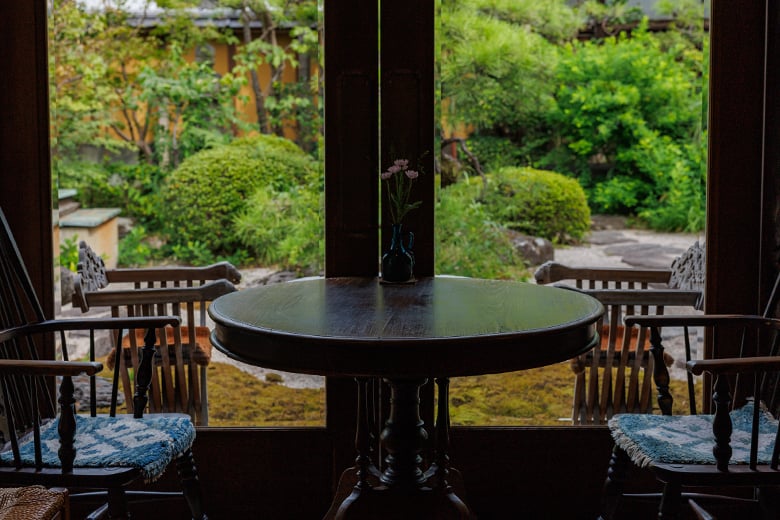
Even the chair-mats display a characteristic hand-dyed Kurashiki textile, made with a technique known as “Kurashiki knotting”
The Kurashiki Dyeing and Weaving Institute draws heavily on the traditions of the Mingei (folk art) movement, working with artisans who carry on the spirit of the institute’s founder Kichinosuke Tonomura (1898-1993) as well as the techniques of hand-spinning, hand-weaving, and honzome dyeing. The current head Rieko Ishigami is a big fan of Nakamura’s efforts: “She is always thinking about human connection, and she is careful and attentive in explaining Kurashiki’s handicrafts to foreign visitors.”
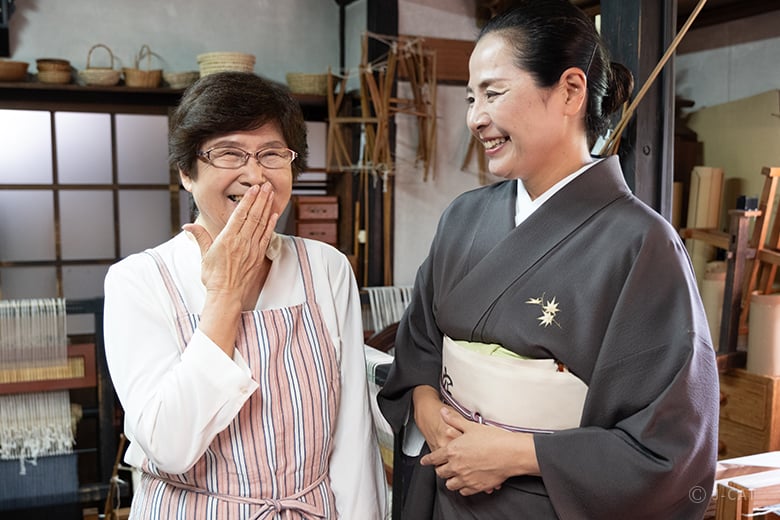
Kurashiki Dyeing and Weaving Institute head Ishigami-san (left) shares a moment with Nakamura, who is eagerly awaiting the new craft releases
“When these handicrafts find their home at the ryokan, they become part of ‘the beauty of the everyday,’” says Nakamura. This is a unique part of her vision for the inn’s hospitality, and a philosophy reflected in its 2023-2024 renovation: that the beauty of craft goods is best experienced by actually using them.
Seeing the Next Century in These Walls
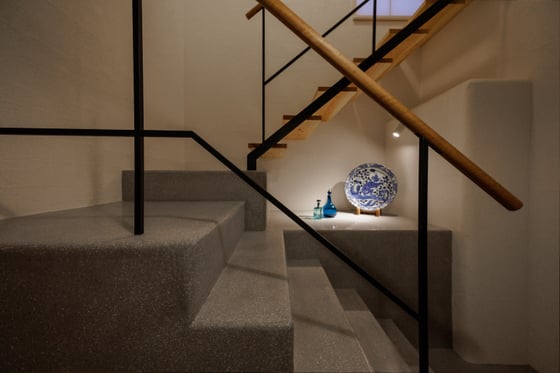
Craft ingenuity permeates the ryokan’s furnishings, staying with travelers and making them want to return. “In the 2005 renovation after I first came on board, I placed a little too much emphasis on convenience – which resulted in a space that was just not quite comforting,” says Nakamura. In the more recent renovation, she brought in an architect who specializes in the restoration of historic cultural properties for the express purpose of prioritizing “comfort” and reevaluating the use of natural materials. This redesign has striven to tuck away any unavoidable artificial and synthetic elements out of sight, while still reinforcing the structure and installing modern conveniences like underfloor heating.
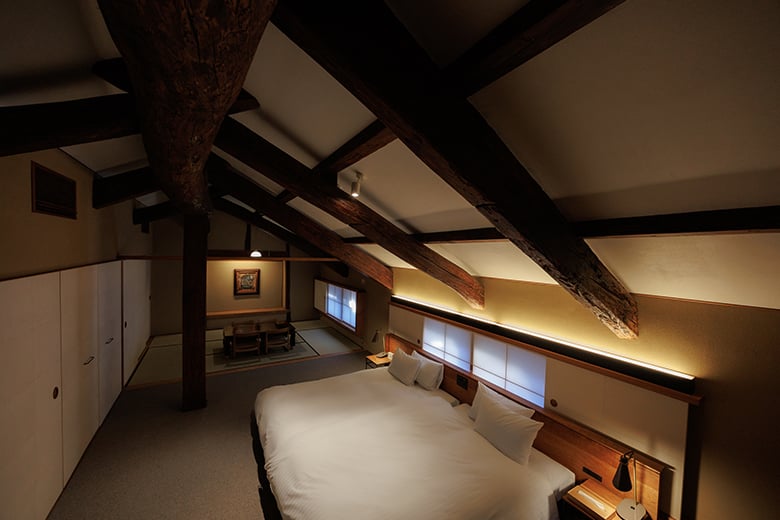
Pillars and beams are exposed to highlight the historicity of the structure
“Things carefully crafted by hand age with character,” says Nakamura, affectionately putting her hand to a copper door handle that dates back to the inn’s founding. Copper tarnishes without the polish of touch, but the endless contact with human hands in a door handle’s life gives it a beautiful sheen. “We approached this renovation like a conversation with the building,” Nakamura adds, “taking advantage of its natural state and carefully layering on top of that. We hope to connect its original beauty to the future, fifty or a hundred years from now.” For Nakamura, this respectful and tasteful approach to renovating and updating the structure is an expression of gratitude to her adopted home of Kurashiki, and of the purpose in her heart.
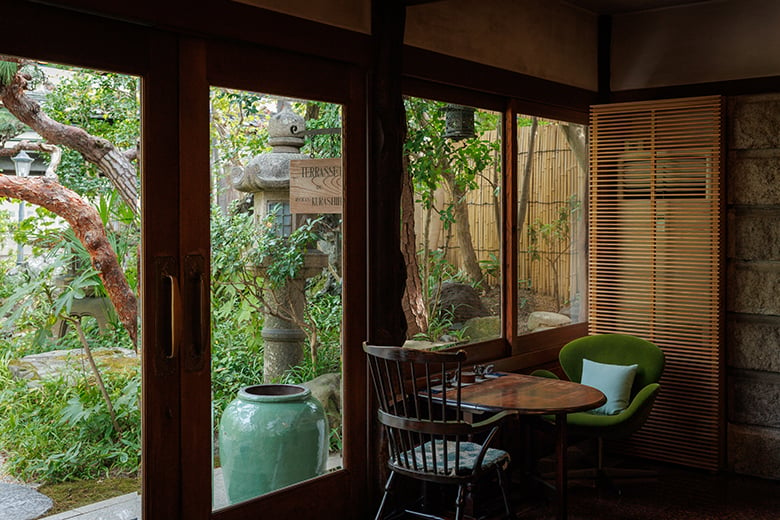
The extra sheen on the left-side door handle reveals its age and history of frequent use, compared to its lesser-touched twin
A Stay Like Living Here, at Ryokan Kurashiki
Nakamura also sees her days as inn proprietress as a way to pass the torch to the next generation. Preserving this historic structure and imbuing it with the human sentiment of its guests is about more than a building. It’s about walking hand in hand into the future together with the whole of Kurashiki. “If this inn can draw more visitors to Kurashiki,” muses Nakamura, “then I will have managed to give back to the town.”
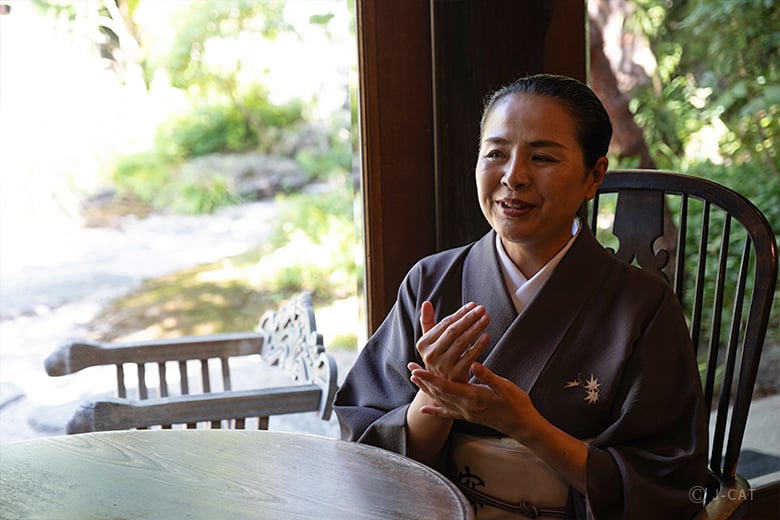
Nakamura is enthusiastic about what she sees as her duty to “hand off the inn in good condition to its next generation”
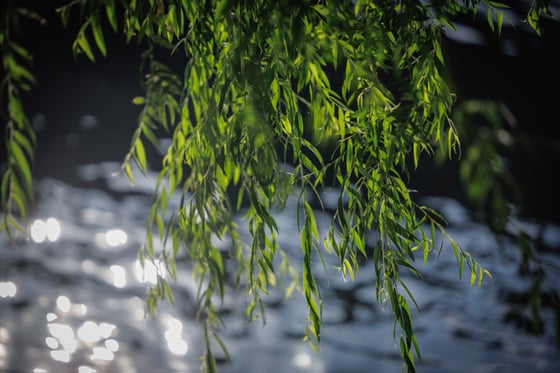
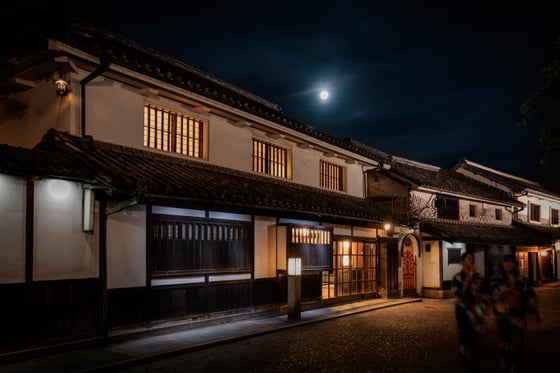
As the night lights twinkle on in the inn, and the white walls reflect the shadows of swaying willow trees in the lamp light, the whole of Kurashiki is enveloped in serene beauty. Locals walk dogs in the evenings, artisans call out as they open their shops in the morning: this is not a place where tourists flock to avoid life, but to feel its true fullness. That’s why an overnight stay here is so essential. Tap into the pulse of the historic quarter, the beauty of the everyday, and the spirit of natural hospitality with a stay at Ryokan Kurashiki.
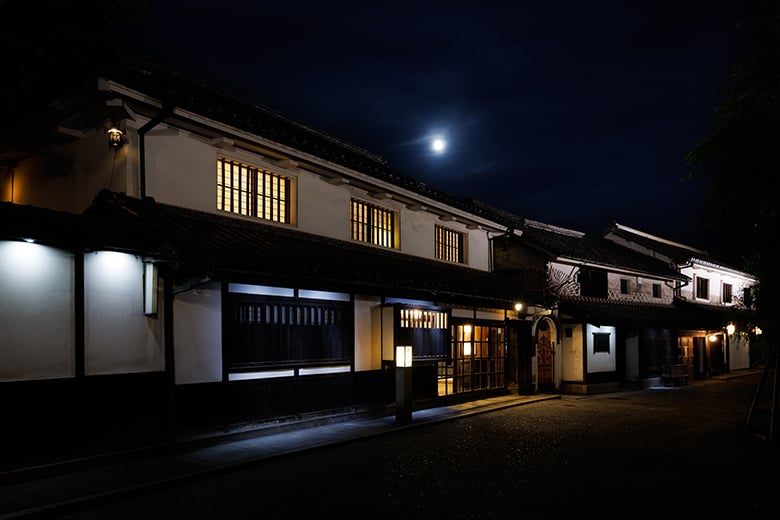
The tranquil night ambience of the quarter, dappled with soft light
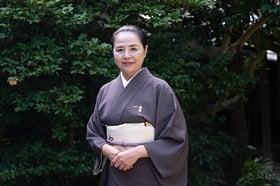
Ritsuko Nakamura, Ryokan Kurashiki Proprietress
Nakamura assumed the mantle of Ryokan Kurashiki in the scenic Kurashiki Bikan Historical Quarter from its first-generation proprietress in 2005. Under her leadership, this historic inn – renovated from an Edo Period sugar storehouse – has continued to welcome travelers from all over the world as a place where guests can “slip out of their shoes into serenity.” Nakamura seeks to pass on “the beauty of life” that has been nurtured here in Kurashiki as much to her guests as to the next generation, a passion that drives her in her efforts to preserve the architecture of the inn and nurture local culture.