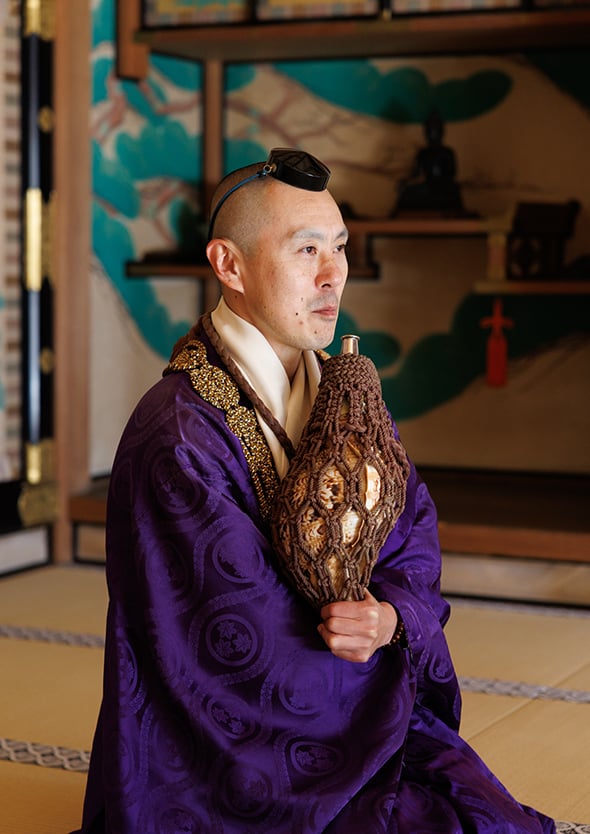
The History of Faith at Takao-san Yakuo-in: 13 Centuries in the Making
As Kamimura tells it, the histories of Mount Takao and Yakuo-in are deeply intertwined.
“The temple’s official name is Takao-san Yakuo-in Yuki-ji,” he explains (Takao-san here in the temple name literally means “Mount Takao”). “The temple is said to have been founded in the 16th year of Tenpyo (744), in the mid-Nara Period by the high priest Gyoki under decree by Emperor Shomu. The Yakuo-in part of the name alludes to the fact that the temple originally enshrined Yakushi Nyorai as its principal image of worship.”* Since these origins, the temple has been beloved by its faithful for 13 centuries and counting.
*Yakushi Nyorai is the Buddha of healing, recovery, and the medicinal arts – with Yakushi literally translating to “Healer.” Yakuo-in literally translates to “Temple of the Lord of Healing” – an epithet for this Buddha.
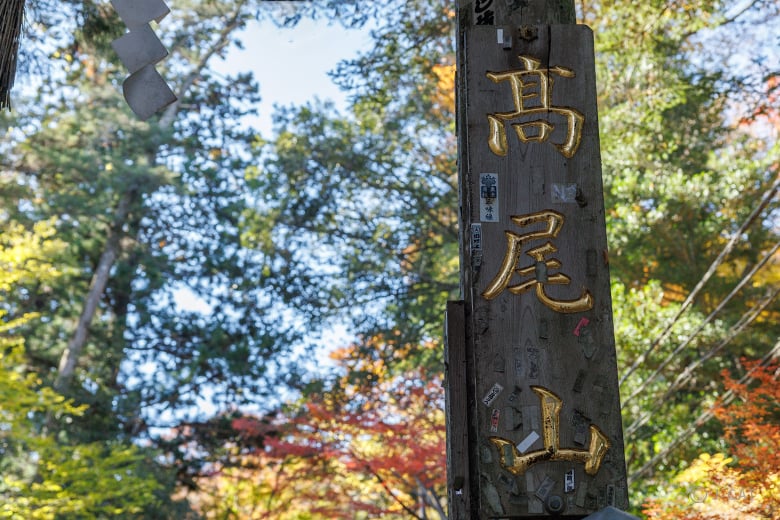
Yakuo-in has long safeguarded the nature of its home, Mount Takao
In the 14th century, the famed monk Shungen Daitoku visited Yakuo-in from a Kyoto temple known as Daigo-ji. While here, he performed a goma fire ritual and undertook reconstructions that enshrined a new principal figure of worship – the deity Izuna Daigongen. Since then, worshippers at the temple have come to offer prayers to both this Shinto god and the Buddha of healing. Per Kamimura, Mount Takao is a place of syncretic traditions, where “Shinto gods and Buddhas are treated interchangeably.”
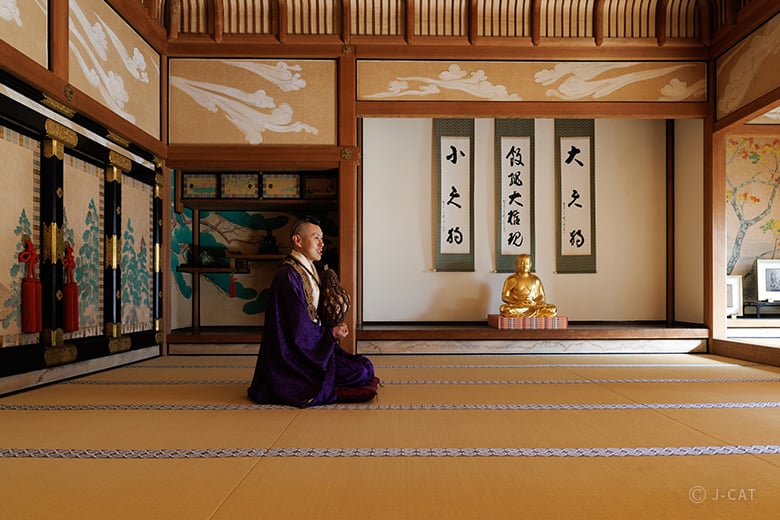
Kamimura offers a sermon in the august shoin (study) of the temple, usually closed to the public
Numerous statues of tengu (mythical yokai creatures of Japanese folklore often depicted as goblin-like humanoid figures with both birdlike characteristics, and either beaks or dramatically oversized noses) catch the eyes of temple visitors all around its grounds. “There are so many tengu statues that people sometimes think the temple is devoted to them. But actually they are attendants of the Shinto deity Izuna Daigongen, and they watch over the people on his behalf.”
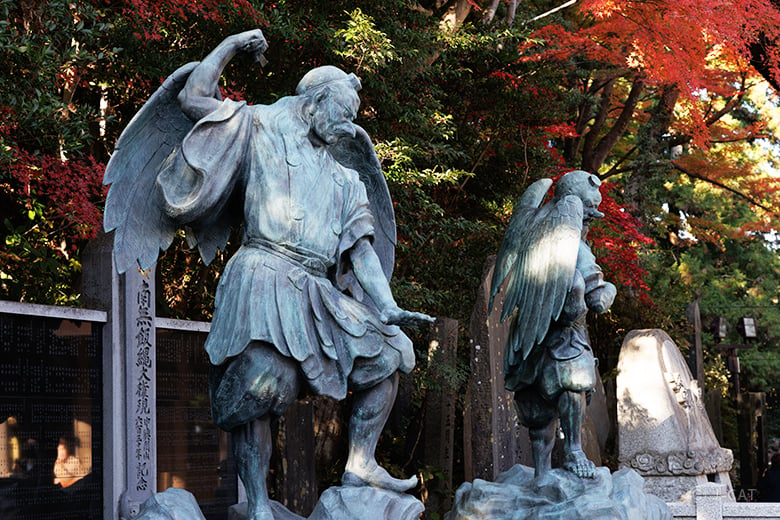
Statues of tengu – attendants of the divine – dot the temple grounds
The Goma Prayer: Bearing the Wishes of the Faithful on Tendrils of Flame
Yakuo-in’s O-goma – Goma Prayer Ceremony – is a special rite of Shingon Buddhism that acts as a ritual of purification and devotion to a Buddha-like mindset, as well as a prayer ceremony. It is typically conducted five times per day in Yakuo-in’s main hall.
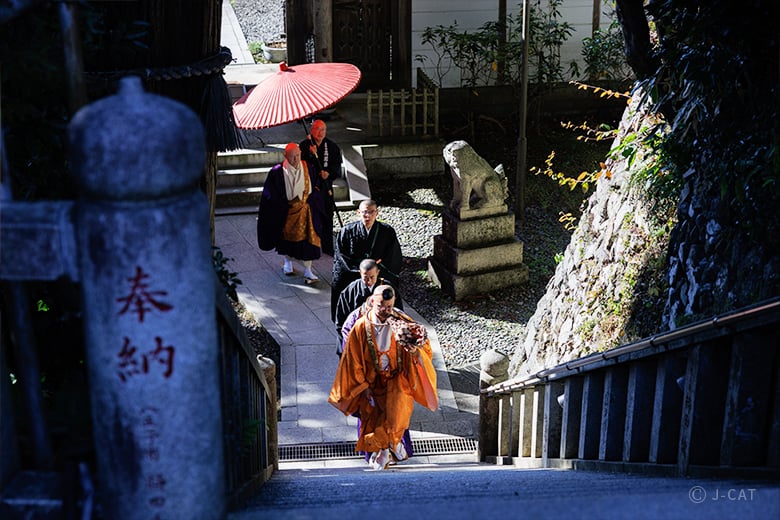
Monks approach the hall of the goma ritual while blowing conch shells – which can be used to herald sermons, issue signals, or ward off evil
“The flames lit during Goma prayer symbolize the insights of the Buddha, and so the image of the Buddha himself. Through this Goma fire, we transmit the prayers entrusted to us by the faithful. This is a ritual open to anyone, a chance to offer prayers together. So don’t be shy – anyone can participate.”
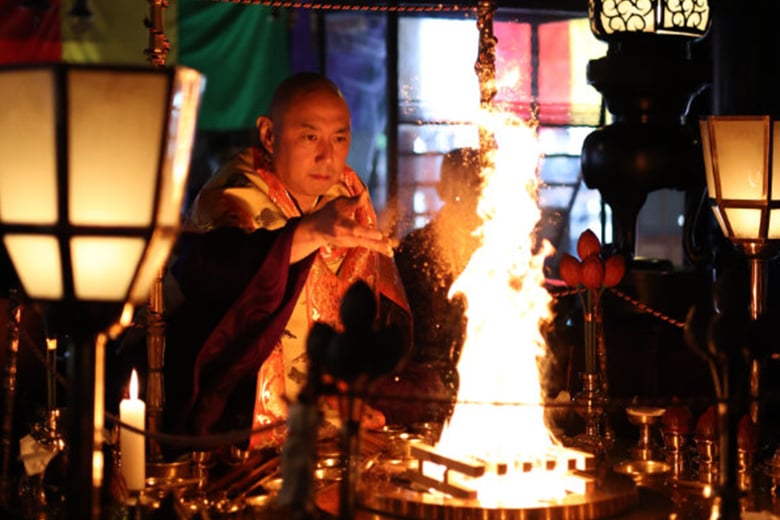
The main hall’s goma ceremony is open to the general public
Shugendo, the Faith of the Mountains: Finding Truth in Nature
Mount Takao is also associated with Japan’s unique esoteric faith known as Shugendo, an ascetic spirituality syncretizing elements of Buddhism, Daoism, Shinto, and folk traditions of mountain worship.
Shugendo practitioners are known as yamabushi. The yamabushi hold that mountains themselves are holy realms in which gods and Buddhas dwell, and that through rigorous austerities in these sacred realms – such as hiking steep paths or standing under waterfalls – they can seek enlightenment and the spiritual power to save others.
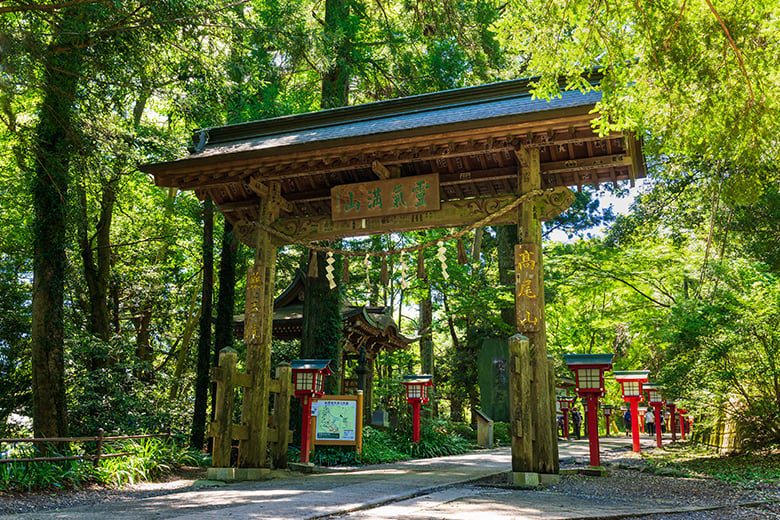
The gate known as Joshinmon marks the entrance to Yakuo-in, with a plaque reading Reikimanzan (literally: “Mountain filled with spiritual energy”)
Mount Takao is said to have once been home to seven waterfalls. Still today, two falls known as Biwataki and Jataki are open to the public for yamabushi-style training.
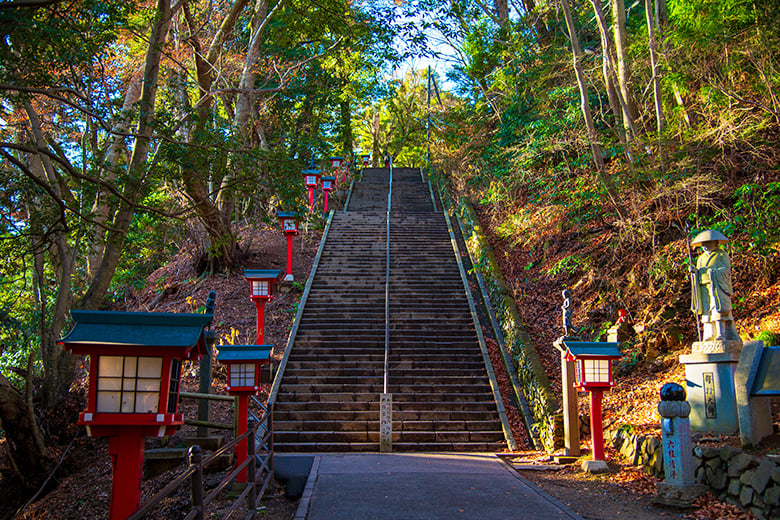
The whole of Mount Takao has been a place of sacred rites and religious austerities since time immemorial
But what can the precepts of Shugendo offer those of us living modern lifestyles? As Kamimura puts it: “Mount Takao has long been a place for ascetics to offer prayers, believed to be a home to gods, Buddhas, and their spiritual powers. Just setting foot on it and breathing its clear air envelopes you in the unmistakably refreshing energy of nature. Even without the waterfall training, simply letting go of the everyday for a time to walk the mountain embodies the spirit of Shugendo – and purifies and centers the mind and body.
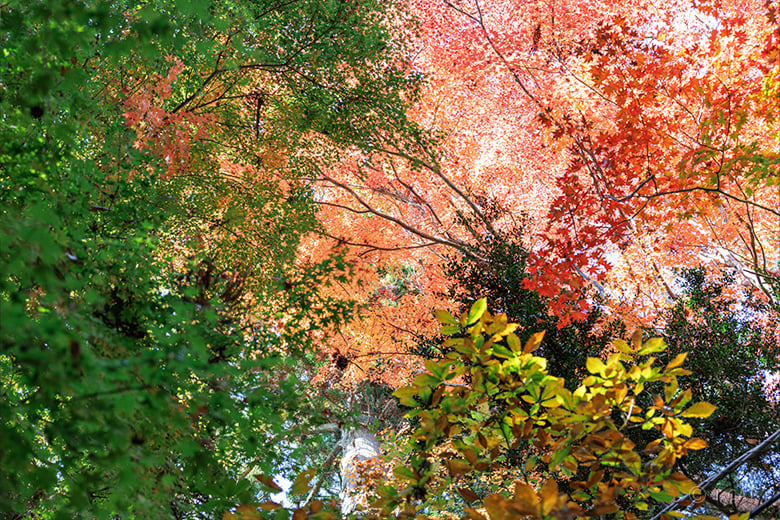
The changing seasons are revealed in the mountain scenery
A Heritage of Faith and Coexistence with Nature: A Story Told in Giant Cedars
Passing through the temple gate known as Joshinmon, visitors will notice a large monument stone inscribing the words: “Taking life is forbidden.” There was a time when the entire Mount Takao was considered the grounds of Yakuo-in, and killing of any kind – including cutting plants – was strictly prohibited.
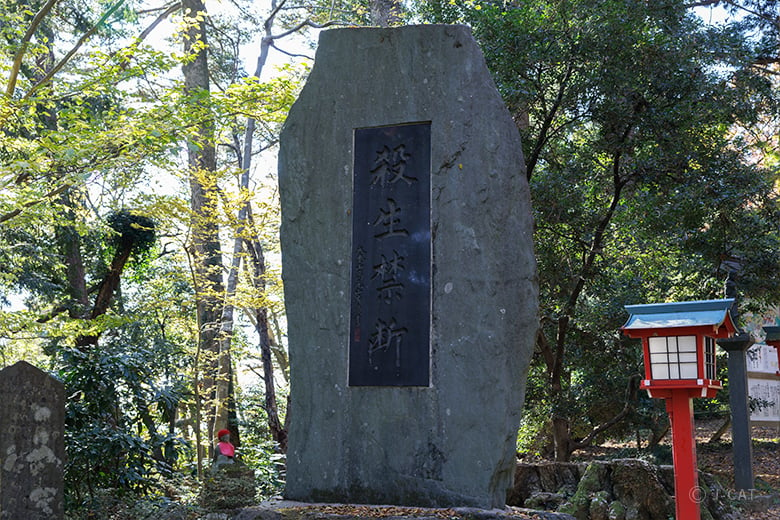
A monument inscribing the traditional commandment against taking life
And this prohibition was enforced. In the late 16th century – in the midst of the turbulent and violent Sengoku Period – Lord of Hachioji Castle Ujiteru Hojo – a devout worshipper of Mount Takao – issued an edict that anyone who carelessly cut the mountain’s vegetation would be executed by beheading. This protection of the mountain by temporal institutions was no fluke – the mountain has long been protected by political power holders, including by the subsequent Tokugawa Shogunate of the Edo Period (1603-1868).
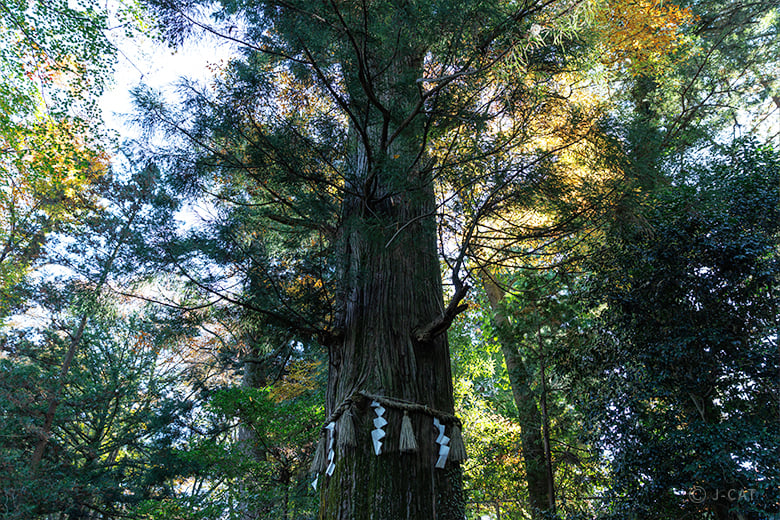
Cedar trees – symbols of the people’s faith – line the approach to the temple
Kamimura notes that efforts of this sort were not limited to simple conservation.
“Since ancient times, Mount Takao has been home to a custom of planting cedar seedlings in offerings of gratitude upon the answering of a prayer. Today known as ‘Sugi-nae Hono,’ this tradition is still alive and well. In entrusting their prayers to the mountain, visitors also take up their share of responsibility to nurture its natural environment in turn. The countless large cedars visible on the temple approach – as well as the rest of the flourishing nature – attest to the mountain’s blessings.”
Thanks to these cumulative efforts, Mount Takao remains a richly diverse ecosystem – home to some 1,600 species of plant life, and thousands more species of insects.
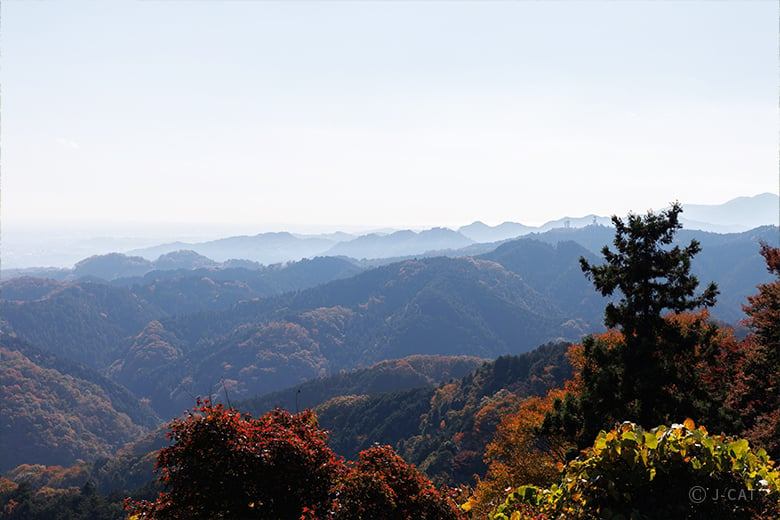
Mount Takao bursts with natural beauty in all four seasons
A Childhood with Mount Takao: Kamimura on the Charms of his Alpine Boyhood Buddy
Kamimura is a Hachioji native who grew up in intimate contact with Mount Takao and Yakuo-in. So it’s only natural to ask him to opine on its alpine charms – and how best to enjoy them.
“Mount Takao is characterized by seasonal beauty, and it’s gorgeous at any time of year. Each season brings its own blossoms, so there is no bad time to visit. The leaves of autumn are undeniably beautiful, but I have a personal weakness for the fresh green of new leaves. It always brings me to life.”
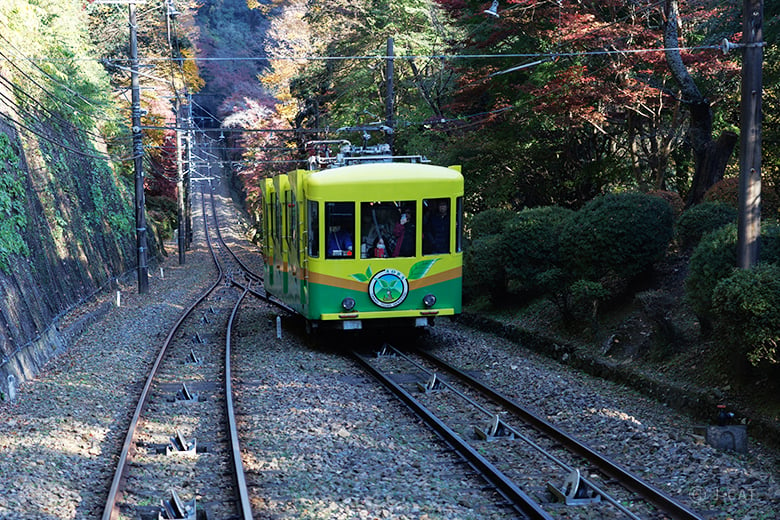
The cable car climbs from the base halfway up the mountain in approximately six minutes, reaching a gradient of 31.18 degrees – the steepest such track in Japan
“I typically come to the temple on the cable car, but generally return home on foot. It’s a fleeting but precious moment for me, a chance to refresh my eyes with a change in scenery. I recommend anyone who visits the mountain to try walking the mountain path even just one way – if they have time, of course. It’s a wondrous feeling of discovery.”
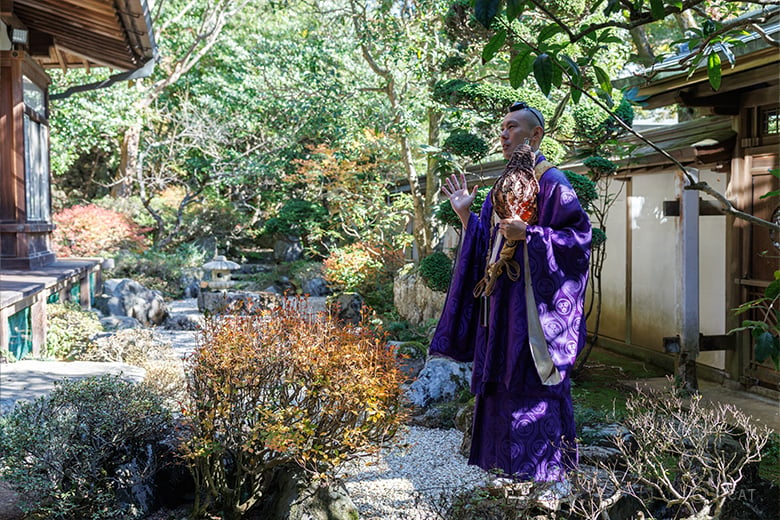
Kamimura wants to convey Japan’s unique reverence for mountains
Kamimura hopes that overseas visitors can enjoy an experience of Japan’s unique nature and spiritual practices.
“For us, mountains are places of gods and Buddhas. They are powerful places beyond human understanding. As places of abundant blessings and incomprehensible terrors alike, I think it’s easy to see how they became objects of prayer. For me, the existence of a temple on Mount Takao is perfectly natural and appropriate. It would make me happy if other people could visit and experience this, and the uniquely Japanese form of faith it has nurtured – revering Shinto gods and Buddhas interchangeably.”
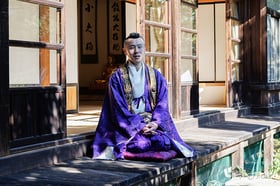
Kosho Kamimura, Director of Temple Affairs at Takao-san Yakuo-in
Born at an affiliated temple in Hachioji, Kamimura learned his way around the nature of Mount Takao from a young age. Like his father and his grandfather before him, he tends the temple of Takao-san Yakuo-in – and has done so since 2011. Fluent in English, Kamimura is also a licensed guide-interpreter who often gives direct explanations to temple worshippers from abroad.


