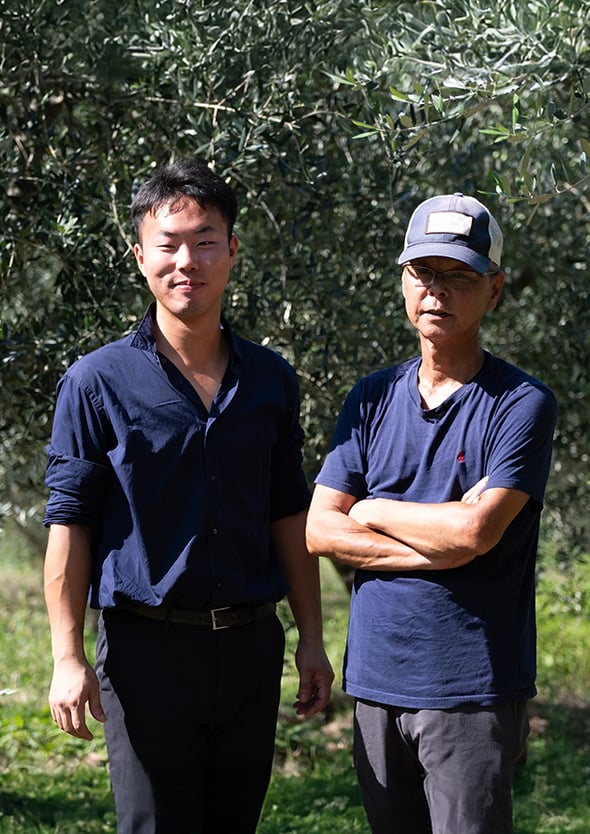
Takao Nouen’s Origins: A Fresh Start, Born from a Leap of Faith
-Toyohiro, what led you to become an olive farmer?
Toyohiro: I first got into olive farming in 2006. My parents ran a clothing shop on Shodoshima, and I initially helped out with the intention of taking over the family business. However, as the shop’s unfavorable location made its sustainability unfeasible, I had to consider taking a different path.
Consequently, at the age of 35, I decided to start all over from scratch and began listing all the possible business ideas I could think of. The last remaining options on my list were “novelist” and “olive farmer.” Ultimately, “olive farmer” felt right for me, so I rented some land from my grandfather and got to work.
Unused for a long time, that piece of land was a completely barren mountain. And so, every day, I went there with a saw and sickle in hand to clear the land. Finally, a year later, I was able to start planting olive trees. Although there were some olive farmers within my network, I also took the opportunity to visit olive farms in California and Australia to deepen my knowledge.
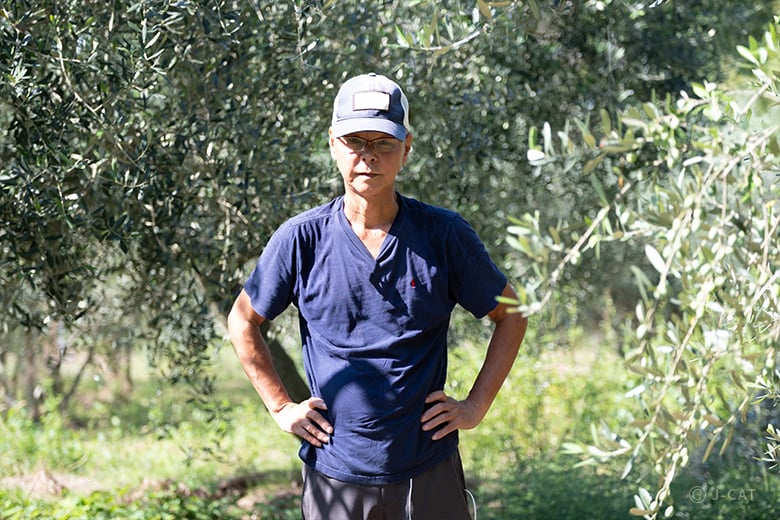
Hailing from a different career background, Takao Nouen founder Toyohiro Takao successfully reinvented himself as an olive farmer
-That sounds like the kind of decision that a Shodoshima local would make.
Toyohiro: I think that Shodoshima’s abundance of olives further encouraged me to pursue this new path. My alternative career option to become a novelist is also related to Shodoshima, as the novel Twenty-Four Eyes is set on this island.
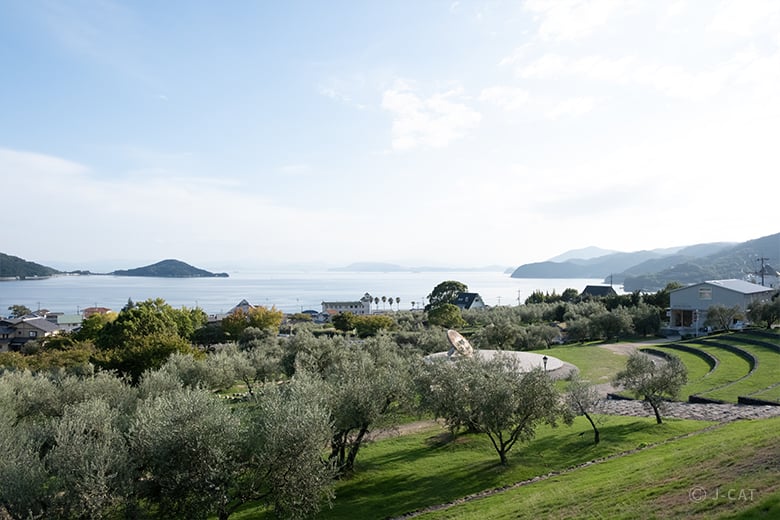
Shodoshima’s olive trees have been nurtured by the mild climate of the Seto Inland Sea
A Father and Son Leveraging Their Skills to Cultivate a Farm
-Kodai, when did you decide to become an olive farmer?
Kodai: Ever since I was young, I'd go to the farm with my father to play and to help out. I also enjoyed spending time with the university student volunteers on our farm, so I naturally thought that I’d also end up in an environment like this when I grew up.
Since I wanted to pursue a future career that I found enjoyable, as early as my high school days, I was already determined to take over Takao Nouen. As I would be working on Shodoshima, I decided to study at an agricultural college elsewhere in Kagawa Prefecture. There, I familiarized myself with the Seto Inland Sea’s warm environment while gaining practical know-how.
Through lectures and hands-on experience, I learned what crops are grown in surrounding regions, and I worked part-time at a French restaurant to learn how olive oil is used in cooking.
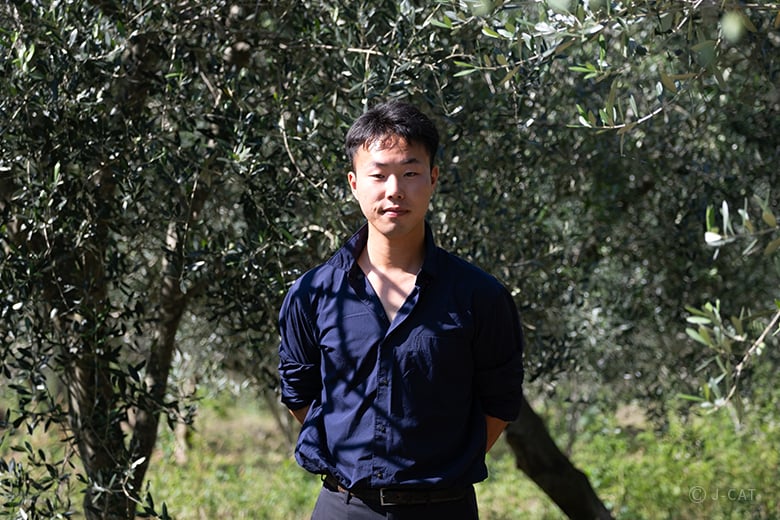
Kodai Takao says, “As soon as I decided that I wanted to do enjoyable work, being an olive farmer came to mind.”
Something that left a lasting impression on me from my student days was a word of advice from a farmer at my part-time job: “Focus on the invisible.” That is, for example, when an olive tree is damaged, I check the soil, not just the leaves and fruit. Paying close attention to the soil environment helps in growing healthy olive trees.
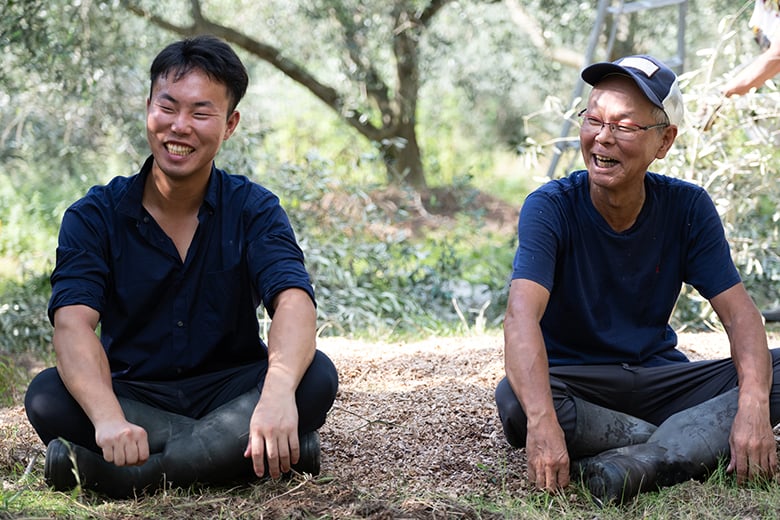
Toyohiro Takao says, “Now, my son is a professional at farming, so I learn a lot from him.”
Takao Nouen: Cultivating a Farm that Meets Global Standards
From cultivation to harvest to oil extraction, each process at Takao Nouen is thoroughly managed for safety and quality. As a result, the farm has earned international ASIAGAP certification, a feat that not many have achieved in Japan. The farm also adheres to international standards for soil preparation, pesticide management, and eco-friendliness.
-Earlier, you mentioned soil environment. What sets Takao Nouen's olive cultivation methods apart?
Toyohiro: At Takao Nouen, we place particular importance on soil preparation. Tedious as it may be, we mow grass four times a year without using herbicides. Leaving grass clippings where they are instead of collecting them for disposal increases the organic matter in the soil, making it more lush. We also crush pruned olive trees to return them to the earth, ensuring that nothing is wasted.
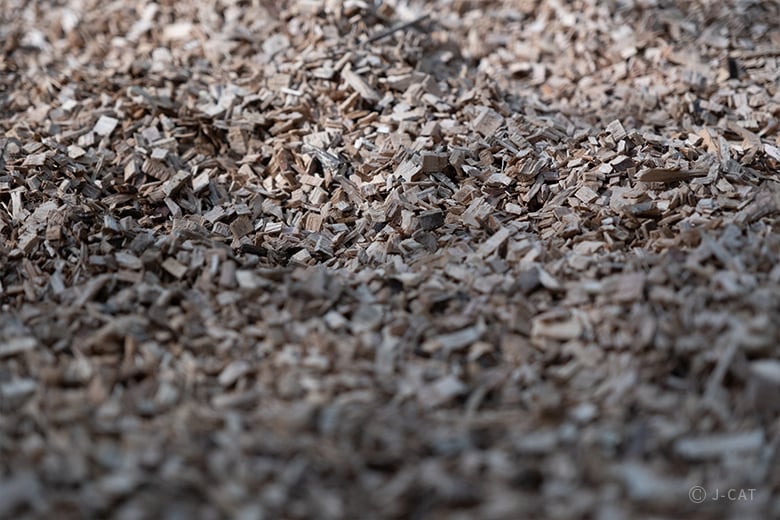
Pruned olive trees are finely crushed and returned to the earth
Kodai: Depending on the variety and time of year, olive trees can be weakened by disease-carrying pests. At worst, they may not produce any fruit at all. Thus, it is important to create an environment that keeps disease and pests at bay as much as possible. We make sure to carefully mow grass, control weed growth, prune our trees, and keep our fields well-ventilated.
Thrice a year, we at Takao Nouen spray only the minimum amount of chemicals necessary to prevent the olive weevil from destroying our trees. Though such efforts take time and effort, we continue to practice farming methods that do not burden the environment or our trees, as we want to deliver olive oil that people can consume with peace of mind.
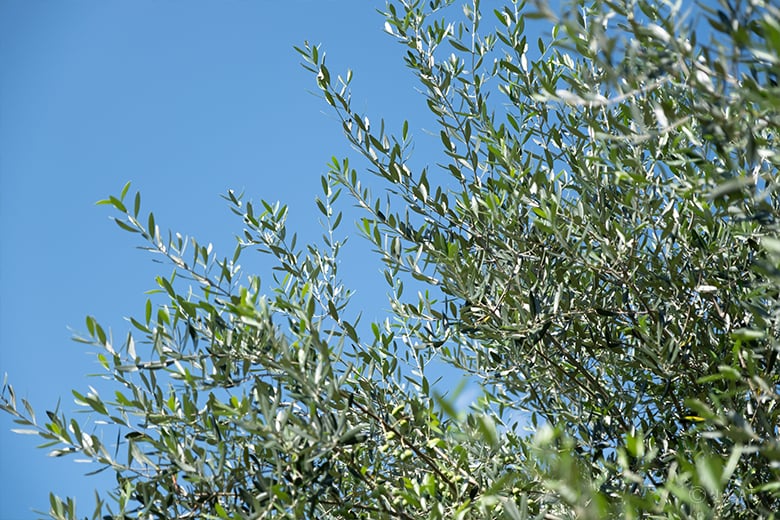
Olive trees growing healthily at Takao Nouen
Striving for the Perfect Balance for a Taste Recognized Worldwide
Takao Nouen continues to produce olive oil that meets worldwide standards and is trusted by consumers. Every year, the farm sends its olive oil to Italy for official accreditation by the O.N.A.O.O., the world’s oldest olive oil tasting organization. There, it is certified as extra-virgin olive oil according to international standards.
-Compared to other olive farms on Shodoshima, Takao Nouen is still relatively new, and yet you’ve already won prestigious awards at international competitions in France, Italy, and elsewhere.
Kodai: We’ve received compliments like “As long as Takao Nouen is participating in a competition, it will be hard for other olive oils to win first place." Some have also made suggestions such as, “With your olive oil being this good, you should enter it in another competition.” As a result, our opportunities to challenge ourselves through international competitions naturally increased. Our interactions with olive farmers around the world have given us further motivation and even greater respect for olive oil farmers.
Toyohiro: Actively participating in international fairs is also an opportunity to promote Shodoshima’s olive oil. Running our business together, my son and I gradually took on our respective roles. I handle management and sales, while I listen to my son when it comes to olive cultivation.
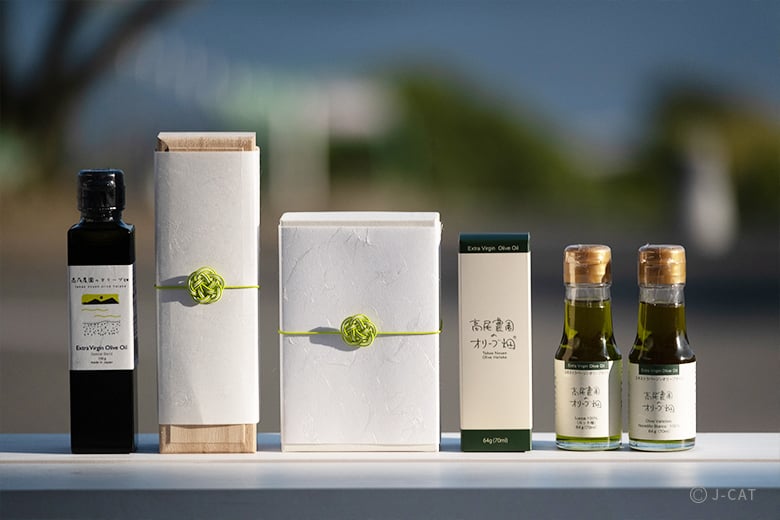
Boxes of olive oil decorated with olive-colored mizuhiki knots are popular choices for gifts
-What efforts do you make to produce globally acclaimed olive oil?
Toyohiro: The keys to producing quality olive oil are figuring out how to balance the aroma, bitterness, and pungency of olive oil, and determining when to harvest. Like fruit, olives have an optimal season. For example, dark ripe olives produce plenty of oil, but their oil lacks aroma.
Whether oil quantity or aroma is more important varies depending on the farm. We at Takao Nouen believe that it's best to harvest a little earlier than the conventional season. Just like freshly harvested tea or newly milled rice, the first olive oil of the season is always delicious.
Whenever we plant a new variety, we change the timing of its harvest for the first three years after it bears fruit. This helps us determine the optimal harvest time for the variety to produce delicious olive oil.
It takes about five years after planting for an olive tree to bear fruit. Add in three years of trials for its harvest season, and, from a long-term perspective, you can say that it takes about 10 years for us to create a finished product.
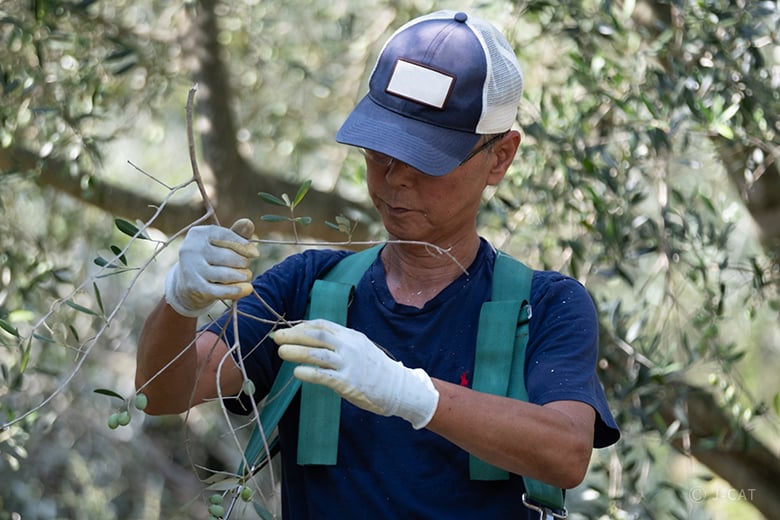
The Takaos check the condition of their trees as they carefully harvest olives
Kodai: Even if different varieties of olive trees are planted in the same field, growth will vary depending on their water veins and the amount of sunlight they receive. Whether it’s Lucca or Mission, different varieties have different optimal harvest times.
Making sure not to miss the best harvest times, we monitor the condition of each tree, as if having a conversation with it, while harvesting our olives. It’s interesting how olive oil greatly differs in taste from farm to farm, even when made from the same olive variety.
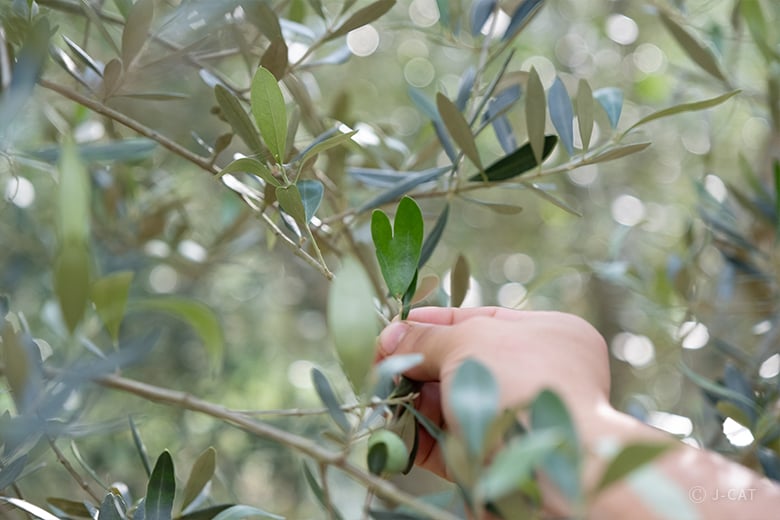
Heart-shaped leaves can sometimes be found while observing olive trees
Meticulous Care in Every Step, From Harvest to Extraction
Crafted with care, Takao Nouen’s olive oil is beloved by renowned chefs. And, at times, department stores’ stock of Takao Nouen’s olive oil for the entire year sells out in just one month.
-Are there any secret techniques to extracting olive oil to produce a delicious finished product?
Toyohiro: Once the olives are harvested, it’s important to press them as soon as possible, while they’re still fresh. At Takao Nouen, we press olives on the same day that we harvest them. We remove impurities from harvested olives, rinse them thoroughly with water, then send them to the extractor, where they’re pressed and mixed until they become a paste. The oil is then extracted by centrifugation.
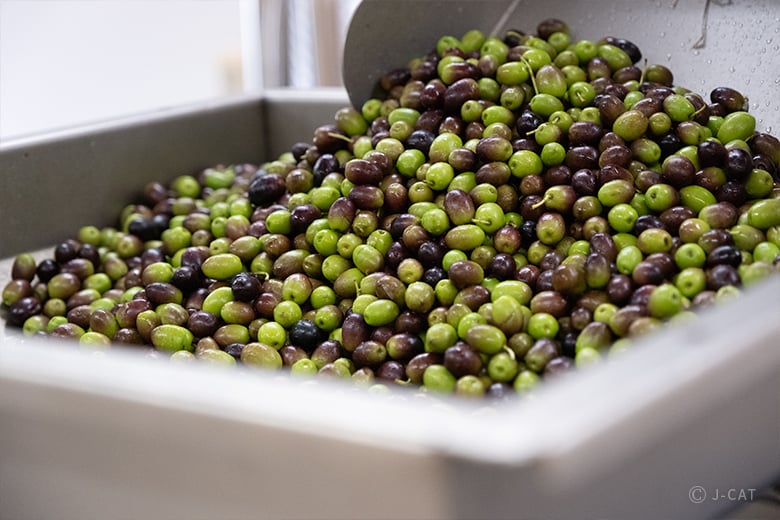
To retain their freshness, olives are pressed to extract oil on the same day that they are harvested
Kodai: Since the extractor cannot be paused once it's running, I update my father on the day's yield and the condition of the olives, then proceed with the work. Our fields are vast, but we generally know where each other is working at the moment.
Freshly extracted olive oil is opaque due to the presence of pulp and peel, so it needs to be filtered. Otherwise, if the pulp is not properly filtered, the oil will eventually smell rotten. Thus, although it’s more time-consuming to do so, we filter our oil twice. Our careful filtration results in an unadulterated olive oil.
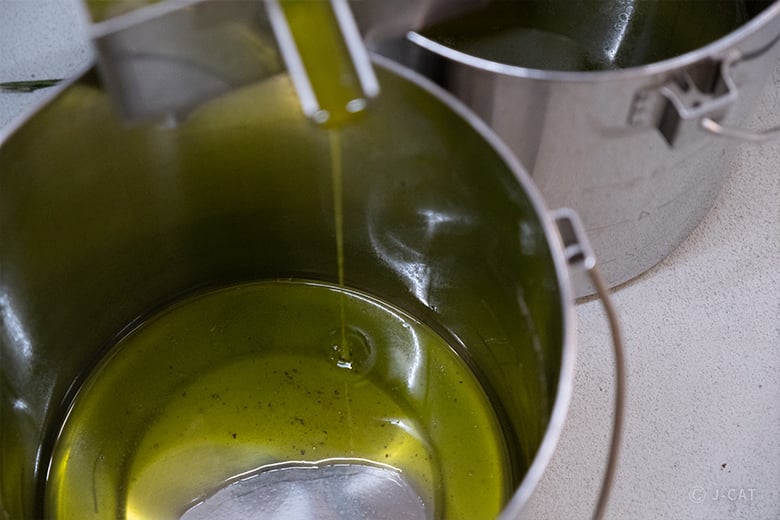
Freshly extracted olive oil is as fresh as fruit juice
As I was practically raised on our farm’s olive oil since childhood, when I take a sip of the finished oil, I’m able to immediately notice if there’s anything off. It's hard to explain what’s distinctive about the taste of Takao Nouen’s olive oil, but it’s a familiar flavor to me, so I feel at ease when the finished product tastes the same as always.
Connecting the Future; Expanding the Olive Circle
Takao Nouen currently has farmland in eight locations on Shodoshima, covering a total area that’s roughly the size of a single Tokyo Dome. Working with over 500 volunteers annually, the farm delivers fresh olive oil across Japan.
-The building that serves as your production site is quite colorful and charming.
Kodai: A student from Kyoto University of the Arts drew this. We’re glad that it catches the eyes of visitors to our farm. For the past 15 years, we have welcomed many volunteers to help out on Takao Nouen through a student organization called the Agricultural Exchange Network. As a child, I enjoyed many warm interactions with university students. Now, I have become a mentor figure to students, who represent the next generation.
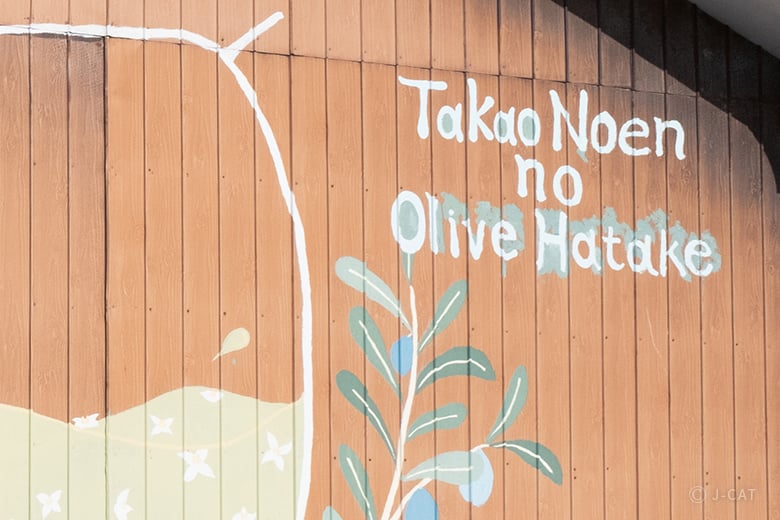
This building with eye-catching artwork by a student serves as the production area for olive oil extraction
Toyohiro: Originally, the students only visited during harvest season. However, since they themselves were interested to learn how olives grow over the course of a year, they are now welcome anytime. They are the hope of our farm’s future, so we try to accommodate their requests to try doing certain tasks to the best of our abilities.
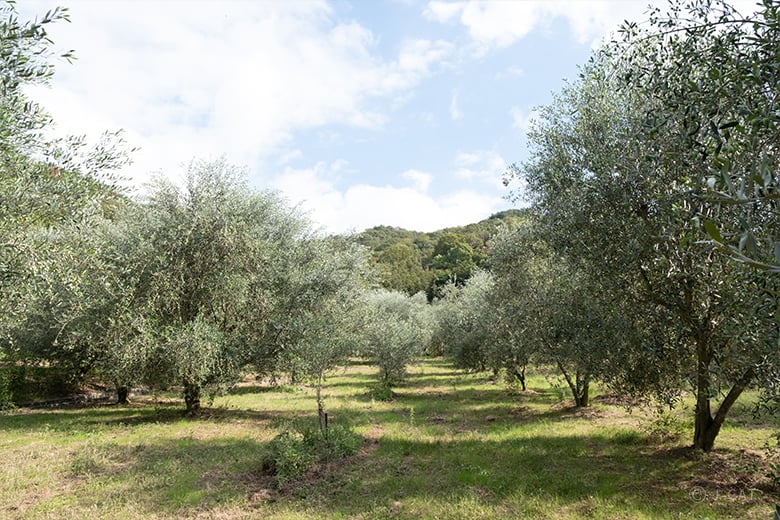
The farm produces olive oil while working with many people on such a vast expanse
-How do you envision the future of Takao Nouen?
Toyohiro: With activities such as growing rice, cultivating asparagus, and beekeeping to keep us engaged all year round, our farm has now taken on various new endeavors beyond olives. We aim to continue providing delicious olive oil while fostering open-minded interaction and exchange as a farm.
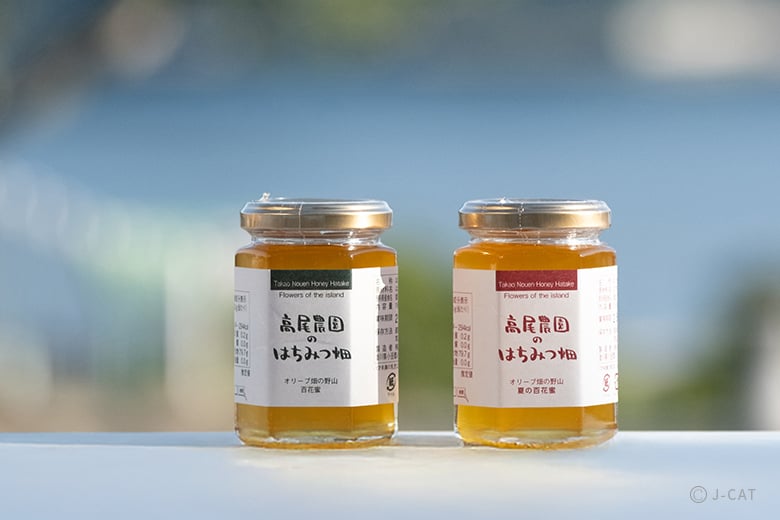
As part of its efforts at practicing sustainable agriculture, Takao Nouen also keeps bees in its olive farm
Kodai: Although it will take time, we’d like to continue taking on new challenges with new olive varieties. We also hope to further expand our farmland. As Takao Nouen grows, we hope to attract more visitors to Shodoshima and generate more jobs. Winning international competitions, we have made more connections with people around the world who want to visit our farm. We will continue working hard to deliver delicious olive oil from Shodoshima to the world.
Toyohiro and Kodai Takao of Takao Nouen Olive Hatake (Takao Nouen Olive Farms)
Established in 2006, Takao Nouen is a family-owned olive farm on Shodoshima Island in Kagawa Prefecture. Since its inception, father-and-son owners Toyohiro and Kodai Takao have been committed to safety and eco-friendliness through herbicide-free farming methods. For their dedicated efforts, Takao Nouen earned the ASIAGAP (Asia Good Agricultural Practice) certification in 2021, becoming Japan’s first farm to receive such a recognition. The farm’s aromatic extra-virgin olive oil, which is cold-pressed immediately after harvest, has won awards at international competitions. The Takaos also convey the high value of Shodoshima olives to the world through training sessions and experiential workshops.


