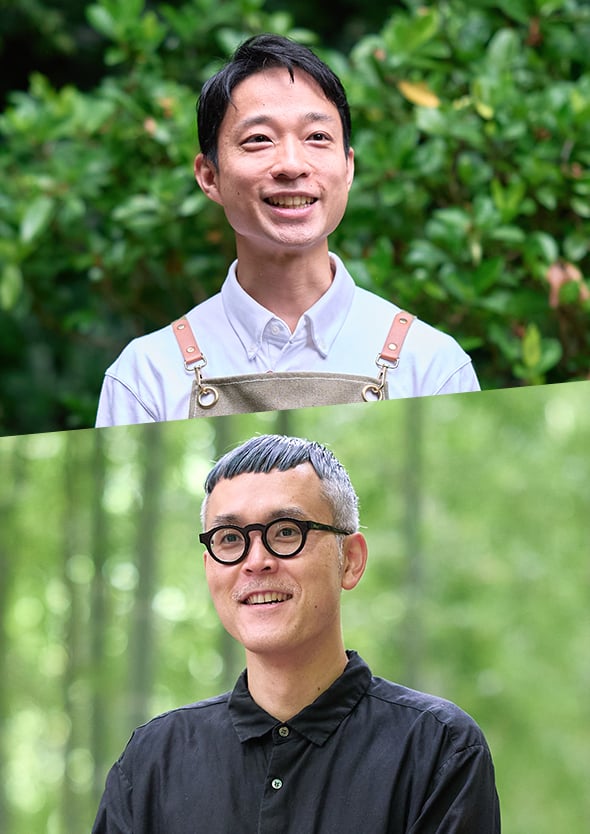
The Fruits of Kamakura
- How do each of you engage with nature and beauty through your work?
Sonoda:
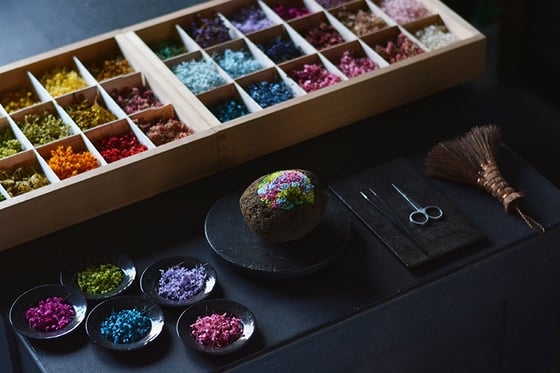
I founded a company in Kamakura called Kokemusubi*, which creates moss-based art pieces and offers related workshops. Today, my work also includes landscaping and maintaining the garden moss at temples and shrines throughout Kamakura.
I’ve really always loved moss, but when I started working with it I quickly found raising it indoors to be nearly impossible. One day, I realized that if I cultivated moss inside a glass-enclosed garden terrarium, it could thrive even indoors. That’s how I came to create what I refer to as “moss terrariums.” People have come to appreciate them as art objects, but to me, they were simply a practical solution for nurturing moss.
*Note: “Kokemusubi” literally translates to “Moss Connection.”
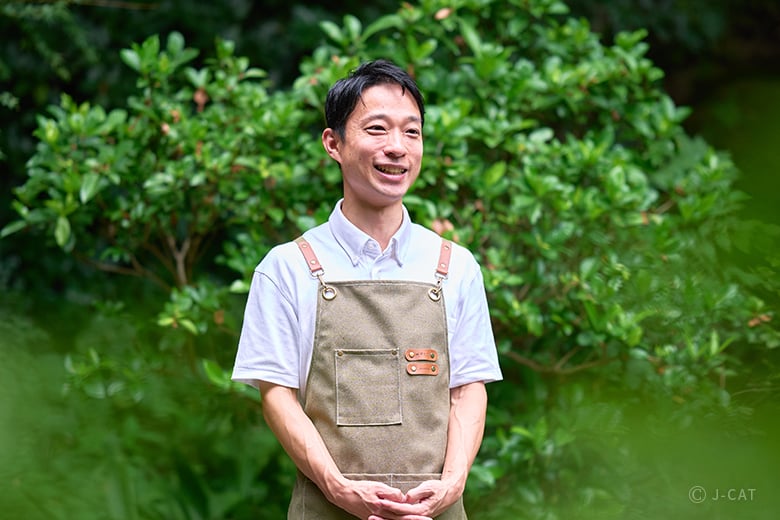
Sumihiro Sonoda, who has loved taking photos of moss since he was a young man
Kamei:
In my case, I currently focus on producing art as the art product brand Ame.* My base is Ame Kita-Kamakura, which serves as both my atelier and gallery.
I majored in painting at art school, but during my studies I found myself drawn increasingly toward traditional Japanese culture. I took up ikebana (flower arrangement) and tea ceremony, and the deeper I immersed myself and the more I learned about them, the more I found myself hooked. My central creative concept today is “landscapes in the palm of your hand,” and my first creation under this idea was a series I called Hanayama* using live flowers. After exhibiting the works abroad, I gradually developed them into art products.
*”Ame” means “Rain.” ”Hanayama” directly translates to “Flower Mountain.”
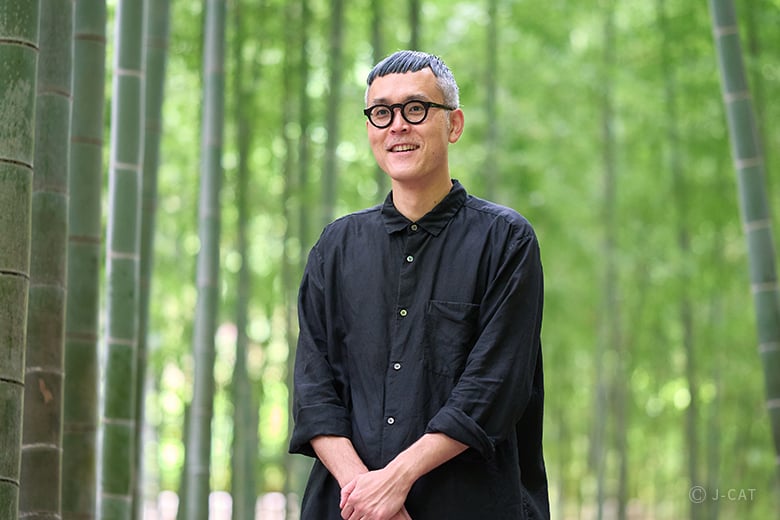
Norihiko Kamei finds endless joy hiking Kamakura’s nature trails
An Immersion in the Natural Beauty of Kamakura
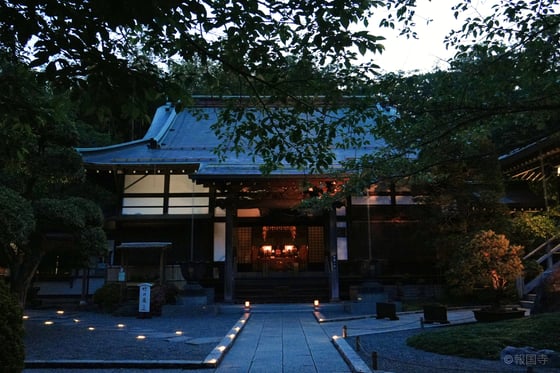
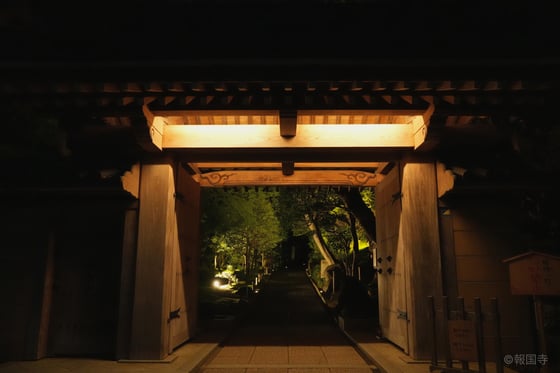
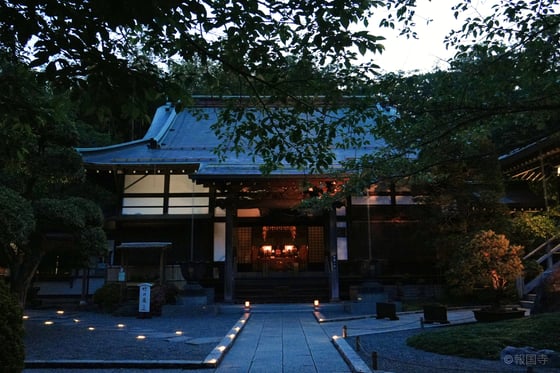
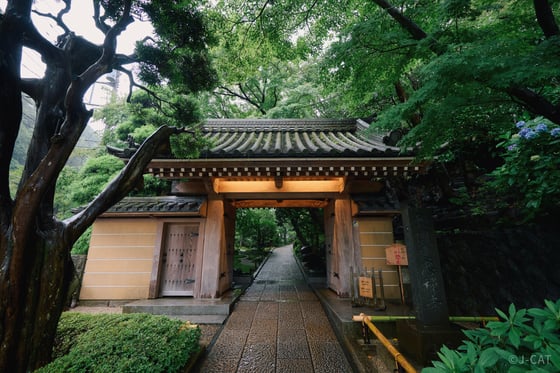
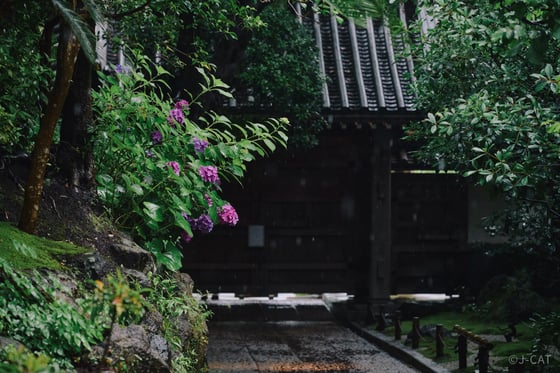
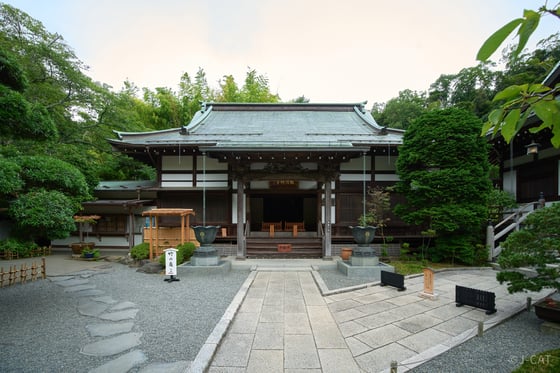
Climbing a gentle slope, visitors arrive at the temple gate of Houkokuji. A serene pathway unfurls within, lined with trees and vibrant moss shimmering in the leaf-dappled sunlight. Brilliant shades of green surround, with leaves trembling in the breeze and birdsong echoing above. It’s a lush scene that beckons temple visitors into another world entirely.
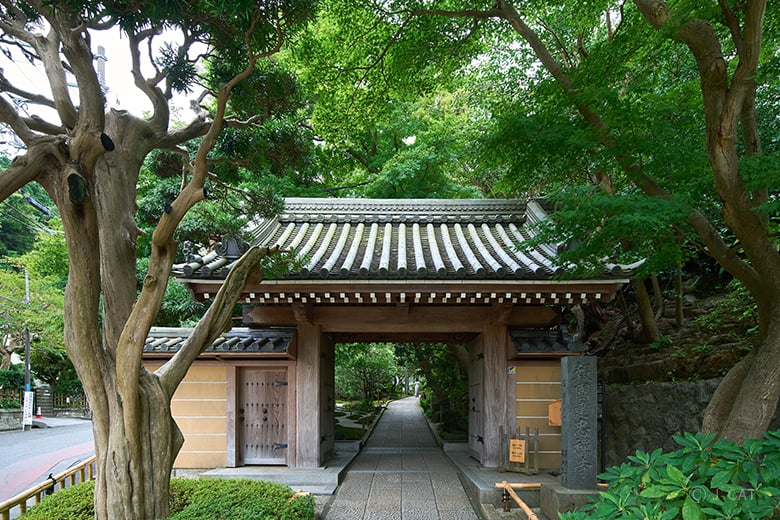
A stately traditional yakui-mon style gate welcomes visitors to the “Bamboo Temple”
- What was your first impression upon arriving at Houkokuji?
Kamei:
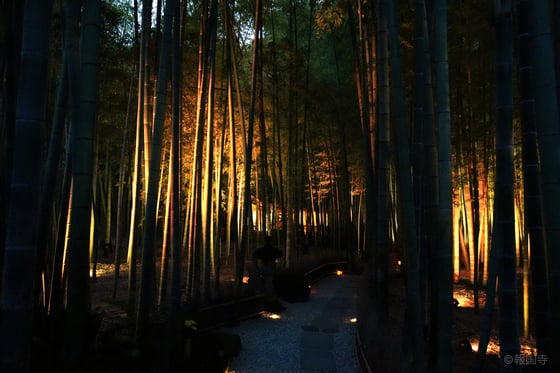
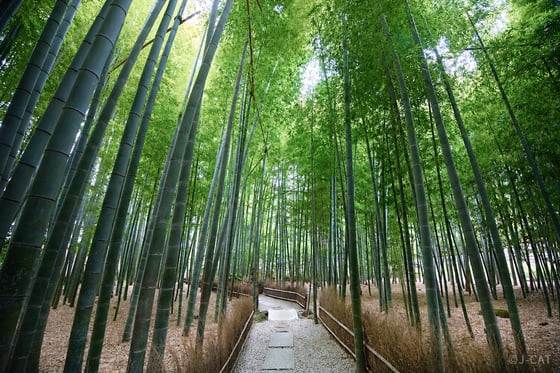
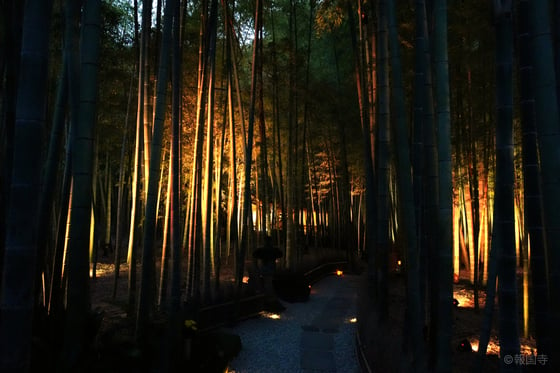
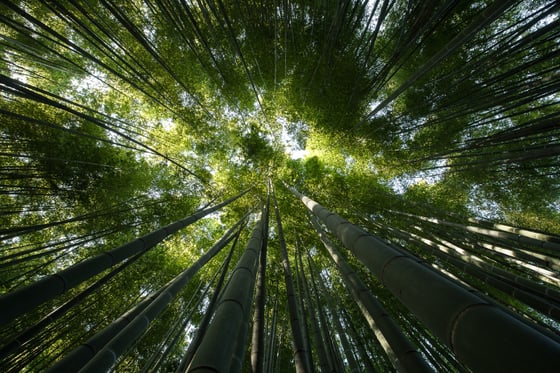
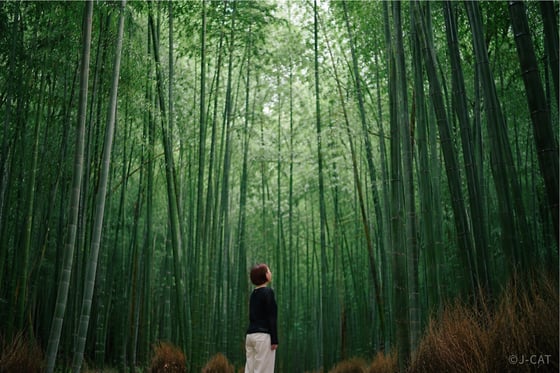
I was struck by the layered, kaleidoscopic expression of the color green here. The sheer depth and richness and variety of hue and texture all in green was deeply affecting. Of course, Houkokuji is famous for its bamboo grove, but there is really no exaggerating just how many different unique shades of green you can see walking through the entire garden, with no two hues or stalks of bamboo alike: deep, pale, tender, rich, dramatic, and on and on.
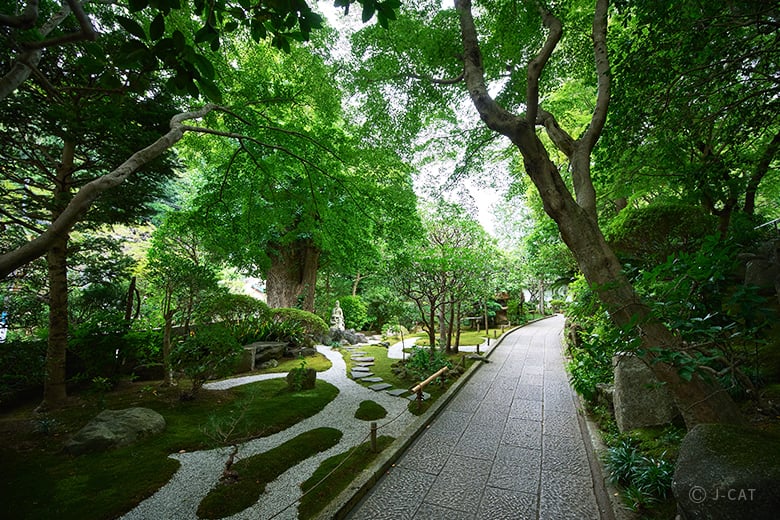
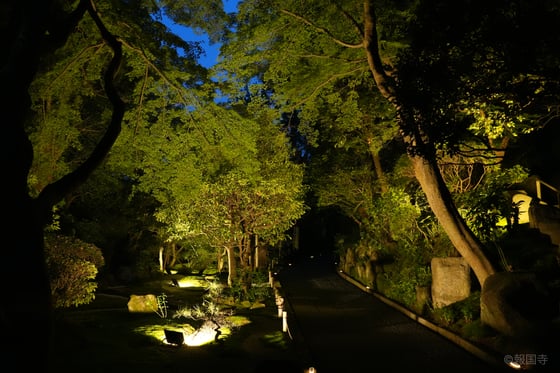
Moody natural light and shadow give the temple approach a face that is constantly changing through season, time of day, and weather
- Does the natural beauty of Kamakura factor into your work much as a creative inspiration?
Kamei:
Absolutely. Greenery is an essential element in my work. Flowers often take center stage, but in reality it is the lush green framing around them that highlights their beauty. Simply spending time amidst the greenery of Houkokuji centers me in the fundamentals of my own creative practice. I do love Kyoto as well, but it is here in Kamakura – especially at Houkokuji – that I feel I can really immerse myself fully in the raw beauty of nature.
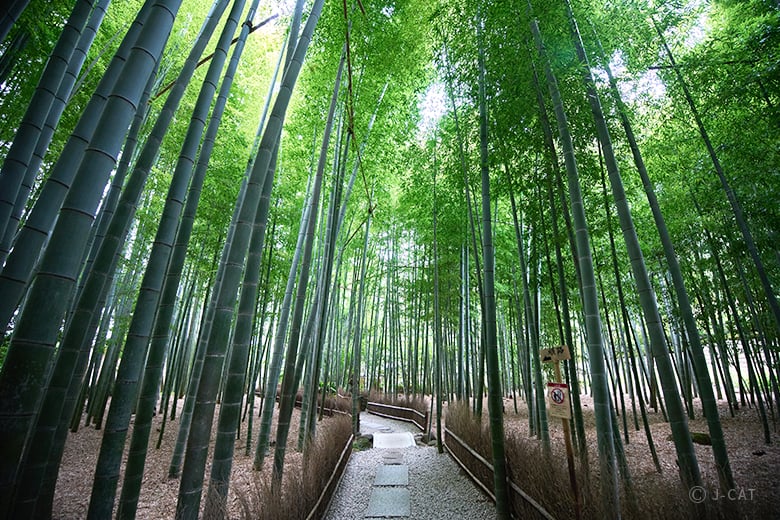
Deep peace in presence within the famed bamboo grove
Appreciate Moss Up Close and Discover its Loveliness
- From the perspective of being the person responsible for maintaining the moss at Houkokuji, what makes Kamakura’s gardens and natural environment unique?
Sonoda:
One of Kamakura’s defining features is the way it integrates with its mountains. The geography is full of valley-like landforms called yato, and these often nestle temples and shrines within them. This puts manicured gardens and wild growth side-by-side in extreme close proximity, blurring the boundaries between nature and civilization for a subtle but deep sense of the city melding right in the natural environment that is quite unique to Kamakura.
Kyoto gardens, for example, often eschew large trees – sometimes to the point of even replacing those that grow too big. That city’s aristocratic culture favors delicacy and refined cultivation, whereas Kamakura developed under more of a warrior culture, valuing untamed nature. That rustic spirit can still be felt in the city’s gardens, giving rise to uniquely bold and majestic landscapes.
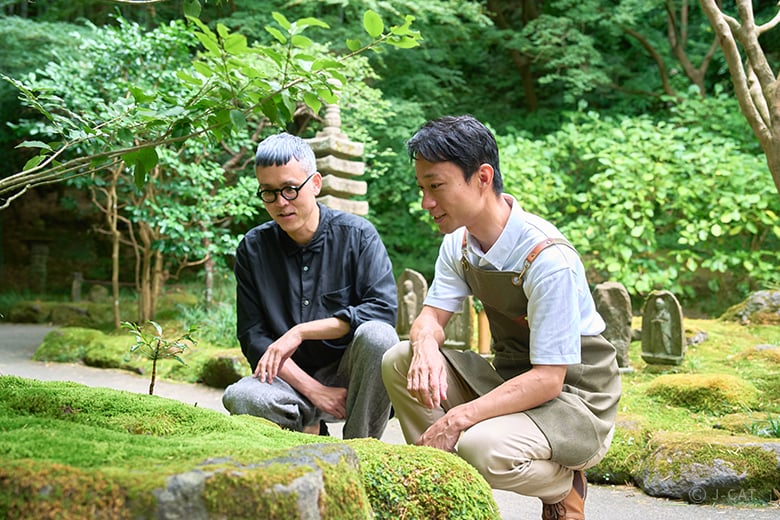
Encounters with nature’s beauty abound in Kamakura, day after day and year after year
- Recently, Kamakura has gained some renown as a mecca for moss enthusiasts. Does that have anything to do with the geography?
Sonoda:
Yes. That yato valley terrain tends to trap pockets of humidity, first of all. The Kamakura stone used in temples and shrine construction is also especially conducive to moss growth. These are both part of the combination of factors that make Kamakura an ideal environment for moss to flourish.
I think moss is something you can’t appreciate from a distance. At a glance, it’s simply part of the general greenery. But when you get close enough to see its delicate forms and even feel its texture, that’s when its real loveliness becomes evident. And I think Kamakura is a special place for nurturing those opportunities.
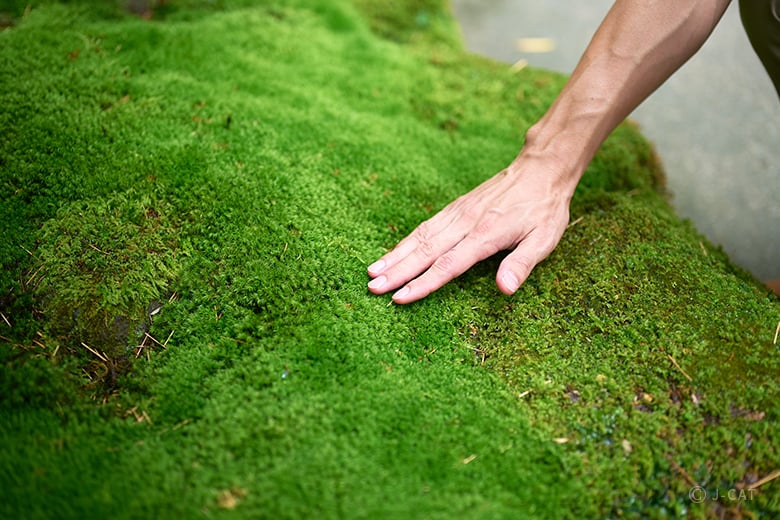
Sonoda watches over the moss of Houkokuji daily, and each patch reveals its own unique character and charm up close
Preserving the Old and Embracing the New — Facing Kamakura’s Future
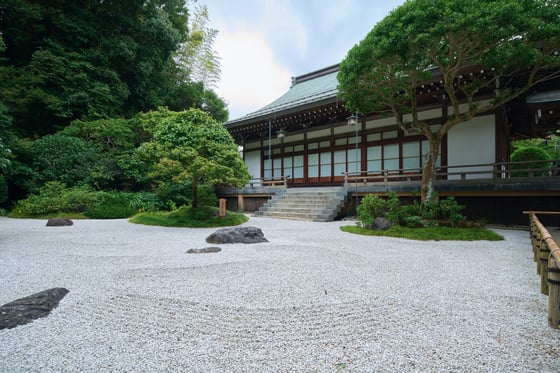
At the end of the temple’s garden promenade sits a striking white-gravel karesansui dry garden, wrapped in the hush of the famed bamboo grove. Wind whips a soft, cool rustle from the two thousand-odd stalks here. In the nearby temple tea spot Kyukoan overlooking this grove, Sonoda and Kamei reflect with us on their visions for the future of the city.
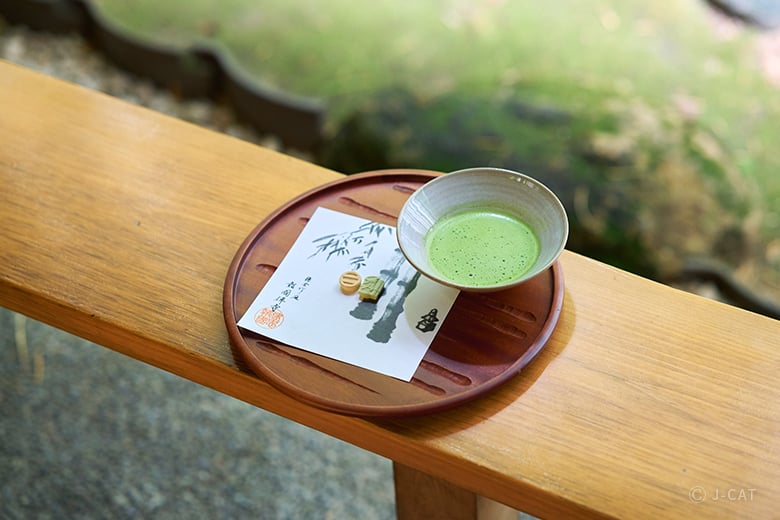
Guests can enjoy matcha and traditional sweets in the Kyukoan tea spot overlooking the grove
- What are your goals going forward?
Sonoda:
I've chosen the rather grandiose term "moss industrialization" to describe my next endeavor. To undertake anything new with moss, you need to be able to actually procure it at scale. However, the reality right now is that both production and quality control of moss are unstable.
You can’t do much with moss if you can’t secure an actual supply of it. That’s why I want to work toward stable production and distribution systems for moss.
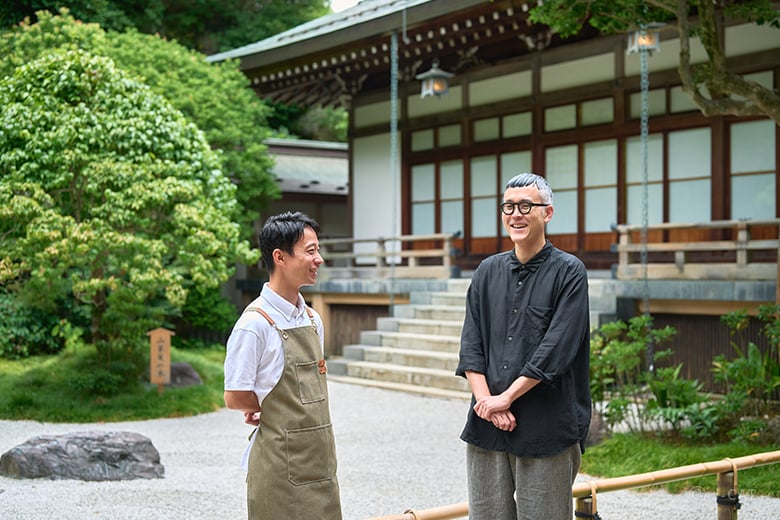
A conversation in the tranquil karesansui dry garden behind the main hall
- Kamei-san, we understand you’ve recently started a new workshop space in an old traditional house.
Kamei:
Yes, I’m using an approximately century-old traditional kominka folk house named Haze no Ie (“House of the Wax Tree”) as a workshop space. In Kamakura, there are still a small number of charming old kominka remaining, but due to their age and the difficulty of maintaining them, they are rapidly being demolished and are verging on extinction. Once you tear a house down, the history accumulated in its bones never returns. I hope that through my work at Ame Kita-Kamakura – Haze no Ie, I can raise people’s awareness of what we might call “the Kamakura quality,” and spur more preservation efforts.
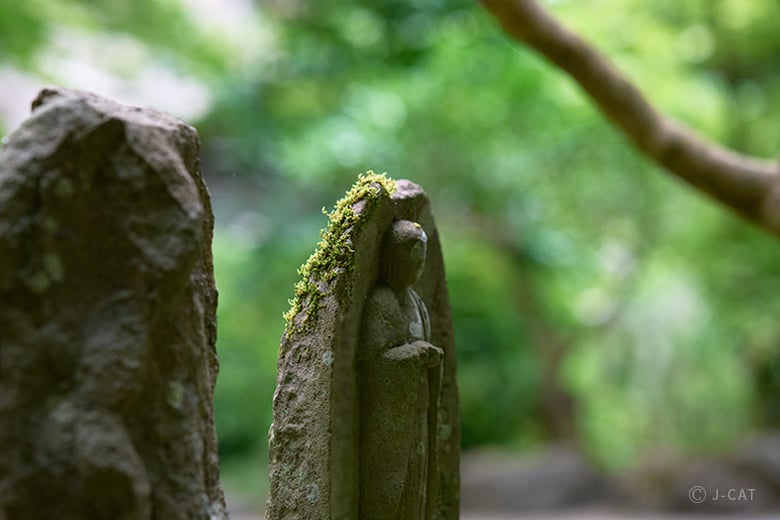
A winsome Buddha statuette standing amidst the greenery
Sonoda:
I’m also making use of a traditional kominka over 80 years old as both an atelier and a classroom space. I hope to preserve its current character through maintenance rather than rebuilding it. Like Kamei-san said, Kamakura’s townscape is in a keenly-felt phase of transition – but I also recognize that preservation is much more difficult than it sounds. We need to continue to innovate in our efforts to not only preserve the traditional townscape, but to utilize its structures to prevent them from obsolescence and destruction.
Kamei:
The people of Kamakura have warmly welcomed us as transplants, and shared with us places to be inspired and to create. That’s why we too want to incorporate Kamakura and its uniquely Japanese aesthetics into our own work.
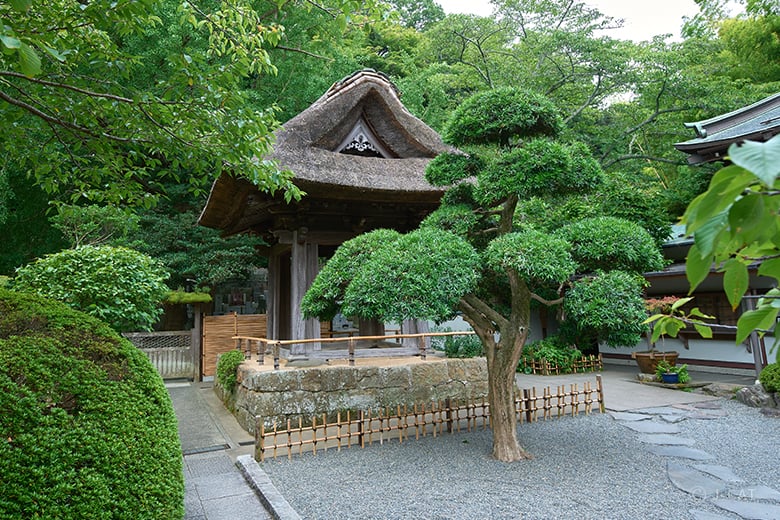
The temple’s thatched-roof belfry bears Edo Period history into the present
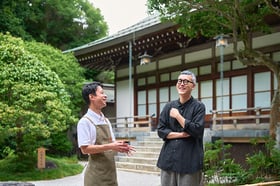
Sumihiro Sonoda / Norihiko Kamei / Houkokuji
Sumihiro Sonoda, Kokemusubi LLC President
A native of Chiba Prefecture, Sonoda holds a master’s degree in Agricultural science and has conducted research into plant physiological ecology — including moss — and its relationships with microorganisms. After working in the R&D division of a major manufacturer, he struck out on his own to found Kokemusubi in 2016, establishing Kokemusubi LLC officially in Kamakura in September of 2021. Sonoda works to connect people with the wonders of moss: through moss terrariums, workshops, and the landscaping and maintenance of moss gardens. He is also a frequent presence in magazines, on TV, and other media.
Norihiko Kamei, Ame Kita-Kamakura Artist & Flower Artist
Osaka-born Kamei creates art that portrays tranquil worlds with an aesthetic sense and view toward nature drawn from deep roots in traditional Japanese culture. Recently he devotes much of his time to growing his art product brand Ame both across Japan and beyond. In July 2020, he opened his Kamakura studio and gallery known as Ame Kita-Kamakura. In 2025, he opened Ame Kita-Kamakura – Haze no Ie (“House of the Wax Tree”), a workshop space utilizing an approximately 100-year-old traditional Japanese kominka folk house.
Houkokuji (Interview Venue)
Founded in 1334 by the eminent monk of the late Kamakura period Tengan Eko, and traditionally held to have enjoyed the patronage of Ashikaga Ietoki (grandfather of Ashikaga Takauji), Houkokuji is a Zen temple belonging to the Kencho-ji school of the Rinzai sect. Affectionately nicknamed “the Bamboo Temple,” it is popular with visitors from across Japan and beyond for its lush scenery and rich history including its temple tea spot called Kyukoan, where visitors can relax with a cup of matcha while gazing out at the bamboo grove. The temple’s Main Hall enshrines a seated Shakyamuni Buddha listed as a cultural property by Kamakura City. Also on the grounds are a thatched-roof belfry surviving from the Edo period and a tomb believed to be the mausoleum of the Ashikaga clan. The temple has also been recognized with a stunning three stars in the Michelin Green Guide Japan.
Houkokuji
2-7-4 Jomyoji, Kamakura City, Kanagawa Prefecture, 248-0003