Union with Nature: A Luxury Villa that Melds into the Akigawa Valley
In the lush Akigawa Valley of Tokyo’s Akiruno City lies Fushi, a luxury villa created by the Kurochaya Group – a restaurant group with a half-century of tradition. Opened in 2024, the property stands alone on a pristine riverside, offering a wholly new expression of luxury hospitality: high-end yet deeply rooted in nature. Here, it’s hard to believe you’re a mere 90 minutes from the urban core of Tokyo. Fushi’s architecture, gourmet gastronomy, and rich local experiences will reveal to you a new side of the capital metropolis that few see.
The name Fushi (literally: “the shape of the wind”) comes from Noh actor Zeami’s classical treatise on the theater known as Fushi Kaden – alluding to “a form in which both nature and human aesthetics resonate.”
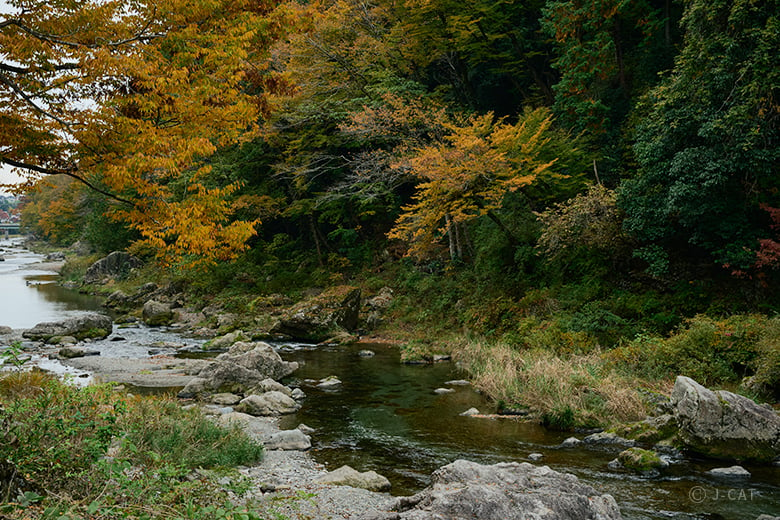
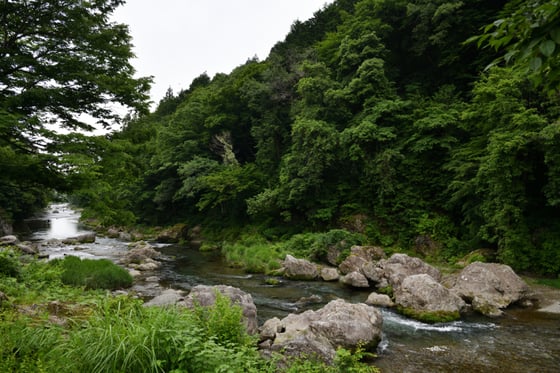
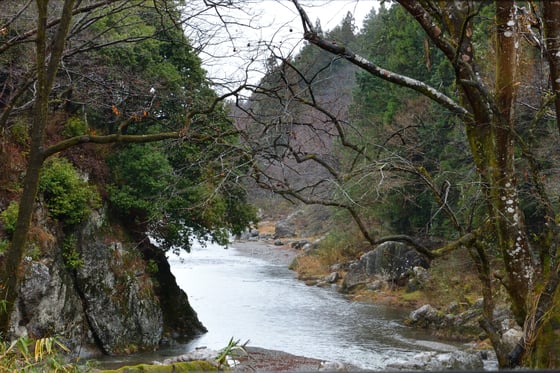
The clear waters of the Akigawa Valley sprawl, nurturing a vast and rich swath of nature, including waterfalls and limestone caves
Chairman of the Kurochaya Group Takamizu doesn’t hold back on his love for the pristine nature of the Akigawa Valley: “This is Tokyo,” he says, “but not the Tokyo that everyone knows.” Takamizu founded Fushi with the dream of “creating something in this place that we can be proud of before the world.”
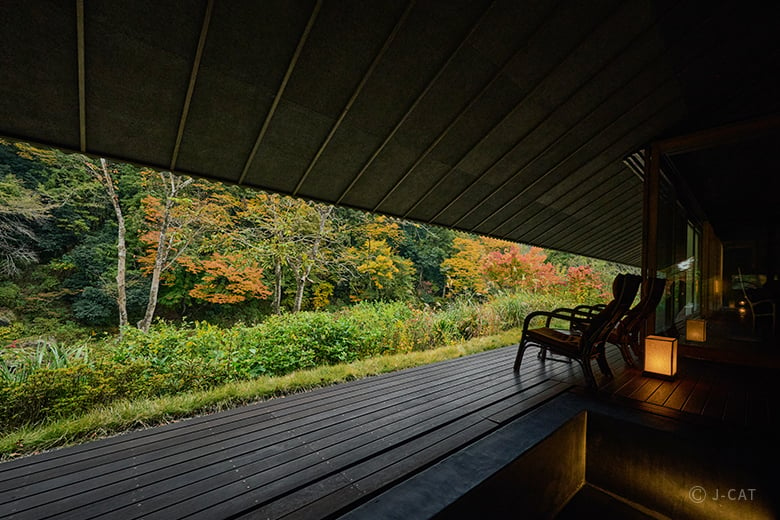
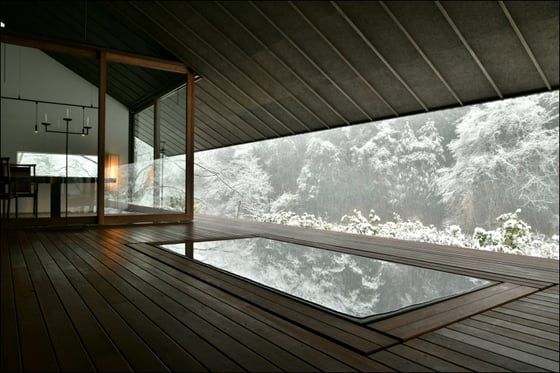
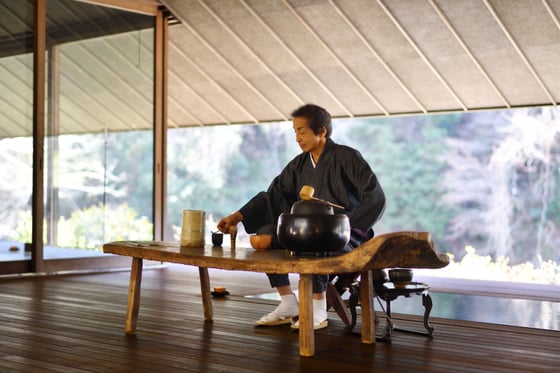
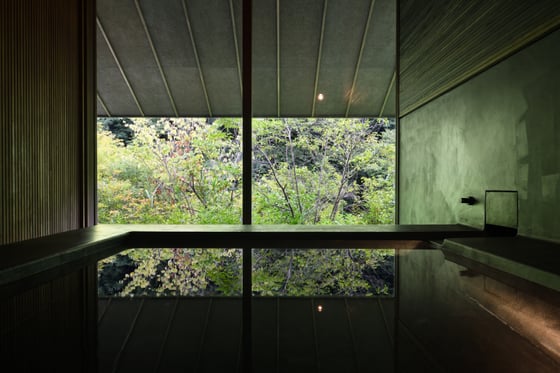
Villa guests can spend the afternoon doing nothing but sitting and absorbing the seasonal scenery
Built on a riverside where no structure had ever before stood, Fushi stands alone in the pristine landscape, a work of thoughtful architecture that melds into its surroundings rather than disrupt or compete with them.
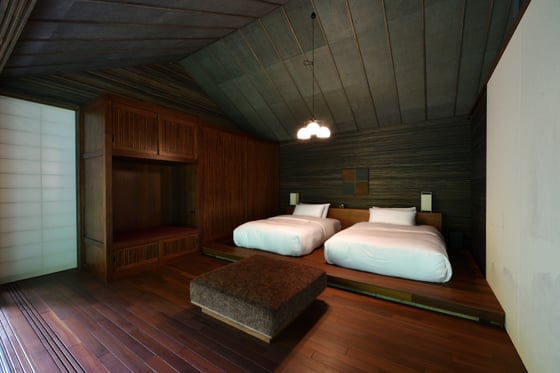
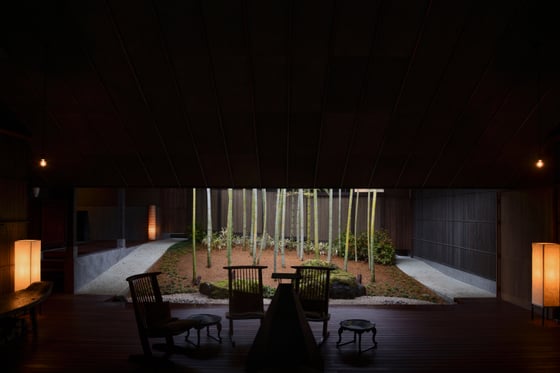
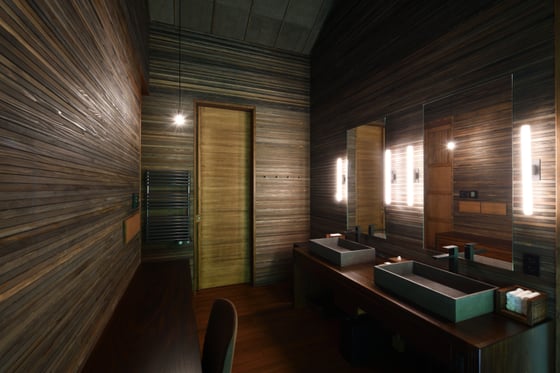
Designed by Takaharu Tezuka, the villa is built to melt into its surroundings. There is not a single man-made object in sight from the living room – only forest, river, and sky. Inside Fushi, warm wood tones and generous natural light create a sense of natural tranquility that erases the line between the indoors and outdoors – much like the open-walled living room. Fushi has already garnered acclaim, receiving the World Architecture Festival “Small Project of the Year” award for 2024.
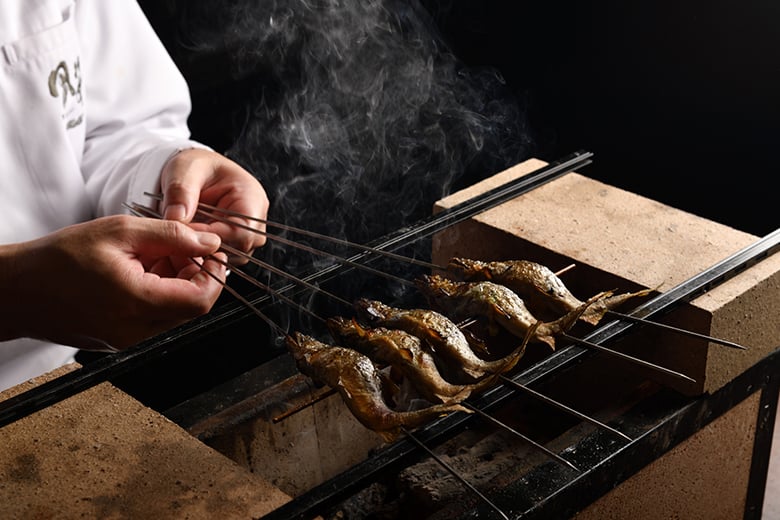
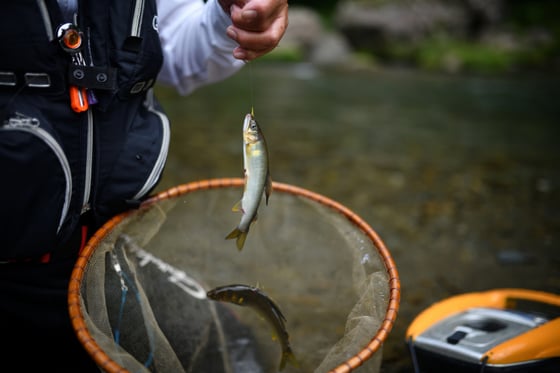
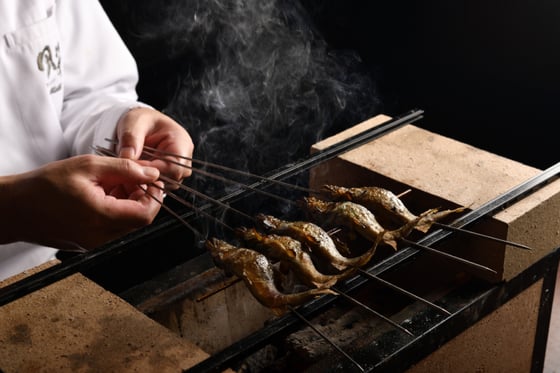
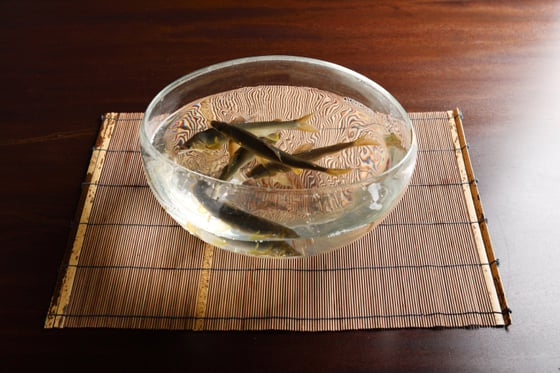
Fresh grilled ayu sweetfish are included in the Wabunka plan
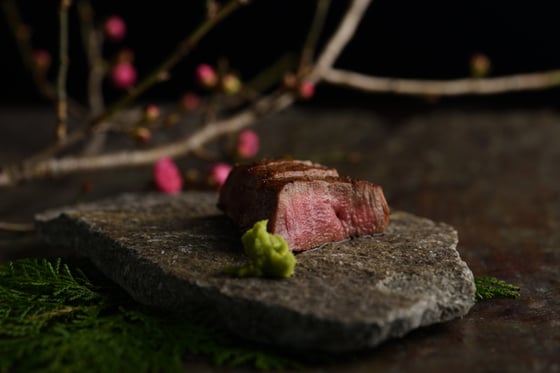
Fushi’s Executive Chef Chishiki draws on the pure waters of the region and the bounties of its seasons to depict the terroir’s aesthetics and memory on the plate. His dinner course is also a three-hour live cooking session, and the preparation is an experience unto itself. Guests watch as seasonal mountain vegetables and river fish transform into fine kaiseki dishes right before their eyes.
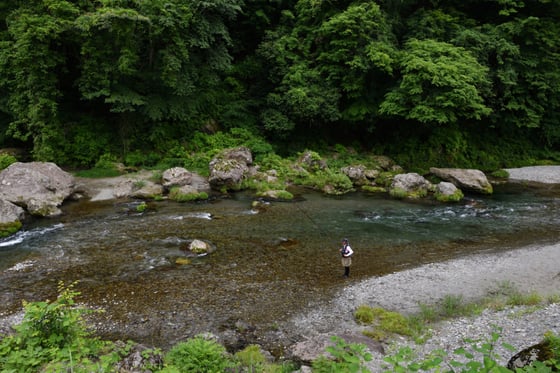
Between June and September, guests are even treated to watching master fisherman Nobuo Ishii catch straight from the river the ayu sweetfish that are served for dinner. It is truly an opportunity to experience what locals call “the breath of the land” with all five senses.
The Flavors of the Akigawa Valley, Nourished by Pure Waters
- The beauty of Akigawa’s waters is a big draw for many people, but how exactly does this factor into Fushi’s cuisine?
Chishiki: Working so close to the Akigawa River that I can make use of its water directly is an absolute treat as a chef striving for top quality cuisine. When we receive a reservation, the first thing I do is go to the river to draw water for cooking. The very first thing I serve the guests when they arrive is this same water, so that it marks the start of the Fushi culinary experience.
The dashi broth we brew from this water has a particularly refreshing deliciousness. Dashi is the lifeblood of Japanese cuisine, so I’m delighted to have such pure natural water so close at hand to be able to make it perfectly any time.
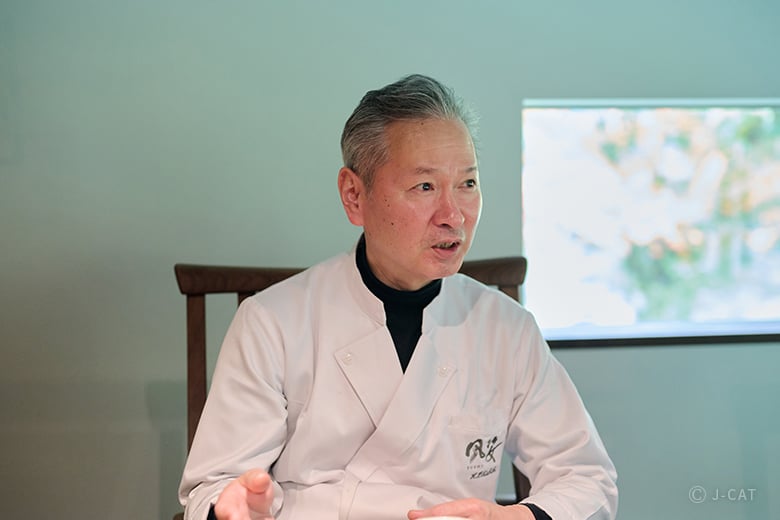
Chishiki – a culinary master with 35 years of experience – speaks on water’s importance
- As a chef who has mastered the craft, what else do you consider vital to cooking?
Chishiki: I place great importance on seasonality. Not just using seasonal ingredients, but also intricately seasonal presentation – for example, in autumn alone I present my food differently depending on whether it’s early, in the middle, or late in the season.
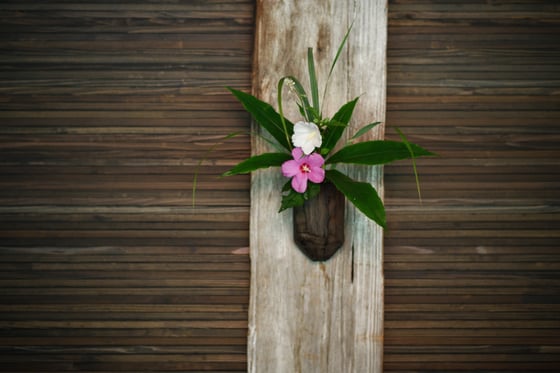
It was actually Chairman Takamizu who inspired me to take this deeply seasonal approach, since he grew up around here and has extensive knowledge of kado*. He gets up early in the morning to go into the mountains and pick beautiful flowers, leaves, and fruit, and he’s taught me a lot about how to express the season that way. The flower arrangements in the villa are all by him.
*Kado literally translates to “the way of flowers,” and refers to Japanese arts of flower arrangement such as ikebana.
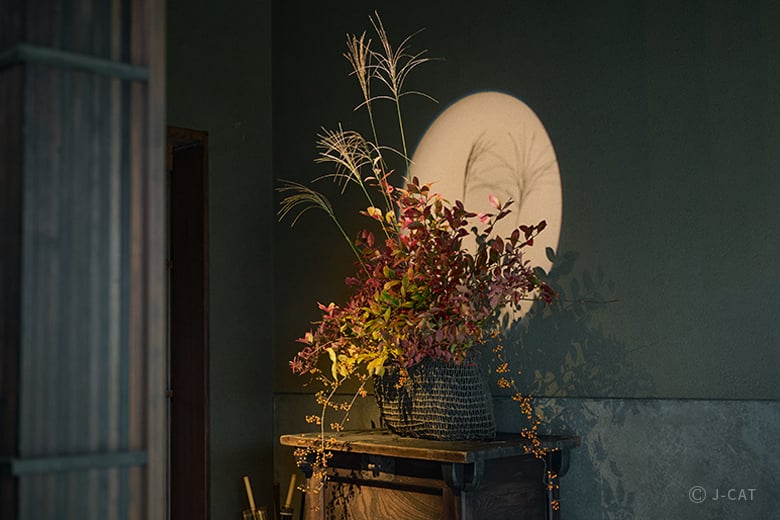
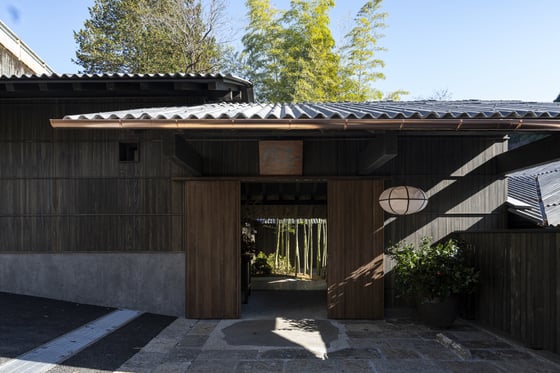
Villa guests are greeted by a Takamizu flower arrangement at the entrance
Takamizu: I can’t cook, so I leave that to the culinary professional and focus on what I can do. But it’s true that this region has a very distinct and beautiful seasonality, so I did want that expressed through our gastronomy.
Chishiki: Everyone brings something to the food, and shares themselves through it. It’s infused with all of their ideas and passions, so even if it’s just me doing the actual cooking, I don’t consider the final dish to have come from me alone. I think a lot of the charm of this place comes from the harmony of all of the elements – the food, the architecture, the scenery, and the people most of all.
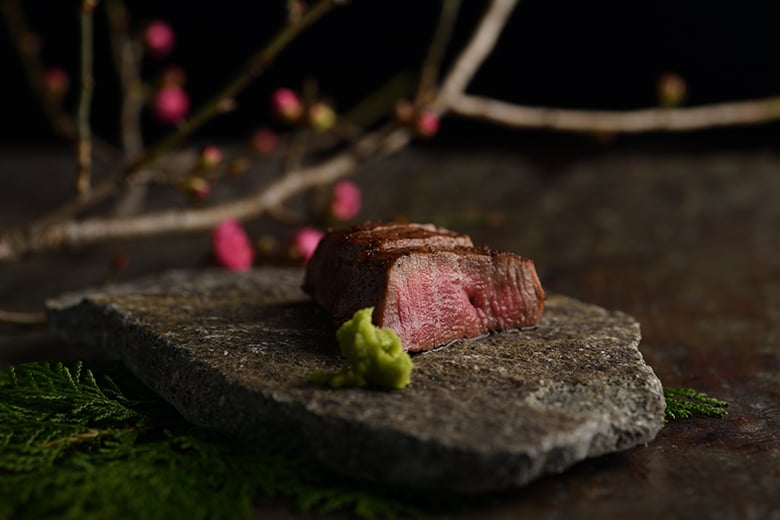
The rich sensory truth of the seasons – often nearly absent in urban life – is palpable in Chishiki’s cuisine
From River to Table: A Master Ayu Fisherman Elevates the Gourmet Experience
Local ayu fisherman Ishii is also a key figure in the Fushi experience, and tends to leave a memorable impression on guests. From June to September, guests can experience his traditional ayu fishing, using the method known as tomozuri. Guests observe his technique up close and try their hand at using it themselves. This river catch is then cooked on the day by the chef.
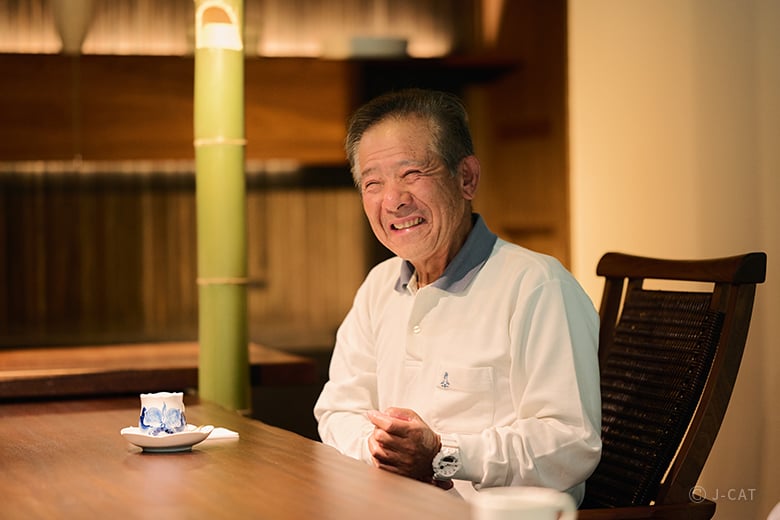
Ishii: a fishing competition regular, mountain stream expert, and fishing magazine editor
- How would you describe the “local character” of Akigawa’s ayu and other river fish?
Ishii: It’s the deliciousness that comes from the water quality. The water determines the flavor of the fish. The quality of the Akigawa’s ayu is proven through an annual competition known as the Seiryu Meguri Kiki Ayu Kai. Around fifty or sixty river communities from around the country enter, and the ayu sweetfish from each river are blind tested for visual appeal and flavor.
The Akigawa Valley ayu have repeatedly taken second place in this competition. The other top performers in the competition are all from exceptionally clean rivers, and all produce ayu with exceptionally tasty flesh and even guts. Also, ayu from rivers this clean tend to have pleasant aromas, evocative of watermelon or cucumber. The cleaner the water, the more distinctive the aroma.
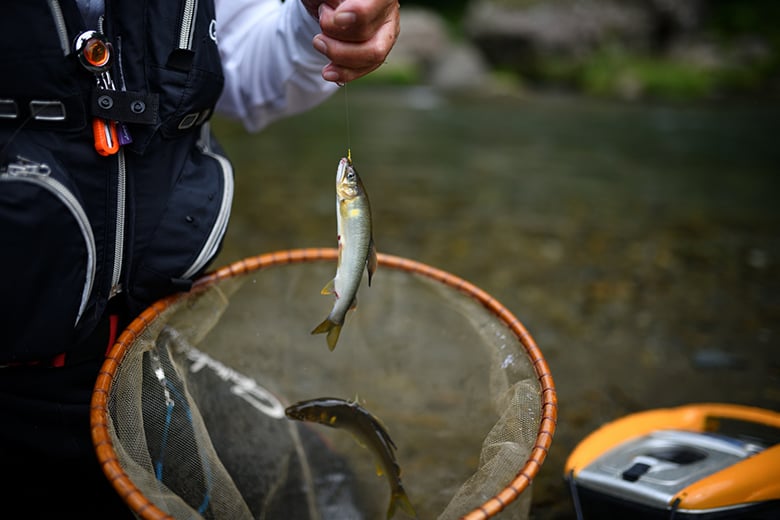
Ayu fishing – with expert guidance – captivates adults and children alike
Chishiki: Dining on ayu you’ve just watched being caught in front of you is a rare experience, even in Japan. Ishii really impresses our guests with this.
Ishii: I’m not present at the meals themselves, but Chishiki-san always tells me about their reactions afterward, which really motivates me. Just the other day, a guest asked him specifically to give me their regards, which made my day.
A Place to Be Proud of, The Challenge of a Lifetime
Today the Fushi structure is a local icon, but until just a few years ago construction was completely prohibited in the area. The COVID-19 pandemic put a damper on tourism levels, prompting the relaxation of this rule and a new challenge for Chairman Takamizu.
- From your perspective as the founder, what value do you feel Fushi creates for the local community?
Takamizu: This is not Tokyo as people know it. It’s a place of pristine, untouched nature, where buildings are only just beginning to appear due to the COVID-19 pandemic.
I happened to develop a heart condition during the COVID-19 pandemic. At the time, I felt a pressing need to put my one and only life to use, to do something I could be proud of before the world. I decided to create a lodging facility offering bespoke hospitality services to a single group per stay. I saw this as “my final chapter,” and wanted to leave a legacy that I could truly take pride in.
I also wanted to enhance the brand value of the Akigawa Valley – where I was born and raised. I intend to share all the ideas I get from running Fushi with the local community.
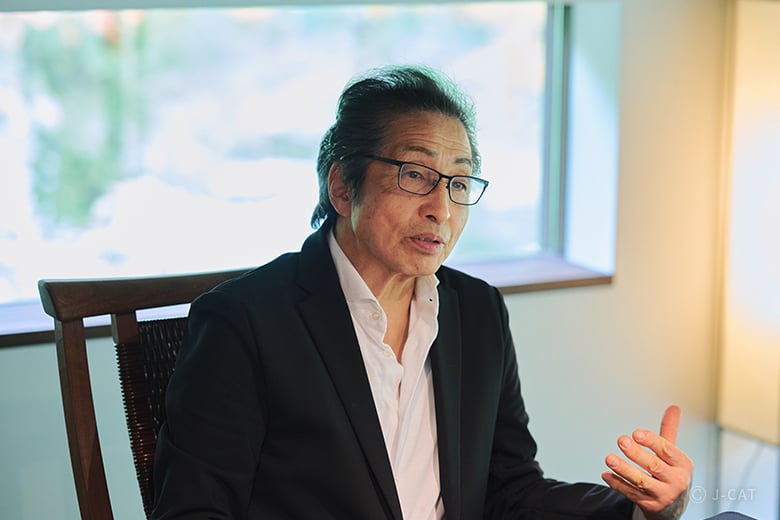
Chairman Takamizu has been involved in the kaiseki restaurant and hospitality management business for over half a century – and describes his current endeavors as his “final chapter”
- The architecture of Fushi seems to strongly embody your feeling. What kind of discussions did you have surrounding the construction?
Takamizu: I gave the architect three conditions. The first was that the structure must stand in harmony with nature, and eventually decay and disappear. The second was that it must not be a building that visually stands out. The third was that the building must allow the wind to flow through it. I wanted a building that would meld quietly with the surroundings, without that eye-catching presence that so many architect-designed buildings have.
The project hit many obstacles along the way, but despite that it ended up taking the Small Project of the Year award at the 2024 World Architecture Festival. It beat out around 800 other entries, which helped to draw global attention to the region.
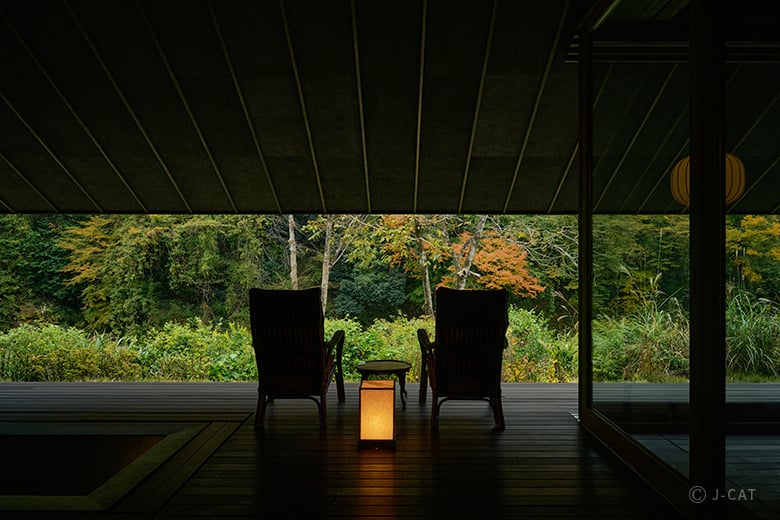
A distinctive feature is that the villa’s front is the side facing the river
“A Chain of Feelings” for Guests from Around the World
- You get a lot of repeat visitors to Fushi, don’t you? Are there any who have been particularly memorable?
Chishiki: There was a doctor and his family. He just looked exhausted from his work life. After dinner on the first night, we had prepared a late-night meal but he was too full to eat it, so we simply left off the day with an explanation of what it was. The next day, after breakfast, he remembered it and requested to have the meal he’d missed for dinner that day instead.
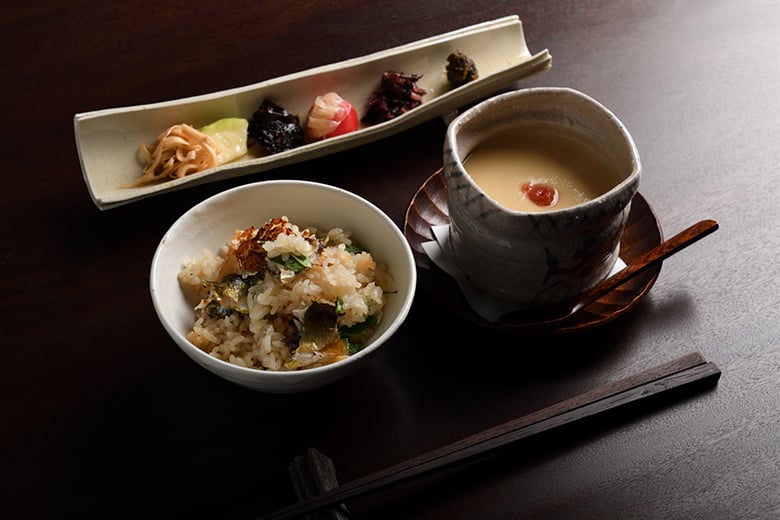
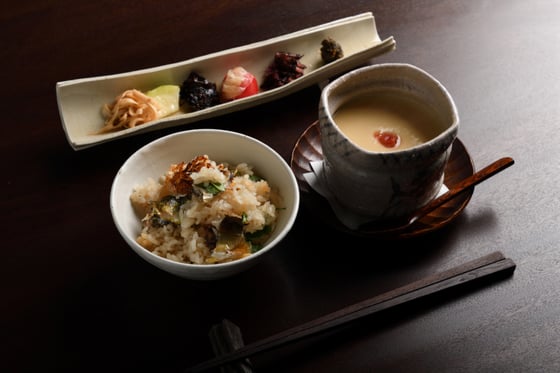
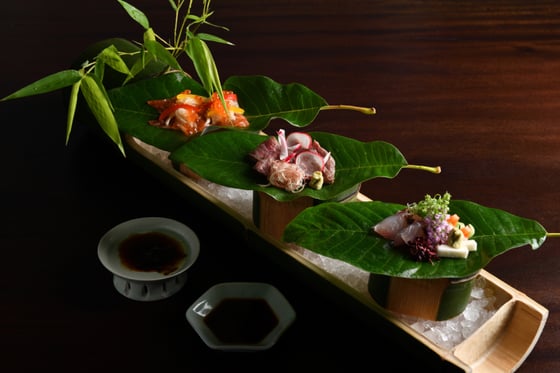
Japanese cuisine imbued with traditional hospitality, crafted by an expert chef from local ingredients
Well, we didn’t have any more of the ingredients from the previous day, so the manager went out in a hurry to get some more, and got some little gifts to go with them. In the end we were able to fulfill his request without a hitch, and when he left, his expression had totally relaxed. He looked like a different person. Even without saying a word, it was clear he’d had a peaceful, refreshing stay, and it made me so glad I hadn’t had to refuse his request.
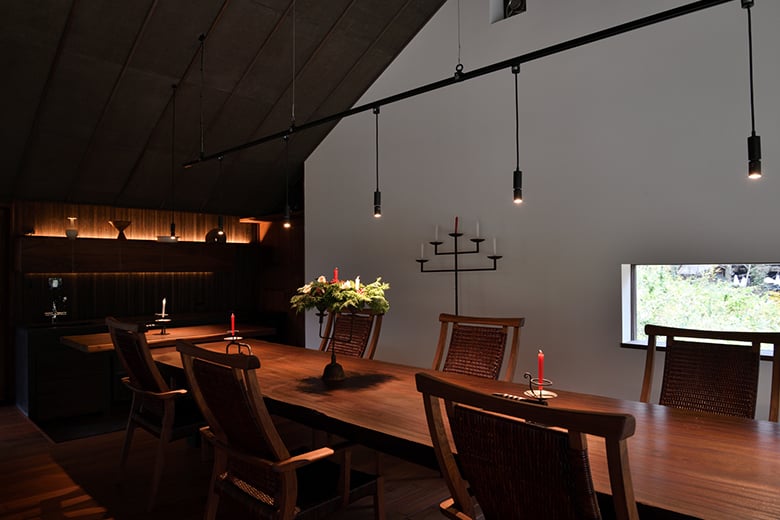
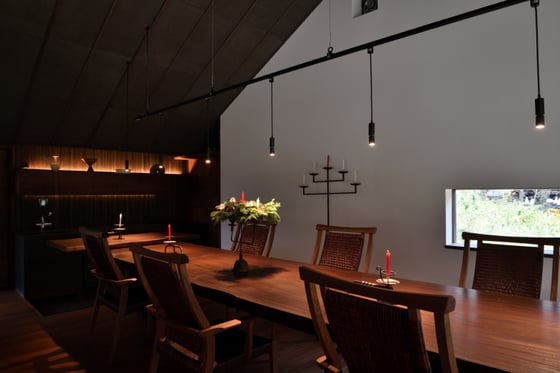
The spacious yet cozy dining room
Takamizu: We believe that pleasing our customers is everything, and we want to do everything we can. Because we only host a single group per stay, we are able to offer bespoke services that you simply can’t get at a luxury hotel in the city. But this doesn’t have to mean extravagance. It can be little touches of personal excitement, serving things we just picked or caught, or grilling over river stones from the Akigawa. A chain of these small touches of feeling is what we want to offer our customers from overseas.
Spinning a Future of Coexistence with Nature
- It seems like the water, nature, and landscape of this region share an inextricably linked destiny. How do you seek to preserve these for future generations?
Takamizu: It’s important that we do our best not to disrupt this unique ecosystem. And that’s really all we can do. I want it to be possible for the children of today and tomorrow to play in this river just like we did growing up.
Ishii: The clean, clear waters of this area are what make our work possible. That’s why we have to take good care of them. We follow the rules of good conservation to protect the landscape and pass it on. I intend to keep this river as my playground for the rest of my life.
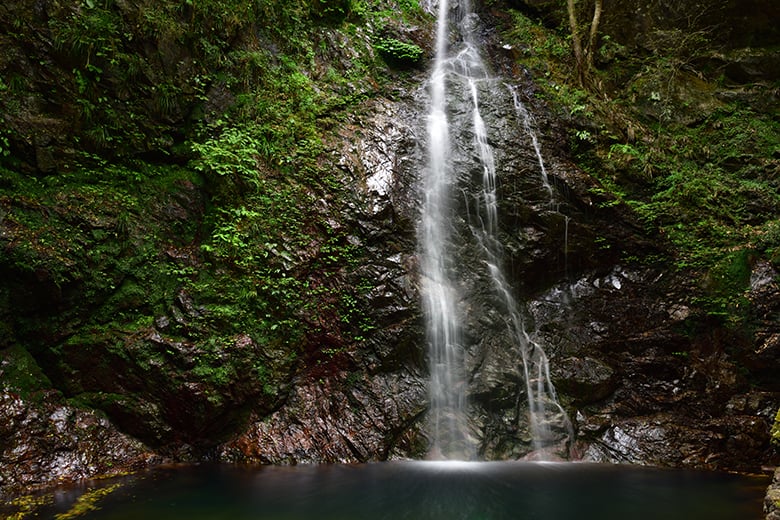
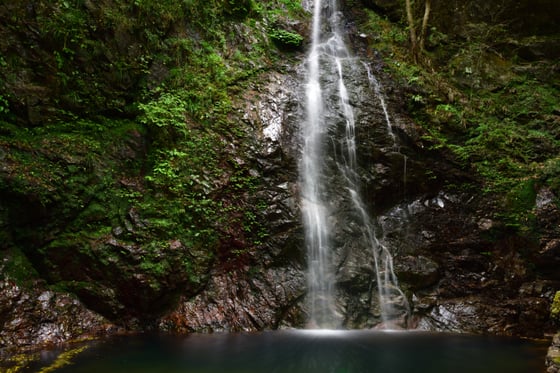
Hossawa Falls, an icon of the region’s pristine natural beauty
Chishiki: As a chef, I feel it important to pass on the fundamentals of cuisine to the youth. The dishes of our ancestors were simple delights, and Fushi draws on those origins. We bring that tradition to perfection using good water for dashi broth, and fresh local produce.
This region is known for potatoes in particular, and they’re delicious simply steamed and salted. It’s a flavor born entirely of the quality of the soil and the water. Through minimalist dishes like this rather than overstuffed extravagance, I hope to reveal to people the deep connections between Japanese cuisine and the natural environment.
Takamizu: Ingredients with a story behind them are all the more delicious for it. I believe that. We want to nurture those stories with all our hearts – along with the natural environment of the Akigawa Valley – and share it all with our guests.
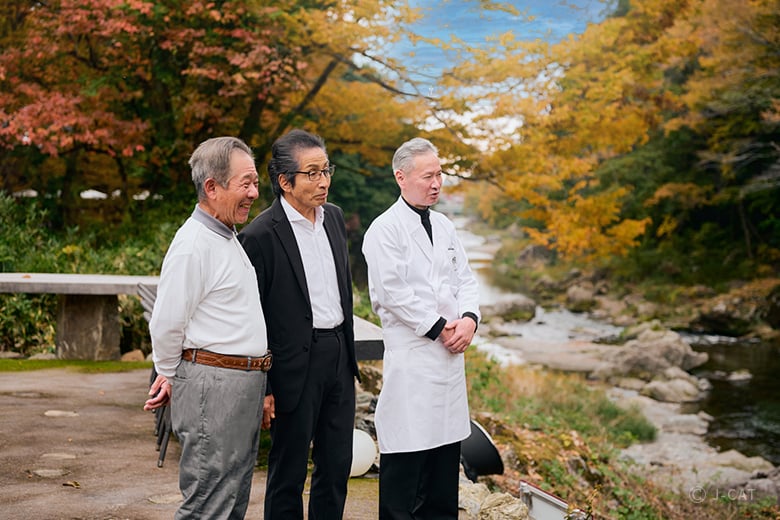
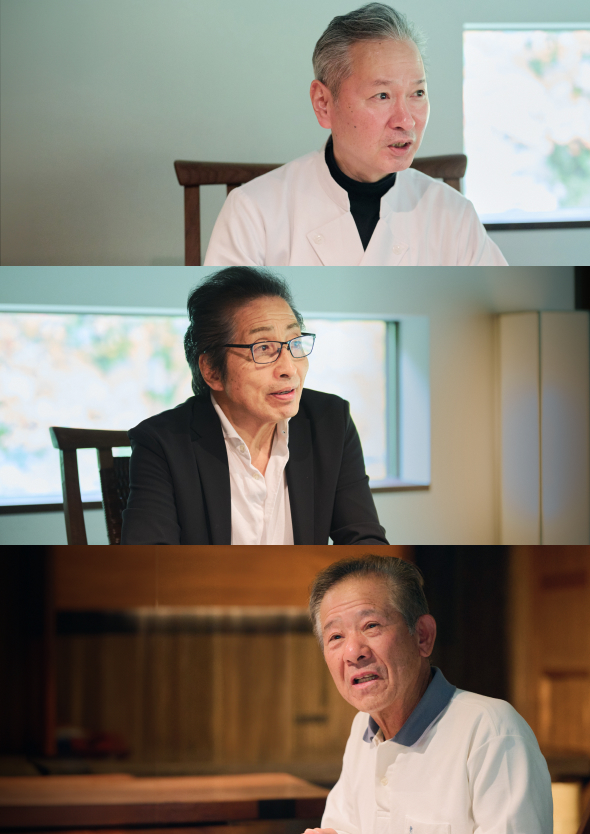
This trio’s shared passion spotlights and augments the charms of the Akigawa Valley
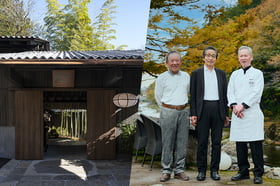
Kenji Takamizu / Hisashi Chishiki / Nobuo Ishii / Fushi
Kenji Takamizu, Kurochaya Group Chairman
Through the Kurochaya restaurant group, Takamizu relentlessly pursues “the coexistence of nature and fine cuisine in Tokyo.” As the helmsman of Fushi, he merges traditional hospitality with modern sensibilities to promote local culture to the wider world.
Hisashi Chishiki, Fushi Executive Chef
Fushi’s chef carries on the culinary philosophy of Kurochaya, a restaurant group with a half-century of tradition behind it. Through his cuisine, he honors the cycles of nature, the blessings of water, and the seasonal flavors of the Akigawa Valley. Through his live cooking performances, he showcases “the beauty of the moment when the ingredients meet.”
Nobuo Ishii, Expert Ayu Fisherman
A master of ayu fishing who has mastered the mountain streams of the Akigawa Valley inside and out. He imparts the techniques of ayu fishing to visitors, along with a reverence for nature through the experience. A key figure in the Fushi stay experience, his story spans “from the river to the dinner table.”
Fushi (Interview Venue)
Opened in 2024 by the Kurochaya Group, Fushi is a private villa retreat designed by Takaharu Tezuka to melt the boundary between indoors and outdoors and meld with its natural riverside surroundings in Tokyo’s Akigawa Valley. Accommodating only one group at a time, the property combines architectural distinction, culinary heritage, gastronomic innovation, deep immersion in nature, bespoke seasonal experiences, and luxury hospitality. It was selected for the Small Project of the Year award at the 2024 World Architecture Festival.
Fushi
177-1 Konakano, Akiruno City, Tokyo 190-0165