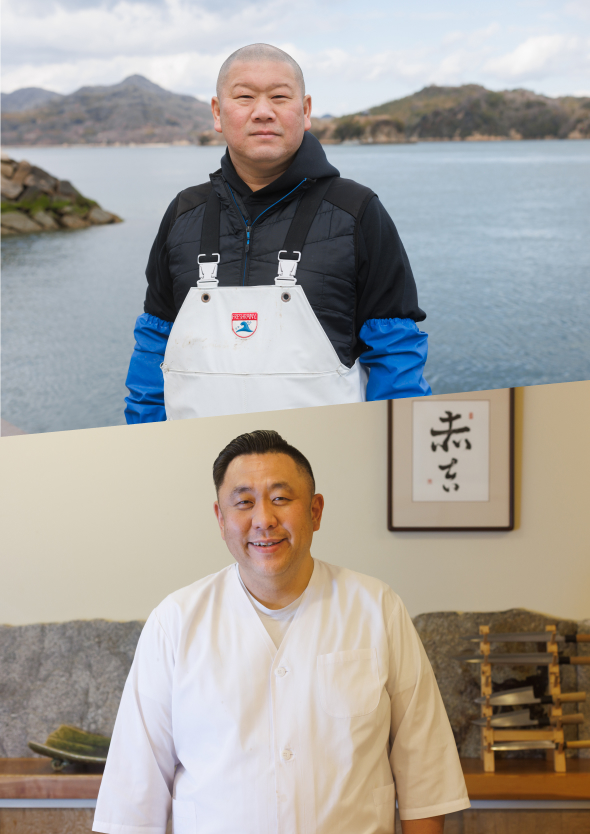
Two Links in a Chain
Junichi Fujimoto and Junji Akase aren’t just partners in business – they’re collaborators who inspire, rely on, and bring out the best in one another. “As a sushi chef, maybe I shouldn’t say this,” confesses Akase, “but I actually don’t inherently love fish. I do love top quality fish, though. Which is why I love Fujimoto’s fish.”
In fact, it was Fujimoto’s ardor that won over Chef Akase when the latter was at a crossroads in his own career. “I’d always loved sushi, but I was also quite drawn to French cuisine, and couldn’t make my mind up which to build my career on. It was seeing how passionate Fujimoto was and experiencing what he was capable of that convinced me this was the path for me.”
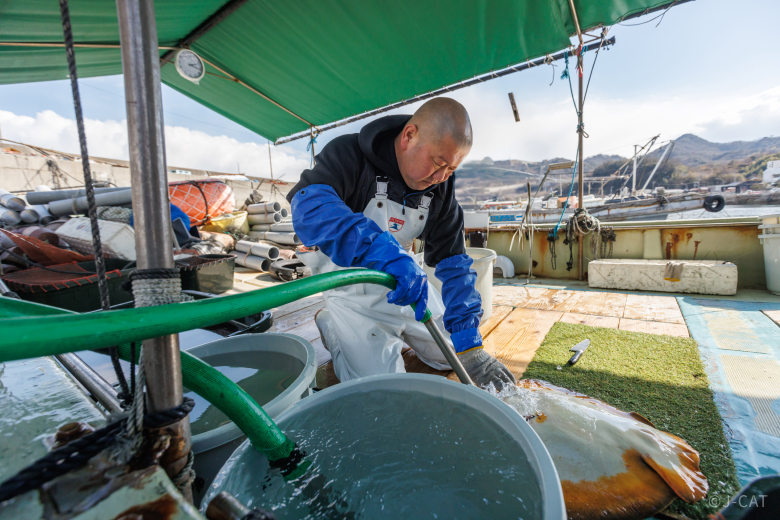
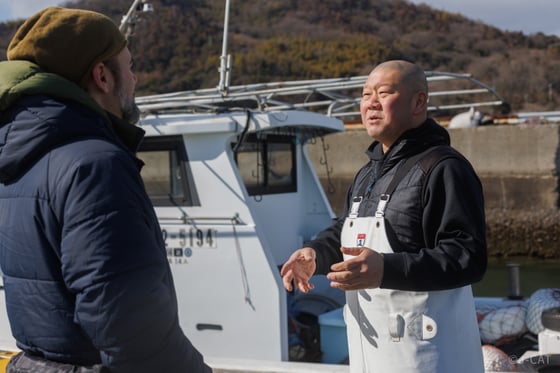
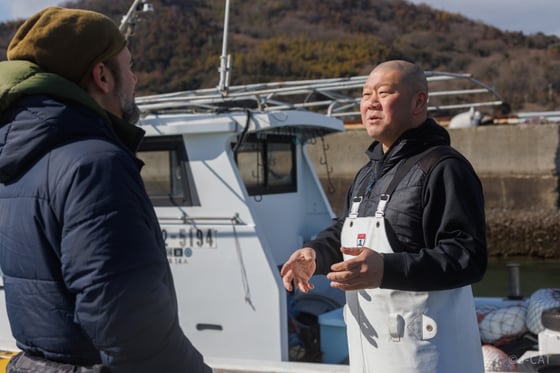
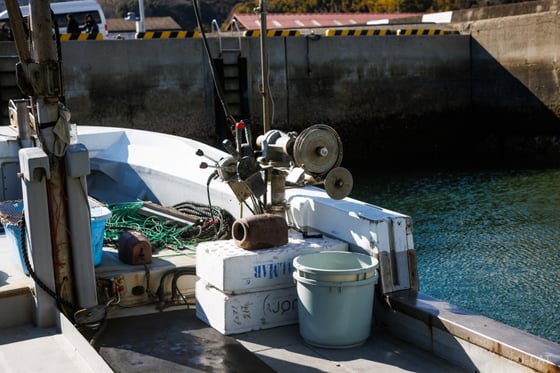
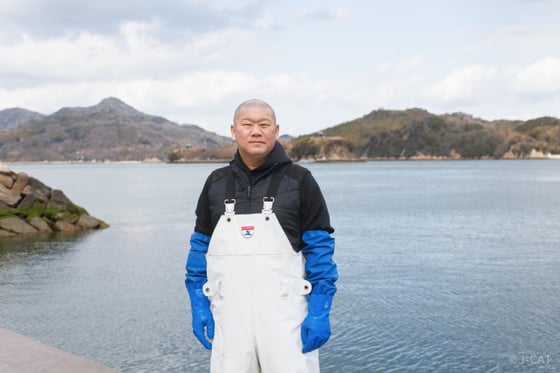
Fujimoto at work on his fishing boat
For his part, Fujimoto has been on his path since childhood. Fourth-generation son of a family of fishermen, his seafood tutelage began under his grandfather who taught him to notice the subtlest differences in taste caused by factors such as size, age, gender, and handling. “When I started developing preferences, he’d let me pick out the fish to eat myself,” Fujimoto laughs at the memory. “Which is pretty crazy to let a kid do.”
Crazy? Given that it set young Fujimoto on a path to mastery, maybe not. Lucky, though? No question. And highly unusual for fishing families, who tend not to keep and eat their most valuable catch for obvious commercial reasons. But this sacrifice for the sake of the budding young fisherman’s education gave him a deep appreciation for quality over quantity, and set him on a quest for sustainable, reproducible perfection.
Thoughts on Sustainability: Environment as Business as Quality
As a pioneer of methods that focus on quality and value over quantity – and as a winner of the Gault & Millau Terroir Award – Fujimoto has been praised in Japan and abroad for his work in promoting sustainability and combating overfishing while elevating the quality of his catch. But when asked about his work toward sustainable fishing, Fujimoto himself is far from idealistic about these concepts.
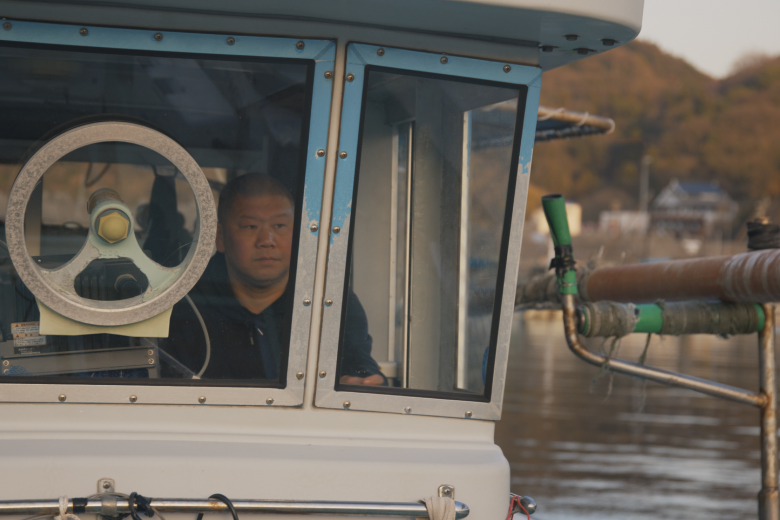
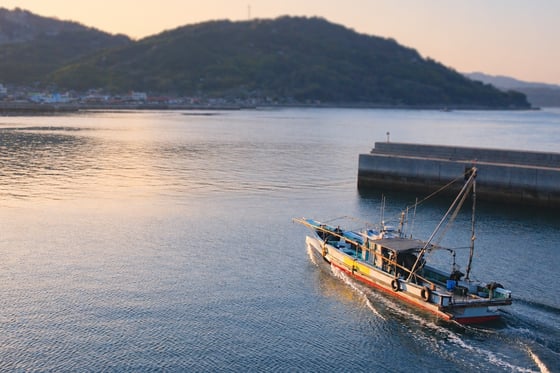
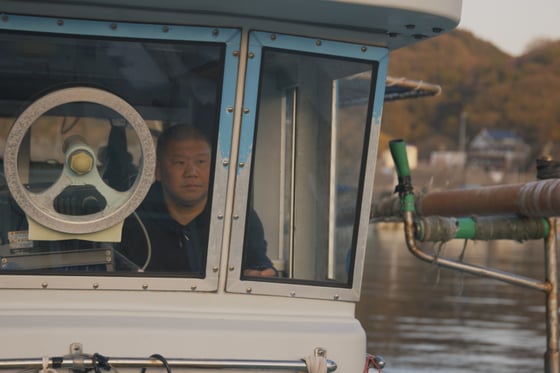
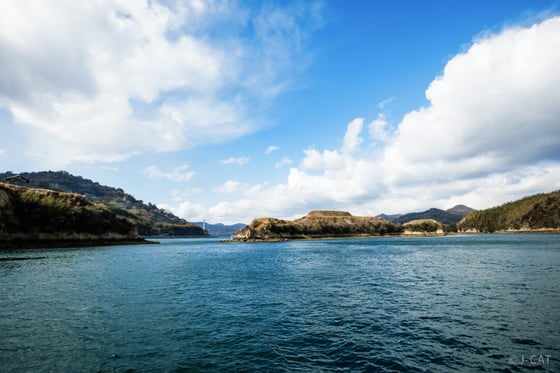
Fujimoto piloting his vessel through the straits around Hakatajima
“‘Sustainability’ has always struck me as a buzzword,” he muses. “I’ve never met anyone using it who was ultimately doing anything but trying to make money. And for fishermen, making money traditionally means catching and selling lots of fish. But we’ve seen a 10 year decrease by half in fish yields in the Seto Inland Sea, overwhelmingly caused not by climate change but by overfishing. I started developing practices and sensibilities that they now call ‘sustainable’ because I love what I do and I want there to be a future in it, not because it’s a trending marketing term. But I think quotas are still more important than anything else.”
Perfection by Elimination: The Art of Subtracting Negatives
One of the biggest things Akase and Fujimoto share is a subtractive philosophy of perfection. For Fujimoto, elevating the quality of seafood all comes down to eliminating the factors that hold it back. This is the guiding principle behind his holistic and empirical system of innovations. It’s why he gives most of his fish plenty of time to rest and relax before performing shinkei-jime – a technique for inducing instantaneous nerve death.
“Are you in your best condition after running a marathon? After being packed into a tight, crowded space with others?” muses Fujimoto. “Obviously not. Stress makes fish flesh stink, and thickens their blood. Relaxation and shinkei-jime are both just about minimizing stress and getting them at their best.”
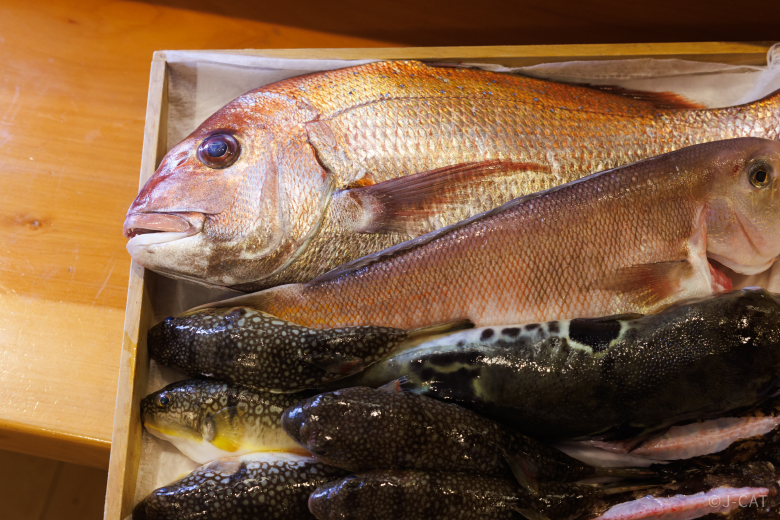
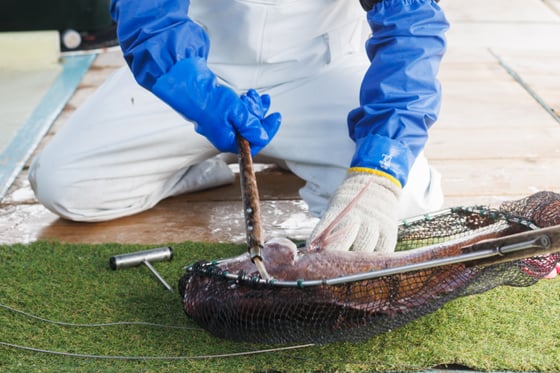
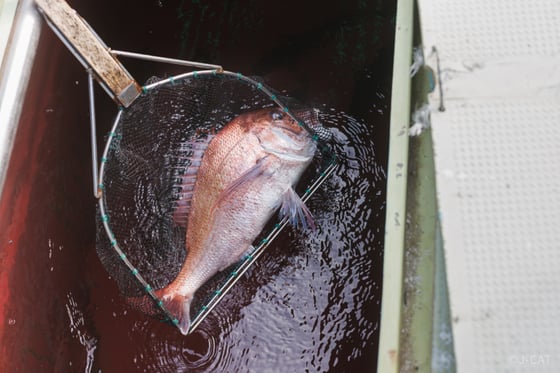
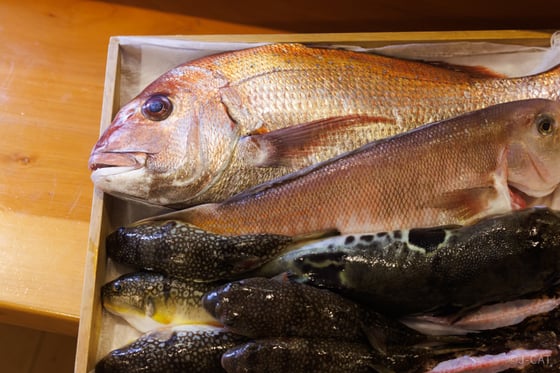
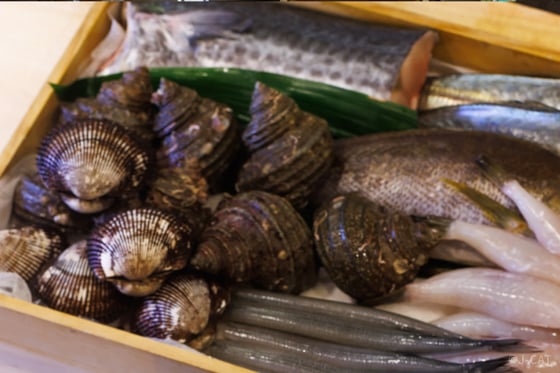
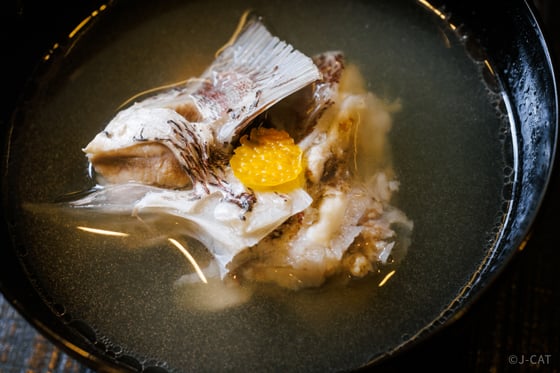
Fujimoto’s freshly shikei-jime’d catch
For the more scientifically inclined, Fujimoto puts it a different way: “Fish use adenosine triphosphate (ATP) for muscle movement” (as do human marathon runners) “and produce lactic acid and ammonia as waste products. So a relaxed fish has maximal ATP and minimal lactic acid and ammonia in its muscles. A fish that is stressed out from fighting for its life has just the opposite. When we smell fish, or taste it, or feel its texture as we bite into it, we perceive those differences.”
Truth in Taste: The Vivid Thing Itself
Junji Akase certainly perceived those differences immediately. “I can tell a lot about a fishery or a fishing boat just based on first impressions. Fish stink is a bad sign. Bleach smell is a bad sign. Fishermen throwing or kicking fish is a red flag. Choices of nets tell me how much they do or don’t care about quality. In my cooking I’m after the real deliciousness of the fish itself, pristine and uncompromised. As a chef I need a supply of pristine, uncompromised fish to bring that out. It really is mostly about eliminating negatives, which Fujimoto gets.”
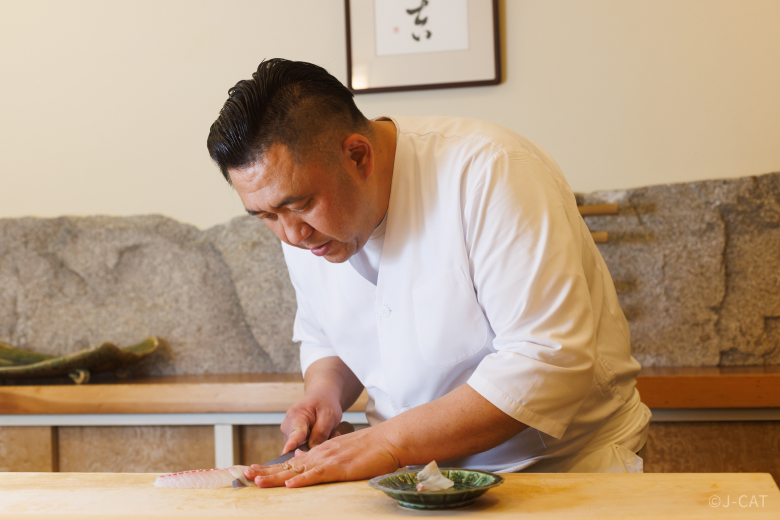
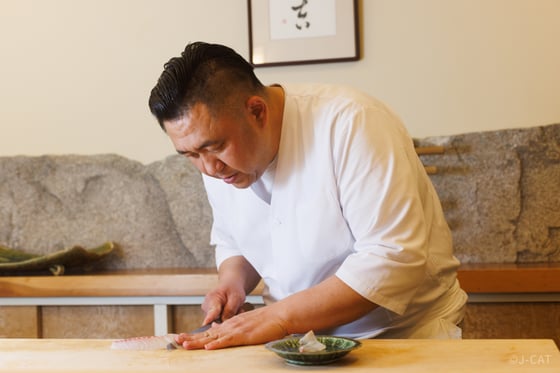
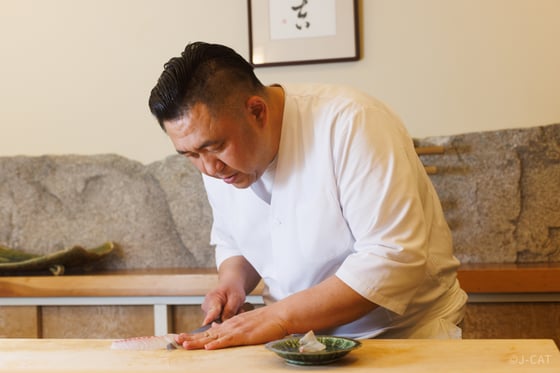
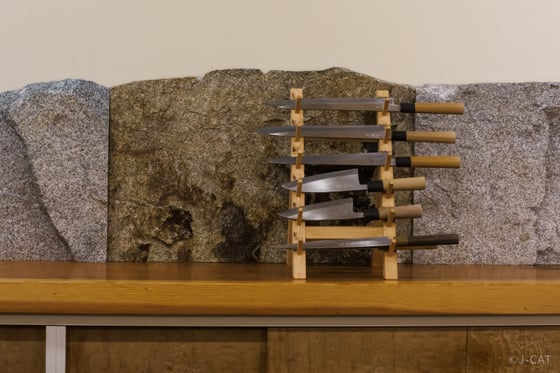
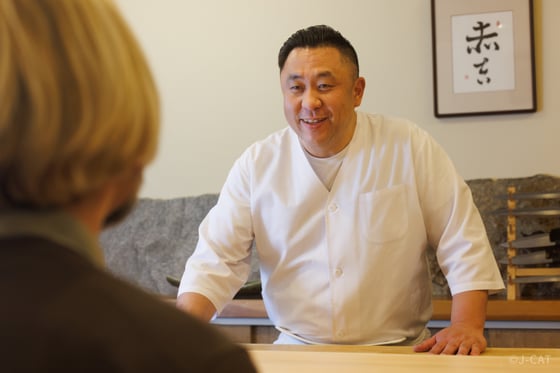
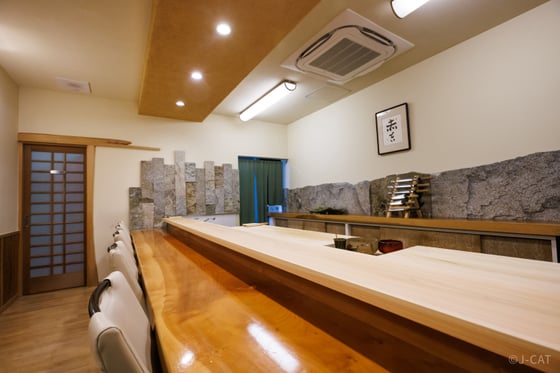
Akase at work in his restaurant
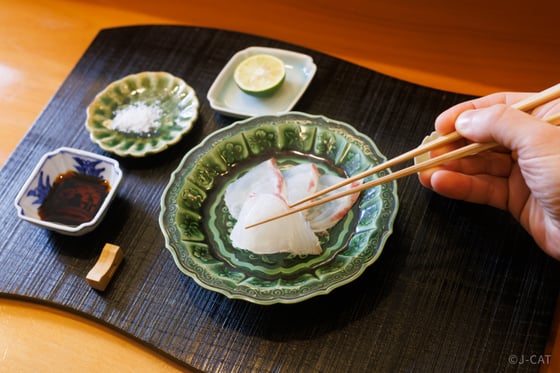
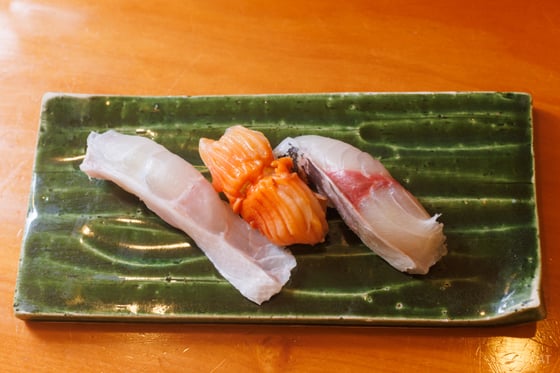
Once you have a supply of pristine and uncompromised catch – so much easier said than done, of course – where do you go from there? For Akase, it’s all about spotlighting the intrinsic flavors and textures. That means eliminating anything that ruins or competes with them. “Red vinegar is sometimes used in sushi to mask the odor or flavor of subpar fish. I only use milder, sweeter white vinegar to bring out the delicate flavors of whitefish. And I only serve local catch, which here in the Seto Inland Sea means I only serve whitefish.”
Eclectic and Empirical: Where Science Meets Craft Intuition
But bringing out the flavors and textures of the fish also means understanding the people eating them. Whereas knowing when to gelatinize or how much salt to use comes from knowing the fish and how to prepare it, things like how much soy sauce to apply or how to press the sushi come from reading the diners. Keen powers of observation and the ability to make adjustments on the fly are critical.
“People from different backgrounds eat differently, and you notice things if you’re watching,” says Akase. “Some tend to bite into their sushi rather than eating each piece as a single mouthful. Some strongly prefer very soft fish. These preferences all dictate different approaches to serving.”
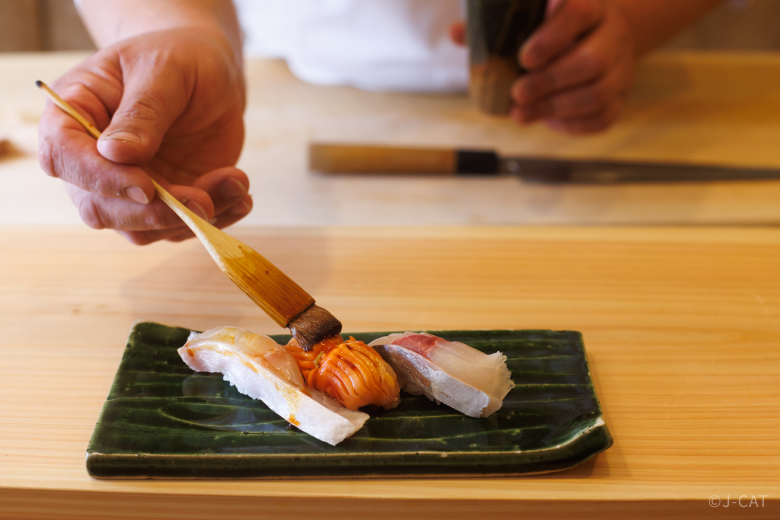
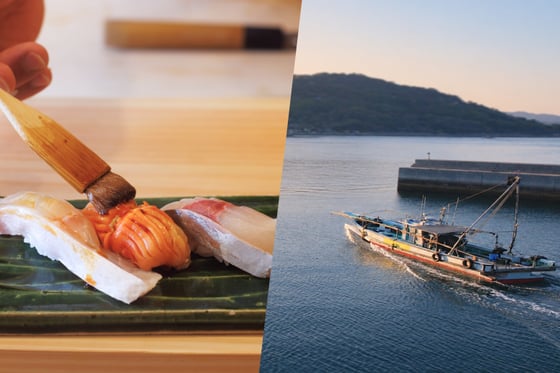
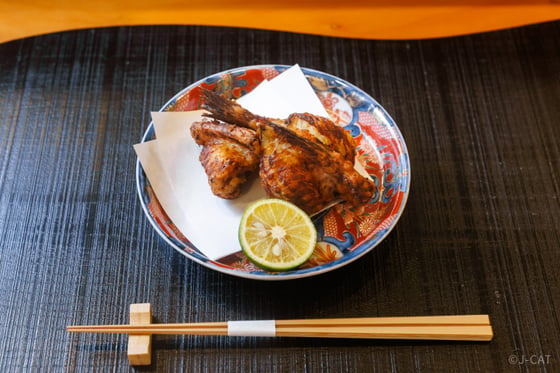
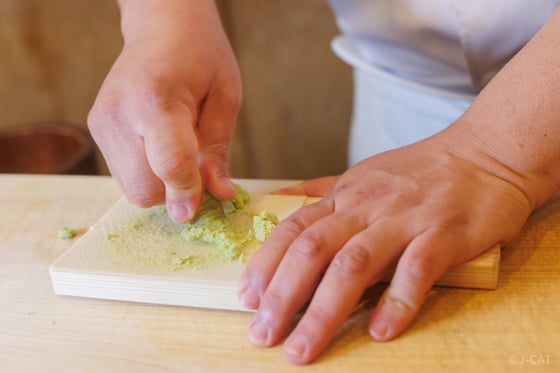
Akase putting the finishing touches on his sushi
But for Chef Akase, one kind of observational trumps all others: “If you’re a cook, you have to eat. It’s the most important thing. Eating gives you ideas. Eating lets you notice things. It shows you every little factor affects the outcome. It helps you develop and calibrate your own tastes, which is super important. Chefs cook based on what they’re used to eating, and what they find delicious.”
Climate, Culture, Cuisine, and the Importance of Being There
On the importance of observation, Fujimoto is also of a mind with Akase. “I go with science as much as I can,” he says, “but I can’t rely on it exclusively. There are certain things I’ve had to figure out on my own from experimentation or restaurant feedback. I don’t always know the scientific reasons, because sometimes the research just isn’t there yet. I just know what is true in practice, and I have my own theories about why. I believe science will catch up and fill in the gaps eventually, though.”
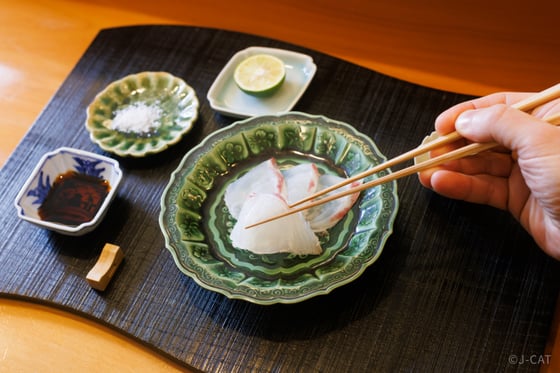
Fujimoto and Akase both say that firsthand experience is just as vital for diners. “There are certain things you just can’t experience unless you eat locally. Even in the best conditions, you only have about 24 hours where the fish flesh is still in a truly ‘living’ state, with zero rigor mortis.” This is one reason why Akase situated his restaurant Akakichi close enough to Fujimoto’s fishery for first-choice catch to arrive within minutes to hours of shinkei-jime. And it’s why Akase’s dining is a cut above even eating the same catch at a famous restaurant in Tokyo.
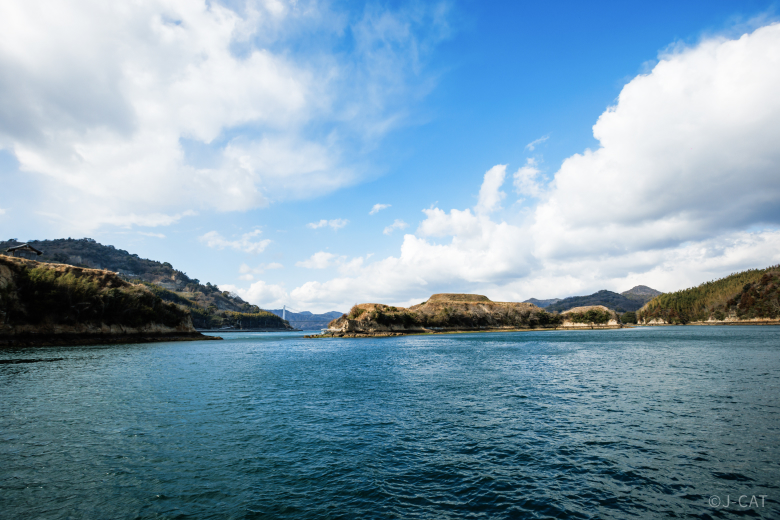
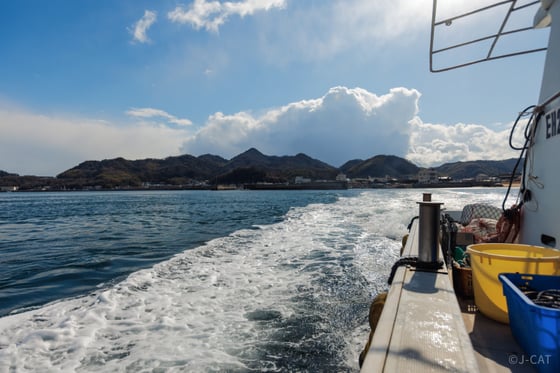
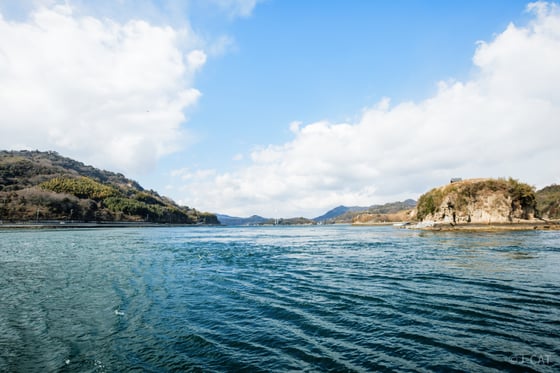
The straits around Hakata-jima, between Shikoku and Honshu
The environmental peculiarities of the Seto Inland Sea also lend themselves to certain characteristics in its fish population. “The tides here are powerful and complex,” says Fujimoto. “Those that are able to survive and put on weight in this challenging environment are special.”
“Part of what I love about my work is opening people’s eyes to the real flavor of good fish and all the factors that go into it,” says Akase. “The way I’d most like to convey the beauty of the Seto Inland Sea and its culinary culture – whether to domestic visitors or those from overseas – is very simple: through Fujimoto’s fish.”
Junichi Fujimoto of Ebisumaru / Junji Akase of Akakichi
Junichi Fujimoto of Ebisumaru
Ebisumaru is a sustainable fishery revolutionizing quality in seafood through a pioneering combination of research, intuition, and knowhow. It is run by fourth-generation head fisher Junichi Fujimoto, who has driven unprecedented advancements in techniques of shinkei-jime. Hotly sought after for his expertise by top seafood restaurants across Japan and the wider world, Fujimoto is also the first fisherman in the world to ever receive the Gault et Millau Terroir Award 2021.
Junji Akase of Akakichi
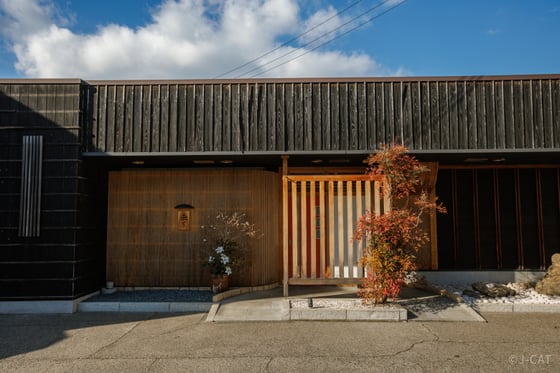
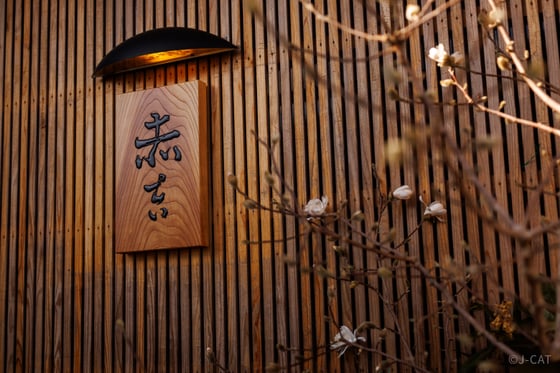
Akakichi is a Michelin-starred sushi restaurant specializing in the freshest-caught seafood of the Seto Inland Sea. Helmed by chef Junji Akase, the restaurant presents the finest of Fujimoto’s world-class shiromi-zakana catch through masterful Japanese cuisine centered around sushi, in an effort to open visitors’ eyes – and taste buds – to the joys of true freshness.