A Legacy of Soy Sauce Brewing on Scenic Shodoshima Island
-Please tell us about the charms of Shodoshima.
Surrounded by Japan’s three main islands of Honshu, Shikoku, and Kyushu, the Seto Inland Sea (“Setouchi” for short in Japanese) is nicknamed the Aegean Sea of the Orient for its scenic beauty. Over 700 small islands with circumferences of more than 100 meters dot this sea; Shodoshima is one of the best-known among them.
The warm climate and low rainfall that the Setouchi region is known for has given rise to a unique food culture on Shodoshima. Soy sauce brewing, in particular, is a legacy that has been passed down for more than 400 years and continues to develop. At Shodoshima, the traditional method of brewing soy sauce in wooden barrels is still highly cherished; we brewers take pride in it.
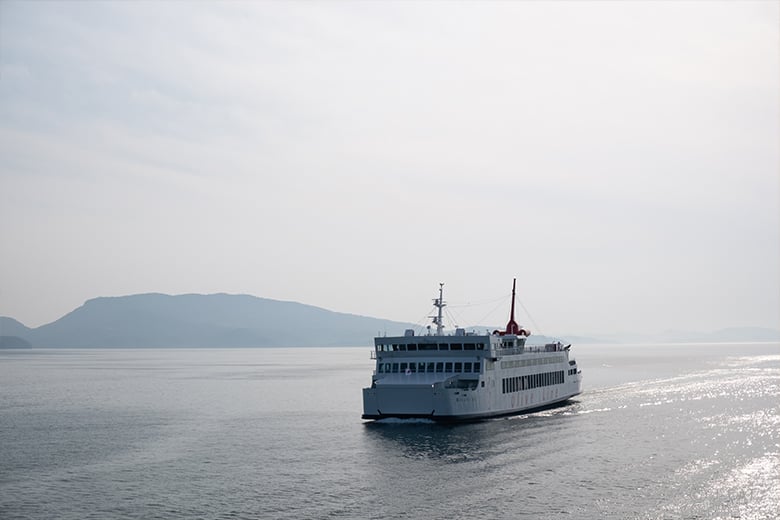
On a short boat ride to Shodoshima, the calm waters extending into the horizon will captivate you
-Is there a particular place at Shodoshima that is brimming with local history?
At its peak in the late 19th century, there were about 400 soy sauce breweries on Shodoshima. Today, the Hishio no Sato district is a testament to the history of soy sauce production on Shodoshima. Here, soy sauce breweries with their distinctive black wooden walls and factories for tsukudani (fish, seaweed, or other types of seafood boiled in a mix of soy sauce, mirin, and sugar) line the streets. With the pleasant aroma of soy sauce wafting through the air, and the townscape’s nostalgic ambiance that evokes scenery from Japan’s past, you can feel the area’s deep history.
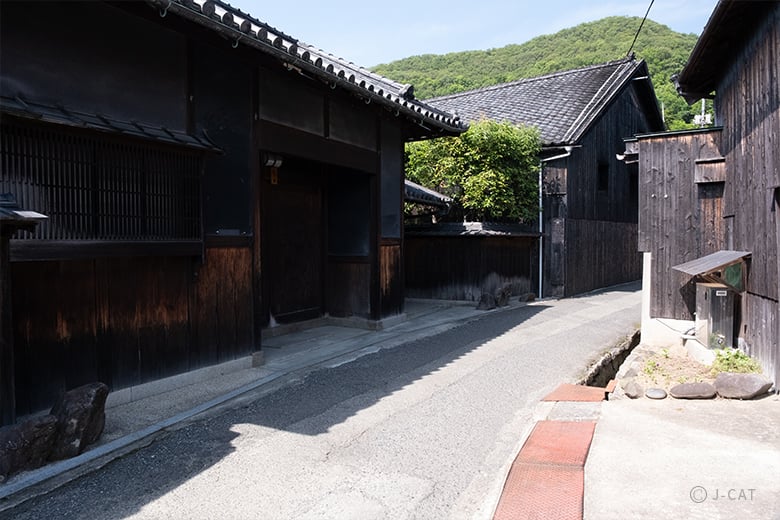
Long-standing breweries such as Yamasan Soy Sauce and Shokin Soy Sauce line the Umaki Walking Path, a popular part of the Hishio no Sato district
The Fifth-Generation Head Keeping the Globally Loved Yamaroku Soy Sauce Alive
-Please tell us how you came to take over the family business, Yamaroku Soy Sauce.
I left Shodoshima for university, but because I missed this island’s abundant nature, I found a job as a sales representative for a local food manufacturer. Though it felt fulfilling to be able to give back to my hometown, I was troubled by a certain dilemma: the fact that high-quality products made with carefully selected ingredients would not necessarily sell. Soon, I began having doubts about the cost-first approach.
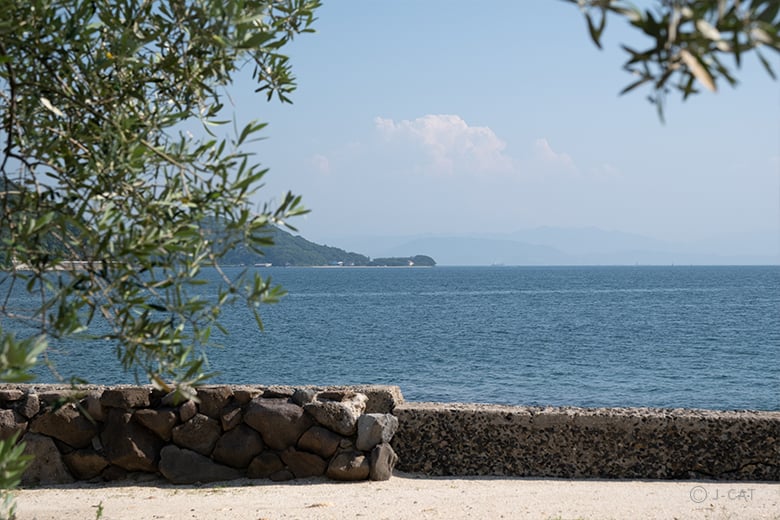
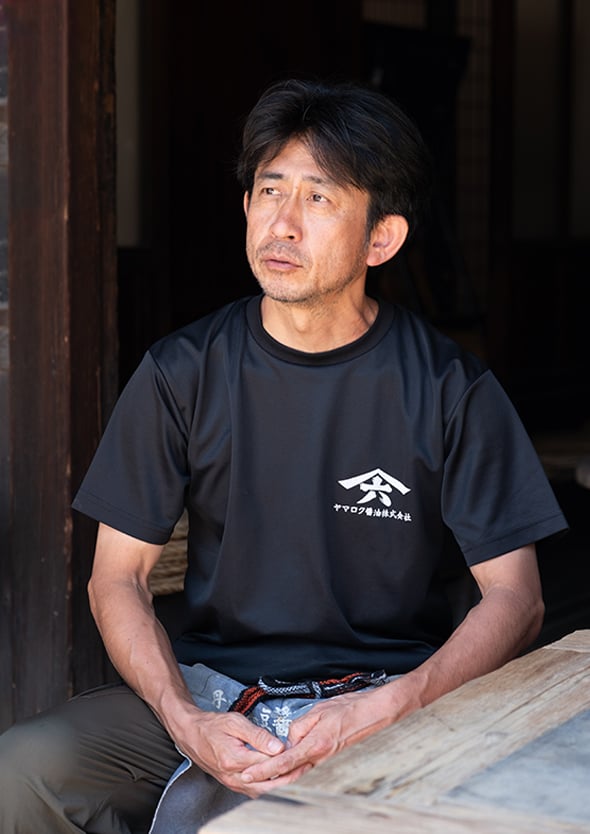
Yamamoto says that it was precisely because he once left Shodoshima that he was able to appreciate the island’s rich and beautiful nature
I have long since wanted to bring delicious food made by producers with love to customers who really need it. As this desire grew stronger with each passing day, I realized that the perfect place to make it a reality was my family's soy sauce brewery. Against my father's opposition to taking over the family business, I came back to my hometown in high spirits. However, upon my return, reality hit me. At that time, our brewery’s business situation was quite dire; it was barely enough for just my parents to live by.
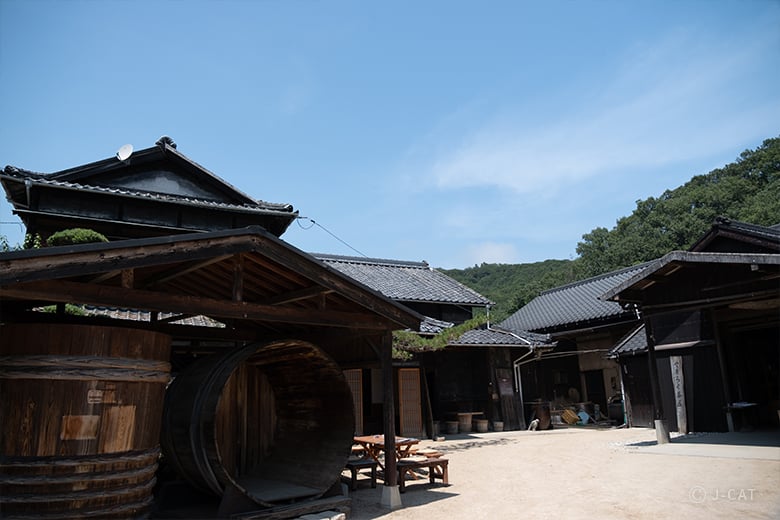
Large, eye-catching wooden barrels stand in front of Yamaroku Soy Sauce; the shop also operates a cafe serving original soy sauce sweets
Connecting Producers with Consumers by Opening the Soy Sauce Brewery’s Doors
-The large size of the wooden barrels is an overwhelming sight for those who visit your brewery. Production management must be tough in such an environment.
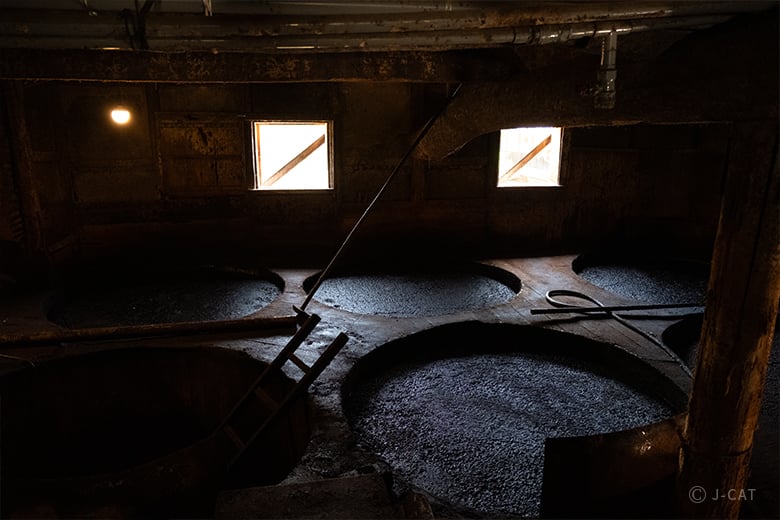
Currently, I manage about 90 wooden barrels all on my own for 365 days a year without pause. Traditional barrel-brewed soy sauce is composed of lactobacilli, yeast, and other microorganisms that live in the brewery and its wooden barrels. Since there is no time to rest when dealing with living microorganisms, I check the condition of the moromi (a fermented mash of ingredients that forms the base for soy sauce) on my own each day.
The work of using a paddle to stir around 3,000 to 6,000 liters’ worth of moromi sitting at the bottom of a huge wooden barrel is so grueling that it is described as hellish. Additionally, the brewery’s environment, which remains unchanged all year round, is extremely harsh for workers.
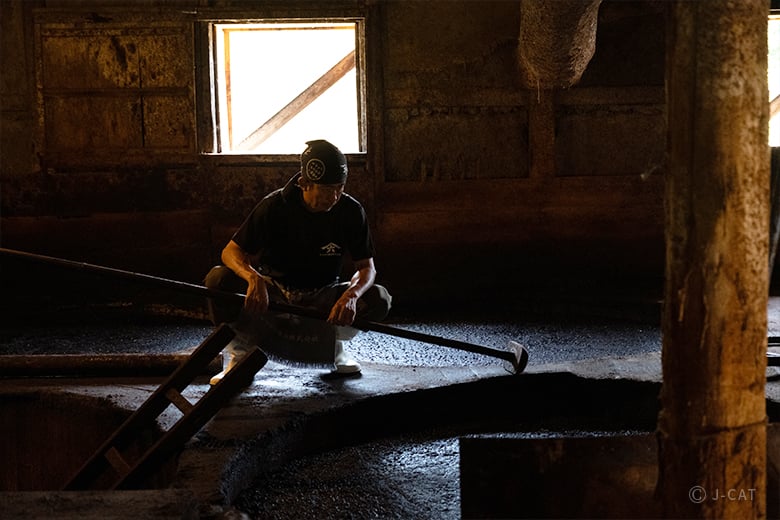
Working year-round to check the fermentation state of the day, Yamamoto carefully inspects barrels one by one
-How did your brewery, on the verge of shutting down, climb from rock-bottom?
First, we opened the brewery to the public so that consumers could see the production site directly. Through continued efforts such as working with local taxi companies to organize brewery tours, awareness spread among our customers.
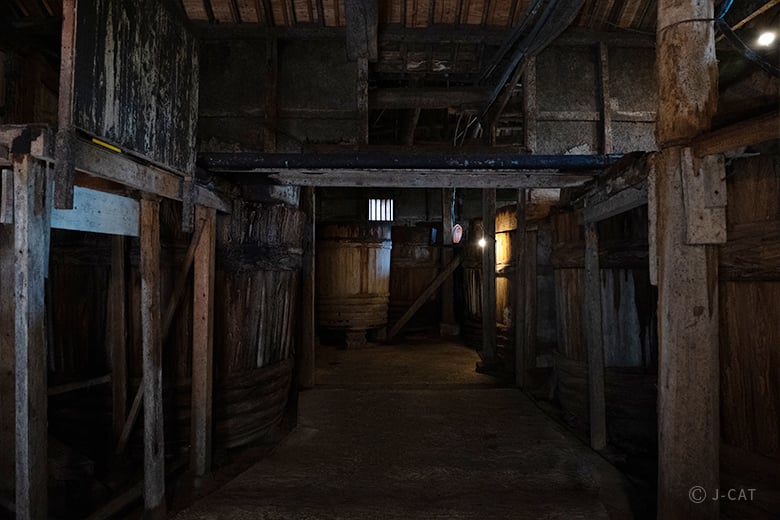
A row of 100-year-old wooden barrels makes for a stunning and almost mystical sight. Soy sauce is aged in these barrels for many years before it is sold
Then, when I took over the brewery in the early 2000s, it was the dawn of online shopping. I came up with a breakthrough idea for the e-commerce system that my predecessor had set up. To cultivate a fan base that truly understands our products’ quality, I insisted on selling directly to consumers. Introducing bottles in smaller sizes such as 150 and 500 mL, which are easier for ordinary households to use, was the catalyst for an uptick in customers not only throughout Japan, but also overseas.
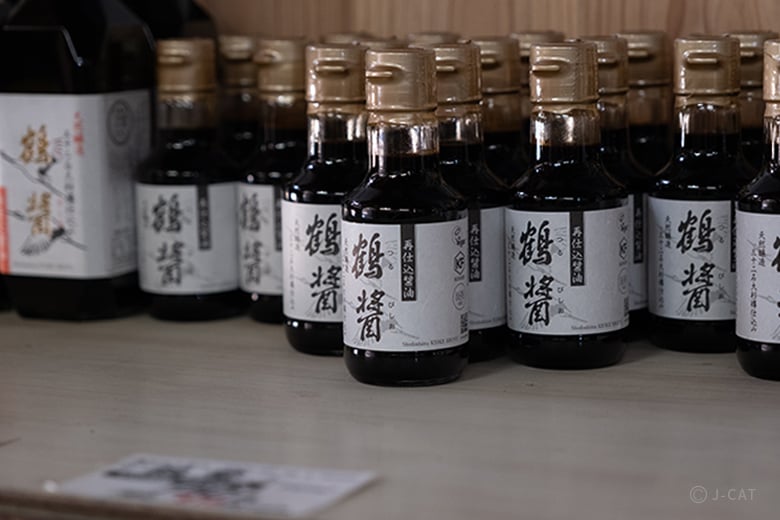
Tsuru-bishio, Yamaroku Soy Sauce’s signature brand, is double-aged in what the brewery describes as “the ultimate pursuit of depth, richness, and smoothness”
Efforts to Protect the Wooden Barrels Essential to Traditional Soy Sauce Brewing
-The Kioke Craft Revival Project that you spearheaded seems to have gained traction in recent years.
With each step forward, business finally got on track around the 12th year. However, a new problem emerged at that time: there were hardly any barrel makers left, and no successors to the craft either, and yet these wooden barrels were indispensable to soy sauce breweries.
Back then, in Japan, wooden barrels were not only used to manufacture food products such as soy sauce, miso, and sake, but also, they were heavily intertwined with people’s daily lives. You could say that they were used from the cradle to the grave. However, as industrialization marched on, demand for wooden barrels sharply decreased to the point that there is now only one remaining barrel making shop in the country: in Osaka’s Sakai City. Faced with this urgent crisis, I launched the Kioke Craft Revival Project in 2011.
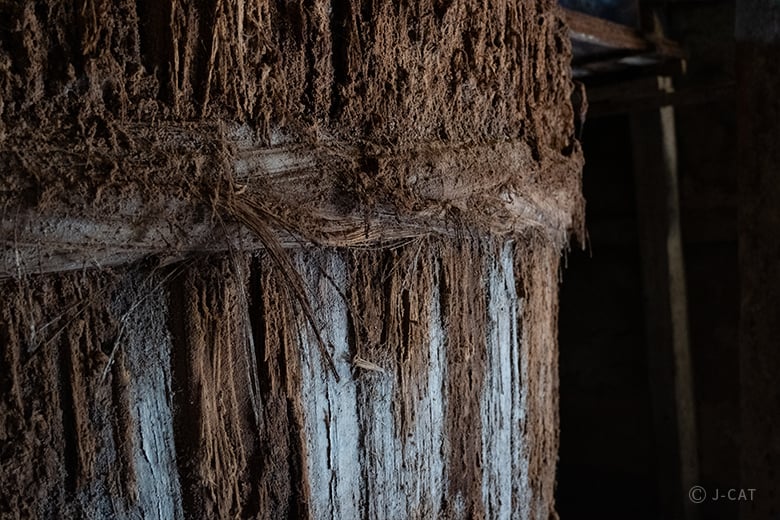
Wooden barrels decay over time due to fermentation, proving that microorganisms are living things
Fermented seasonings such as soy sauce contribute to the delicious taste of Japanese cuisine, and it is microorganisms — one of nature’s blessings — that bring out the umami flavor of these seasonings. Wooden barrels provide a healthy environment for these microorganisms to live in; plastic products cannot replace them.
Some wooden barrels at Yamaroku Soy Sauce are nearing the end of their lifespan, as they are over 100 to 150 years old. It dawned on me that in order to pass on the craft of barrel-brewed soy sauce to future generations, it was also necessary to foster a new generation of wooden barrel craftsmen. To learn how to make wooden barrels, I, along with fellow carpenters from Shodoshima, trained as apprentices with Fujii Seiokejo, currently Japan’s last barrel shop.
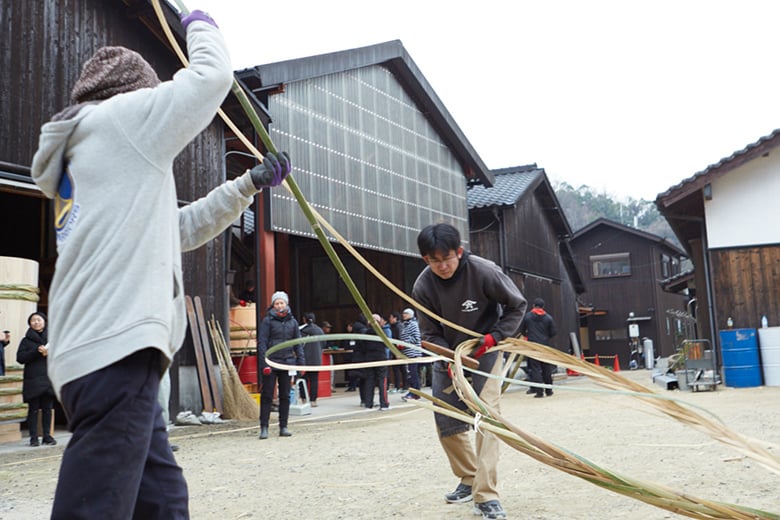
Yamamoto making a wooden barrel. As the time to replace the barrels drew near, he was determined to push through with this project
Once we had learned the barrels’ structure and features, the sourcing of materials, and the relevant techniques, we returned to Shodoshima and began making barrels. Using local Madake bamboo for the hoops that hold the barrel together and Yoshino cedar from Nara Prefecture for the base, we finally finished our new barrels after two years.
At first, we were just a group of volunteers from Shodoshima, but our numbers gradually increased. Now, young brewers from all over Japan gather each year for activities such as barrel making and fermentation culture summits. More and more soy sauce makers are returning to the barrel brewing method, and in recent years, our project has become large-scale, with over 300 people involved.
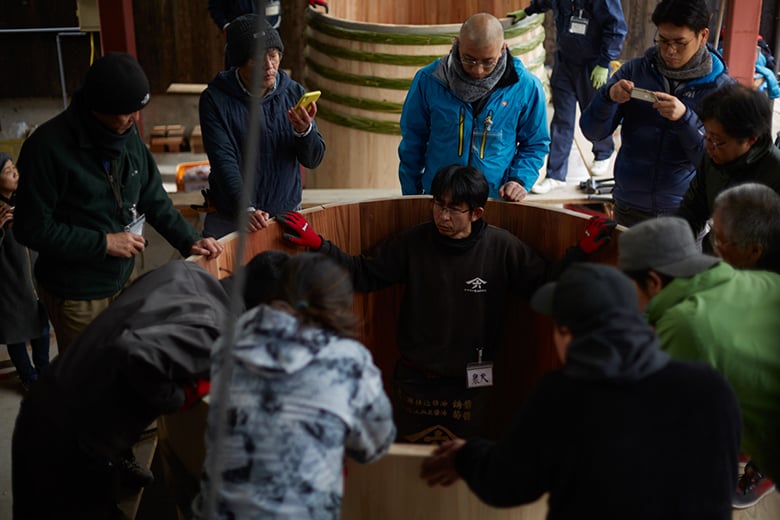
The annual barrel-making event brings together manufacturers, dining establishments, and distributors from all over Japan
The Spread of Wooden Barrels and Barrel-Brewed Soy Sauce Overseas
-What are the reasons behind the high brand recognition and appraisal for your brewery overseas?
The globally oriented sales and promotions initiatives that I started ever since I took over the brewery, are finally starting to show some results. We were first featured on France’s national broadcaster, followed by CNN, BBC, and The Wall Street Journal. Positioning soy sauce breweries like wineries, they showed savvy overseas consumers the appeal of touring Shodoshima's soy sauce breweries. As a result, Yamaroku Soy Sauce has become a Shodoshima attraction that is well-known to those in the know.
About 8% of Yamaroku Soy Sauce’s visitors on brewery tours are from Europe and the Americas
Along with the coverage we received in international media, we were also asked to showcase our wooden barrels at the Salone del Mobile.Milano global trade fair. Things have come full circle, and those barrels are now being used at craft beer distilleries in Italy. Amazingly enough, in recent years, a barley wine brewed in one of these barrels won an award at an international beer competition. These feats show that Japanese wooden barrels have gained attention in France and Italy, and for that, I am happy.
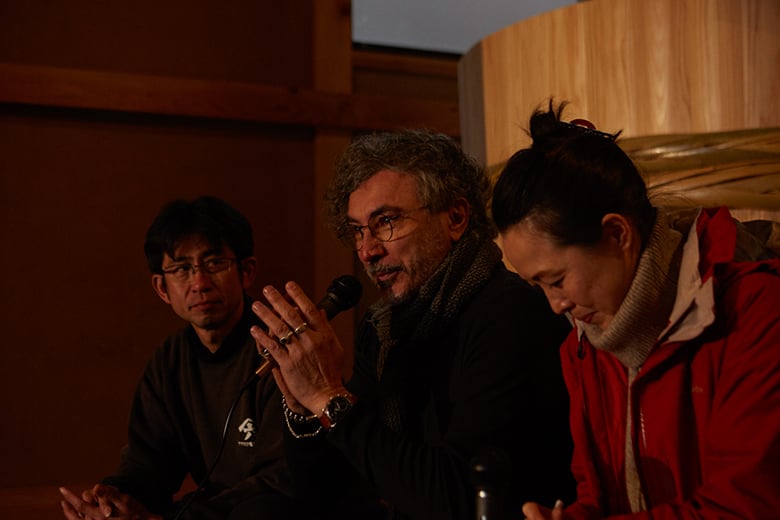
Craft beer brewed in wooden barrels has emerged overseas, and Yamamoto has been in communication with Italian craft beer distilleries
Continuously Delivering Delicious Soy Sauce from Shodoshima to the World
-What vision do you have in mind for Shodoshima’s barrel-brewed soy sauce?
As soy sauce is considered a delicacy overseas, it can be sold at a fair price that both producers and consumers can agree on. Now is a prime time for opportunities, as Japan is taking measures to increase the nationwide export rate for food products. And so, taking advantage of the Kioke Craft Revival Project’s gain in momentum, I launched the Barrel-Brewed Soy Sauce Export Promotion Consortium with like-minded soy sauce brewers from all over Japan, including Shodoshima. We will put even more effort into our international branding and communications.
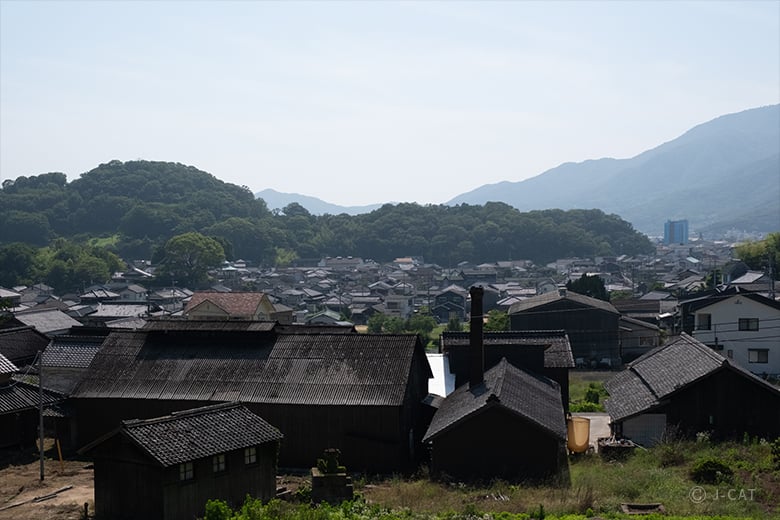
A bird’s-eye view of Hishio no Sato. Yamamoto hopes to elevate the branding of Shodoshima soy sauce as a whole while relaying the appeal of barrel brewing
With continued growth predicted for the global soy sauce market, our current goal is to grab 1% of that market share. And for the next 100 years, at least, I want to protect the traditional method of brewing soy sauce in wooden barrels and pass it on to the next generation. This is Shodoshima’s traditional industry and a legacy that I have inherited from my predecessors.
Though there are still challenges to overcome, I am able to focus on brewing soy sauce while enjoying myself thanks to the support of each customer and Shodoshima’s abundant nature. Today, I continue to express my gratitude for the blessings of this land as I work with soy sauce, a living thing in this brewery that lives on.
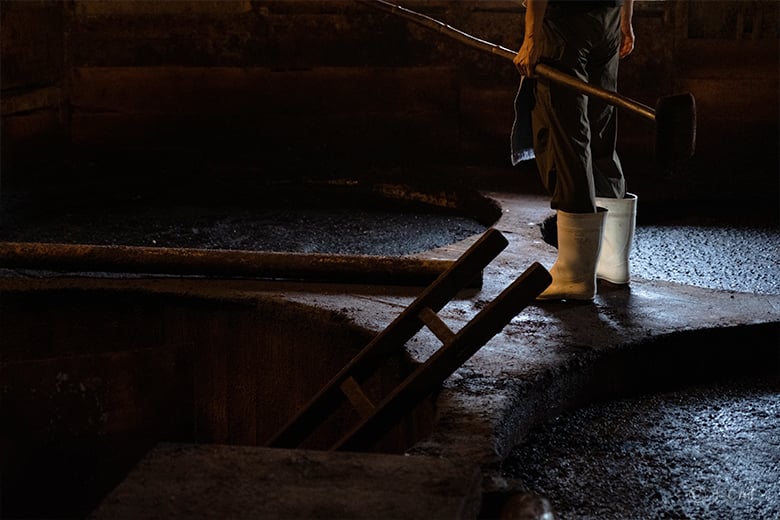
Feel the splendor of nature in the rich umami flavor of carefully aged soy sauce — as Yamamoto says, “The brewery itself is also a living thing.”
Yamaroku Soy Sauce
For nearly 150 years, Yamaroku Soy Sauce has been producing fine soy sauce in wooden barrels, a traditional method that accounts nowadays for just 1% of Japan’s total soy sauce production. The brewery has been in owner Yasuo Yamamoto’s family for five generations and he hopes to pass on his 90 vintage wooden barrels along with all the knowledge accumulated to future master soy sauce craftsmen.