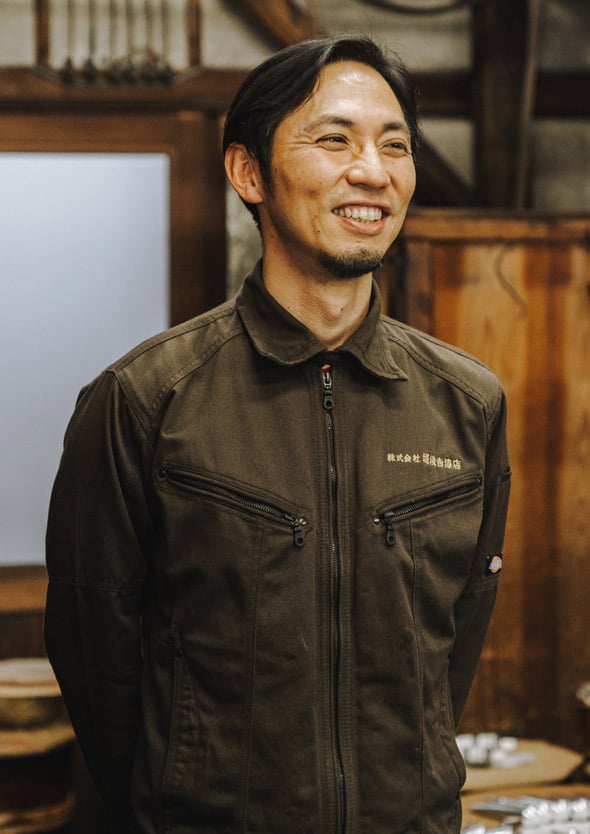
Urushi has been a part of everyday life for the Japanese for over 10,000 years
Today, urushi is often seen as a luxury item. Urushi has a long history, and traces of its use in Japan have been confirmed as far back as the Jomon period. It is used not only for decorative purposes, such as Buddhist statues and works of art, but also for durable, everyday items such as bowls and chopsticks, adding luster to life in Japan since ancient times.
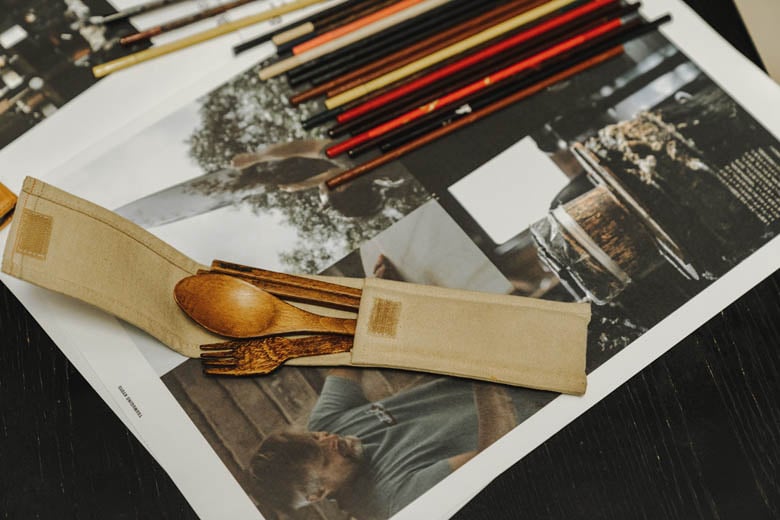
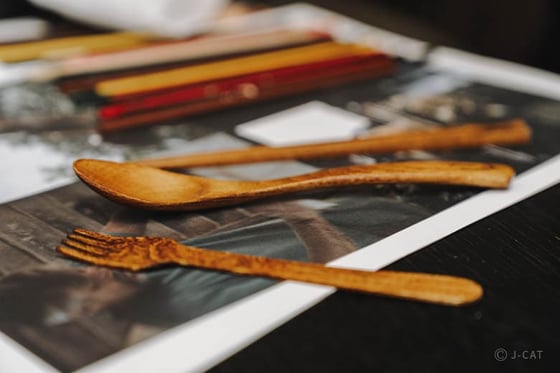
Tsutsumi regularly uses tableware made from commercially available wooden tableware coated with urushi.
“Urushi trees have a long history, but they are delicate and require a lot of care and attention. Their continued existence shows that they are valued and have been carefully nurtured by people for over 10,000 years. That's how much history and culture they embody," Tsutsumi says with pride.
However, the current situation of urushi is not so rosy.
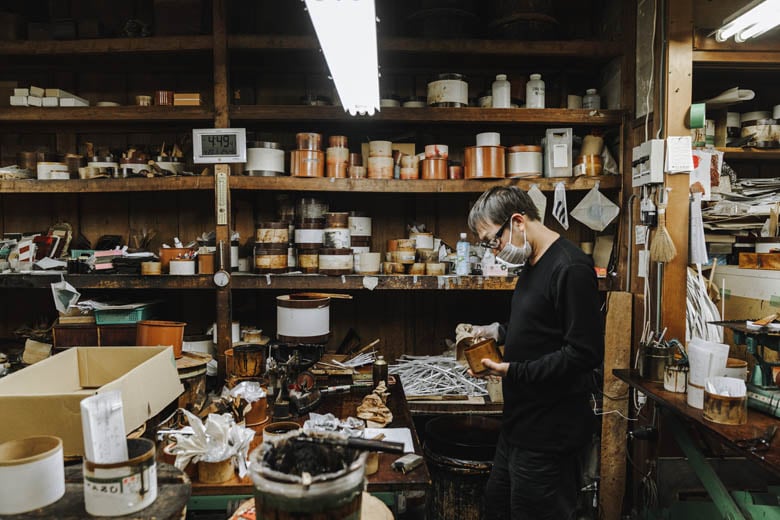
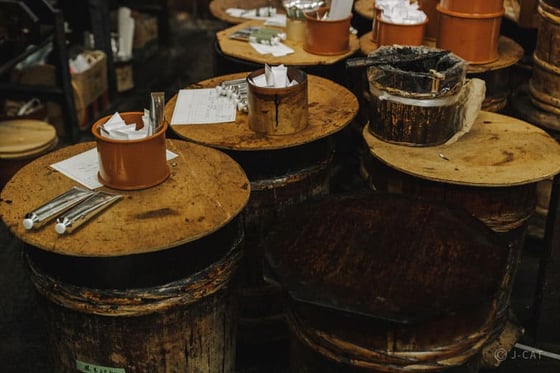
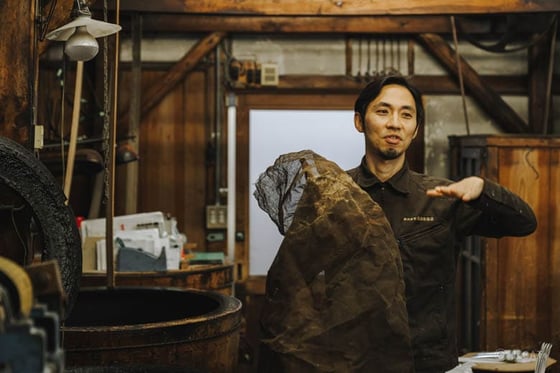
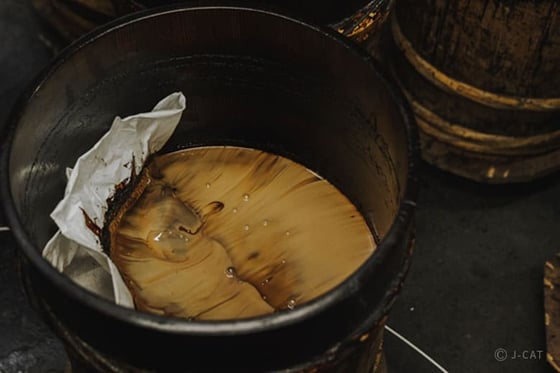
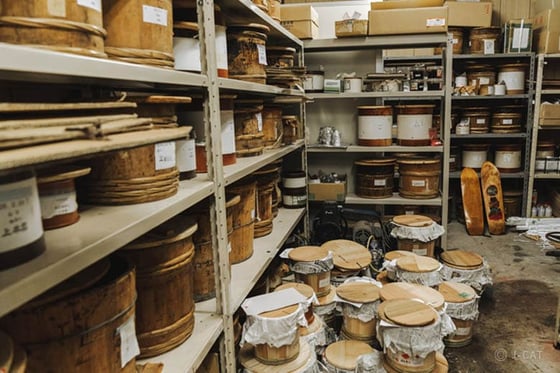
A factory where urushi is refined. The unique but pleasant scent of urushi sap fills the air.
The consumption of urushi in Japan has decreased significantly over the past few decades. In 1975, about 515 tons of urushi were consumed in the country, but by 2020, that number had fallen to just 30 tons. Similarly, the consumption of domestically produced urushi has also dropped to around 1.8 tons. It is clear that the future of the urushi industry is uncertain.
“When I went to the mountains to meet with urushi tappers, there were only people in their 70s and older. I felt that if this situation continued, there would be no future for urushi within the next decade. I knew we needed to take action to revive the craft," says Tsutsumi.
And this was how his project to popularize urushi and pass on the craft to the next generation began.
Beyond tradition — connections beyond crafts
Tsutsumi first launched the media campaign "Urushi no Ippo" in hopes that many people would become more familiar with the existence of urushi. At first, however, he did not get his desired response.

Urushi no Ippo provides event information and activity reports in print and on the Web.
“We wanted to try everything," says Tsutsumi. "So we made videos and websites, and held lectures. We were grateful for the response we received, but it was only from people in the craft industry. I wanted to make urushi appealing to laypeople, who can also use the material for their own DIY projects.”
To convey the everyday appeal of urushi, Tsutsumi felt that he should "go beyond crafts." He first tried lacquering his favorite skateboard, then a surfboard, and finally a bicycle.
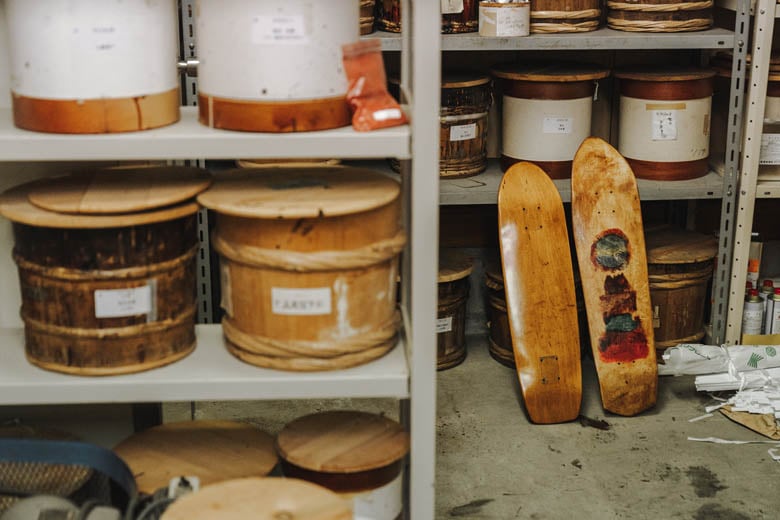
Skateboards propped up in the back of a urushi warehouse
“When I sent out a message using urushi-lacquered skateboards and bicycles as icons, people around me thought they looked cool. As you use urushi-lacquered items, the color and shine of the urushi becomes more pronounced, similar to how denim and leather become more stylish with wear. I was treated like an artist overseas, and I felt the respect for Japanese techniques. Together with like-minded friends, we are promoting projects to nurture urushi trees, and to connect consumers and craftspeople.”
Although Tsutsumi is active in a wide range of fields, his roots are unexpected.
His life experiences and childhood memories connected him to the world of lacquer
In fact, Tsutsumi had been active in another industry for a long time without intending to take over the family business. “When I was a student, I studied agriculture in Hokkaido and started working there, with no intention of coming back to Kyoto. Then I got a call from my parents asking me to help them.”
“My grandfather used to fix broken things with urushi. He would use urushi to attach the broken wings of clay airplanes, and lacquer bamboo dragonflies. I would fold origami cranes with Japanese paper, and the next day they would be covered with urushi, which I thought was so cool, like magic.” His childhood memories and the theme of "coexistence with nature" that was also present in his passion for extreme sports eventually drew him into the world of urushi.
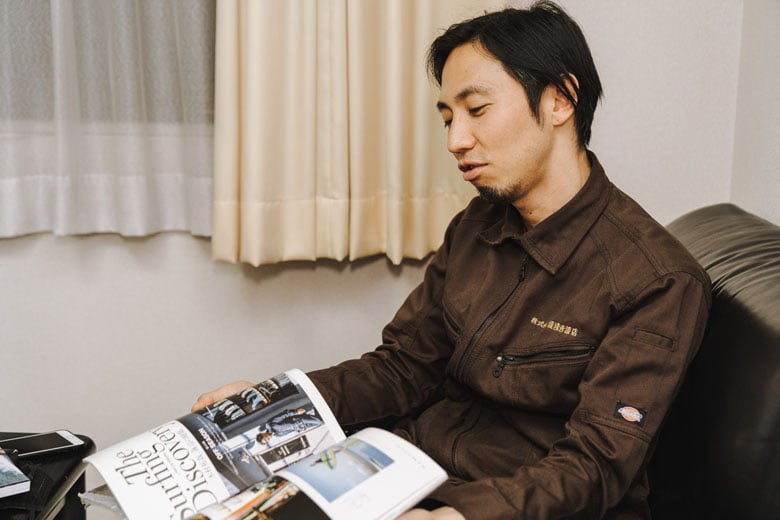
Tsutsumi was once interviewed by a surf magazine as a urushi refiner.
When working with urushi, Tsutsumi encounters changes in weight and texture as he mixes it, as well as the fact that urushi’s characteristics can be affected by external factors like humidity, making it impossible to recreate exactly the same result every time.
“In surfing," he says, "there is the fun of being swept along by the waves and not being able to do what you want. Waves and urushi are similar in that they are both natural objects, and it is difficult to completely control good waves and good urushi. And as I visited the urushi production area and talked to the craftspeople, I started to become more interested in urushi.”
Equipped with diverse life experiences and his childhood memories, Tsutsumi set out to take an out-of-the-box approach to using urushi.
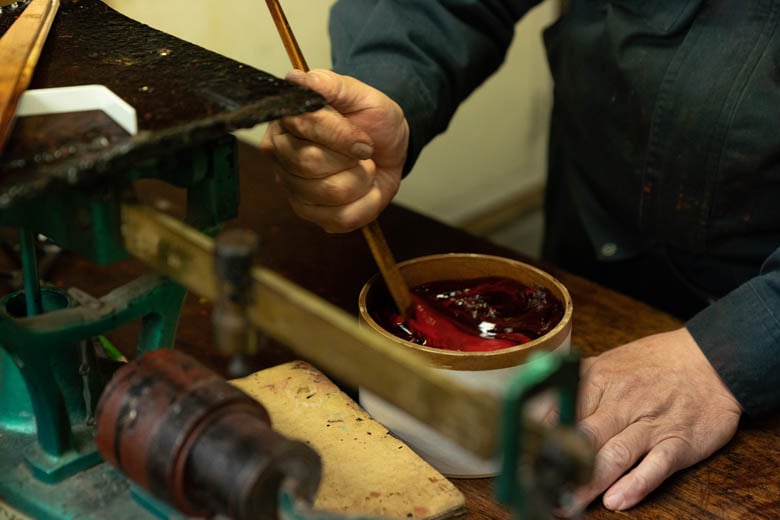
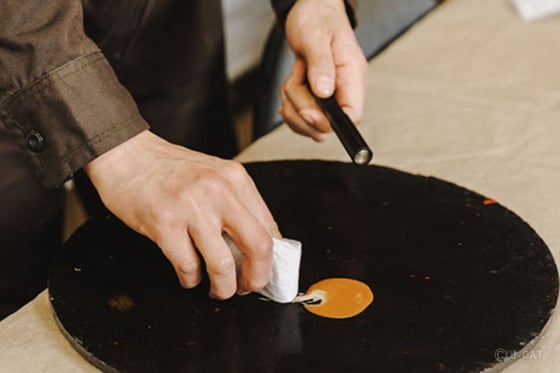
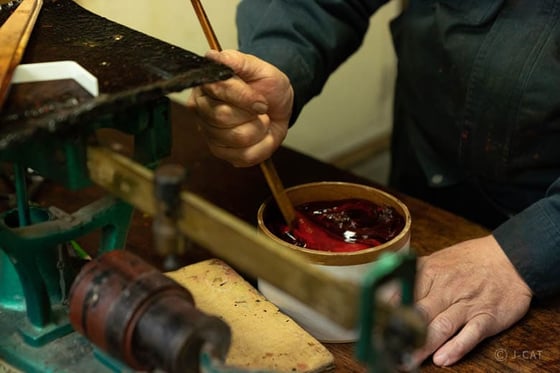
Urushi changes its appearance depending on how it is mixed.
Bringing urushi that fits the needs of future lifestyles to the world
As the demand for sustainable products increases, it is believed that urushi, which has a long history and is made from natural materials, will become more widely accepted.
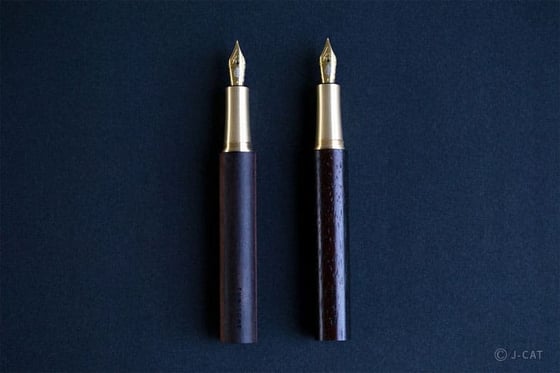
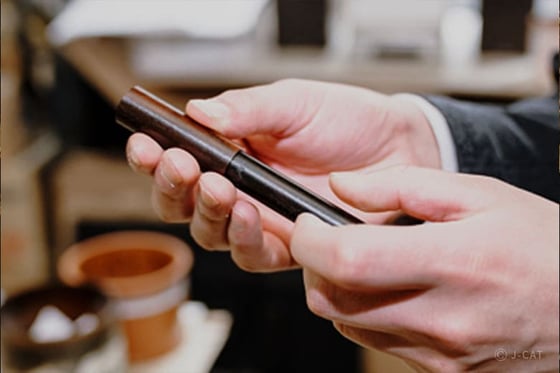
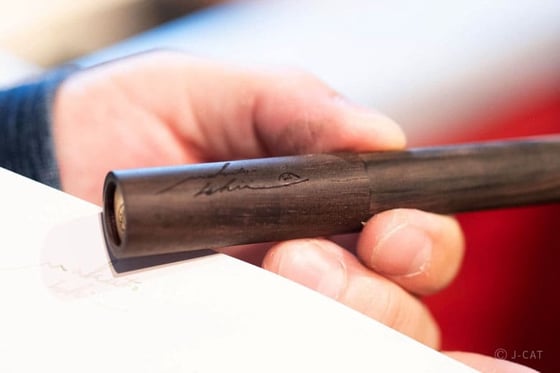
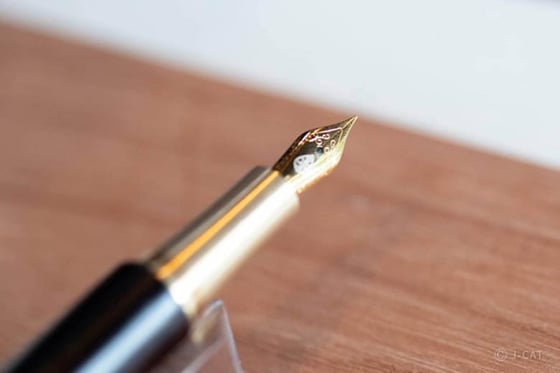
Tsutsumi Asakichi Urushi offers the experience of lacquering fountain pens so that more people can experience urushi. In the future, the company plans to launch lacquering experiences for a variety of wooden products.
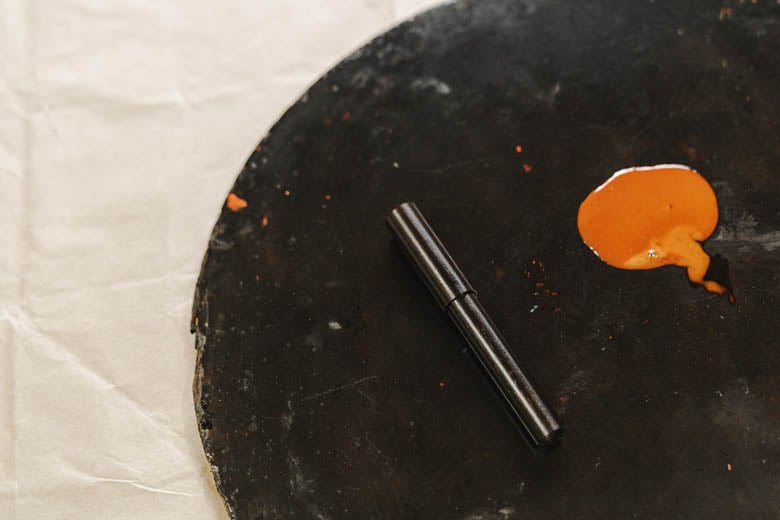
By applying urushi layer by layer to an object yourself, you can form a strong emotional bond with it.
“Many people know what urushi looks like but do not know what it feels like. It actually feels similar to human skin, as it is smooth and moist like a baby’s skin. I want people to know the true nature of urushi, from its luxurious and delicate image to the way it is used in everyday life," says Tsutsumi.
At Tsutsumi Asakichi Urushi, take your first step into the world of urushi and discover the enduring charm of this ancient craft.

Asakichi Tsutsumi Urushi
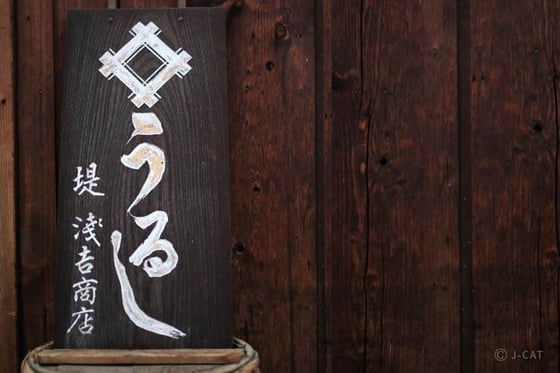
Located on a narrow street in Kyoto near Bukkoji Temple, Tsutsumi Asakichi Urushi has been a urushi manufacturer since 1909. The company buys raw urushi sap and processes it in-house, including refining, mixing, and coloring. In addition to traditional techniques passed down through the generations, the company also uses a newly developed high-dispersion refining method to create urushi that meets customer needs. MAP: 540 Inari-cho, Shimogyo Ward, Kyoto 600-8098 HP: https://www.kourin-urushi.com/