An Ikebana Background Naturally Formed in Contact with the Art
Despite being born the eldest daughter of the 20th iemoto, in a family with so many generations of deep ties to the ikebana, Fujiwara describes an upbringing without pressure. “My parents let me be myself. I was never pushed to get involved in ikebana.”
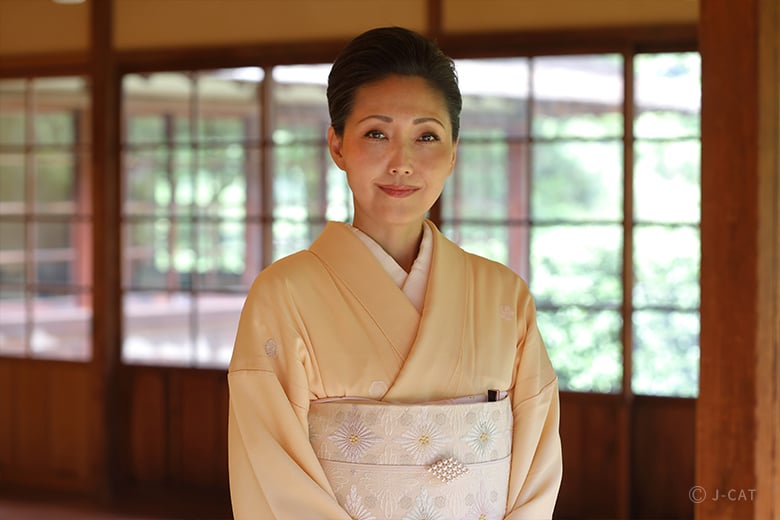
Isshosai Socho Fujiwara, the decorous 21st iemoto (headmaster) of Kajiinomiya Goryu Ikebana
They say that technique is first acquired from observation, and the headmaster’s childhood environment was ripe with opportunities for just that. “I accompanied my parents to seminars sponsored at various branches of Kajiinomiya Goryu, and grew up watching them make their arrangements. So my process of learning the art was very gradual, and I felt naturally able to pick it up seriously when the time came.”
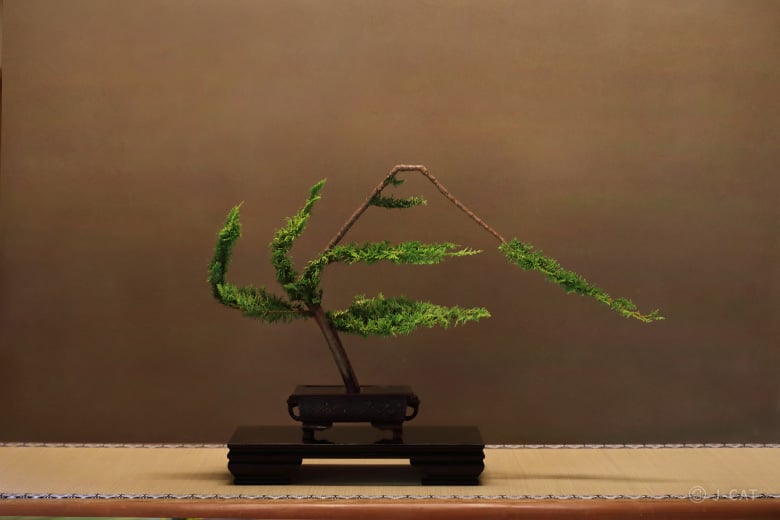
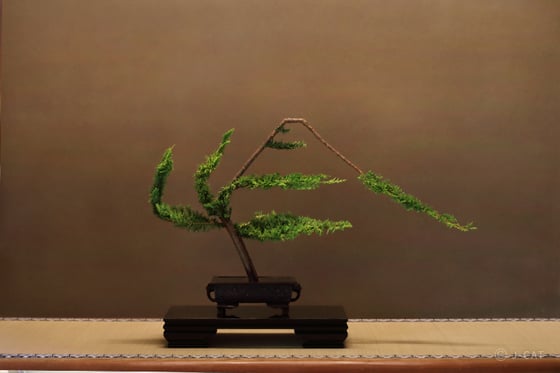
A signature Kajiinomiya Goryu masterpiece, depicting the silhouette of mount Fuji in the branch lines
A Calling Proclaimed Proudly
Fujiwara’s spectacular career began when she assumed the duties of fuku (“vice” or “deputy”) iemoto when she was in her twenties. In 2004, she succeeded to her current position and assumed the headmaster name “Isshosai” under which she still practices. In between, she had gone to junior college and worked in the business world. “I’d intended to go straight into ikebana, but my father advised me to reconsider. ‘You need experience working under a boss and senior coworkers if you’re going to really come into your own. So go get some experience in the world first.” And so began a hasty job search.
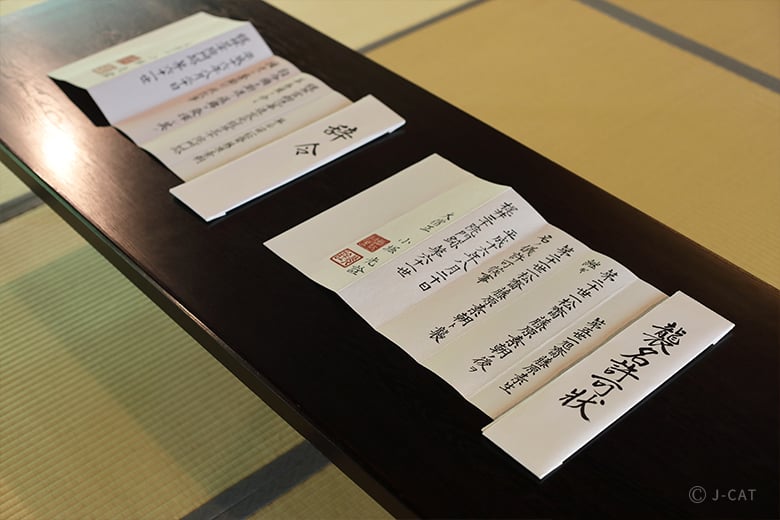
The authorization letter from Sanzen-in Temple affirming Fujiwara’s succession to headmaster and her right to adopt an iemoto name and use the title
“My father took over as iemoto because he didn’t want our five centuries of tradition to come to an end. Normally, the oldest son succeeds the father as the headmaster, but my father was the second son in his family which I think made his path a lot harder. It has been a little different for me, though: I can say without a doubt – with all other concerns aside – that this is my calling. Not just the art itself, but introducing it to new learners, training apprentices, and really anything related to flowers.”
To Uphold the “Gravitas of Flowers”
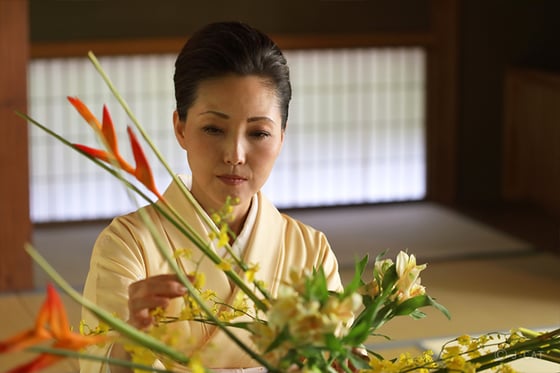
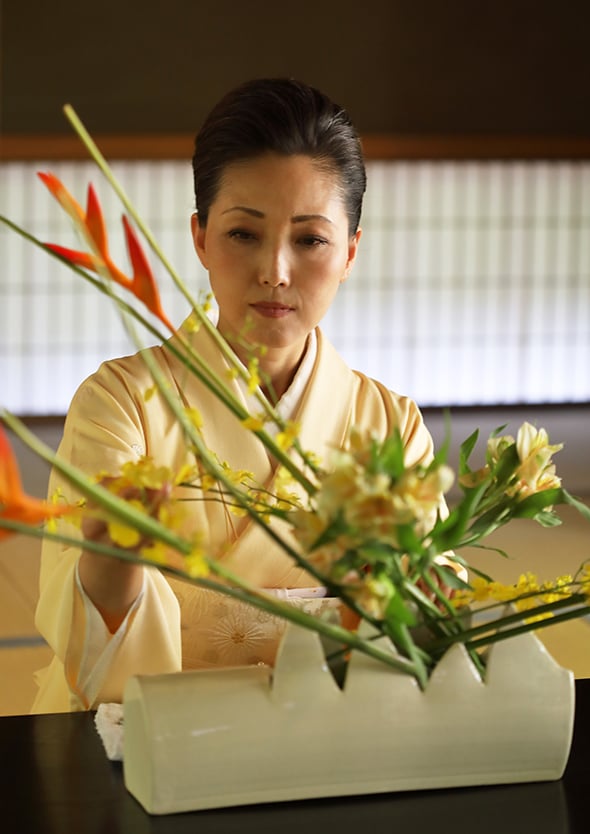
The iemoto cuts a striking figure in her kimono, and the decorous manner she brings to her work bespeaks her belief in the solemnity of the art itself. Still, Fujiwara manages to be approachable. She is gently friendly, soft spoken, and thoughtful.
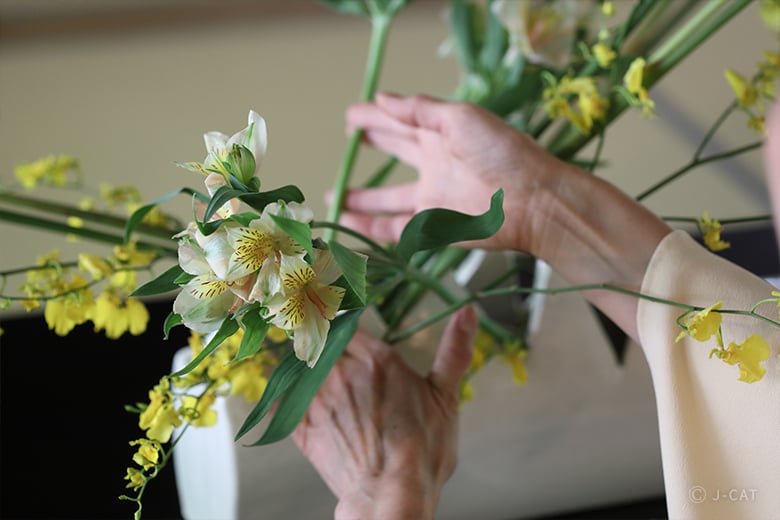
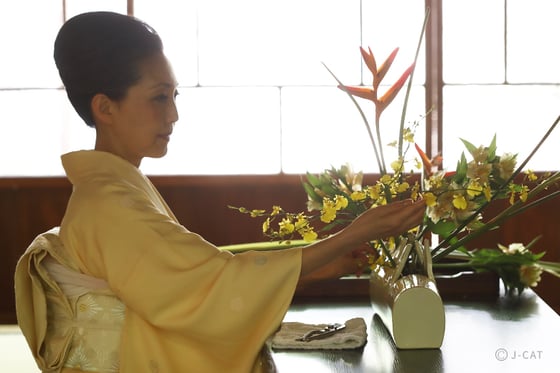
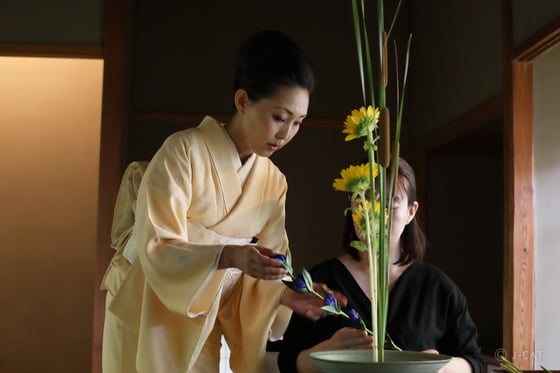
Taking care to highlight the beauty of each flower in its arrangement
Although the iemoto approaches her arrangements with a mind to “the gravitas of flowers,” she also works with a surprising improvisational nonchalance. “Each encounter with a flower is a once-in-a-lifetime event. I approach each individual flower hoping to discover and foreground its dignity, to present it at its best.” And the headmaster’s sincere passion for her work, and her affinity for the flowers themselves, is evident behind her gentle tone of voice.
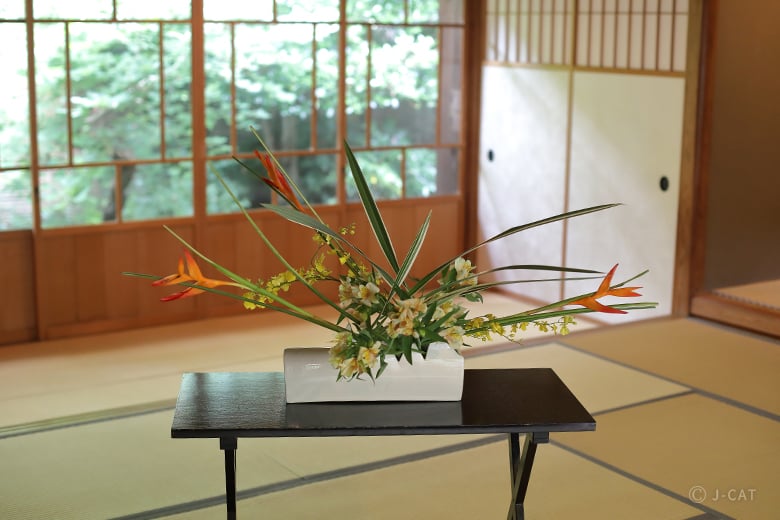
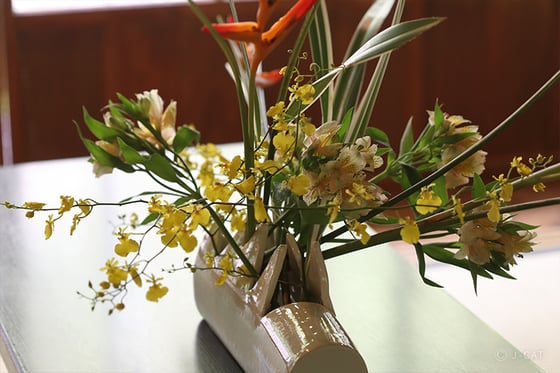
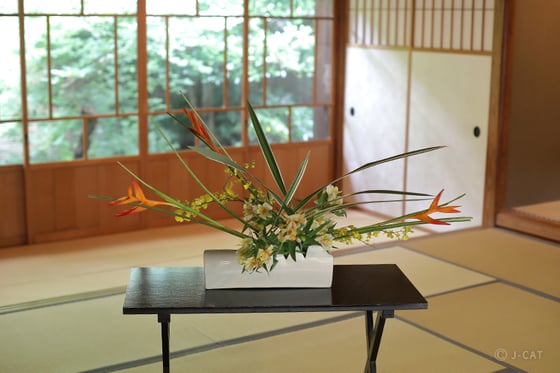
An arrangement showcasing the iemoto’s creativity
“The Aesthetics of Subtraction” – A Tradition Apart from Classical Western Culture
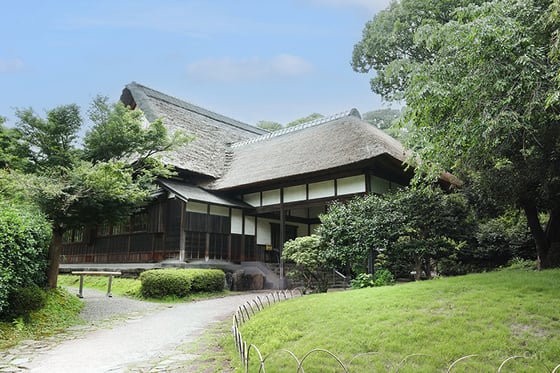
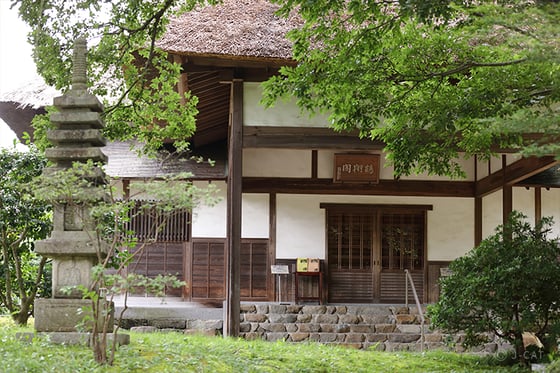
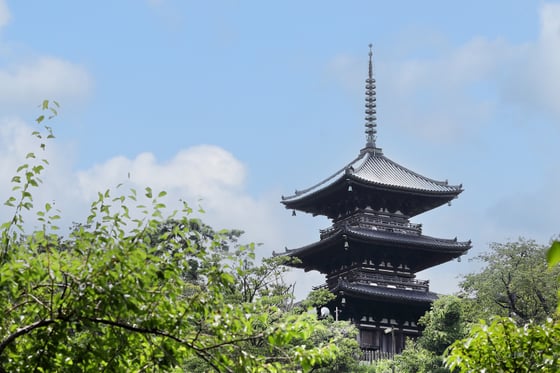
Kajiinomiya Goryu began in Kyoto’s Ohara-area Sanzen-in Temple – known in ages past as “Kajii Sanzen-in Monzeki” – and maintains ties to it today. The current iemoto continues to create arrangements that are displayed at Sanzen-in, even getting chances to see visitors’ reactions to them. “I have been surprised that overseas visitors seem to pay more attention to the flower arrangements than Japanese visitors do. I’ve seen their faces light up and heard them express an interest in ikebana. That’s how I know this work can transcend national boundaries. I want to introduce more people to Kajiinomiya Goryu.”
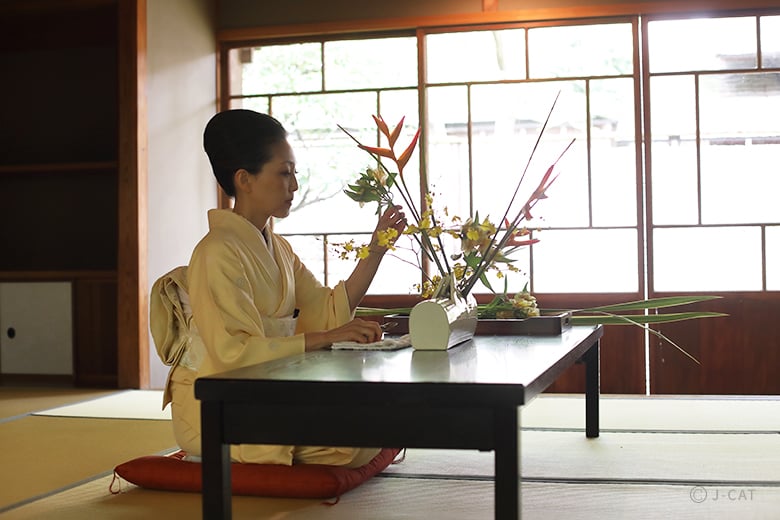
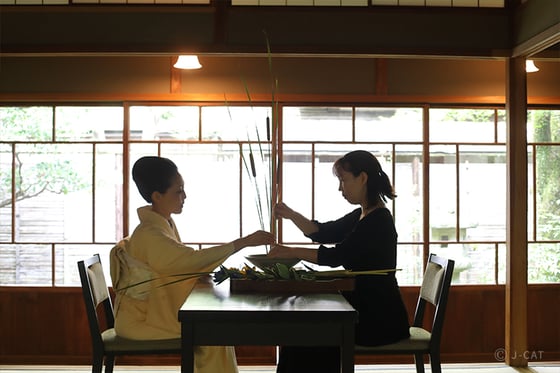
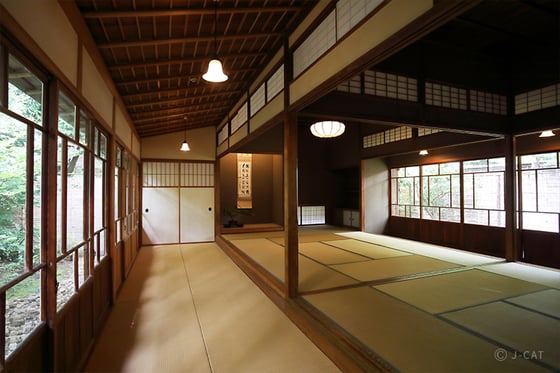
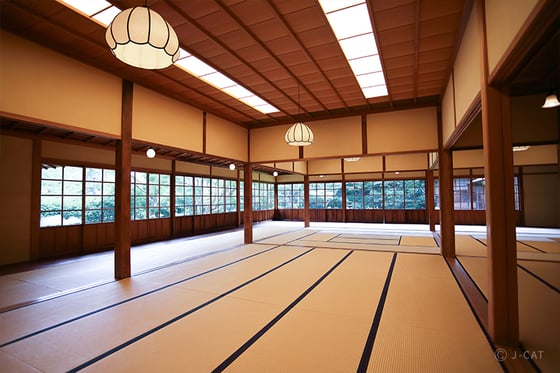
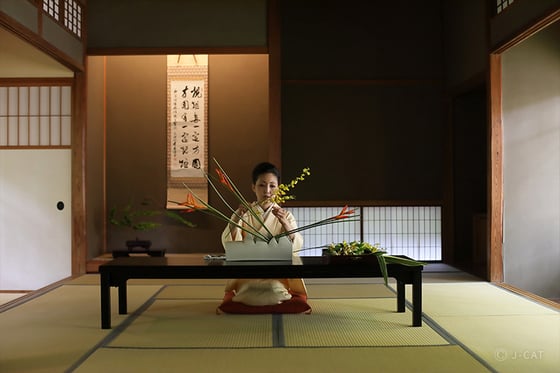
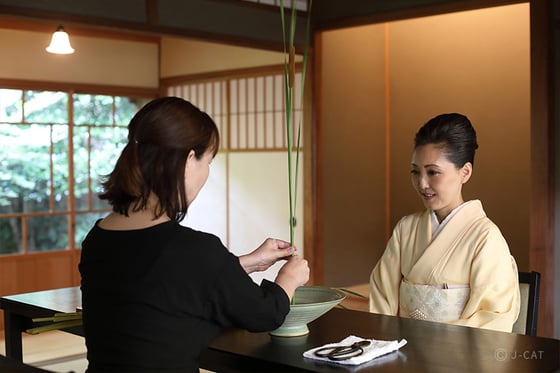
The elegance of the iemoto at work in a traditional-style room
Some aspects of ikebana, of course, translate less intuitively than others. A particular difference from European-derived flower arrangement traditions is the emphasis on negative space in ikebana arrangements, and the minimalist approach of using three-dimensionality to highlight the beauty of fewer flowers – and even pre-bloom buds.
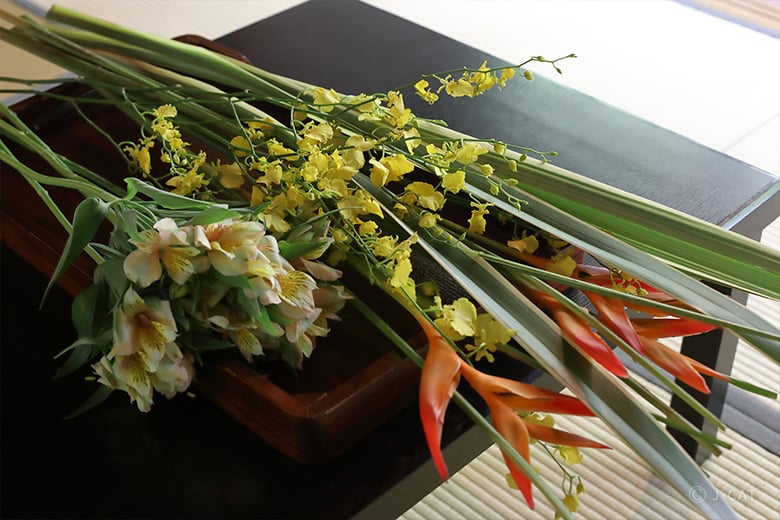
Connecting visitors from outside of Japan with the country’s unique aesthetic traditions is an ongoing quest
“I hope that the guests who participate in these experiences can come away with a better sense of what makes Japanese aesthetic traditions and Western ones distinct from one another,” says Fujiwara. On the philosophy of ikebana (which literally translates to “living flower”), she adds: “The theme of a flower’s life has global resonance. But by not simply focusing on blooms, by breaking a flower’s natural life cycle, we can transform it into an ikebana arrangement, which captures a beauty that is natural at heart while at the same time distinct from nature.”
Sowing the Seeds of a New Generation of Interest in Ikebana
The study of ikebana was once a popular rite of passage for women in preparation for marriage, but this is a practice that has declined in recent times – giving the iemoto a sense of urgency about – and responsibility for – its survival. “It would be nice to introduce ikebana to elementary school students as a standard practice, to build a familiarity with flowers from a young age, but that’s not going to happen anytime soon. For now I focus on teaching it to university students. Seeing them convinces me I have a duty to protect and pass on the art form so that later generations can enjoy it too.”
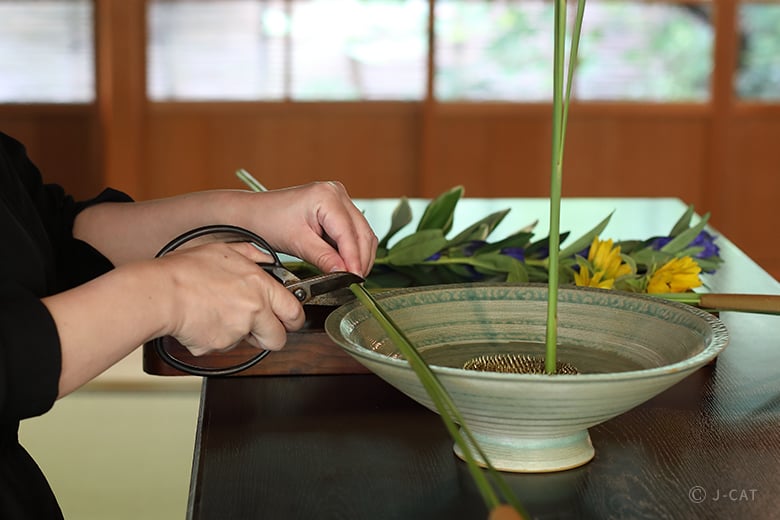
Fujiwara’s university students have begun to discover the joys of ikebana
The year 2025 will mark the 21st anniversary of the 21st iemoto’s succession to the role. “We’re planning a special commemorative event for this ‘double 21’ milestone, and I hope to use it to further popularize the magic of traditional Japanese ikebana around the world – especially among the younger generations.” The iemoto says this event will mark an unprecedented endeavor. Her hopes for the future of the art are higher than ever.
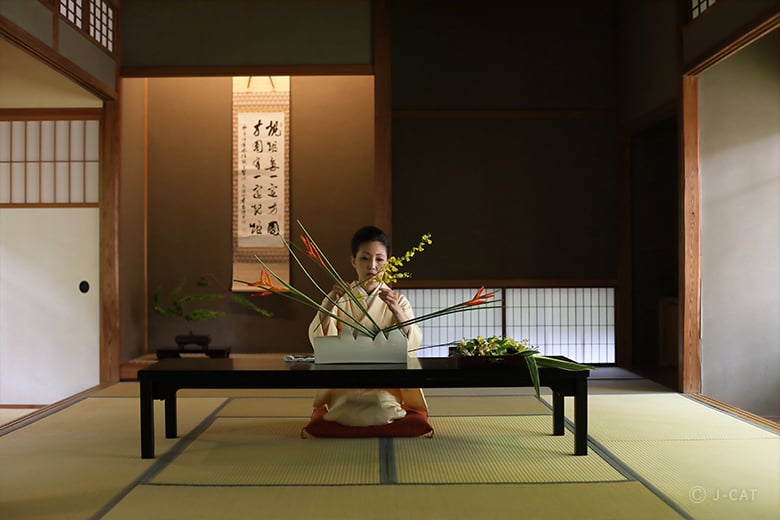
History on her shoulders, Fujiwara creates with her eyes on the future
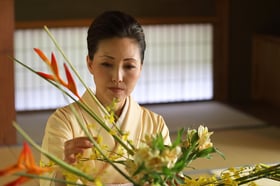
Isshosai Socho Fujiwara
Kajiinomiya Goryu is a school of ikebana with over five centuries of history which was founded during the Muromachi period. As its 21st headmaster, Fujiwara is committed to protecting and upholding its classical traditions while also spreading its charms through modern choices that incorporate modern lifestyles and the individuality of new practitioners.