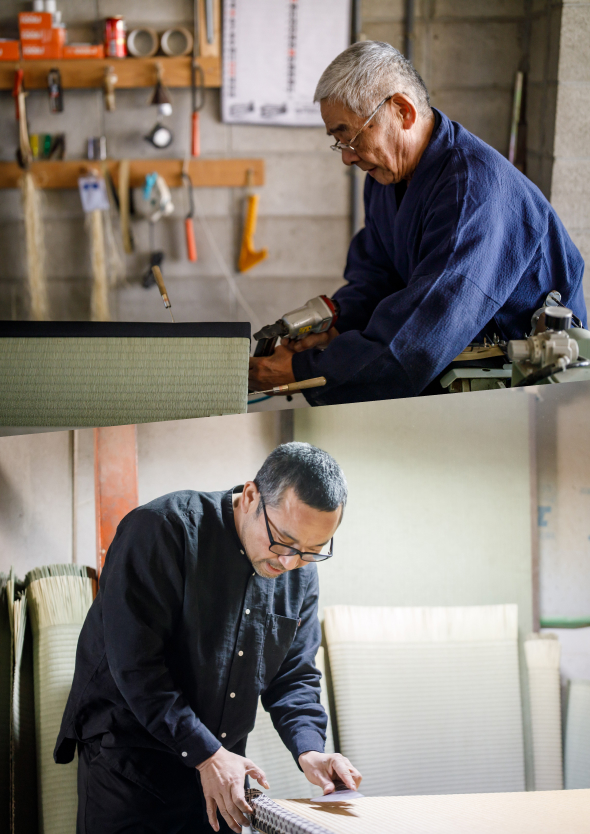
Ooe Tatami Store, A Legacy Built Within One Generation
Tatami, a flooring material unique to Japan, has been an integral part of Japanese homes for centuries. With its natural ability to regulate humidity through the changing seasons, it plays an important role in traditional architecture. Whether walking, sitting, or lying down, tatami offers comfort in every form, bringing a sense of tranquility and a distinct Japanese atmosphere.
Sakai, Osaka, once a thriving port city, remains home to historic temples, shrines, and merchant houses reflecting its prosperous past. For over 50 years, Ooe Tatamihas been preserving and supporting the rich tatami culture in the city.
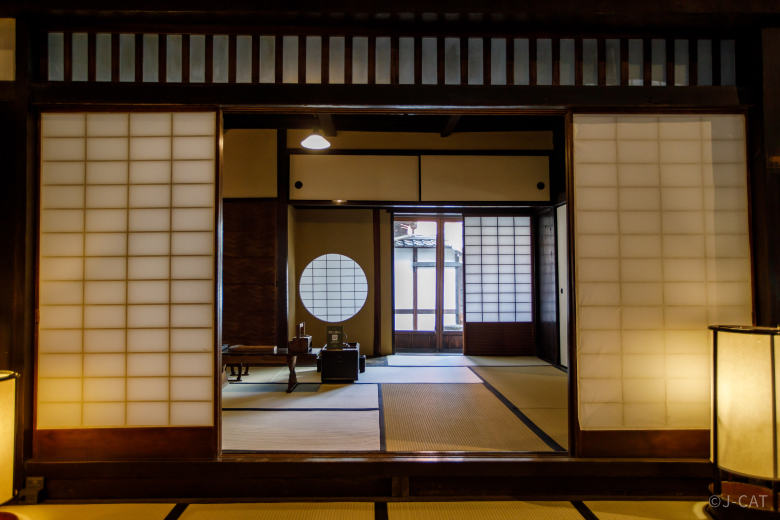
A tatami-lined space, filled with the fresh, calming scent of igusa (rush grass), exudes a soothing atmosphere.
The story of Ooe Tatami Shop began when Syunzi Ooe, its founder, entered the world of tatami craftsmanship at just 15 years old. Seeking to master a trade, he began training under his uncle, a tatami artisan. The apprenticeship was rigorous, with meticulous instruction for every task, but looking back, Syunzi reflects, “I was fortunate to learn from many skilled craftsmen, including my master.”
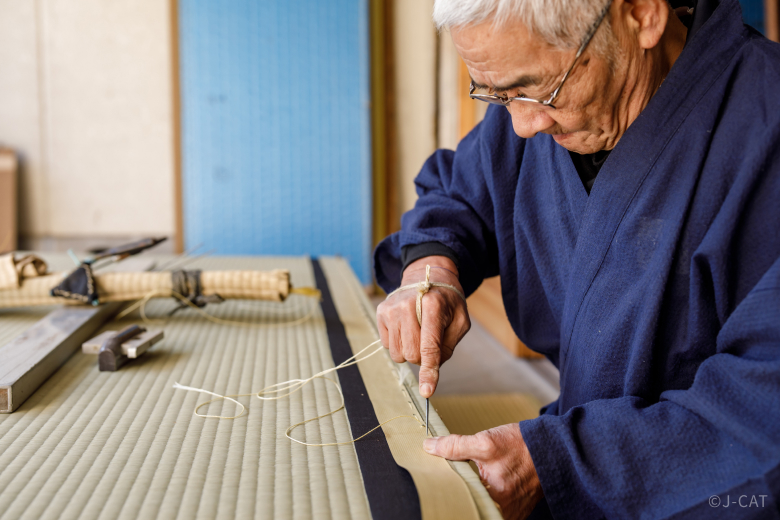
Tatami mats carefully sewn by Syunzi—each stitch reflects the skills he has honed over decades
For years, Syunzi worked tirelessly to perfect his craft. Yet, no matter how well he executed a job, it was always the store’s name—never his own—that remained. Wanting to leave behind a legacy, he took a leap after more than a decade of dedication and opened Ooe Tatami.
It was an era of rapid economic growth, with high demand for new housing and, consequently, tatami mats. However, mass production was also becoming the norm. Despite the shift, Syunzi’s commitment to craftsmanship and top-tier skills earned Ooe Tatami a trusted reputation in the local community.
Tatami for Modern Life: The Second Generation’s New Challenge
Growing up, Toshiyuki watched his father at work, but he didn’t initially set out to become a craftsman. Instead, he pursued a career in the apparel industry, gaining expertise in design, marketing, and even sewing techniques in a factory. Working with his hands every day, he developed a deep appreciation for craftsmanship, and at 25, he decided to return home and carry on the family business.
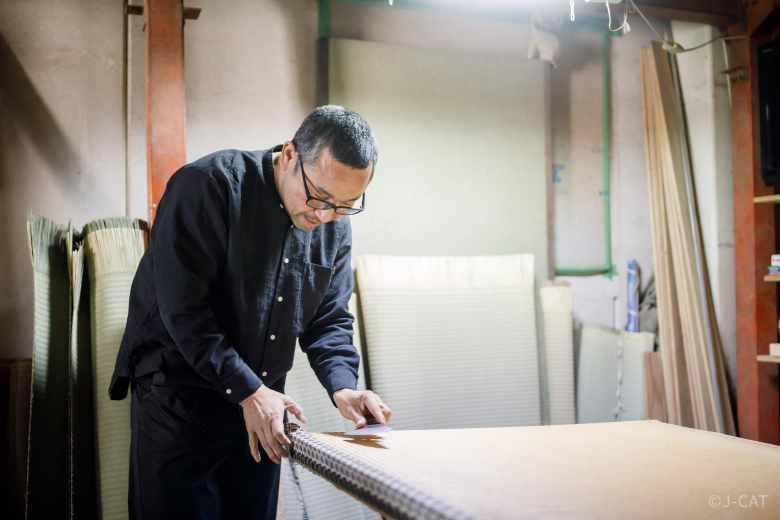
Toshiyuki at work—his precise craftsmanship carries tatami into the future
Syunzi had never expected his son to take over the store—he had planned to close it after he retired. So when Toshiyuki expressed his decision, it came as a surprise. But as they worked side by side, exchanging skills and ideas, something unexpected happened: they started to enjoy it.
“We barely spoke when we were working separate jobs,” Syunzi says with a smile. “But now, we get along well. We can talk about anything while we work—it’s a great dynamic.”
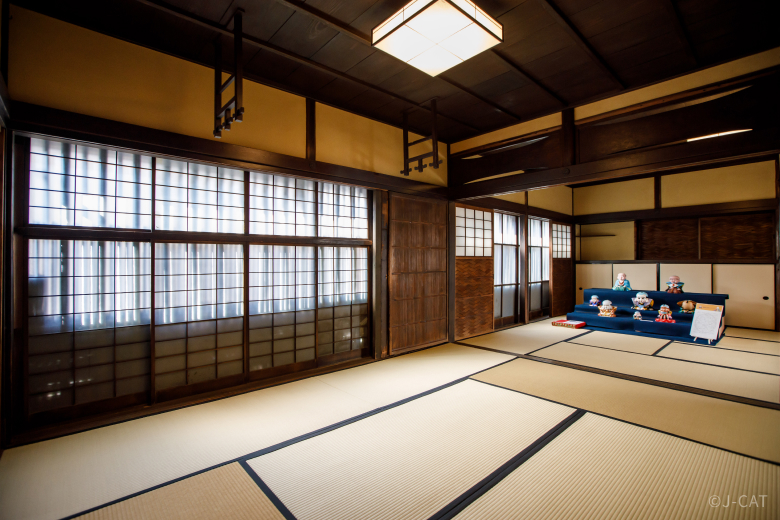
A space where the beauty of tatami shines
Since taking over the family business, Toshiyuki has explored new ways to integrate tatami into modern lifestyles. One of his initiatives was launching Classica and washitsu.labo, brands that incorporate tatami motifs into accessories and home goods. By incorporating traditional craftsmanship into contemporary design, these collections have introduced tatami culture to a younger audience.
Keeping Tatami Culture Alive for the Future
Through years of dedication, Ooe Tatami has earned a reputation for exceptional craftsmanship. Today, their tatami is used not only in homes but also in temples, shrines, and even cultural heritage sites.
“Working with cultural properties was always a dream of ours,” say Syunzi and Toshiyuki. “It feels like all our efforts have led us to this point.”
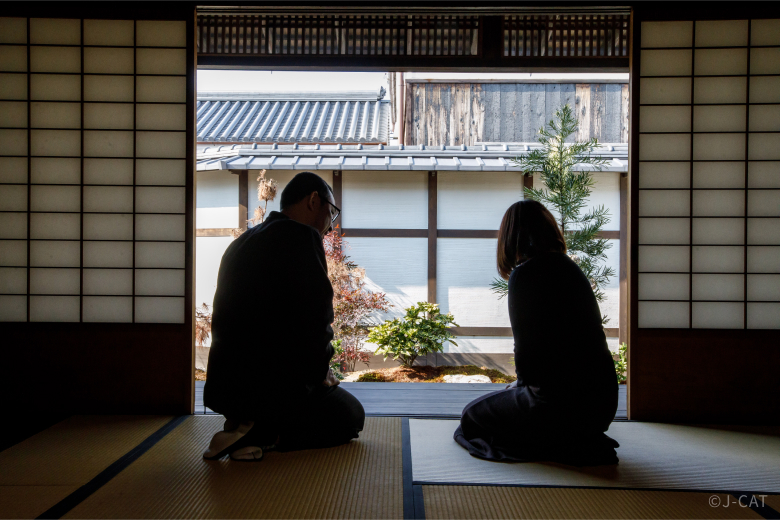
Many of Sakai’s historic homes feature tea rooms, offering insight into the area’s deeply rooted tea culture
With Wabunka’s exclusive experience, you can explore the Old Yamaguchi Family Residence, a nationally designated Important Cultural Property, and the Old Gunsmith Workshop and Residence, a tangible cultural property of Sakai City—guided by either Syunzi or Toshiyuki.
As we toured the mansion, Ooe shared, "I made these tatami mats while imagining how people once used these rooms. Feel free to touch them and relax." Why not run your hands over the tatami and picture life in old Japan?
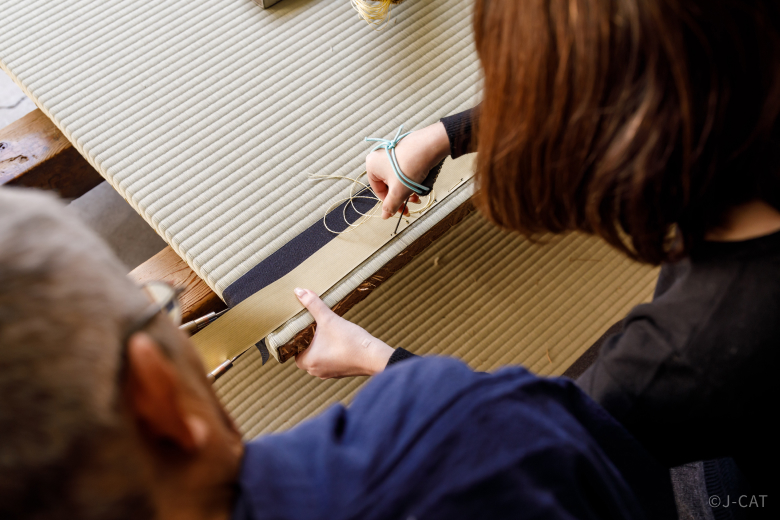
Through Wabunka, you can try hand-sewing tatami under the guidance of a skilled craftsman
After the tour, you can visit the Ooe Tatami to see how tatami mats are made and try hand sewing tatami or making a mini tatami mat (optional paid add-on).
Preserving Tradition, Embracing the Future
Ooe Tatami continues to honor the craftsmanship of the first generation while embracing innovation for the next. "I want to refine my skills every day so that when people in Sakai think of tatami, they think of Ooe Tatami," says Toshiyuki.
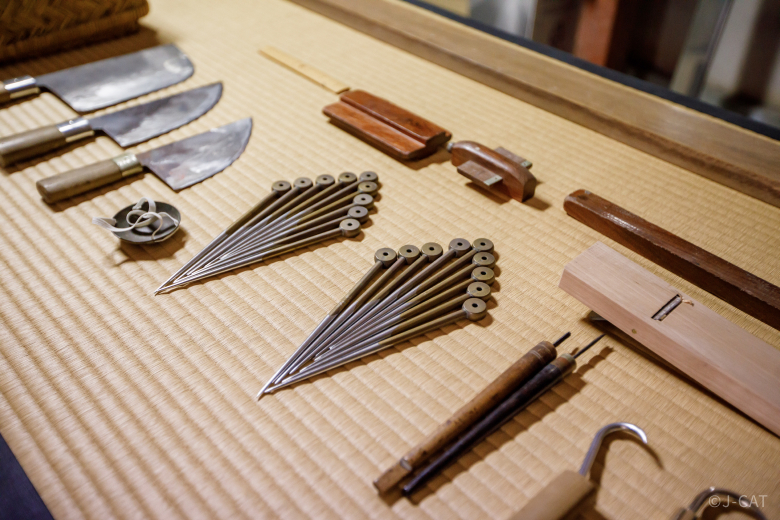
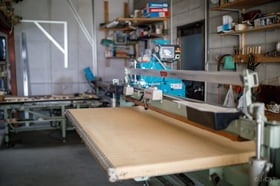
A glimpse of the tools essential for tatami-making
Alongside traditional tatami production, the store is expanding its presence through the accessories and lifestyle goods brands Classica and washitsu.labo, bridging old and new to redefine tatami’s place in modern living.
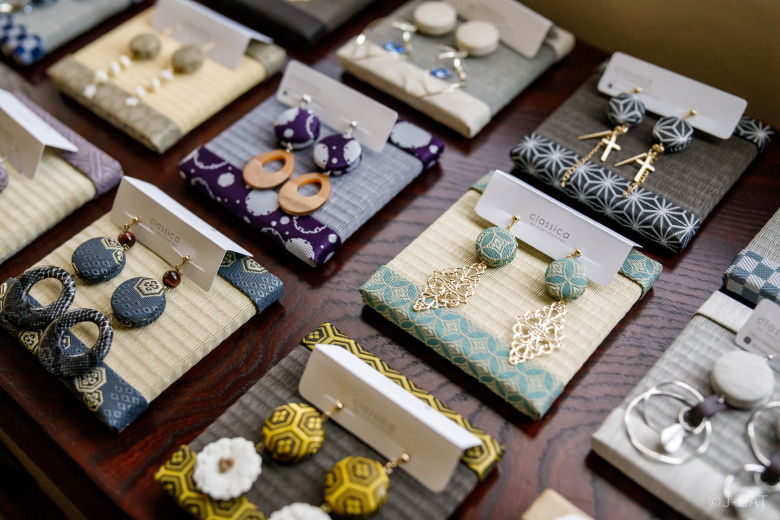
Classica accessories—ideal as unique souvenirs or gifts
The Comfort of Living with Tatami
A father perfecting his craft and a son expanding tatami culture in fresh ways. Their shared passion and commitment shape tatami that embodies family warmth and Japanese aesthetics. Together, they continue to bring the comfort of living with tatami to many.
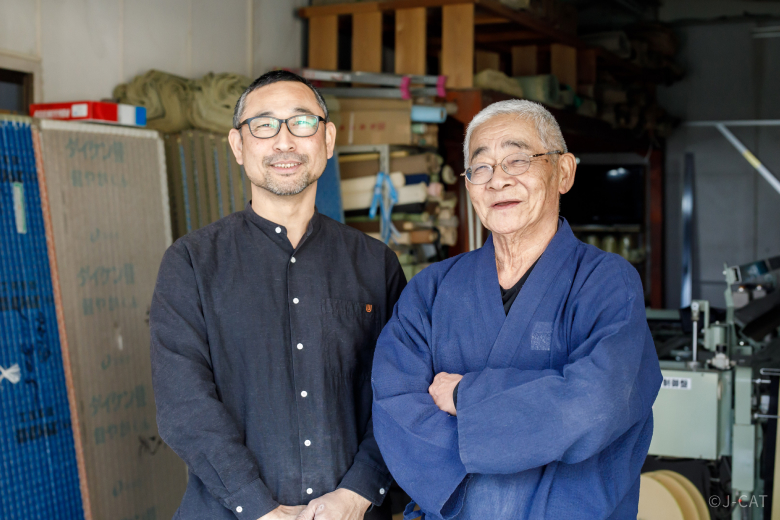
Syunzi and Toshiyuki—father and son, master and apprentice
Ooe Tatami
Ooe Tatami has supported Japanese housing culture in Sakai City for nearly 50 years. Founded by Syunzi Ooe, the store earned trust for installing tatami mats in historical buildings. Now run by his son Toshiyuki, the second generation is working to pass down the tradition while adapting tatami culture for modern living.


