Interdisciplinary Revelations
-Despite carrying on the Ohi-ware craft tradition of Kanazawa, it seems both of you are also active in other fields – such as Mr. Ohi in design and Mr. Nara in architecture. How does that work?
Ohi: There is a tendency for those who make their living in traditional crafts to think of their paths as limited, but in fact numerous generations of the Ohi family have been active in multiple fields. The eighth and ninth were skilled in painting and calligraphy. My father Toyasai Ohi (Chozaemon X・Toshiro) made ceramic walls and numerous works of contemporary art in addition to ceramic tea implements. I think this is why it felt like a natural progression for me to get into design, and for my son to pursue a career in architecture.
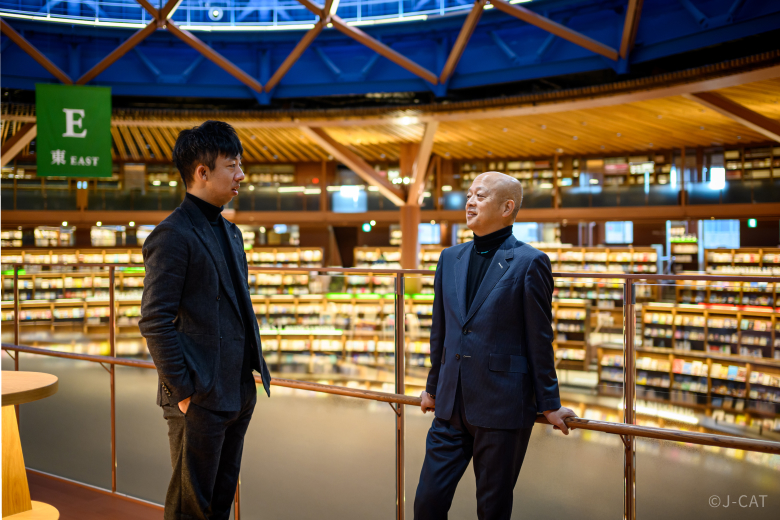
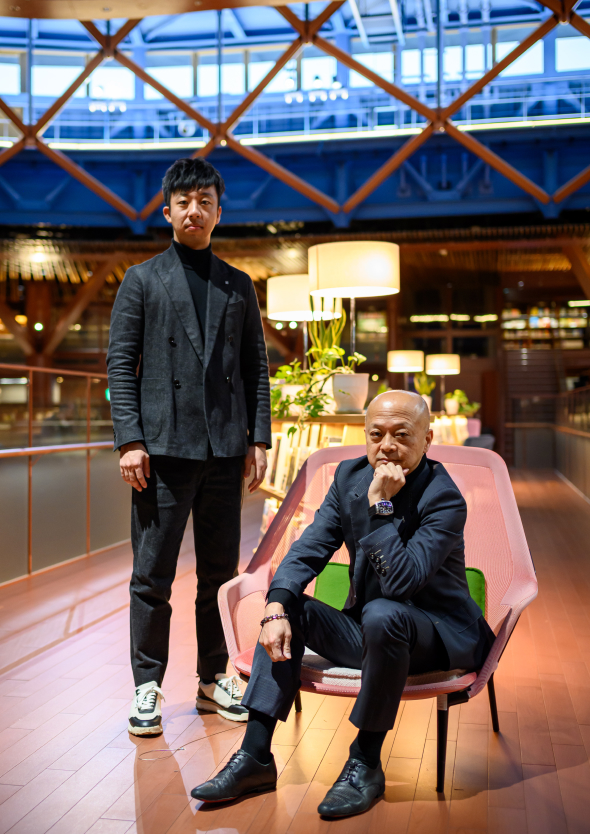
Toshio Ohi Chozaemon XI (right) and the next head of the kiln Yuki Nara (left)
-Could you share a bit about the experiences that led you into your current fields?
Nara: I decided to pursue a career in architecture in high school, after getting an up-close look at the construction of the 21st Century Museum of Contemporary Art, Kanazawa. It impressed me very much, and I went on to major in architecture at the Tokyo University of Arts. I think getting to study architecture in an art department rather than a STEM one started me on the path I’m on today.
Ohi: In my case, it was a tea ceremony demonstration by the then-head of the Urasenke school of tea ceremony, Hounsai, at the Metropolitan Museum of Art during my studies abroad. If I’m honest, I was pretty averse to the idea of carrying on the family business and traditions for a long stretch of my youth. But then I studied in the US and attended this demonstration. Seeing tea ceremony conducted by Westerners, accompanied by American tea masters dressed in juttoku (formal male attire in the tea ceremony), felt like something from a movie. It really impressed me. I thought, "Japanese traditions can actually be really cool. It’s just a matter of how you conceive of and present them."
A View of Toyasai Ohi (Chozaemon X・Toshiro), Order of Culture Recipient, from His Child’s and Grandchild’s Eyes
-The works of Toyasai Ohi (Chozaemon X・Toshiro) – your father and grandfather, respectively – are on display in the Ishikawa Prefectural Library. As an artist, what was he like?
Ohi: I think he was a great man, but father and son are a little too close in time to see the forest for the trees. Parents have their hands full learning to parent, and children are learning to be children. It creates a gap that makes it hard to really learn all there is to learn. Looking at it that way, my son’s relationship with him – as grandson and grandfather – came with more leeway and was more conducive to teaching and learning.
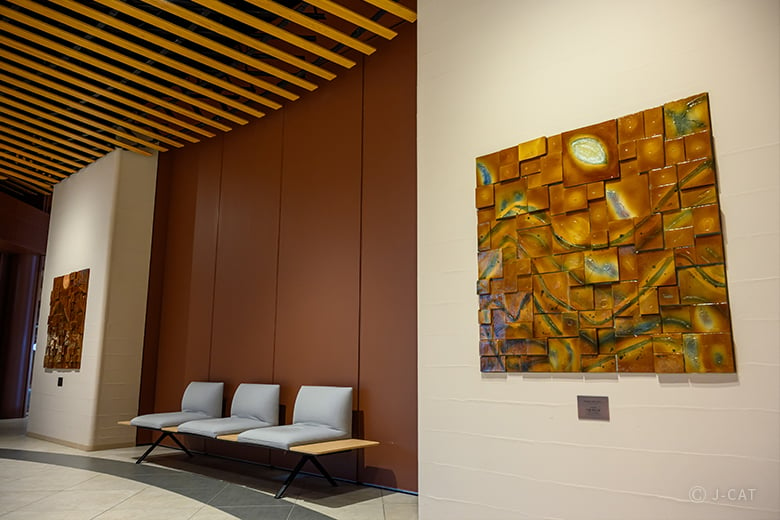
“Flowers, Birds, Wind, and Moon of Kaga & Noto 2022,” by the late Toyasai Ohi (Chozaemon X・Toshiro)i, exhibited at Ishikawa Prefectural Library
Nara: I agree. Although we weren’t very close, I greatly respected my grandfather as an artist. During the last three years of his life, I lived in the same room as him, because I wanted to learn everything I could about him. I believe that a person’s work reflects their way of life. I wasn’t just thinking about his production process, but more holistically about how he spends his days and where his ideas come from. That was what I wanted to study up close.
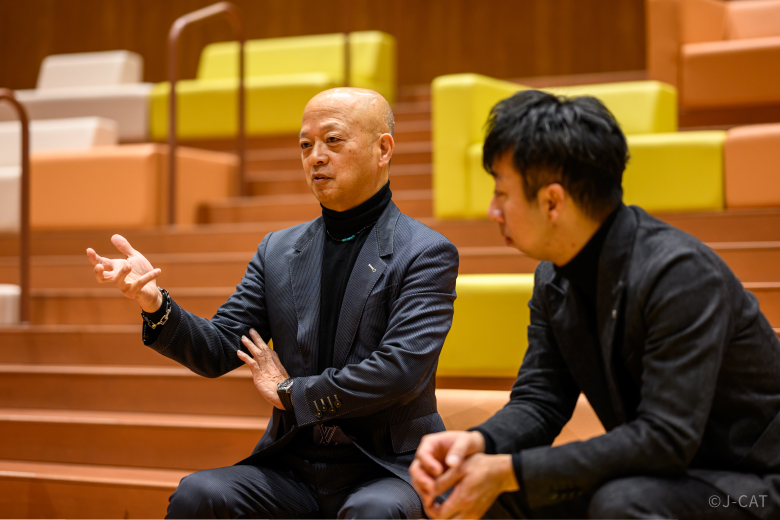
Ohi reminisces about his father
Driven by Experiences in the Noto Earthquake, the Pair’s First Father-Son Exhibition
-In 2024, you held your first father-son exhibition at Azabudai Hills Gallery in Tokyo. We’ve heard that you intended it as a tribute to the Noto Peninsula, which suffered severe damage from that year’s New Year’s Day earthquake.
Ohi: As a matter of fact, all of Kanazawa’s old Ohi-ware clay kilns were destroyed in that earthquake. It was a dark period for me personally. But actually visiting Noto and talking to an artist I knew there, I found myself inspired by his attitude. Even though his house had been flattened and he had sustained serious injuries, he was thinking on a different level. “Let’s build a new place to create,” he said. It was humbling, and it made me feel I had to do something for the area. That inspired me to create new works from the fragments of pieces destroyed by the quake. My father often said that the will to fight through tragedy is art’s greatest engine.”
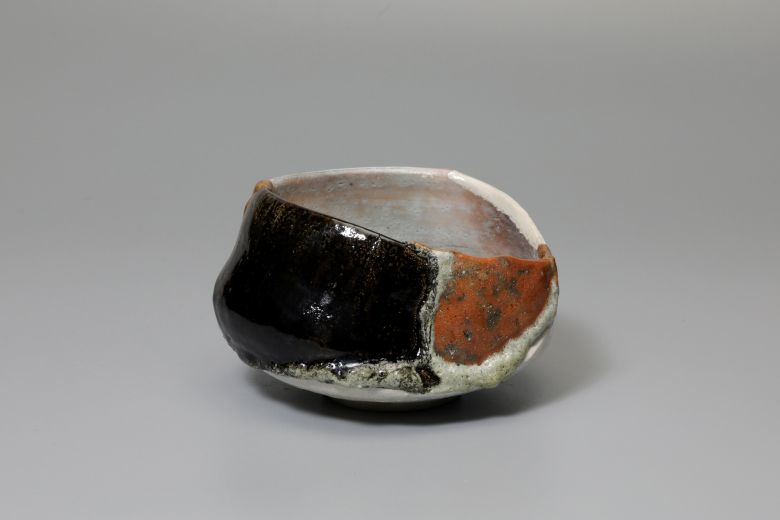
The “Ohi Tea Bowl Reborn 9+10+11” is made by firing together reassembled pieces from the 9th, 10th, and 11th generations of the Ohi family shattered by the earthquake
Nara: The Noto hiba (a variety of cypress native to the Noto peninsula) is an indispensable material in local architecture, so I decided to use it in the creation of a piece. I also set up an “instant house” that had actually been used for shelter in the disaster area at the venue of our father-son exhibition, configured as a tearoom for holding tea ceremony. I wanted people in Tokyo to experience something that made the situation in Noto feel closer to home. That instant house is now in front of the Ohi Museum, open to visitors, where it is part of the story the museum tells about the earthquake.
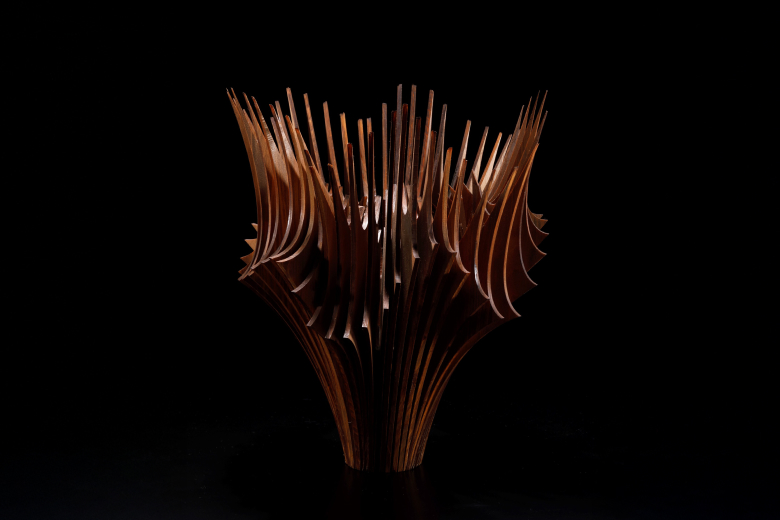
Nara's masterwork "Bone Flower" remade using Noto hiba cypress as a prayer for recovery: “Bone Flower Noto Hiba”
Two Kanazawa Souls Seeking the New and Revitalizing the Old
-What do you think Kanazawa’s biggest draws are?
Ohi: Kyoto is often described as refined, and Tokyo as fashionable. But I think Kanazawa is harder to pin down with a single word. It’s a place where everything is in motion, being customized and updated. The roots of making traditional things lie in Kyoto, and Tokyo is where those things are introduced to the world. But Kanazawa is where we harness those things and develop and transform them.
Historically, there was even the dream of the Kanazawa Maeda family – connected to the heart of the country – that “maybe someday, something we’ve created will be presented to his Majesty the Emperor.” It’s part of the milieu of Kanazawa, where new ideas are always bouncing around and there is this drive to “create something better together.” I think it’s in the city’s whole atmosphere.
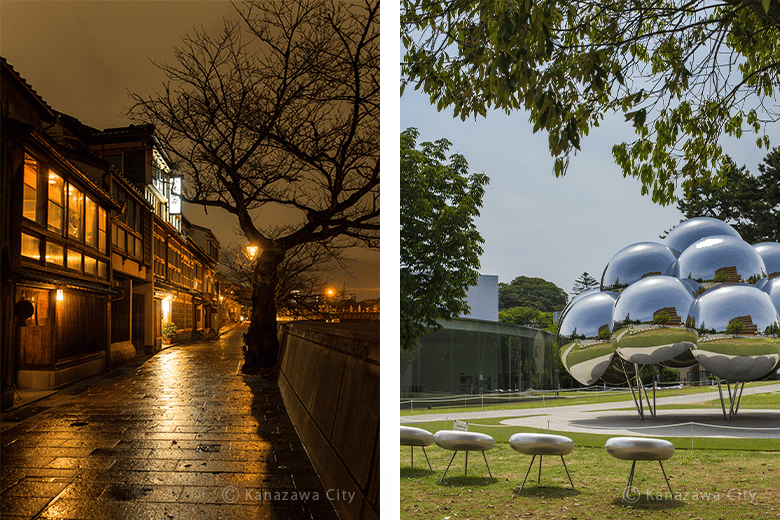
“Shu” – the veneration of tradition; “Ha” – the embrace of innovation and change; and “Ri” – the striving to reach new places: all thrive together in Kanazawa
*Shuhari: A term for the direct relationship of apprenticeship between mentor and protege, or master and pupil, in traditional Japanese fields such as art, tea ceremony, and martial arts.
Nara: A visitor from abroad recently said something that really resonated with me: “Neighboring Toyama Prefecture is a place of ‘nature resorts’, but Kanazawa is a place of ‘cultural resorts.’ That encapsulated it for me. In addition to art and cuisine, other traditional practices like tea ceremony and performing arts thrive in Kanazawa. The city works hard to preserve its valuable historic traditions, and I think the word ‘resort’ is appropriate because of the abundance of chances for visitors to not only see but experience those traditions.”
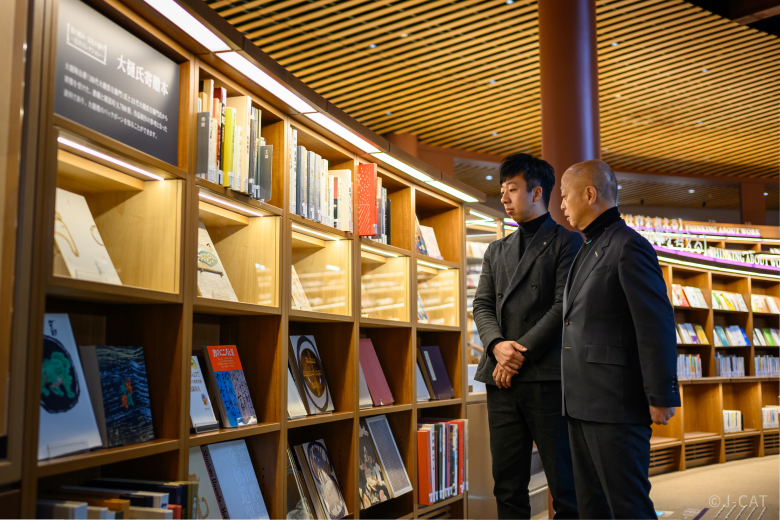
The Ishikawa Prefectural Library is home to some 3,700 books and magazines donated by Ohi
Two Professional Artists Pull Back the Curtain on the Best of Kanazawa
-What would you recommend visitors to Kanazawa see or do?
Nara: Easily one of Kanazawa’s biggest appeals as a tourist destination is how compact it is. Strikingly different museums are all within walking distance of one another. If you visit the Nakamura Memorial Museum of Art or the D.T. Suzuki Museum after a stop at the 21st Century Museum of Contemporary Art, Kanazawa you’re in a completely different world.
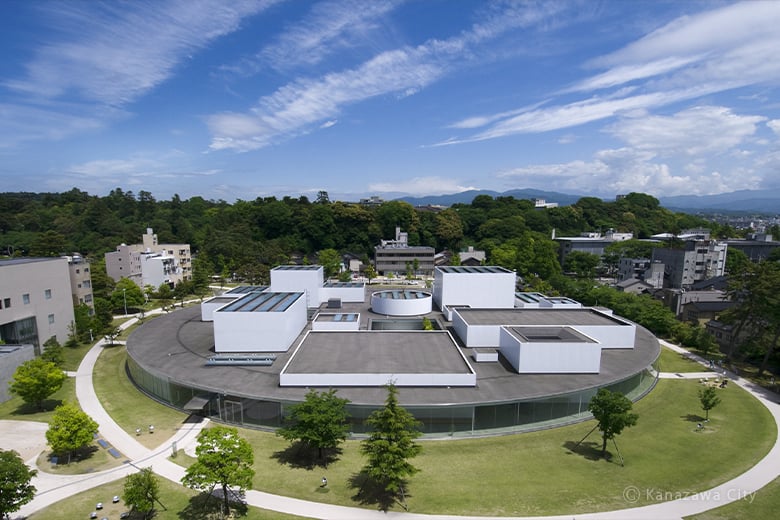
Since its opening in 2004, the 21st Century Museum of Contemporary Art, Kanazawa has been attracting a steady stream of visitors from both within Japan and overseas.
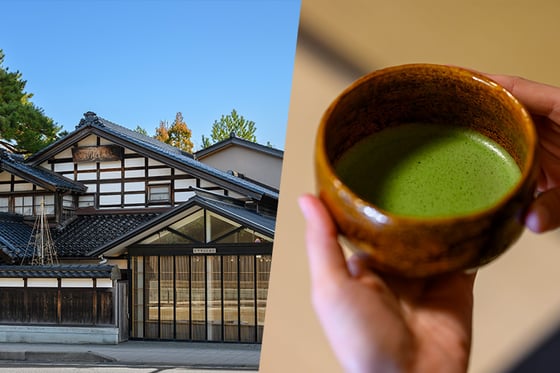
Ohi: Obviously I’m hardly impartial on this, but I’d really like for people from overseas to visit our Ohi Museum and experience tea ceremony there. For visitors who book a reservation in advance, we curate and arrange all of the tea implements for them specially based on the information they share. Of course, all of these implements are from our own collection. We often get repeat visitors hoping to recreate their first experience again. Because we are a small city, it is important to have places that people want to come back to, and we strive to provide just that through hospitality imbued with true Japanese spirit.
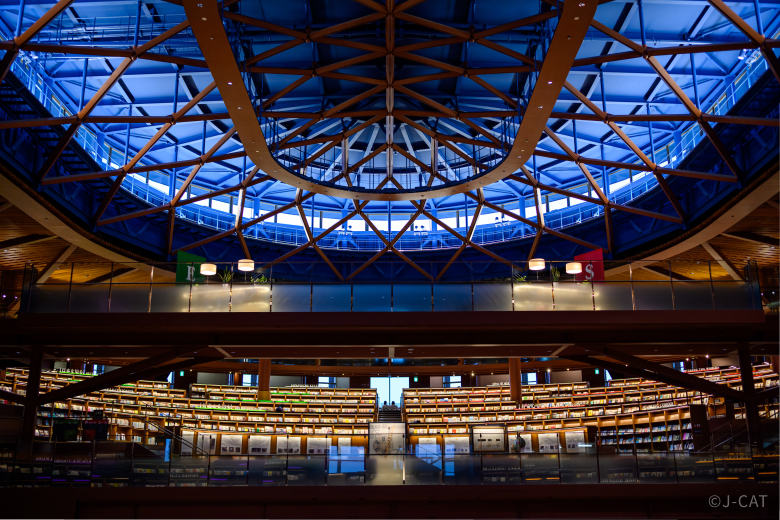
Ishikawa Prefectural Library is not only known for its collection of books, but also for its architecture, spatial design, and interior design.
Toshio Ohi Chozaemon XI / Yuki Nara / Ishikawa Prefectural Library
Toshio Ohi Chozaemon XI
Born in Kanazawa in 1958 as the eldest son of Toyasai Ohi (Chozaemon X, Toshiro), who was a recipient of the Order of Culture. Toshio Ohi Chozaemon XI is a member of the Japan Art Academy and completed his master's degree at Boston University Graduate School in 1984. In 2016, he assumed the name of Toshio Ohi Chozaemon XI. Active in a wide range of fields as a ceramicist, designer, and artist, he has also served as a visiting professor and university lecturer in Japan and abroad. In 2023, he was awarded the Imperial Prize and the Japan Art Academy Prize.
Yuki Nara
Born in Kanazawa in 1989, eldest son of Toshio Ohi Chozaemon XI, Nara graduated at the top of his class with a major in architecture from the Graduate School of Fine Arts at Tokyo University of the Arts. He founded architectural design laboratory "Earthen" in 2021, and his ceramic masterpiece "Bone Flower" is in the permanent collection of the 21st Century Museum of Contemporary Art, Kanazawa. Nara is a young artist on the ascent who splits his time between architecture and ceramics.
Ishikawa Prefectural Library (Interview Venue)
Opening its doors in July 2022, Ishikawa Prefectural Library boasts a collection of some 1.1 million titles, including photo books, art magazines, and volumes on Ishikawa Prefecture’s craft traditions. The library also serves as host to exhibitions by local artisans and artists, as well as demonstrations and workshops, making it a vital pillar of local culture and art. The five traditional colors of Kaga Yuzen dyeing are incorporated as accent colors into the building’s design, in homage to the region’s arts and crafts history.
Ishikawa Prefectural Library
2-43-1 Kodatsuno, Kanazawa City, Ishikawa Prefecture, 920-0942