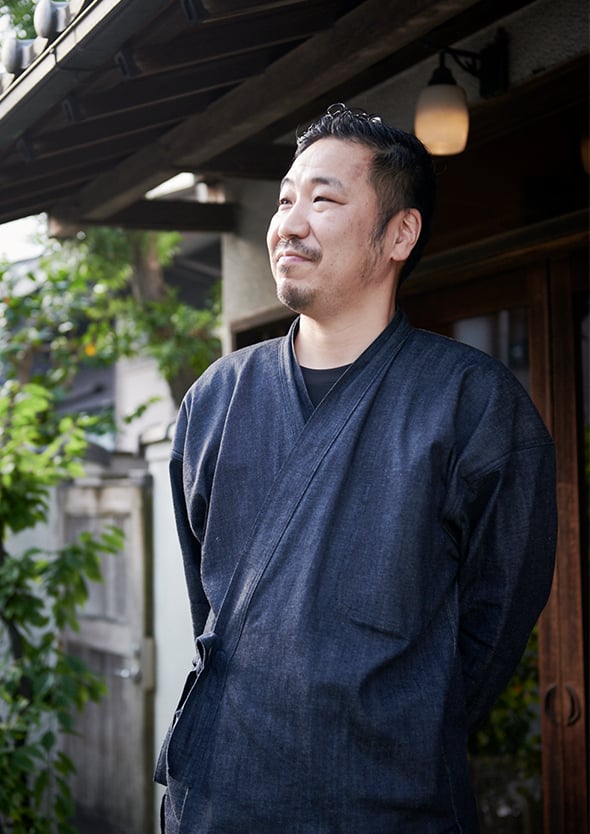
His training journey
Goto is a descendant of Unkei, a famous Buddhist sculptor from the Kamakura period, and grew up in his grandfather's Kamakura-bori workshop. From a young age, he was expected to take over the family business. However, he initially had a negative image of Kamakura-bori. “I saw it as being old and uninteresting,” he says. "But while I was struggling with my career choices, my father passed away.”
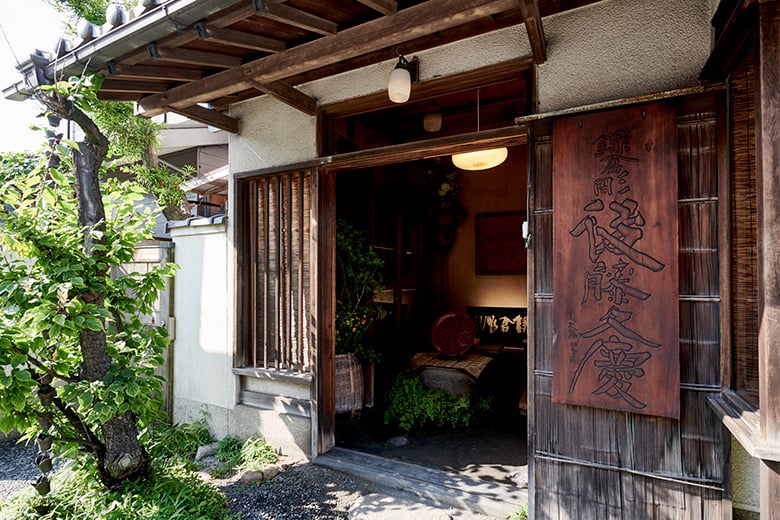
The gallery and studio are located right next to the third torii gate of Tsurugaoka Hachimangu Shrine in Kamakura.
After his father’s death, Goto was suddenly placed in charge of Kamakura-bori Goto Kyukei. He decided to learn from Hiroshi Kobatake, an award-winning sculptor specializing in Buddhist sculptures, and also visited craftsmen who had worked with his father to have them evaluate his own work.
One urushi lacquer craftsman felt the surface of his wood carving and said, "Your father's carving was softer.” It was challenging for him to hone his skills as a craftsman without a master. However, according to Goto, the previous generation of craftsmen in the family took great care to document the process of carving Buddhist statues, so that they could pass on their skills to later generations. Even now, there is much to be learned from the works of the Goto family.
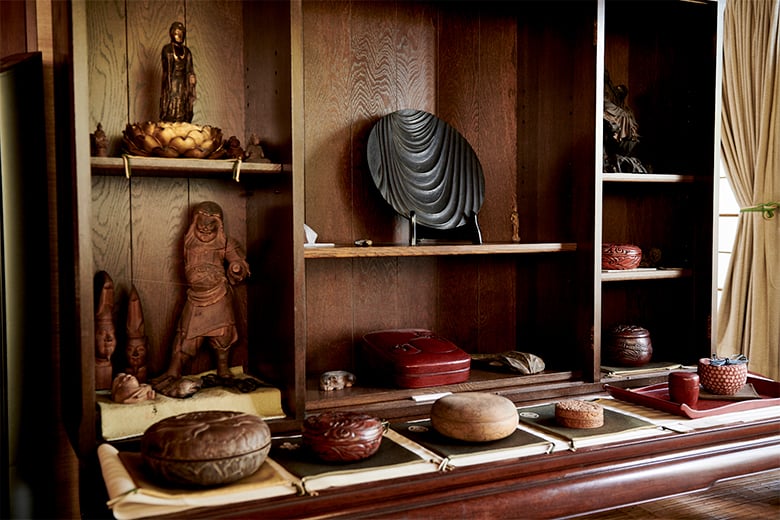
Gallery with a variety of works handed down in the Goto family through generations.
Rediscovering the potential of Kamakura-bori through art
After 10 years of training, Goto also began his career as an artist under the name "Keidai Goto." He has worked with contemporary artists in the fields of sculpture, ceramics, and metal sculpture, and regularly holds exhibitions. His goal is to present Kamakura-bori as an art form that can be appreciated by those who are completely unfamiliar with it.
As he continued to work with artists from different genres, Mr. Goto's perspective on Kamakura-bori began to shift. He discovered that he could express a wide range of ideas through this ancient art form, and came to the realization that "everything I wanted to do could be achieved through Kamakura-bori."
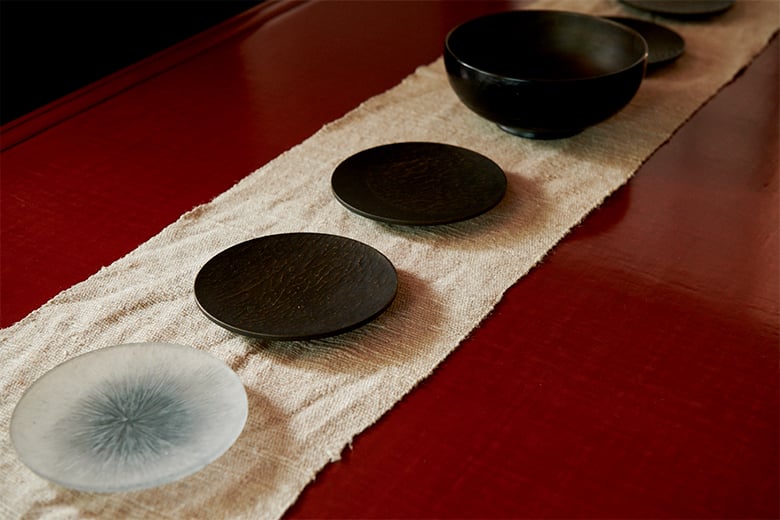
The glass plate featured in this photo was made using a Kamakura-bori mold, and is part of a glassware series based on Kamakura-bori molds.
“Kamakura-bori has the potential to be a part of our daily lives, not just something to be admired from afar. By presenting them as art and finding new ways to use them, we can appreciate their beauty in a fresh and modern way.” Goto hopes for Kamakura-bori to be used and enjoyed in the present, not just relegated to the past.
Kamakura-bori has a special charm that captures the thoughts and feelings of its creator
At Kamakura-bori Goto Kyukei, Goto offers hands-on workshops to introduce the art of Kamakura-bori to as many people as possible. He believes that the process of thinking about what to carve and carefully facing one's own heart is a valuable experience that can help individuals discover what is truly important to them. Kamakura-bori is not only a craft, but also a form of self-expression.
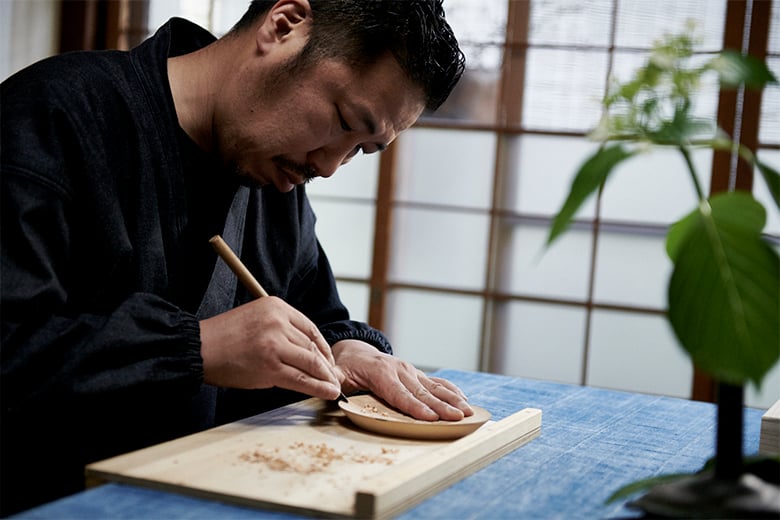
"Kamakura-bori is interesting because you can feel the emotions of the person who carved it,” says Goto.
The time spent immersed in the process of carving will be an unforgettable experience. The appeal of Kamakura-bori lies in its ability to be used and enjoyed for a century and beyond. "Every time I use a piece of Kamakura-bori, I am reminded of the emotions I had while creating it," Goto says. The beauty of this art form is that it allows these feelings to be preserved and shared for many years to come.
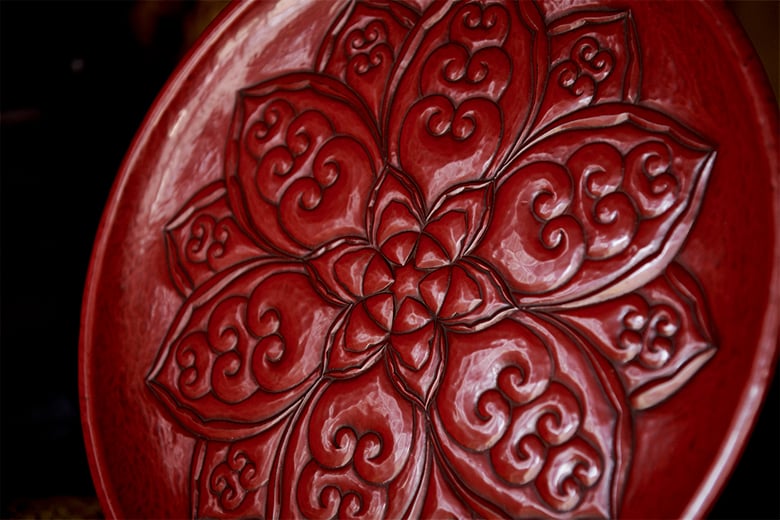
Kamakura-bori carved by a craftsman from a previous generation. Urushi lacquer is applied over and over again to make it durable and usable for 100 years to come.
Passing on culture handed down from ancestors to the present and future
Goto is the 29th grandson of Unkei, and has inherited the workshop of Kyukei, which has continued for three generations. The road to success has not been an easy one, as he has been burdened with the responsibility of passing on traditional culture to the future. In the absence of a master, he has listened to the voices of many people, and his humble attitude as he continues to hone his craft is inspiring.
“Someday, I want to create a work of art that I can say, ‘I was born to create this.’” Goto continues to aim high and make no compromises in his pursuit of this goal.
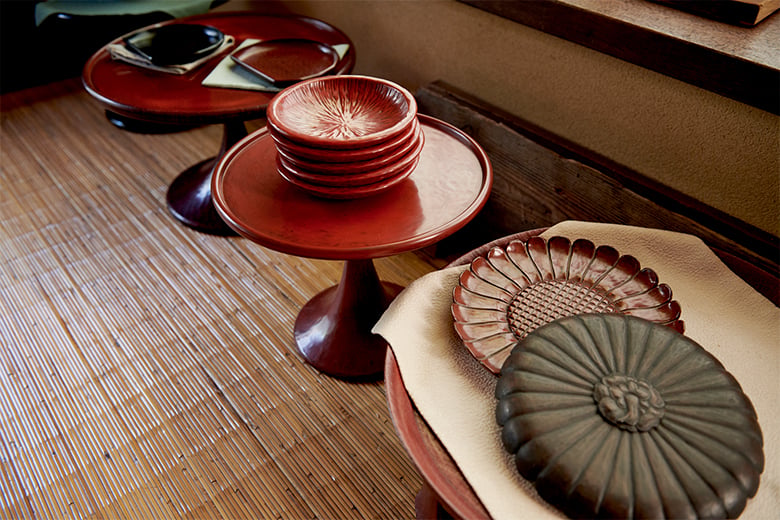
From traditional Kamakura-bori to works of art, visitors can see Goto's works up close.
Goto's studio in Kamakura is open to the public as a gallery, displaying his latest works as well as representative works of his ancestors. Visit to hear directly from the soft-spoken Goto about the stories and thoughts behind his works, and you may discover something new and fascinating about Kamakura-bori.
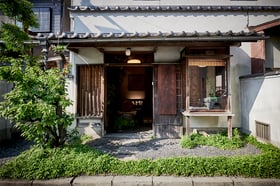
Kamakura-bori Goto Kyukei
Kyukei Goto, born in Kamakura in 1972, is the 29th grandson of the renowned Buddhist sculptor Unkei. He took over the family business, Kamakura-bori Goto Kyukei, in 1998 after training under sculptor Hiroshi Kobatake. In addition to creating traditional Buddhist altar fittings and furnishings for temples, Goto also gives lectures and holds hands-on workshops on Kamakura-bori. As an artist, he has formed the art units "Yuki no Fuku" and "eventum," and has held exhibitions in various locations. Goto is dedicated to promoting the art of Kamakura-bori in a variety of fields.


