Entering the world of Kyoto wagasa craftsmanship from a different field of work
With a history of more than 160 years, Hiyoshiya is also Kyoto’s only remaining wagasa shop.
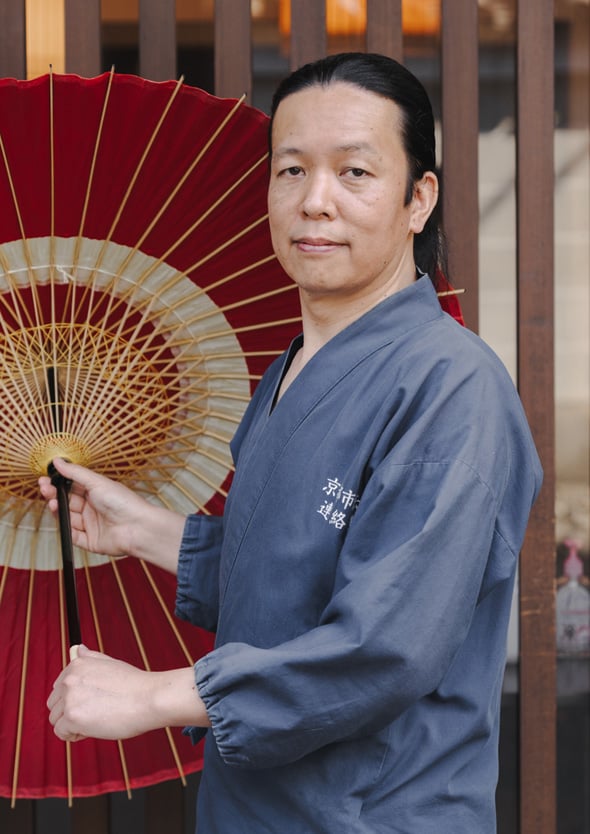
Nishibori, the fifth-generation head of the company, has a unique journey in the world of wagasa craftsmanship. After studying abroad, he originally worked as a public servant in Wakayama prefecture, but became interested in umbrella making after visiting the home of his future wife, whose family founded Hiyoshiya. “I still remember how impressed I was with how cool the umbrellas looked in front of me."
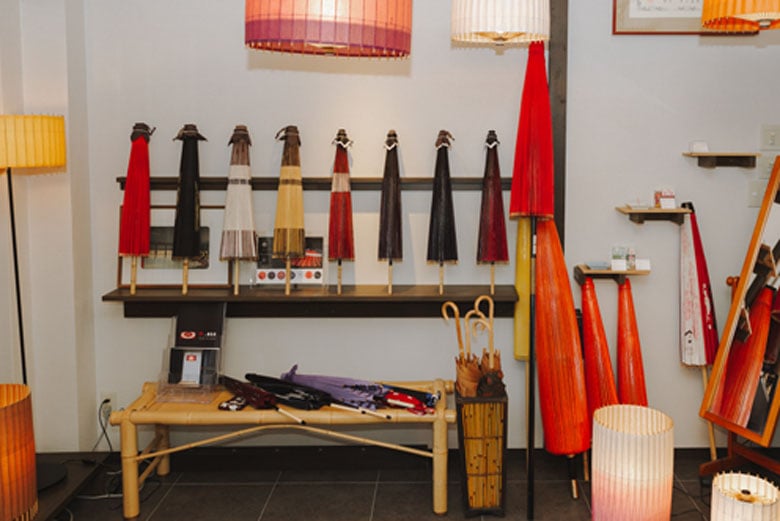
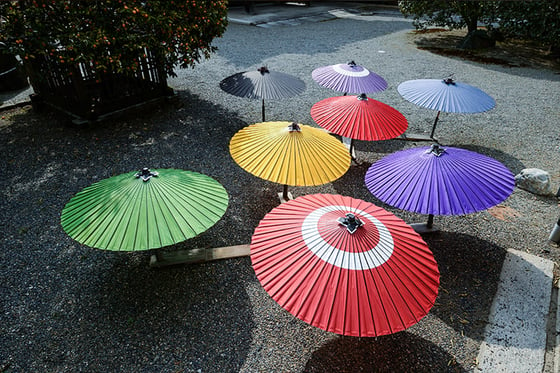
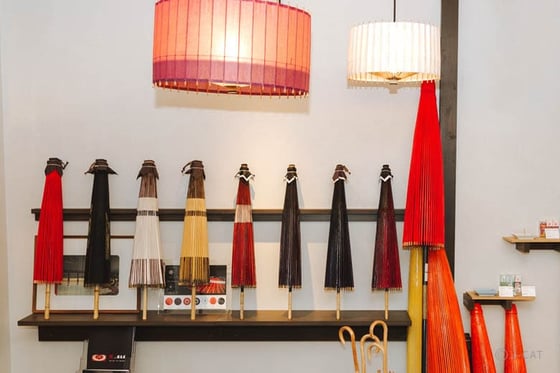
Colorful umbrellas on display at the store, which also serves as a workshop and sales office.
However, at that point, the family had already decided to close the business due to the popularity of cheap, mass-produced Western-style umbrellas. “I thought it was a shame that something so beautiful could no longer be made available to the world. I saw the potential for global demand for traditional Japanese umbrellas, so I used my experience in e-commerce and tourism to promote the family business online," said Nishibori.
Nishibori initially took on the role of promoting the company's sales, but over time he developed an interest in crafting umbrellas himself. “After work, I would travel from Wakayama to Kyoto to record the production process on video, and spend my days learning how to make umbrellas by watching and studying the footage," he says.
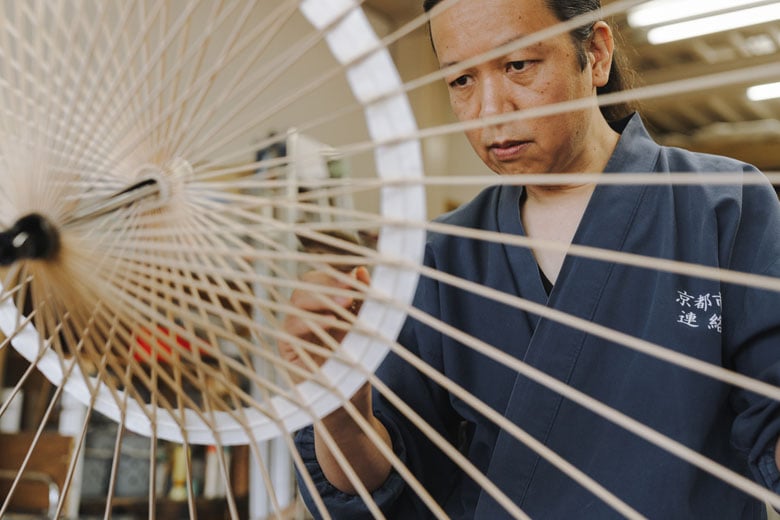
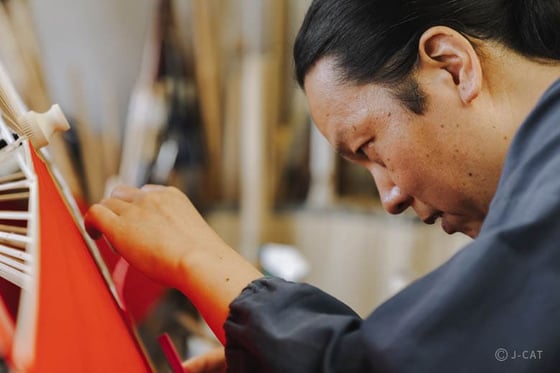
From an early age, Nishibori loved working with his hands.
The transition to e-commerce was successful, leading to an increase in demand for kyo-wagasa both within Japan and internationally. As the family business became busier, Nishibori resigned from his previous job and joined Hiyoshiya. Tragically, his predecessor passed away in the same year, leading Nishibori to take on the role of head of the company. He left his previous career behind to learn the craft of umbrella making from the ground up and decided to revive the traditional art of kyo-wagasa. It was a tumultuous but ultimately fateful encounter with this centuries-old craft.
Rational and beautiful, the charm of wagasa
Nowadays, it's common to be able to open and close an umbrella with the touch of a finger, but according to Nishibori, "the mechanism of the umbrella holds the history of study by skilled craftsmen and the charm of the umbrella."
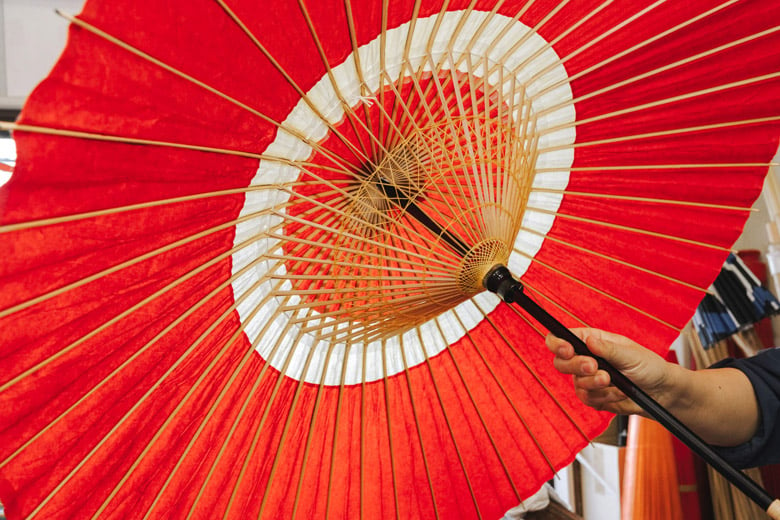
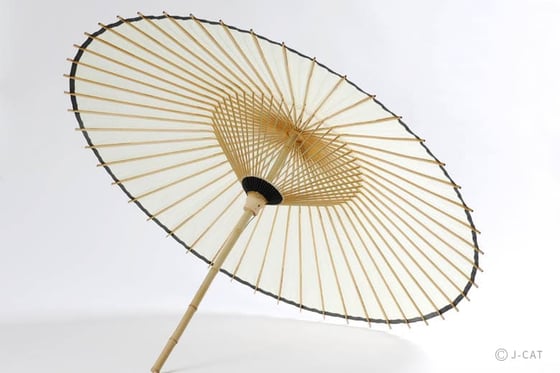
Light shines through the Japanese paper, creating a colorful contrast.
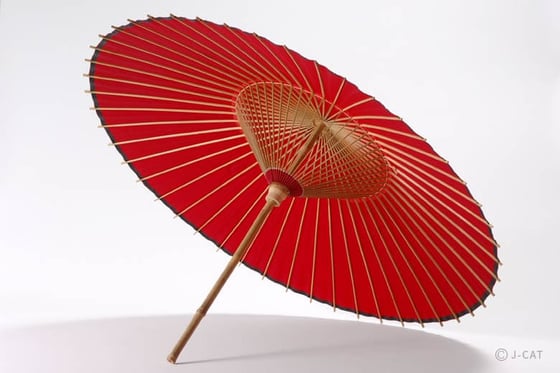
“When closed, the umbrella looks like a simple stick, but when opened, its beauty is beyond words. The contrast of the bamboo material, the contrast of the Japanese paper, the way light passes through, and the sound of the oiled paper being struck by rain all contribute to the deep, uniquely Japanese beauty of a wagasa," Nishibori explains.
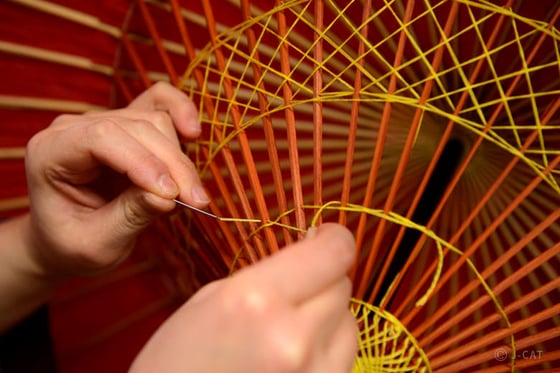
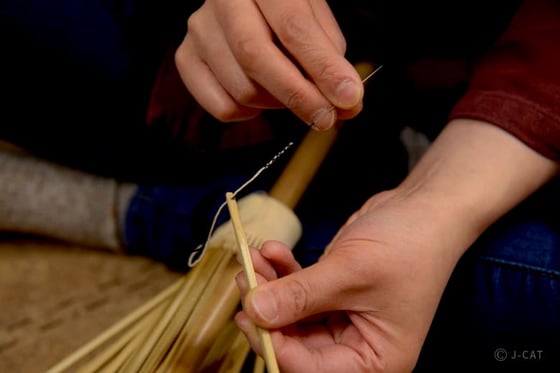
While Western-style umbrellas that we use in our daily lives are usually made with a framework of eight ribs, a wagasa is made with 30-70 bamboo ribs. In contrast to Western-style umbrellas that can be mass-produced by machines, wagasa are made only from natural materials. As a result, behind the skills of the craftsmen, there must be a lot of trial and error that we can't even begin to imagine.
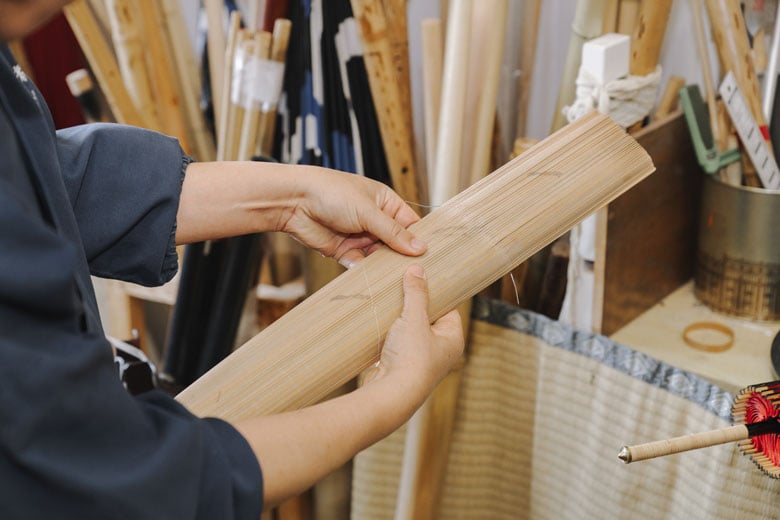
Delicate bamboo ribs before paper is glued on
“Opening and closing an umbrella is now taken for granted. However, it took craftsmen a thousand years to figure out how to efficiently open and close a Japanese umbrella made entirely of natural materials, resulting in the form we have today. This rationality is the result of that history, and is beautiful in itself," says Nishibori.
Continuing to innovate as a long-established global venture
In just one generation, Nishibori has brought a long-established wagasa manufacturer to the world. The motto he established when he incorporated the company, "tradition is continuous innovation," still seems to be the foundation of his business today. "Although wagasa are visually striking and have a strong presence, Western-style umbrellas are more convenient for everyday use. I don't think this is because wagasa are inferior products, but rather because they have become out of sync with the times. That’s why I decided to introduce new ideas,” he says.
When he took over Hiyoshiya, Nishibori thought he would "start over as a venture company using the contents of a long-established business." Since then, he has developed and exported "KOTORI," a Japanese-style lighting product made using the same manufacturing process as wagasa, and has collaborated with designers and architects in Japan and abroad to create products that introduce the culture of the wagasa umbrella to the rest of the world.
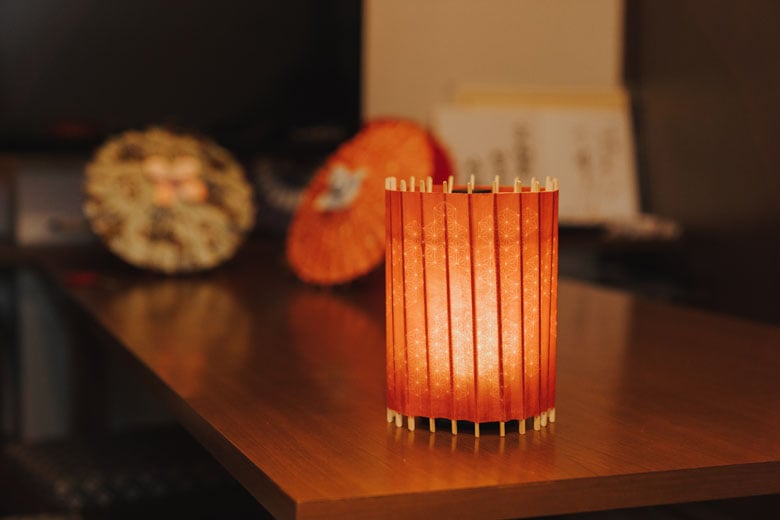
KOTORI — lighting made of the same material as wagasa
"It's already been 20 years since we started using wagasa as lighting fixtures. In another 20 years, even this will be considered a traditional craft. I believe that by continuously innovating and increasing awareness of wagasa, we can ensure the continuation of this tradition."
"There are only around 10 wagasa-making companies in Japan. I want to start by creating a place where people can come and get to know wagasa," says Nishibori. He hopes that this experience will also raise awareness of the texture of washi paper and the charm of wagasa, which can be felt through touch.
This experience represents the culmination of over 1,000 years of innovation and technology
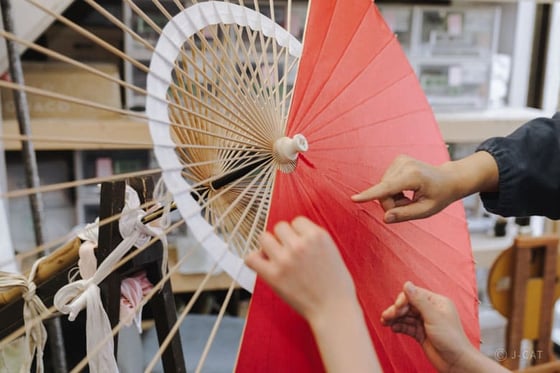
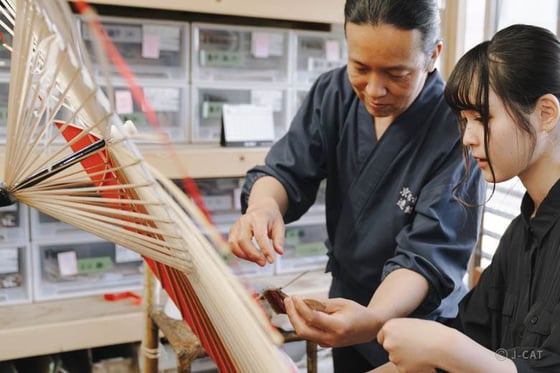
In this experience, visitors will hear about the history of the umbrella and have the opportunity to apply washi paper to bamboo ribs under Nishibori’s guidance.
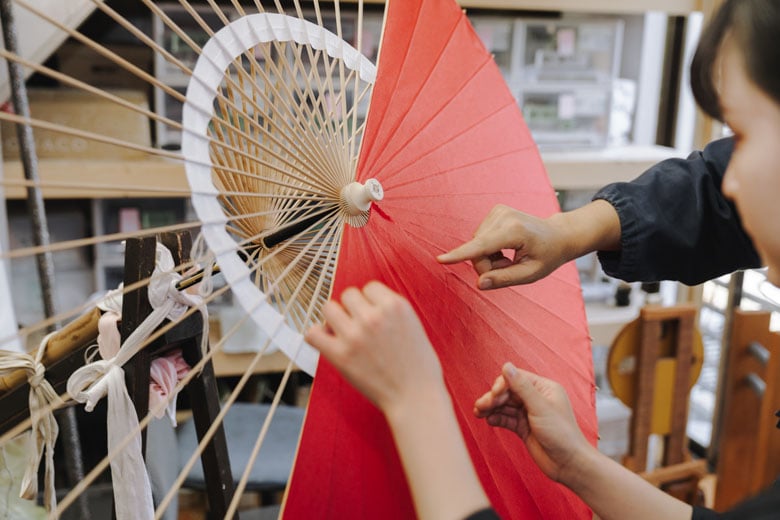
To attach a single sheet of washi paper, various innovations are necessary, demonstrating the depth of wagasa.
“Like the theory of evolution, old things are phased out, but things that have been around for hundreds of years hold a certain value. The umbrella, for example, evolved from a tool to ward off evil that couldn't be opened and closed into rain gear.” By participating in the process of making wagasa and learning about the origins of the umbrella's shape and how the glue is applied, Nishibori hopes that people will come to appreciate the beauty that is uniquely Japanese.
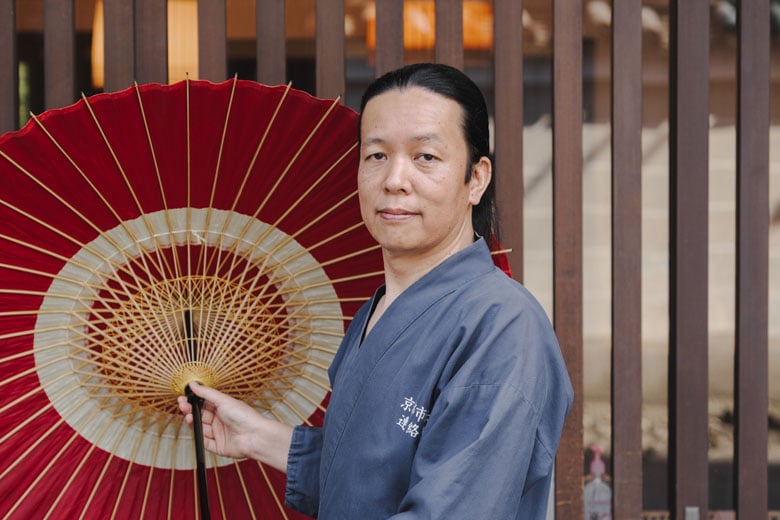
"I want people to experience the beauty of Kyoto through kyo-wagasa," says Mr. Nishibori.
The Hiyoshiya experience offers the chance to connect with the tradition of over 1,000 years of technological innovation and explore the refined, yet simple beauty and glamor of kyo-wagasa. Don't miss the opportunity to immerse yourself in the world of wagasa at Hiyoshiya.

Hiyoshiya
Hiyoshiya is a long-established company that has been producing kyo-wagasa, Kyoto-style traditional Japanese umbrellas, for 160 years. With the belief that tradition is built on innovation, the company strives to create products that blend traditional craftsmanship with modern functionality. Located in Kyoto, Japan, Hiyoshiya uses the skills, materials, and structure of wagasa to create products that are both beautiful and practical for daily use.