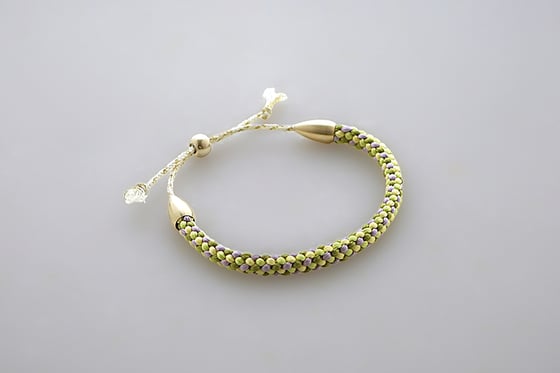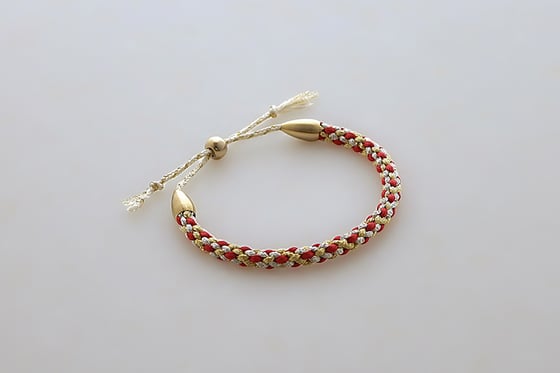
Infinite Possibilities Within Reach
“Kumihimo, including the stand used to braid the cords, is something that you can put together by yourself from start to finish with minimal tools," says Domyo.
This accessible quality is part of kumihimo’s appeal, he adds.
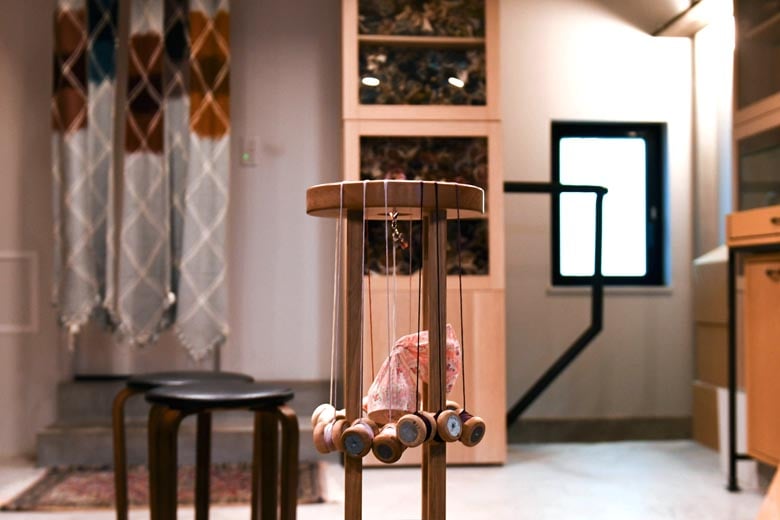
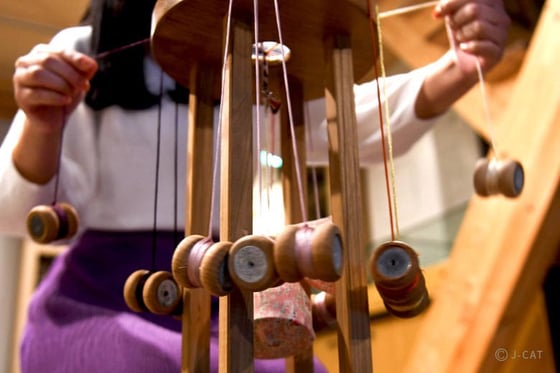
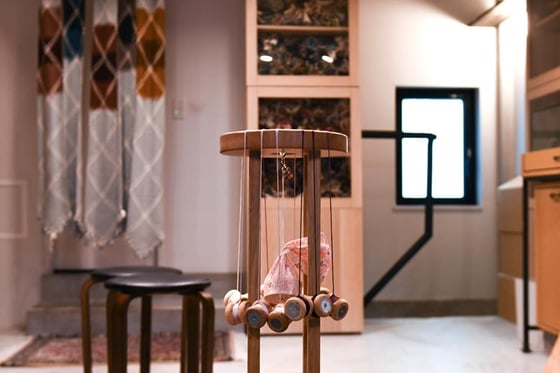
A kumihimo stand
Making kumihimo does not require large-scale facilities or equipment. Yet, the combination of colorful yarns dyed in traditional Japanese colors and the way they are woven allow for an endless variety of designs.
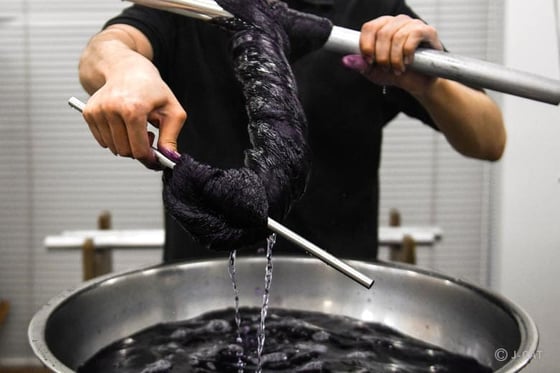
At Domyo, all processes from dyeing the silk threads, to shaping and assembling the product to completion are done in-house. Skilled craftsmen are in charge of each process, and everything is done by hand.
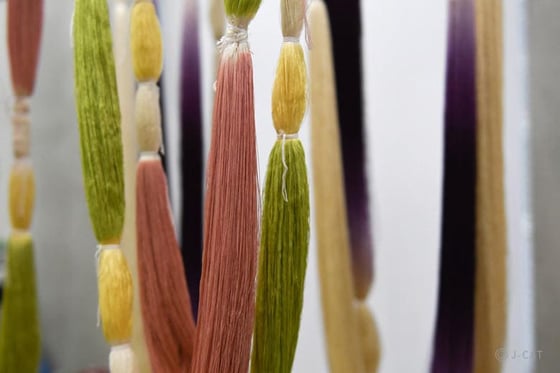
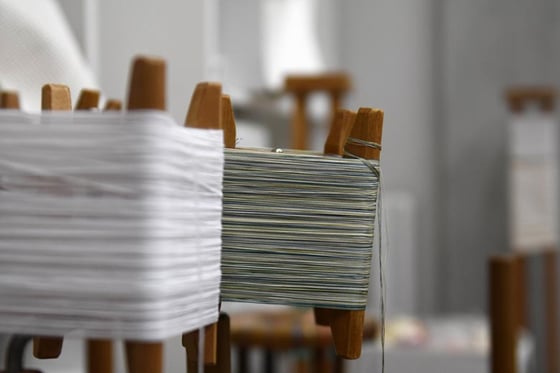
Because there are so many different types of silk threads that can be dyed in a variety of colors, there is no recipe. Tapping on their accumulated experience and skills, craftsmen blend colors by eye and fine-tune temperature and time to achieve their desired results.
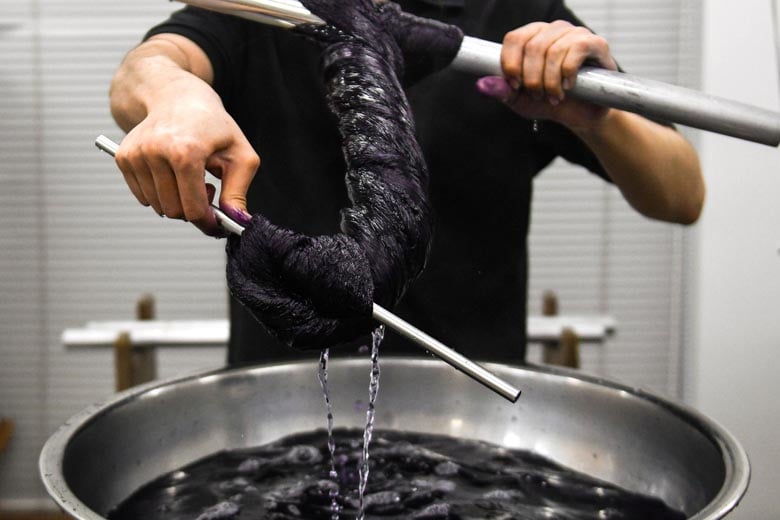
Dyeing silk thread
Over the course of its 360-year history, Domyo has been involved in researching the techniques and history of kumihimo, which have been handed down through generations. The company also has a collection of kumihimo that faithfully reconstructs and reproduces the structure, color, and shape of kumihimo stored in the Shosoin Repository, the treasure house of Nara’s Todaiji Temple.
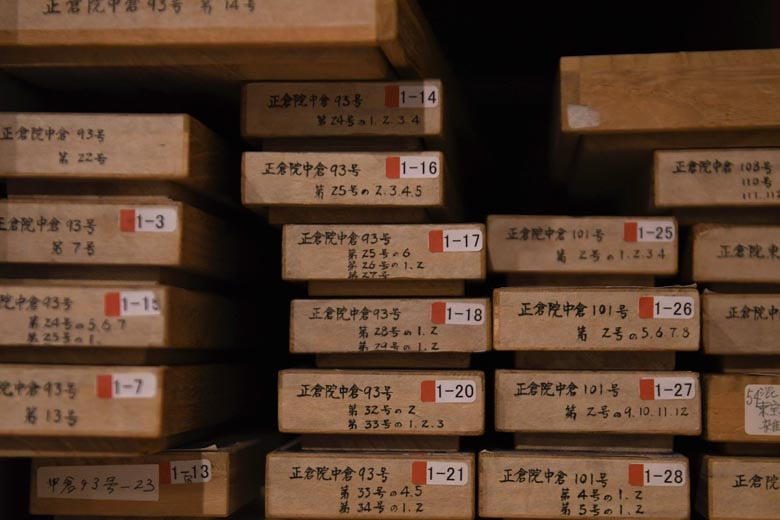
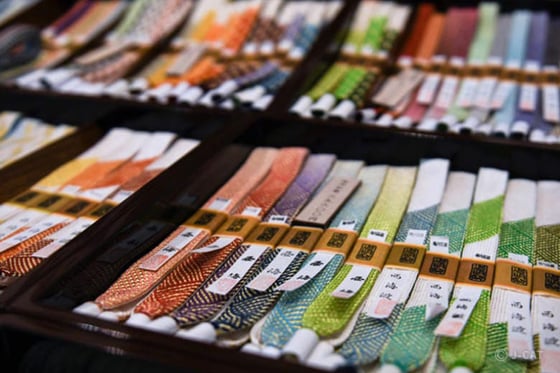
Boxes of reconstructed kumihimo
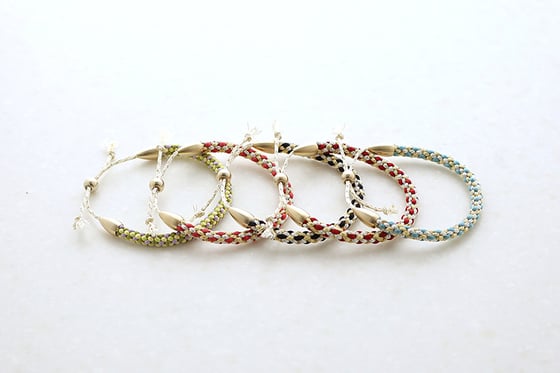
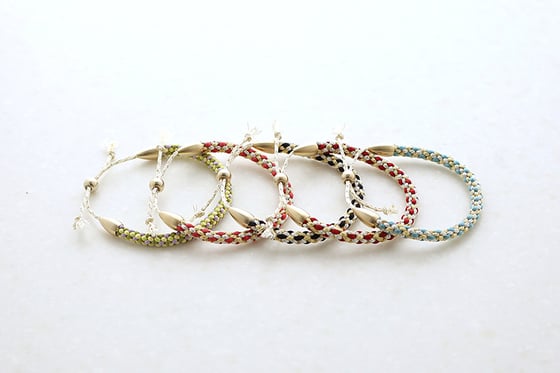
Without forgetting the importance of passing on ancient techniques, Domyo is also in constant pursuit of new challenges. For example, to apply kumihimo to a modern context, the company has created kumihimo neckties and easy to wear colorful accessories that incorporate new braiding methods. These products are said to be especially popular with overseas customers.
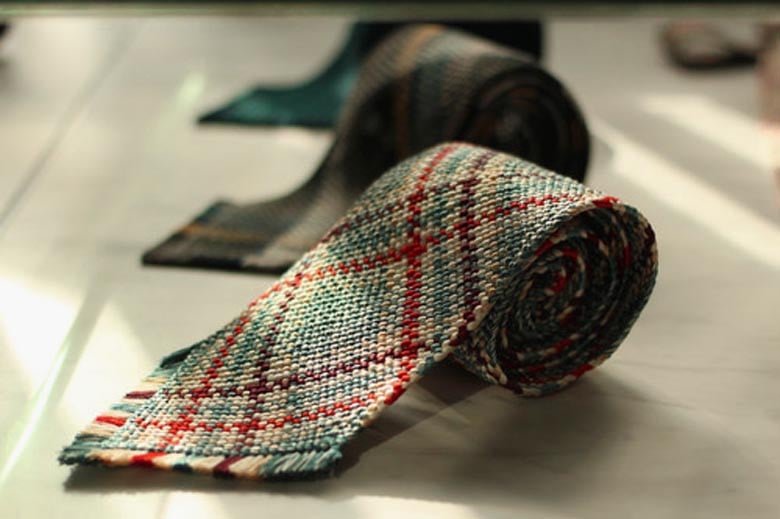
Kumihimo neckties
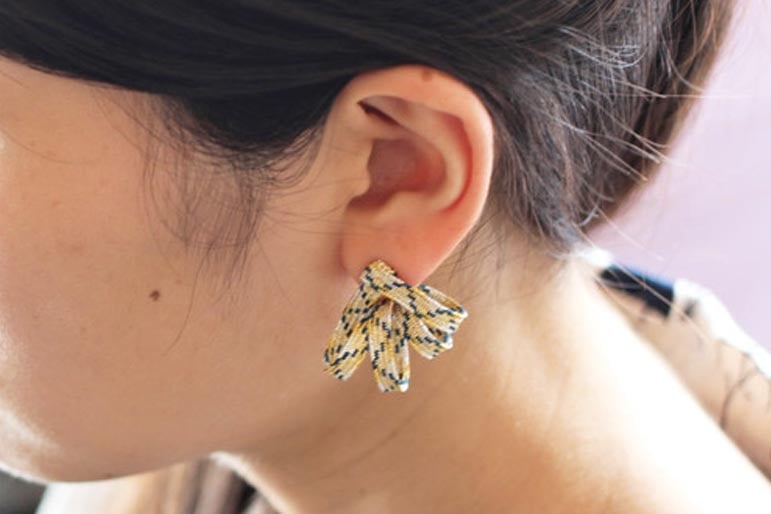
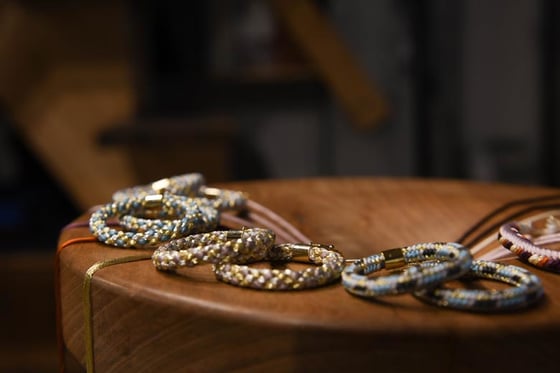
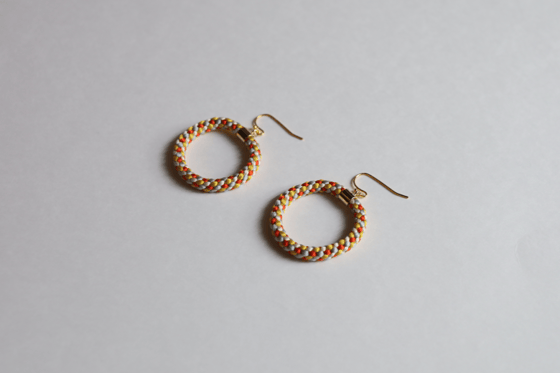
Kumihimo earrings
The kumidai is a "mirror" that reflects the heart
At first glance, the braiding process appears to be a repetition of regular movements. However, to create a three-dimensional, beautiful, and uniform braid, it is important to twist the threads with the same strength at all times while braiding.
Rhythmically, quietly, and carefully the craftsmen work, as the clinks and clanks of the tools resonate pleasantly.
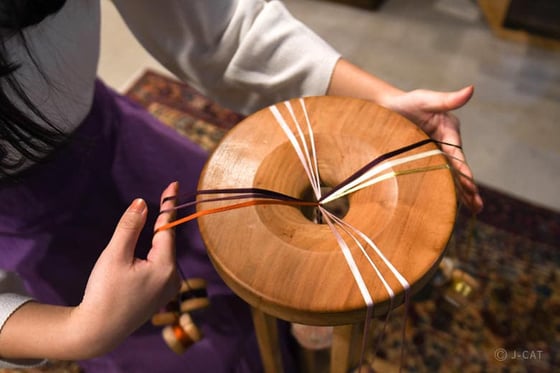
For the kumihimo experience, a circular braiding stand about the size of two palms is used. The simple and beautifully shaped surface of the stand is polished to prevent the threads from rubbing and snagging. The surface is also called a "mirror," with the implication that it "reflects the heart of the people who make it."
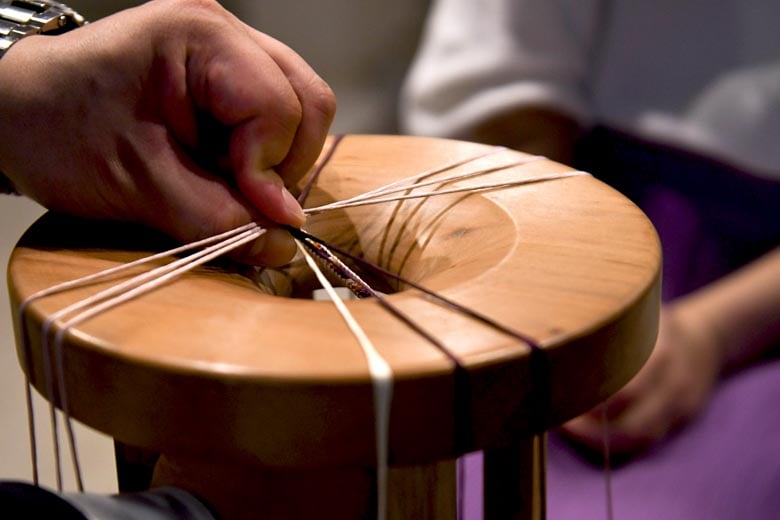
Braiding threads on a polished kumihimo stand
“Even the most skilled craftsman cannot create beautiful kumihimo if his mind is in disarray," says Domyo.
While craftsmen carefully observe and consider the weather, humidity, and yarn conditions of the day to ensure that all pieces are woven evenly and beautifully, maintaining a beautiful state of mind is also an important element.
Individuality and Value Created by Handwork
Each piece finished by hand by a skilled craftsman has its own individuality.
“Even though our products are always high quality, no two are exactly the same. I want people to enjoy a piece of work that is truly the only one in the world," says Domyo, explaining the joy of kumihimo.
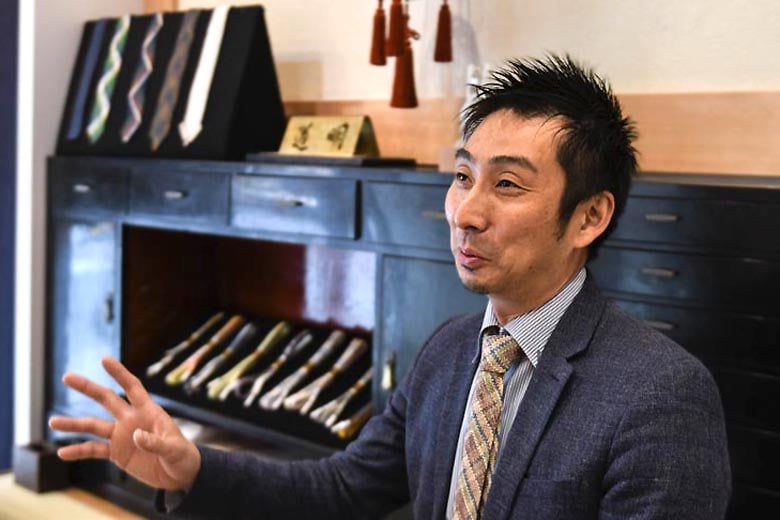
Mr. Kiichiro Domyo
He adds, "in Japanese society where mass production and mass consumption have become commonplace, I would like more people to discover kumihimo and experience how it is made. I want people to re-recognize the wonders of handicrafts in terms of sustainability." Domyo believes that making only what is needed using minimal energy is a merit unique to handwork.
We want to offer the experience of weaving kumihimo with your hands
Creating something with your hands is less common today.
“In the process of making kumihimo, you can enjoy the feel of the threads and tools, look into your own heart, and build something in a relaxed frame of mind. Through the activity, I want people to experience the value of things created by hand," says Domyo.
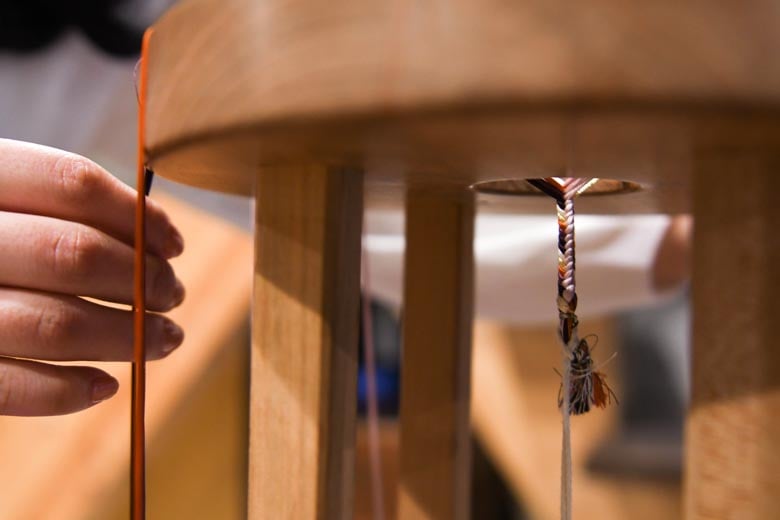
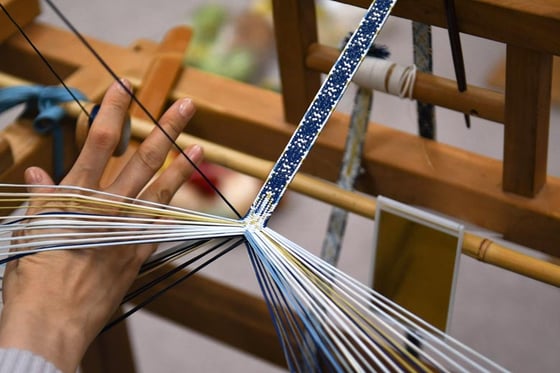
Weaving kumihimo
Over 1,000 years have passed, and kumihimo is still a part of people's daily lives.
At Domyo, a kumihimo shop that incorporates both old and new techniques and individualities, you can learn to appreciate the value of handmade products through the unique experience of braiding kumihimo by hand.

Domyo
Established in 1652, Domyo is a kumihimo store in Ueno, Tokyo. Since its founding, it has produced various kinds of kumihimo products using traditional hand-dyeing and hand-weaving techniques. While drawing on classical research by samurai in the Edo period (1603-1868), Domyo has also conducted its own research on historical kumihimo that have been scattered all over Japan since the Meiji period (1868-1912). Domyo produces kumihimo for daily use such as obi ties and cords for haori jackets, as well as ties and accessories for Western-style clothing.