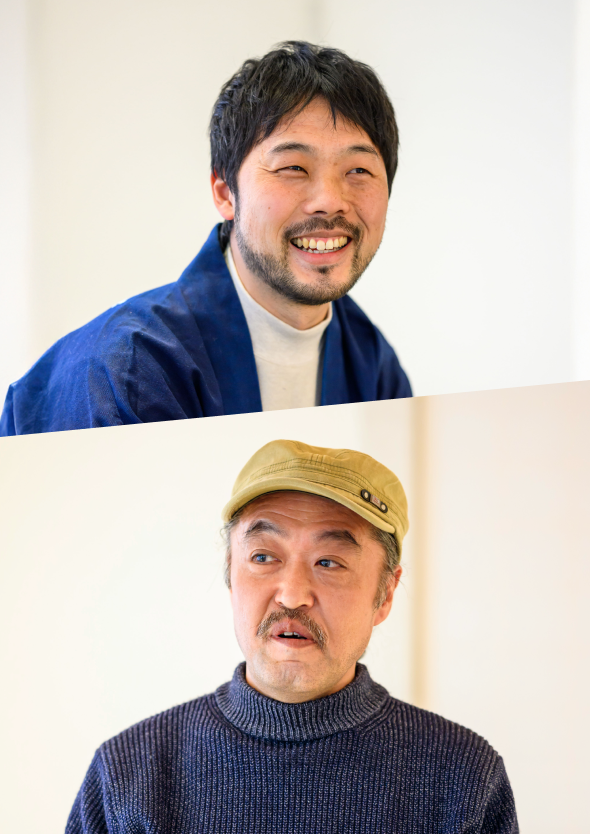
Protecting Tradition while Pursuing Innovation
– If you wouldn’t mind, let’s start with your occupations, current projects, and backgrounds.
Kawakami: I’m originally from Takayama, but I apprenticed with a shrine carpenter for about 10 years in Kuwana City, in Mie Prefecture. After that, I returned here to my hometown and began learning about the region and the culture while working on a wide range of architectural woodworking projects such as shrine and temple restorations, residential construction, and shop interiors.
I actually didn’t think I’d ever come back to Takayama, but leaving gave me the opportunity to get some perspective on the kind of work Hida artisans and Takayama carpenters have done over the ages. That was when I started to discover deeper feelings for my hometown, and a desire to carry on its culture.
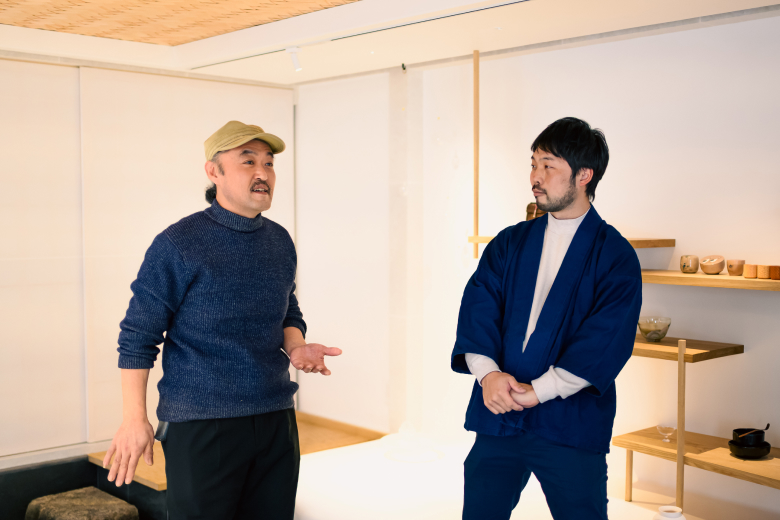
Sculptor Ayayuki Kosaka (left) and shrine carpenter Shuusei Kawakami (right)
Kosaka: I took up this work to carry on the family business of ichii ittobori woodcarving. I wasn’t very driven at first, and no one told me to do it, but because I couldn’t find anything else in particular to pursue, I had a very passive feeling of “just carrying it on.”
That changed about three or four years into my apprenticeship. Once I had achieved a certain degree of mastery over the techniques and could give my ideas form in the wood, I discovered joy in ichii ittobori. My work became more ambitious after that. I was hooked.
A Shrine Carpenter and a Carver: Seeing Two Paths in the Same Wood
– Although the two of you do very different things – shrine carpentry and woodcarving – you both work with the same Hida wood. How would you describe your respective strengths and characteristics?
Kawakami: “Hida no takumi,” the advanced woodworking techniques of Hida-Takayama, has 14 centuries of history here. Once, Takayama artisans would have traveled to the capital to serve in the construction of palaces and temples in place of paying tax. These large projects allowed them to return with new advanced techniques to utilize locally. This is how Takayama’s culture of woodworking was cultivated.
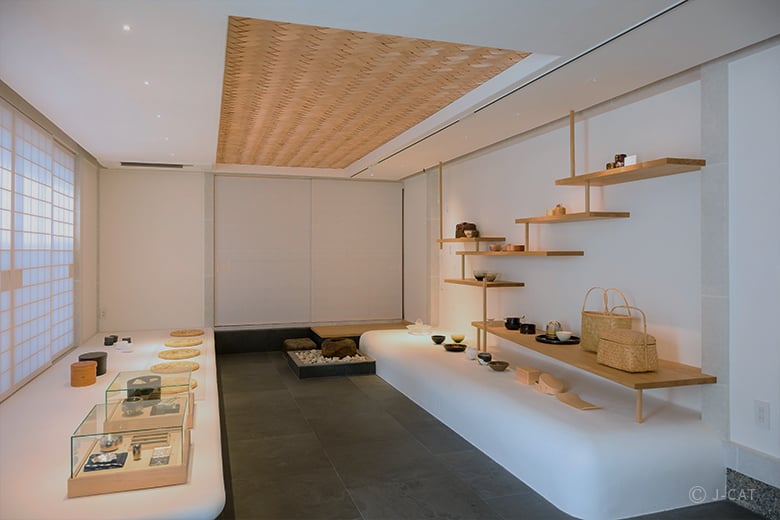
Kawakami’s company designed and built the shop interior of the Kazehikaru shop and gallery
Architectural styles changed with the ages. Grand shrines and magnificent temples were constructed during the Muromachi period (1336-1568). In the later Edo period (1603-1868) wealthy merchants built townhouses and the shogunate constructed the Takayama jinya administrative office to govern the province. Later, private residential architecture flourished. Through all of this, a characteristic style of Takayama and its surrounding region emerged.
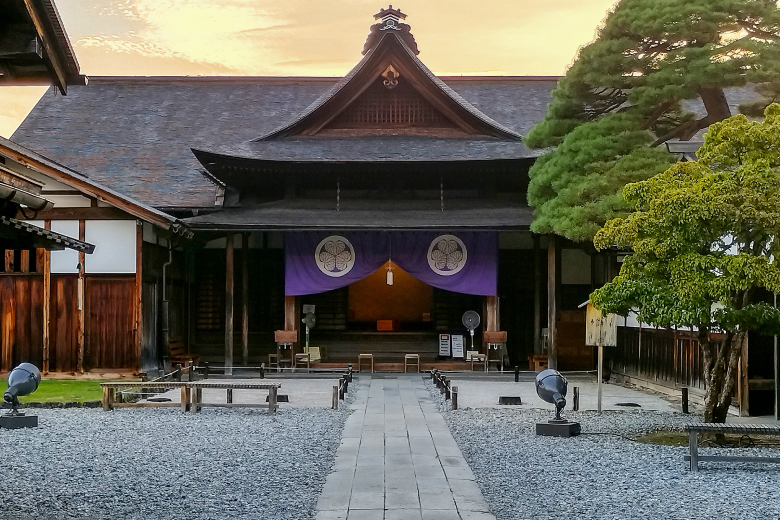
Takayama Jinya was established by the Edo Shogunate to govern Hida province directly
Lumber was easy to come by in the woodlands of Takayama, which drove unique construction techniques such as in wood-roofed farm buildings built from large trees. An accumulated history in the buildings of the town is visible on any walk through it, like rings in a tree trunk.
Kosaka: The craft of ichii Ittobori grew with a focus on creating works using yew – called “ichii” in Japanese – from Gifu prefecture. The Hida region’s yew has long held a special significance as the raw material for the scepter taken up by the emperors of Japan when ascending to the throne. It is a beautiful and noble wood. It has also become very hard to come by. I don’t focus on it exclusively, and follow a broader notion of “Hida woodcarving,” using a variety of woods.
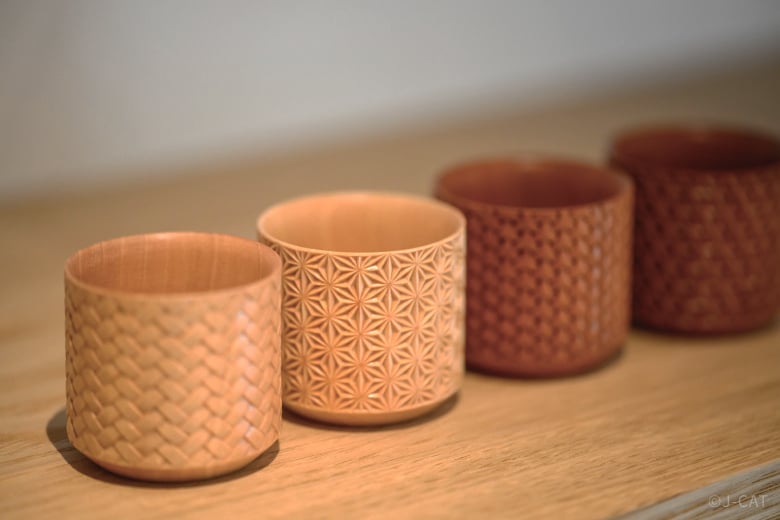
Sake cups crafted by Kosaka, brimming with Hida craftsmanship
– When you’re actually at work on a carpentry or carving project, what do each of you care the most about?
Kawakami: What I care about the most is the idea of “not cutting things out.” Since I work in shrine and temple construction and restoration, I regularly deal with buildings that are 2 to 3 centuries old. Hida carpentry is an unbroken 14 century tradition. When I look at the 200-year-old building we are restoring right now, I wonder about who will be restoring it in another 200 years? Will there be anything left to restore? I think it’s important to zoom out and think in this big picture way while working.
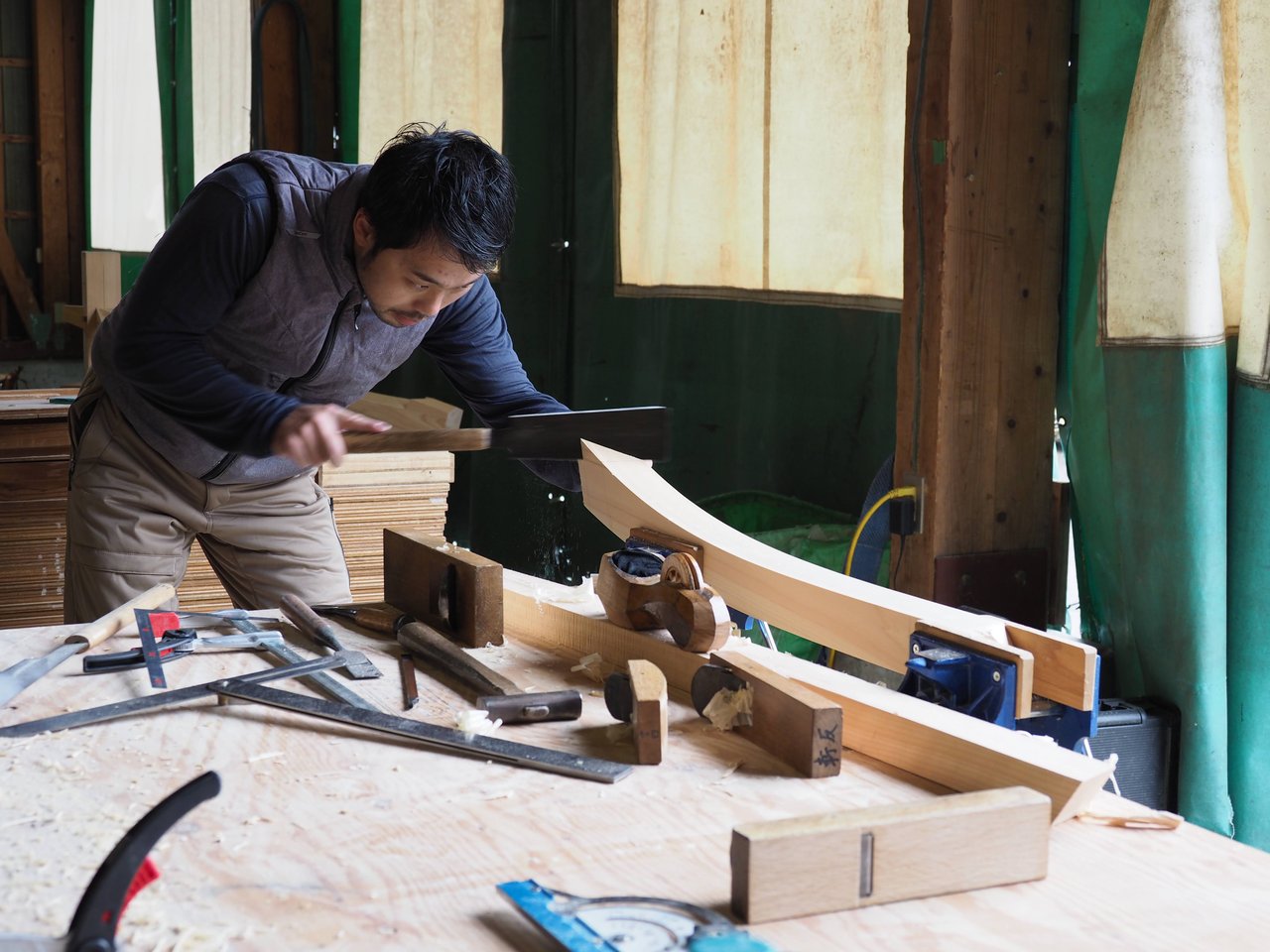
Kawakami is also involved in the restoration of cultural properties across Japan
I’ve only got perhaps twenty to thirty years of my life to devote to this kind of labor, but I believe my bigger role is to learn about the history behind the traditions and pass that all on to the next generation – like a baton in a relay race. That’s why I always think about how to contribute to the future of this legacy, rather than just about my own goals.
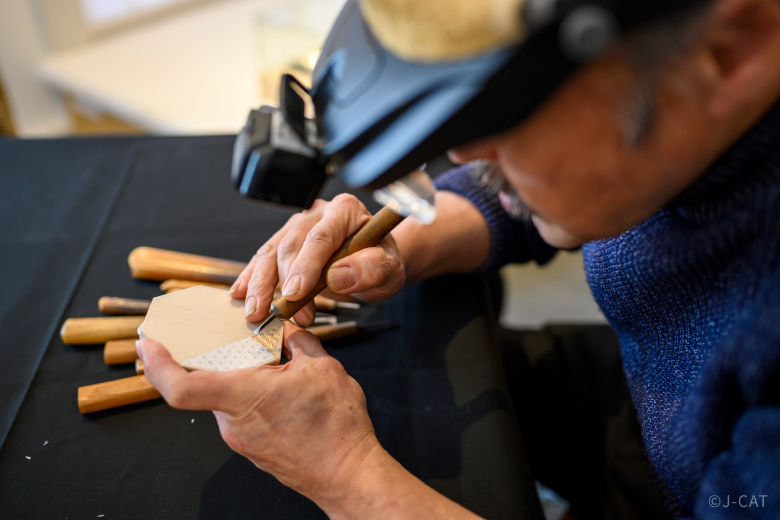
Cut by cut, Kosaka coaxes intricate patterns from the wood
Kosaka: For me, working earnestly is the thing I value most. Skill is obviously necessary, but the intention you put into work – thoughts about who will use it or where it will be displayed – has an outsized influence on the results, even with the same skills and the same piece of wood. Thinking about how to bring people joy through my work reveals new challenges and new ideas in turn. That’s how I grow.
Life Revealed Only in Dialogue with Wood
– Is there anything that either of you feel about the wood itself, when working with it?
Kawakami: I sometimes get quite a strong sense of vitality when interacting with wood. Biologically speaking, it is dead once it’s been turned into building material, of course. But when you take a planer to a temple pillar that has been there for 200 years, a vibrant cypress fragrance bursts out as if the tree were still alive. Old wooden surfaces often mask a liveliness of aroma beneath that emerges the moment you cut into them. It can be a strange feeling in the moment, almost like slipping through time into a past before your own life, to encounter the tree as it was during its life.
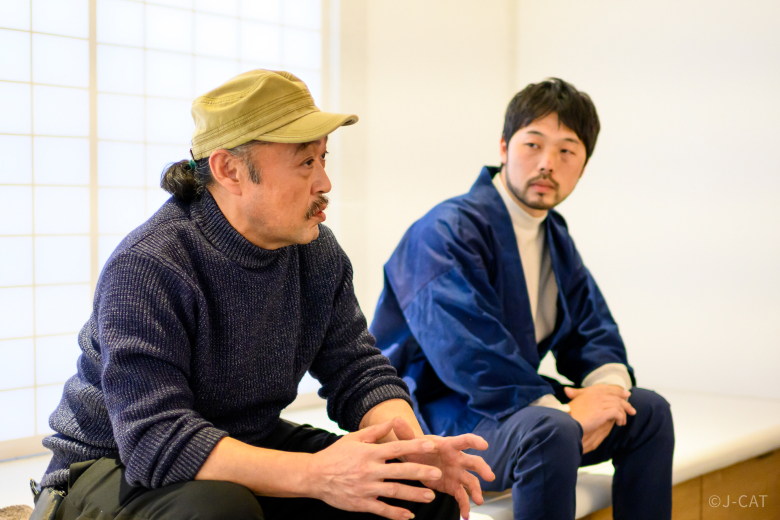
Two perspectives on the mystical power of wood
Kosaka: My long experience working with wood has convinced me of a mysterious power in them. Take this: in carving, we never use completely dry wood. Dry wood is difficult to carve, and cracks easily after being processed. You can’t do anything with a cracked piece, so I was taught by my forebears to take whatever cracked pieces I had and put them in the closet.
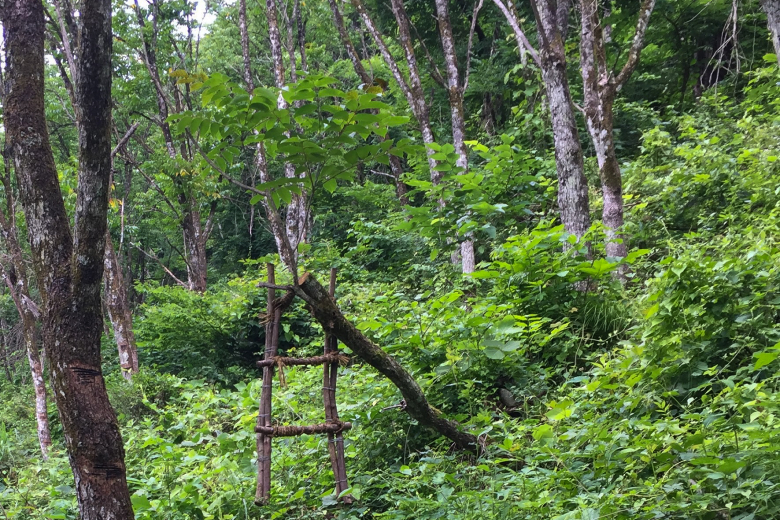
Both Kawakami and Kosaka have had felt a mysterious power in the trees
But there is more to this than it may sound. Wood sitting in a closet gradually absorbs moisture. It swells, and eventually the cracks close so tightly you can’t even find them. Of course, you risk them reopening after you take it out, but if you repeat this enough times, eventually the cracks disappear altogether.
Understanding the Depth of Life in Hida-Takayama by Exploring like a Resident
– As two people who know all about Takayama’s nature and make your living and local artisans, what would you recommend tourists to the town see or do?
Kawakami: I think the best approach is to “spend your time like you would if you lived here.” Rather than trying to cram a checklist of sightseeing into a night or two, you could stay for a week and look for a more personal experience exploring the mountains, stream fishing, meeting people, or just walking around town. You’re sure to find a way of experiencing it that suits you, and I think you’ll discover the true charm of Takayama that way.
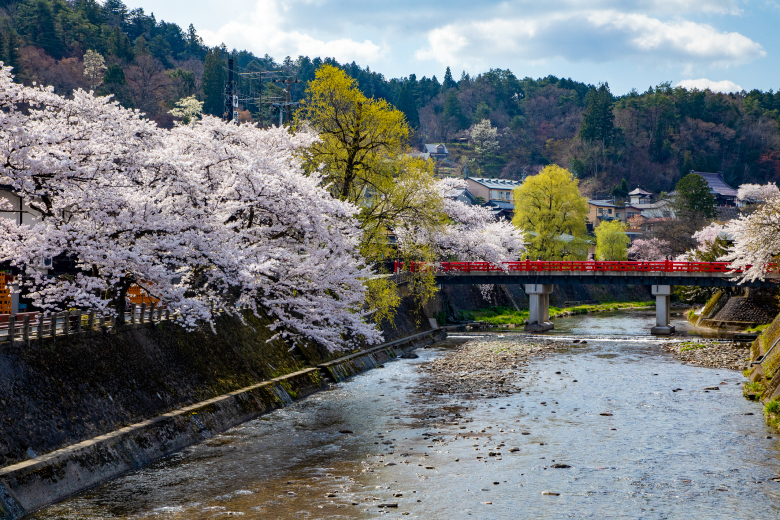
Nakahashi, the distinctive red bridge across the Miya River
Kosaka: I couldn’t agree more. Hida’s essence is really its nature, and by getting in touch with that nature you will also glimpse the deep foundations of town culture. Mountains and mountain streams are always nearby, with plenty of options to suit your interests. In addition to mountain stream fishing, skiing is also great in the winter.
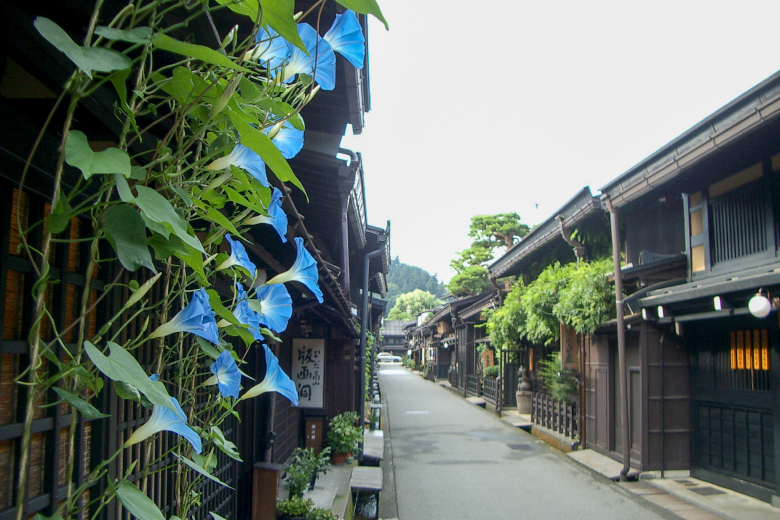
Hida-Takayama’s streets reveal different faces with the passing seasons
Kawakami: Something else to consider is that the most comfortable distance from nature is different for different people. Some people can live nearly self-sufficient lives in nature, while others prefer brushes with it while living a more urban lifestyle. They’re all different forms of coexistence with nature, and Hida offers the full range and variety, which I think gives it a unique charm.
The Challenge of Preserving Tradition while Connecting to the Next Generation
– Last, is there anything either one of you does especially to try to pass on these cultural traditions of Hida-Takayama that you’re keeping alive?
Kosaka: For carving, we face a serious material supply problem. Yew is the traditional raw material of our craft, and it has been severely depleted. But we’re also suffering a serious depletion in numbers of skilled artisans. If the skills aren’t passed on, the whole thing disappears. That’s why we’re working with the city and local industry to welcome new apprentices this year.
We’ve currently formed a group of just five of us, with the primary goal of passing on our skills. But it’s hard these days for people to see a living to be made just from woodcarving. But that’s why we feel it’s so vital to pass on the craft to a new generation.
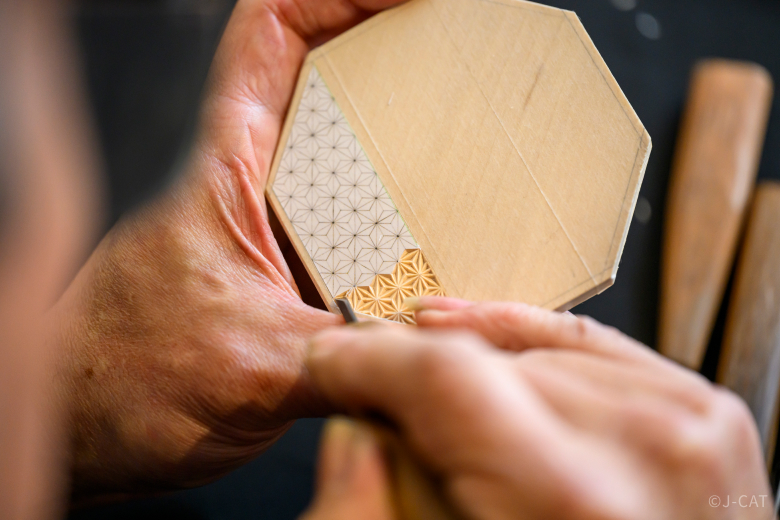
Painstaking, meticulous wood carving techniques
Kawakami: I’m of the same mind. It’s crucial to leave behind a successor to carry on the work. But making a living from this kind of specialized work is not an easy thing. It depends on clients, and demand.
Just as Kosaka is working to cultivate apprentices, I feel it’s vital for artisans to “communicate” their work. Words are important for communication, but some things have their essences “cut out” by trying to put them into words. I want to look for other ways to convey these things to people, to achieve a deeper understanding and sympathy.
I believe this will serve to preserve Takayama’s townscape and create demand and work for the apprentices. I think it’s all connected this way.
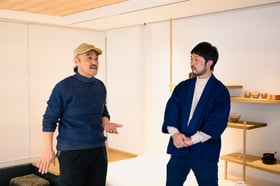
Shuusei Kawakami / Ayayuki Kosaka
Ayayuki Kosaka, second generation wood sculptor (left)
A master carver carrying on the traditional legacy of Hida’s ichii ittobori woodcarving techniques who has spent half a century honing his skills. Kosaka continues to fuse traditional and modern beauty today, carving Hida woodcrafts from a variety of woods including cherry, Japanese zelkova, and cypress. Kosaka has produced a wide variety of works, from the interior decor of luxury hotels to fine sake cups and other tableware.
Shuusei Kawakami, shrine carpenter (right)
Laying claim to 14 centuries of Hida woodworking craftsmanship heritage, Kawakami took an interest in carpentry from a young age. After acquiring basic architectural knowledge and skills, he apprenticed under a shrine carpenter, and today runs the architecture company Kokosha. He now handles a wide range of projects ranging from restorations of cultural properties to shrine and temple construction, in addition to residential buildings.
Kazehikaru (interview support)
Nestled in the historic townscape of Hida-Takayama, Kazehikaru was conceived of as a place where people could commune with the forest through crafts and tea. It provides unique experiences blending tradition with modernity, and works to conserve the Hida lacquer forest and the lacquer culture it makes possible. Kazehikaru’s first floor gallery exhibits and sells traditional local crafts and the works of contemporary artists, while its second floor tea room offers an experience in Hida-Takayama’s traditional Sowa style of tea ceremony.