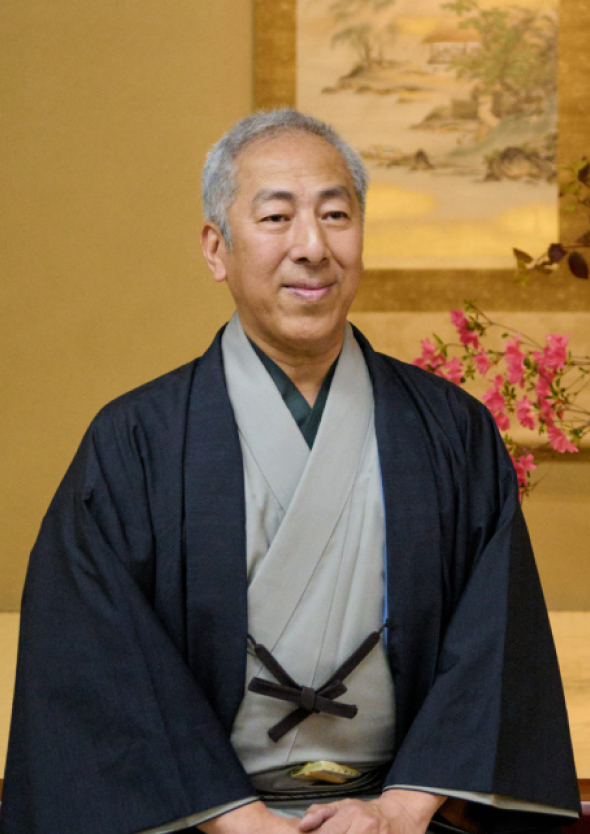
A Family Legacy: Born into the World of Kabuki
With a father who was among the most celebrated kabuki actors of his generation, it is small wonder that many of Monnosuke’s earliest memories arise from kabuki. “It was my reality,” he explains. “Kabuki was all around me from such an early age—I even used to play backstage with the children of other actors. And so when the time came for my first appearance on stage at age five, I wasn’t nervous at all. It just seemed normal.”
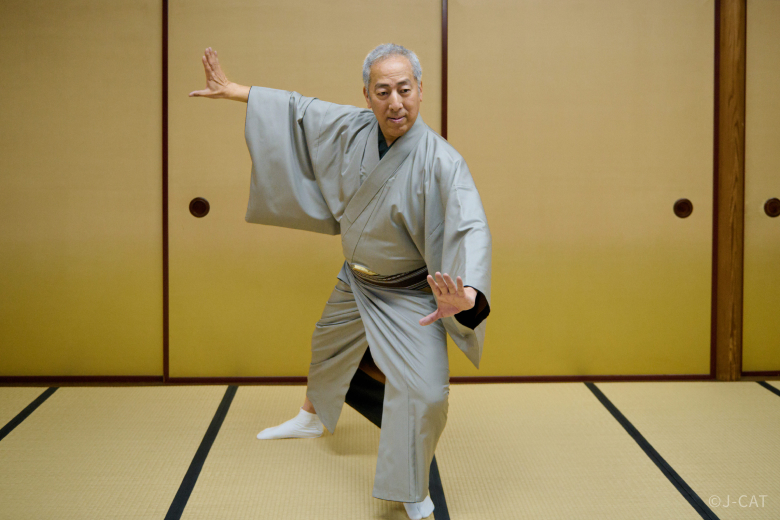
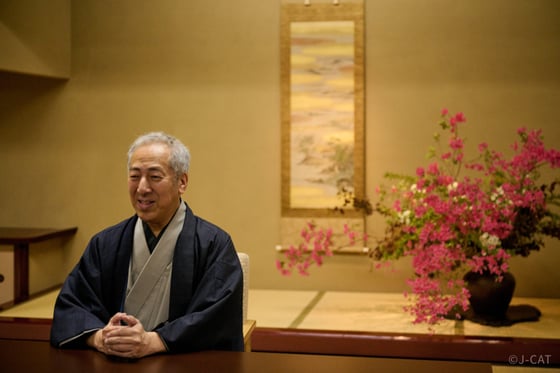
Monnosuke discovered his love of the kabuki stage at an early age
When he reached age ten, however, Monnosuke was faced with a decision that would determine the course of his life. “My father did not pressure me to become a kabuki actor,” he says. “In fact, he warned me that it would be a long and challenging career path. But I already knew from the feelings that I’d experienced on stage that the only thing that I wanted to be was a kabuki actor.”
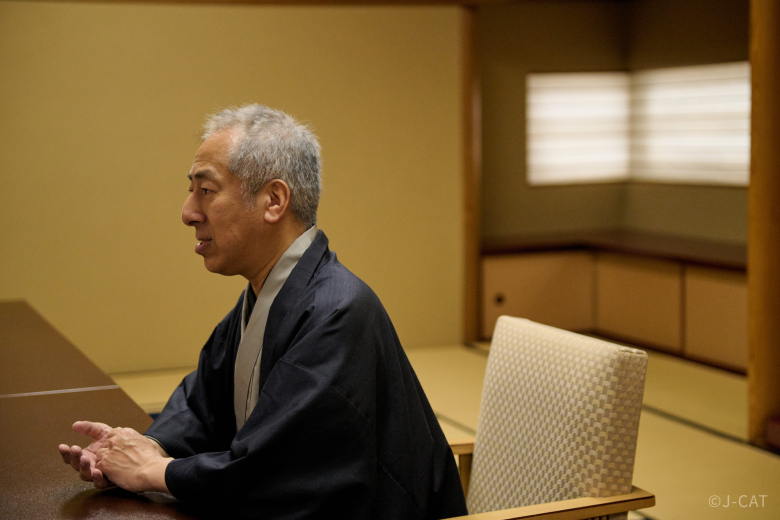
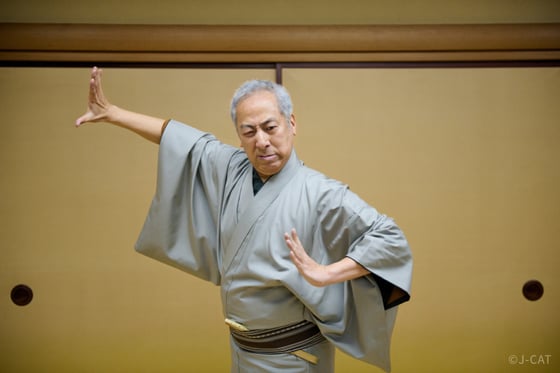
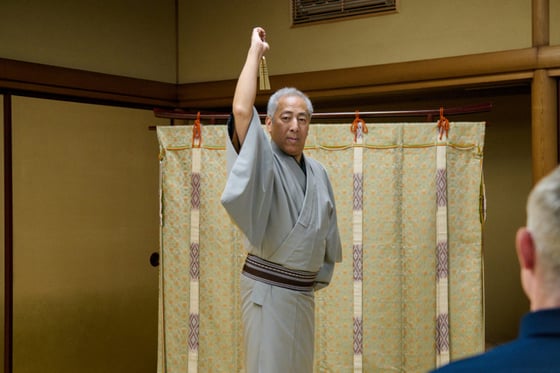
With warmth, wit, and quiet conviction, Monnosuke shares his lifelong pursuit of the stage
As with the practitioners of many traditional Japanese arts, kabuki actors often inherit their stage names from their predecessors, usually their father or an instructor or mentor. “After I decided that I would pursue kabuki as a career, my father became extremely strict with me about my training and conduct. And so when he passed away in 1990, I was still unsure as to whether I wanted to take on his name.”
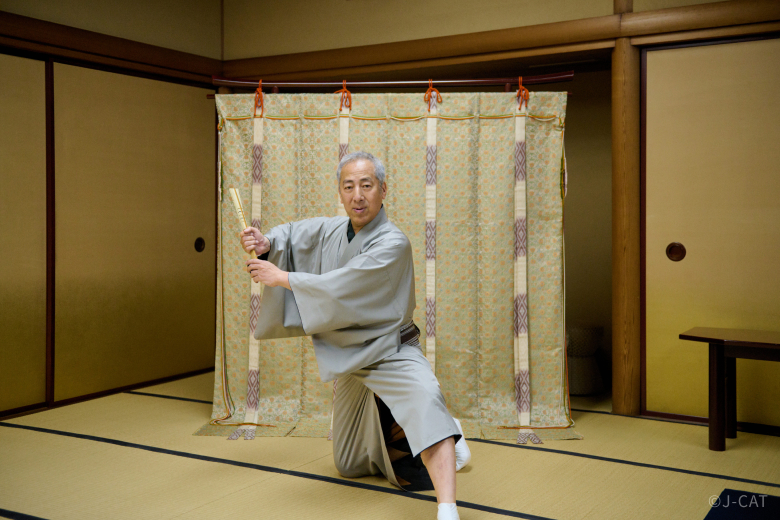
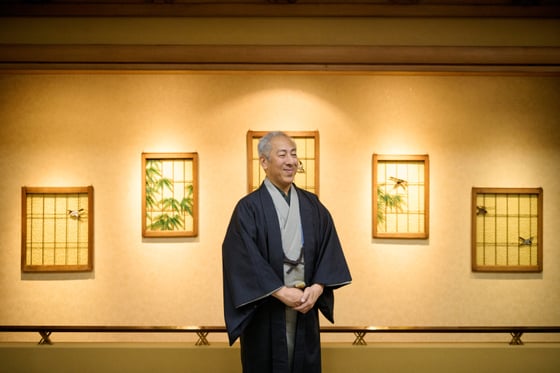
Monnosuke was given the choice to follow in his father’s footsteps as a kabuki actor and later adopted his father’s kabuki stage name
It was one of Monnosuke’s great mentors, Ichikawa Ennosuke III, who convinced him otherwise. “He told me to believe in myself,” Monnosuke explains. “And not shirk the responsibility endowed by my father’s name.” And so it was thus that the young man took on the name Ichikawa Monnosuke, becoming the eighth of that name in a line stretching back more than two hundred years.
Japan’s Greatest Traditional Dramatic Art
Kabuki often draws comparisons with the Shakespearean theater of England. The two dramatic traditions arose at roughly the same time around the turn of the sixteenth century and have gone on to become the most iconic dramatic arts of their respective countries. Some of the most popular kabuki plays are jidaimono such as Yoshitsune Senbon Zakura or Kanadehon Chūshingura, period pieces that depict mythologized versions of famous events in Japanese history akin to Shakespearean history plays such as Richard III or Henry V. The other major genre of kabuki, sewamono, focuses more on everyday domestic matters, similar to some of Shakespeare’s comedies and tragedies.
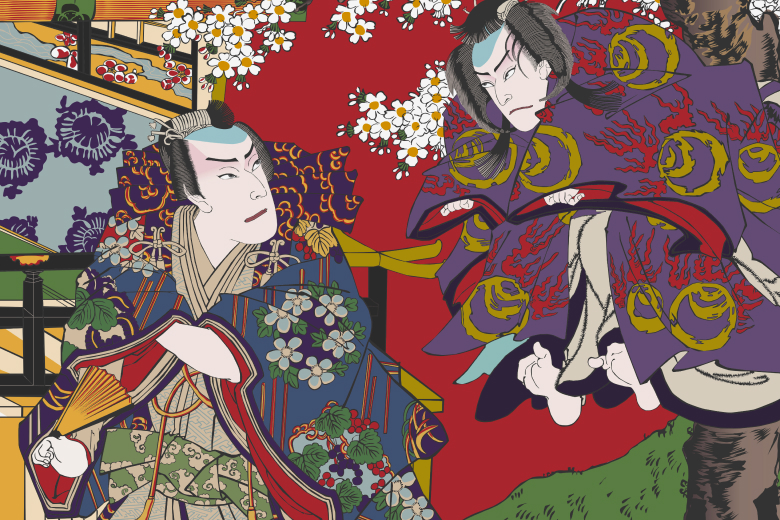
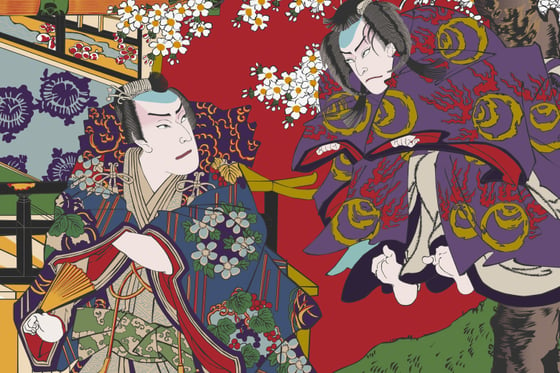
An ukiyo-e print portraying kabuki actors in a scene from the historical play “Yoshitsune Senbon Zakura.” One of Monnosuke’s early stage appearances was in Yoshitsune Senbon Zakura, in the same leading role played by his late father
One of Monnosuke’s first appearances after assuming the name of Ichikawa Monnosuke VIII was in one of the lead roles in Yoshitsune Senbon Zakura, a role that his own father had played previously. “As I donned the costume and felt the makeup brushes transforming me into character, I suddenly experienced the weight of history,” Monnosuke reminisces. “It was a deep realization that not only my father, but so many generations of great kabuki actors who had played this role before, were lined up in a row behind me. It was an incredible responsibility—slightly daunting yet exciting all at once.”
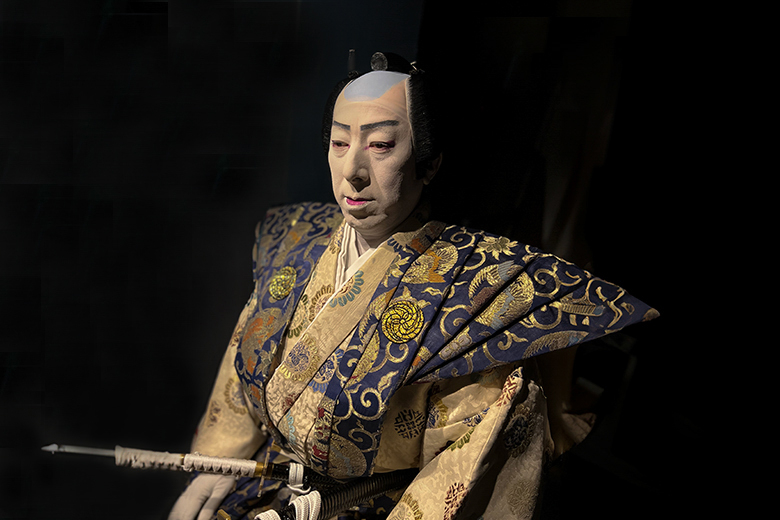
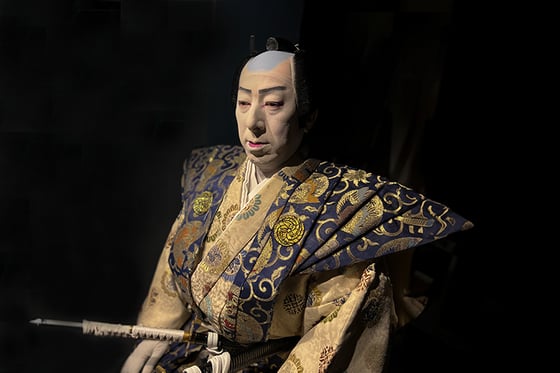
Ichikawa Monnosuke VIII in full costume and kumadori makeup
While rough parallels with the Shakespearean tradition exist in terms of period and genre, kabuki has also drawn comparisons with Western opera.. Words are often delivered on the kabuki stage in an accentuated chantlike cadence with musical accompaniment from traditional instruments such as the shamisen, taiko drum, and hichiriki flute. Characters are presented as larger than life, clad in outlandish costumes and kumadori makeup, alternating between subtle yet meaningful gestures, dynamic dance-like movements, and the iconic freeze-frame pose of the mie.
Mastering the Kabuki Actor’s Craft
Kabuki first emerged in the early years of the Edo period (1603-1868), based on dances and plays enacted by all-female troupes in Kyoto. These soon spread to Edo (now Tokyo) or Osaka, becoming popular and thus acquiring a rather salacious reputation. This prompted the Tokugawa shogunate to ban women from appearing on the kabuki stage, which led to male actors portraying female roles known as onnagata. Monnosuke himself has played both male and female roles throughout his long career. “It’s wonderful,” he says. “Becoming someone else—someone so different from oneself—is one of the great joys of acting.”
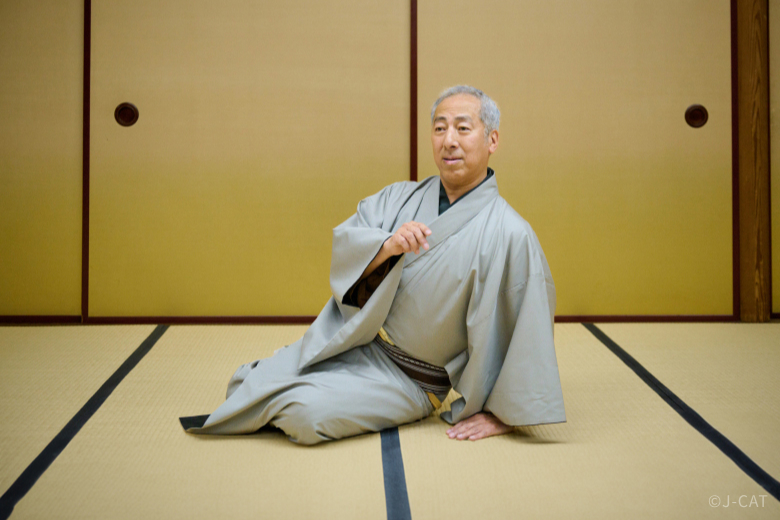
As is tradition in kabuki, Monnosuke has taken on both male roles (tachiyaku) and female roles (onnagata) throughout his career
As well as different onnagata roles, from princesses to old women, Monnosuke has portrayed heroic samurai warriors, aging sages, clever merchants, oni (demons), and kami (gods). Readying himself to enter into such roles has involved a lifetime of ceaseless training and study. Some acting techniques he uses are specific to kabuki, such as the iconic mie pose, in which the actor freezes in place, often with eyes crossed to convey a moment of particular emotional intensity.
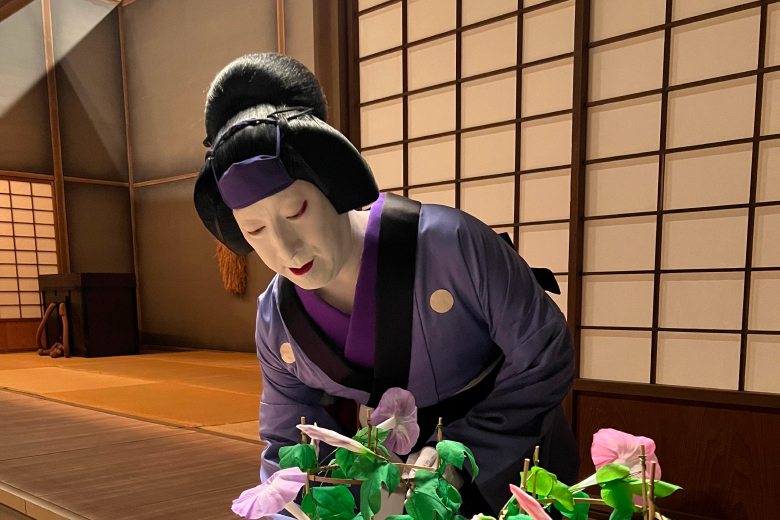
The makeup and costumes of kabuki are incredibly colorful and elaborate, transforming the performer into the character
To truly master the craft of the kabuki actor, however, Monnosuke believes that it is also vital to become a keen student of everyday human interactions. “You need to observe other people in detail,” he explains. “The smallest movement or inflection of the voice can be something that I adopt as an actor, integrating it into kabuki to instill life into a character.”
Based in Tradition But Ever-Evolving
Facing censorship under American occupation after World War II, the future of kabuki looked uncertain for a time. Actors like Ichikawa Monnosuke VIII and his father contributed to its resurgence, along with increased efforts to make the centuries-old dramatic art appeal to a modern audience. One such development was the creation of Super Kabuki by Monnosuke’s mentor Ichikawa Ennosuke III, a new form of kabuki that placed emphasis on the three Ss of speed, story, and spectacle.
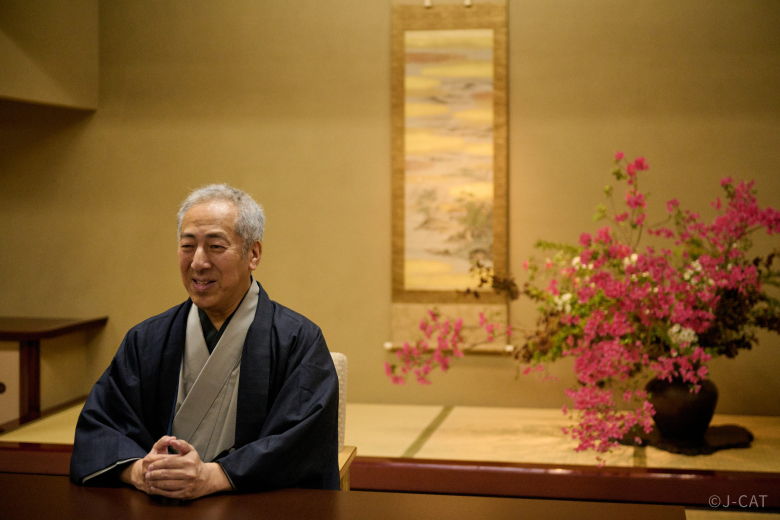
Monnosuke sees a balance between tradition and innovation as the way forward for kabuki
As with any long-standing cherished tradition, there was pushback to Super Kabuki at first. Monnosuke, who has appeared in Super Kabuki plays, takes on a more conciliatory approach. “Tradition is the foundation,” he says. “Without foundation, kabuki would be shapeless—it would be chaos. That said, kabuki has always been an evolving, dynamic form of theater. Throughout the Edo period, they were constantly trying to impress their audiences with new stories and staging devices, from revolving stages and trapdoors to high-wires that made actors fly through the air. I think kabuki requires both tradition and innovation.”
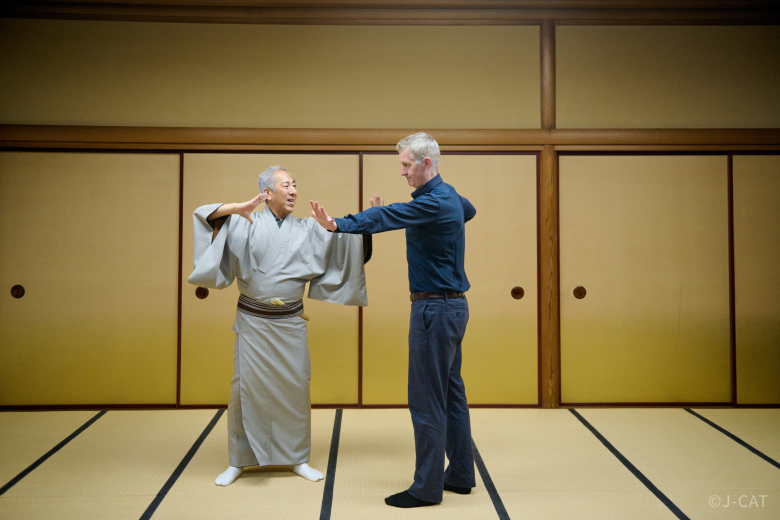
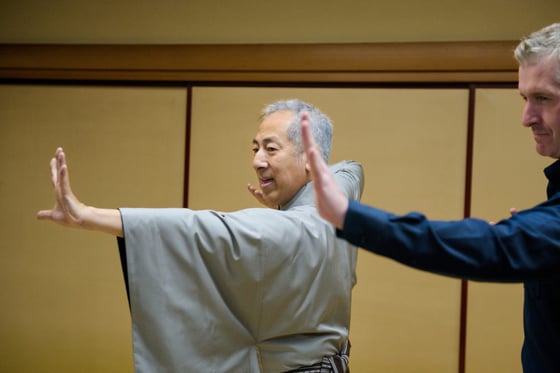
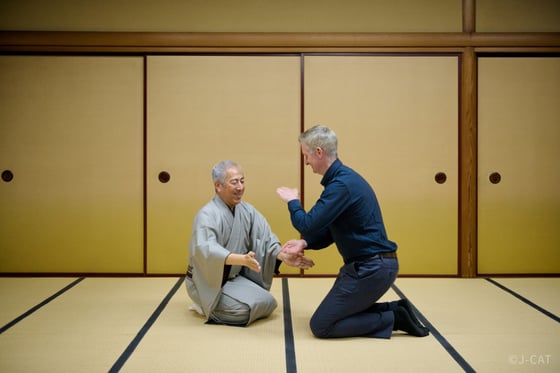
Monnosuke enjoys sharing his passion for kabuki with people from all over the world
Monnosuke has previously toured North America, Europe, and Asia with various kabuki troupes. “Seeing the response of audiences outside Japan really surprised me. That was when I understood the power of kabuki as an art form and symbol of Japan.” After discovering during trips to Hawaii that the islands had their own tradition of kabuki theater established by Japanese immigrants in the late 19th and early 20th century, Monnosuke spends some time teaching kabuki to students aspiring to broaden their cultural horizons. “Each of us plays his part in the long arc of kabuki history,” he says. “I want to do all I can to ready the stage for those who come next.”
Ichikawa Monnosuke VIII
Ichikawa Monnosuke VIII is a top professional kabuki actor who has performed for decades in major kabuki productions in Japan as well as on tours of Europe, North America, and Asia. Monnosuke’s lifelong passion for his dramatic art previously led to a kabuki teaching position at the University of Hawaii as well as providing motivation to create this exclusive Wabunka kabuki experience.