Hasue Koen: Following the Way of Tea
Hasue Koen grew up in a home where her mother, her aunts, and her grandmother had all studied the tea ceremony, and so it was natural for her to follow a similar path. “My mother had learned the tea ceremony within the Urasenke school,” she explains. “So that seemed like the right choice for me.”
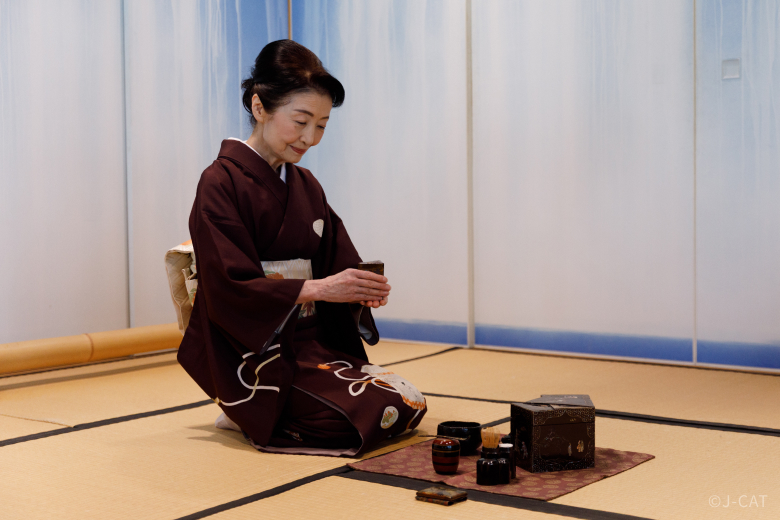
Hasue Koen was inspired at age 18 by an encounter with Grand Master Sen Soshitsu XV
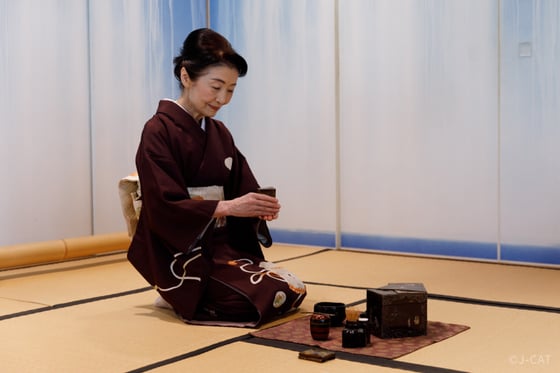
At the age of 18, Hasue Koen formally entered the Urasenke school, which was presided over at the time by Sen Soshitsu XV, the school’s fifteenth generation iemoto (Grand Master). Direct instruction was provided by the iemoto’s sister Shiotsuki Yaeko, who was known for her expertise in the etiquette and procedures of the tea ceremony.
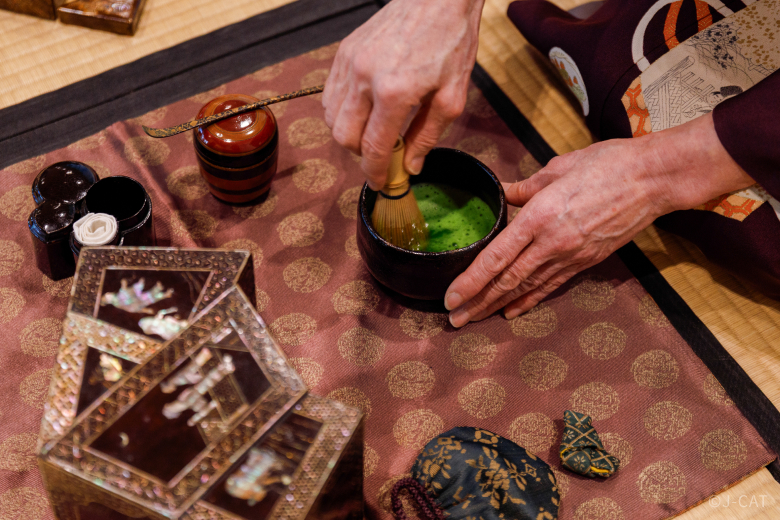
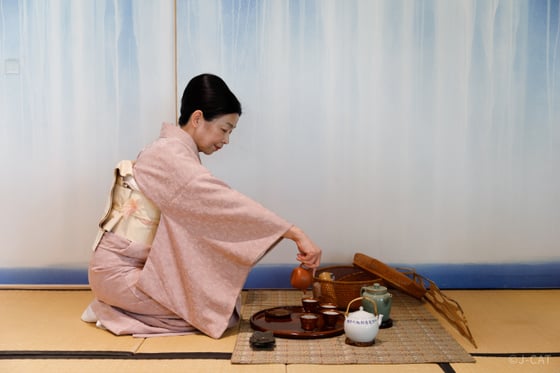
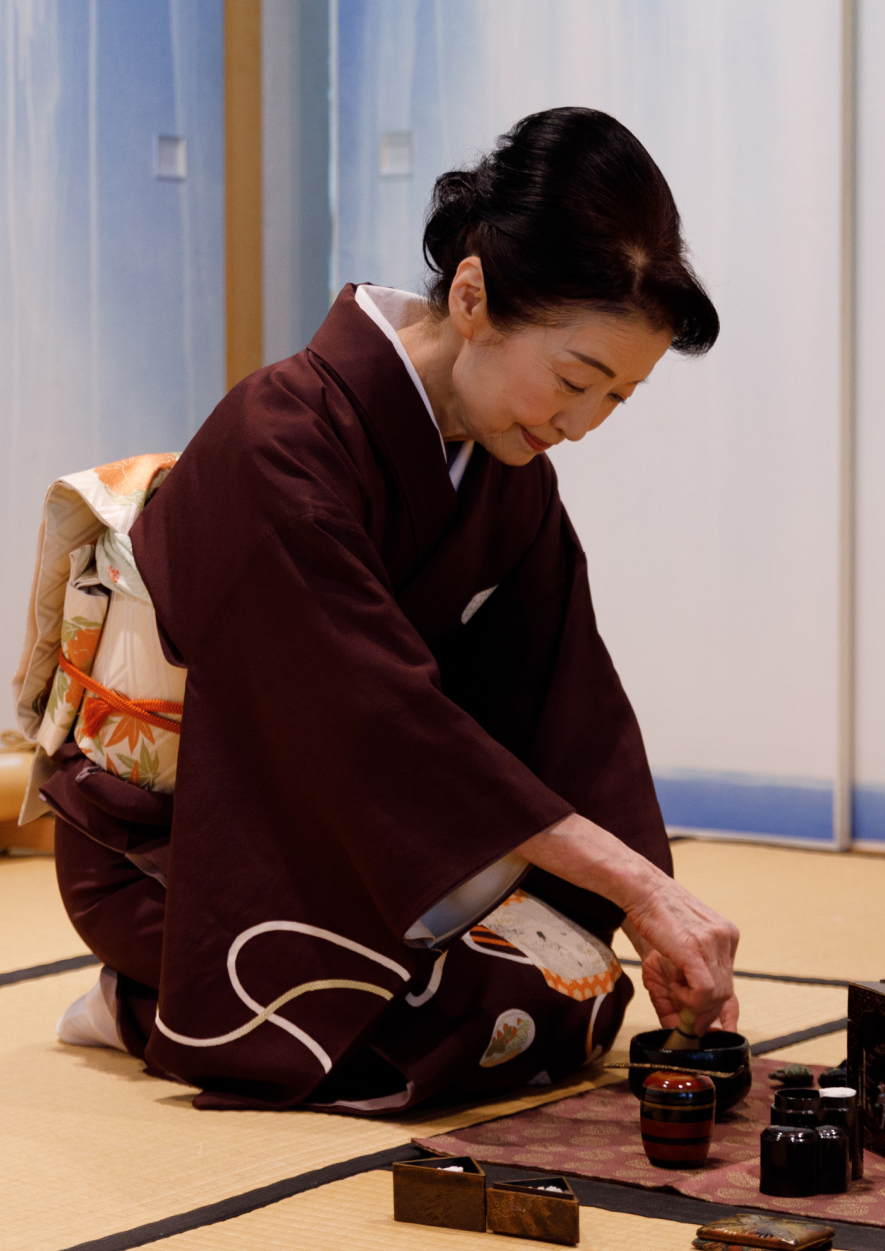
Hasue Koen still follows the subtle etiquette and procedures that she learned in the Urasenke school
“I was incredibly moved every time I heard her speak,” says Hasue Koen. “But I also learned a lot from the way that she carried herself and moved. At first I was more interested in enjoying the sweets that accompanied the tea, but in time I became drawn to the quiet intensity of the tea room. I continued to study there until I became a mother.”
Discovering the Unique Charms of Senchado
With marriage and motherhood, Hasue Koen drifted away from the world of the tea ceremony for a time. At one point, however, she was invited by one of her aunts to the house of a friend who was an enthusiast of sencha tea and the senchado tea ceremony. Being served a cup of sencha tea that day was an unforeseen turning point in her life, leading her back to her original path once more to follow the way of tea.
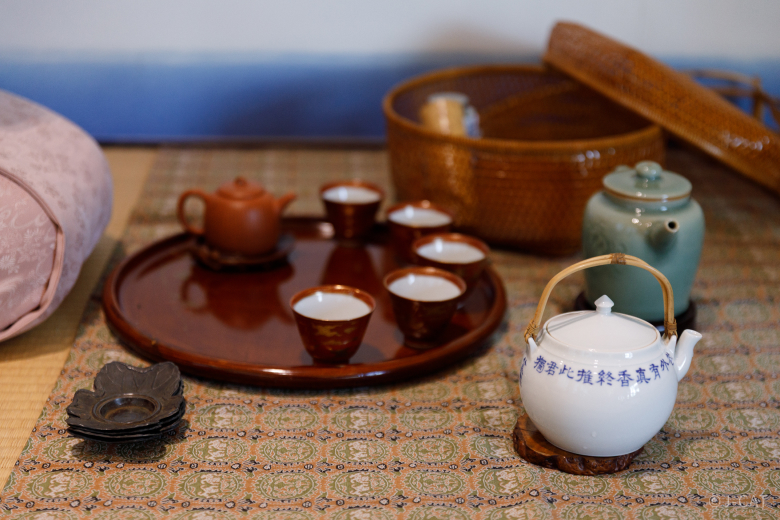
Hasue Koen’s first experience with the senchado tea ceremony was a turning point in her life
“That first cup of sencha tea moved me deeply, somehow,” she remembers. “As soon as I returned home, I found the tea box left to me by my late grandmother and began to brew tea again myself. That was a wonderful time.” So inspired was Hasue Koen that she began to consider a return to the world of the tea ceremony, ultimately deciding that she would. This time, however, she would branch off in a new direction, heading into the realm of the senchado tea ceremony.
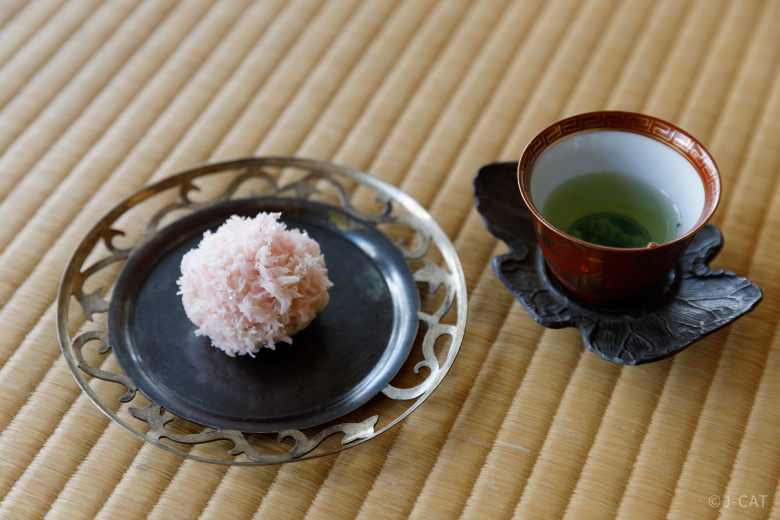
Shifting to the senchado tea ceremony breathed new life into Hasue Koen’s passion for tea
How to Create Just the Right Ambience for a Senchado Ceremony with Traditional Tea Utensils and Seasonal Decor
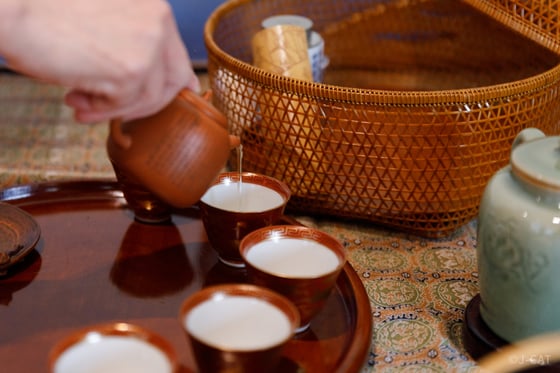
To Hasue Koen, the most attractive feature of senchado is the taste of the green tea. Traditional tea ceremonies rely on the green tea powder known as matcha to brew tea, while senchado tea ceremonies use leaves picked directly from tea bushes, then steamed, rolled, and dried. The specific type of tea that Hasue Koen prefers for her senchado tea ceremonies is high-end gyokuro, which possesses just the right measures of delicate sweetness and fulsome umami. Gyokuro leaves are grown in the shade, leading to a mellow taste and rich aroma that gives the tea that they produce a flavor unlike any other.
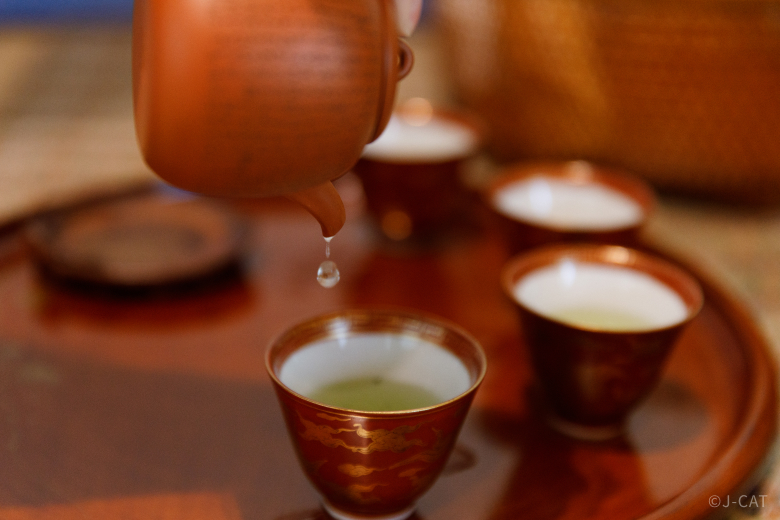
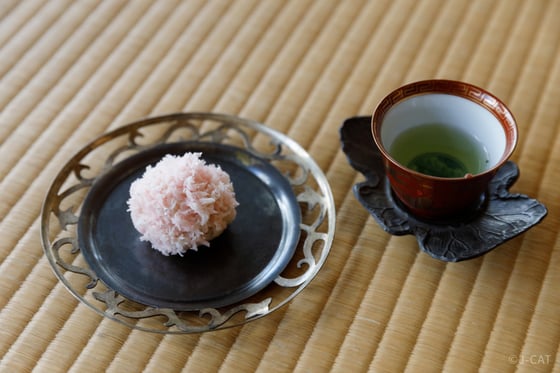
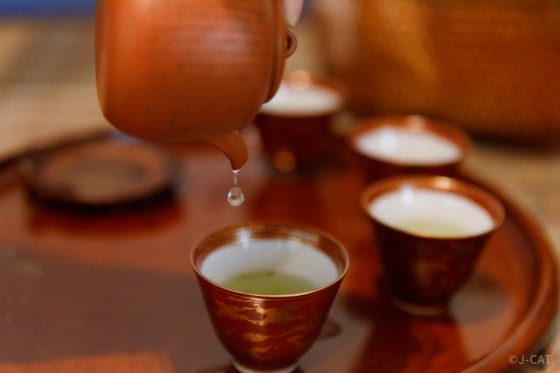
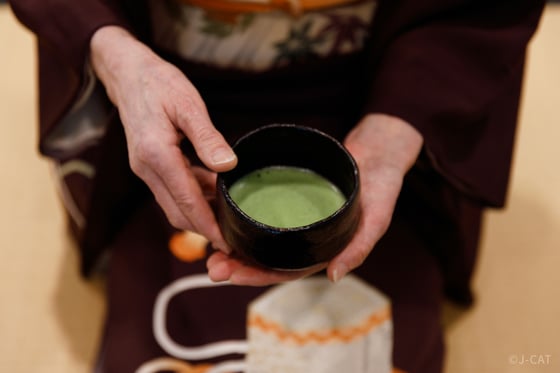
Tea brewed with gyokuro leaves, drop by careful drop
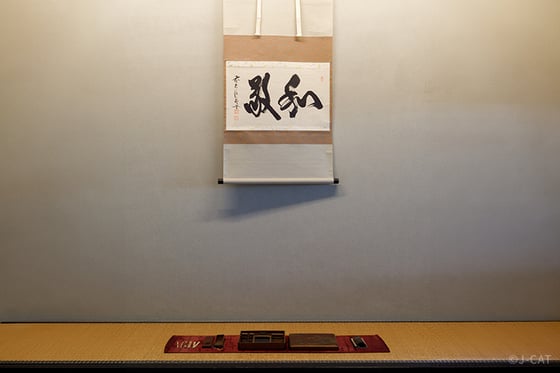
Beyond the appeal of the tea itself, Hasue Koen believes senchado has much more to offer. “Senchado allows for more freedom than conventional tea ceremonies when it comes to decorating the space where the ceremony is to be held, such as in the tokonoma alcove of the room,” she explains. Hasue Koen takes great care to adorn the room in a way that will welcome her guests and encourage them to feel the beauty of the seasons, with hanging calligraphy scrolls, flower arrangements, seasonal fruit, gorgeous tableware, and other wonders on display.
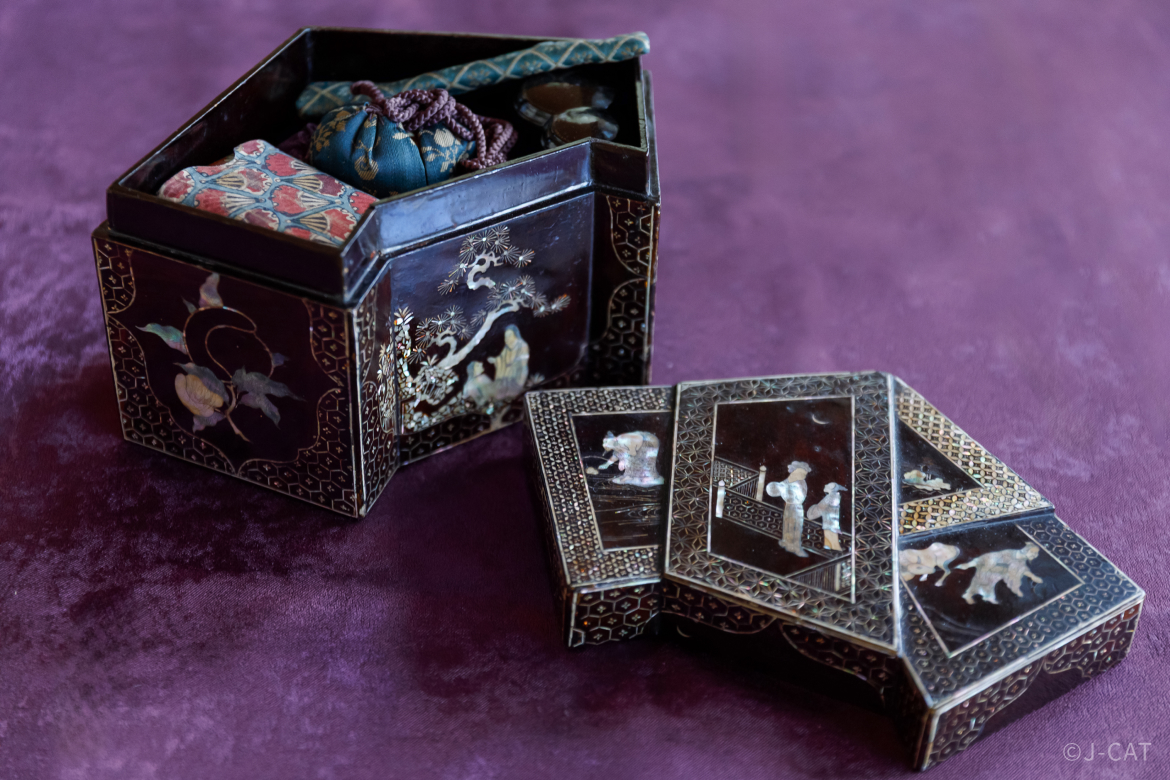
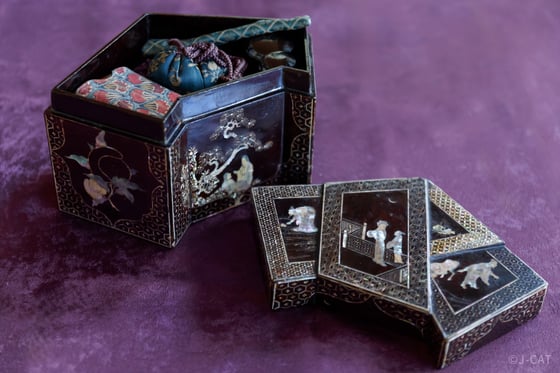
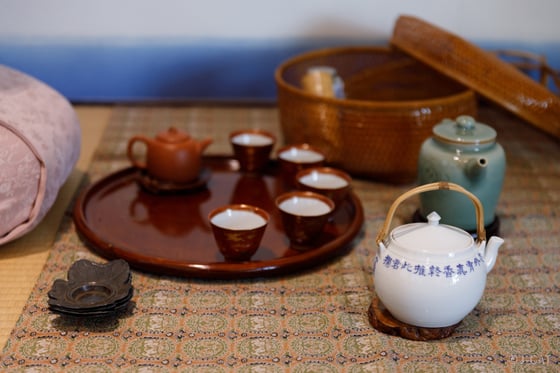
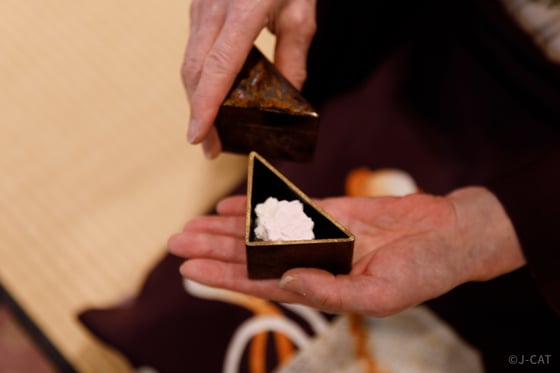
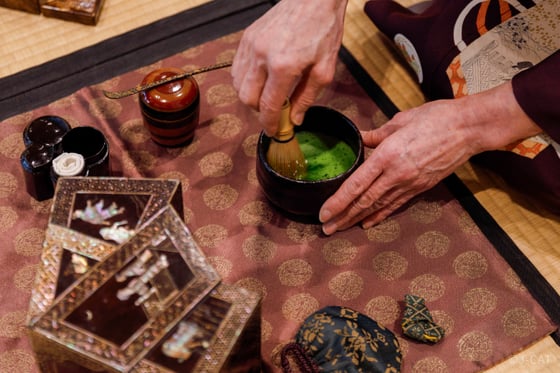
Traditional tea utensils inside a beautiful chabako tea box
Hasue Koen is continuously on the lookout for precious new items to further enhance the experience of her tea ceremony, preferring to use treasures from her own personal collection. For some senchado tea ceremonies, she carries an elegant chabitsu bamboo basket woven by a master artisan, while for conventional sado tea ceremonies, she uses an ornately decorated chabako tea box featuring black lacquer inlaid with designs made from mother of pearl. The traditional tea utensils inside are specially selected by Hasue Koen from her collection to fit the contours of the box precisely, collectively creating a unique work of art to provide her guests with a special and memorable experience.
Revealing the Relationship between the Senchado Tea Ceremony and the Literary Arts
Many generations of poets, scholars, writers, and painters throughout Japanese history have harbored a special affection for the senchado tea ceremony. While the conventional sado tea ceremony originally gained popularity in the 16th century among the samurai elite, senchado was favored by those who valued quiet contemplation and deep artistic conversations.
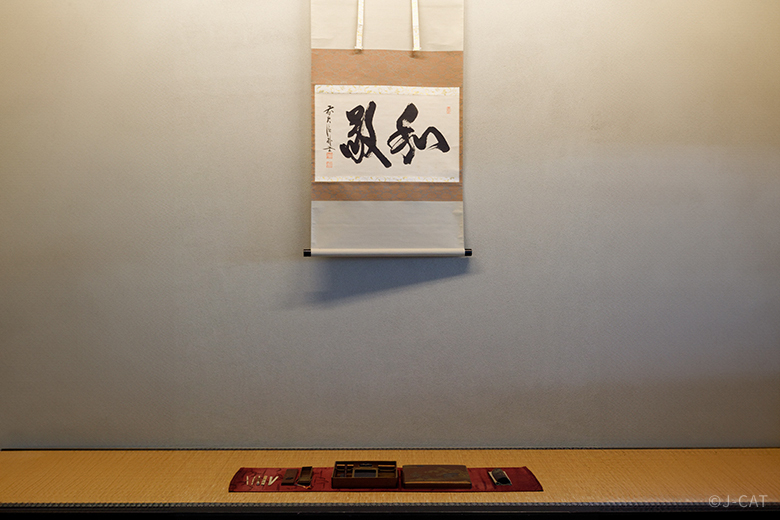
The timeless tea ceremony has provided artists and writers with the tranquility they need for hundreds of years
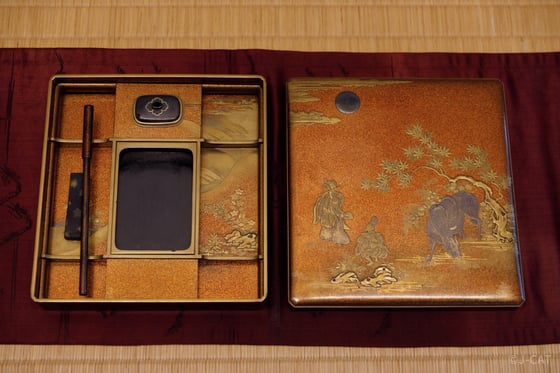
To honor this literary legacy, Hasue Koen likes to display historic artifacts selected from her own collection during tea ceremonies. These include a suzuri-bako inkstone writing box that dates back to the Edo period (1603-1868). The lacquer interior and exterior surfaces of the box depict a scene from the Tale of Heike, an epic poem that is one of Japan’s most famous works of medieval literature. These vibrant images were created using the traditional Japanese technique of maki-e, which involves sprinkling gold powder onto the layers of lacquer used to coat the box.
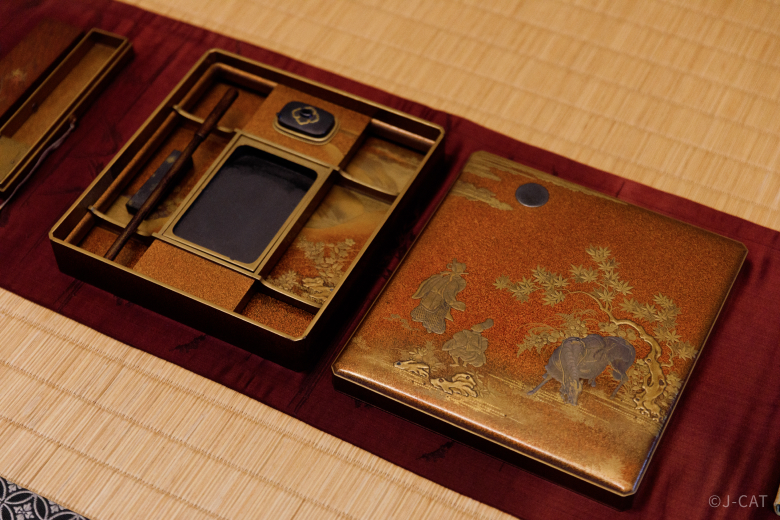
This ornate suzuri-bako is a precious artifact that dates back to the Edo period
“I include these treasures from my collection to add more depth to my tea ceremonies,” says Hasue Koen. “Each artifact has its own life – its own tales to tell – and I think this adds to the sense of timeless tradition that the tea ceremony deserves.”
Bringing Lives Together through a Simple Cup of Tea
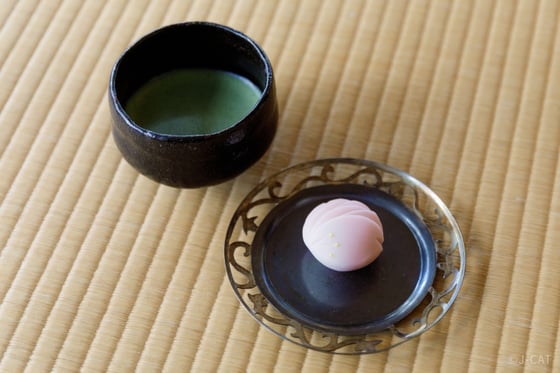
With over 50 years since she first began her studies at the Urasenke school and over 30 since she decided to focus primarily on sencha tea, Hasue Koen now has time to reflect. “I care deeply about preserving Japanese culture and I adore the purity and simplicity of tea.” She also attributes her dedication to the tea ceremony to the Christian school she attended as a child and the value of serving others that it instilled within her. “If the tea and sweets at my tea ceremonies can help my guests feel relaxed and welcome, I feel that I have served them well. I brew every cup of tea from the heart with the sincere hope that it will bring someone happiness.”
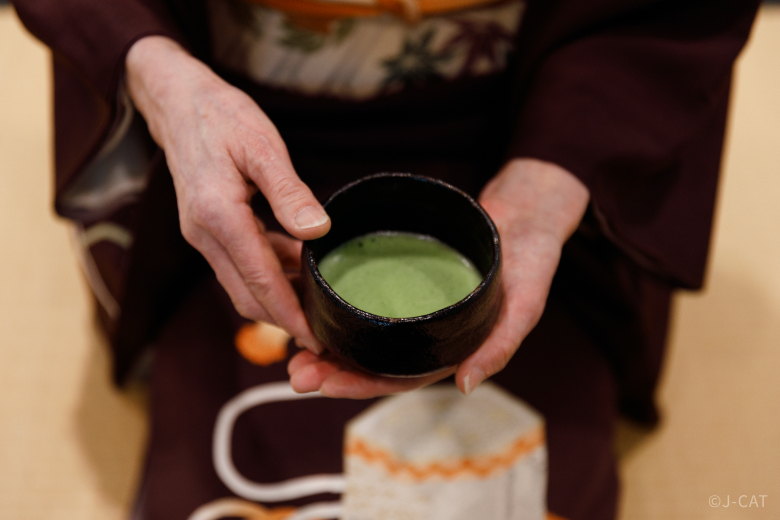
Hasue Koen believes that tea can help provide continuity between Japan’s past, present, and future
These days, it can be difficult for young people to find opportunities to study traditional Japanese arts such as the tea ceremony. “It is my duty to pass on what knowledge I can,” says Hasue Koen. “Even if it is only a little.” With that in mind, she continues to walk this path, that life has chosen for her – the way of tea – day by day.
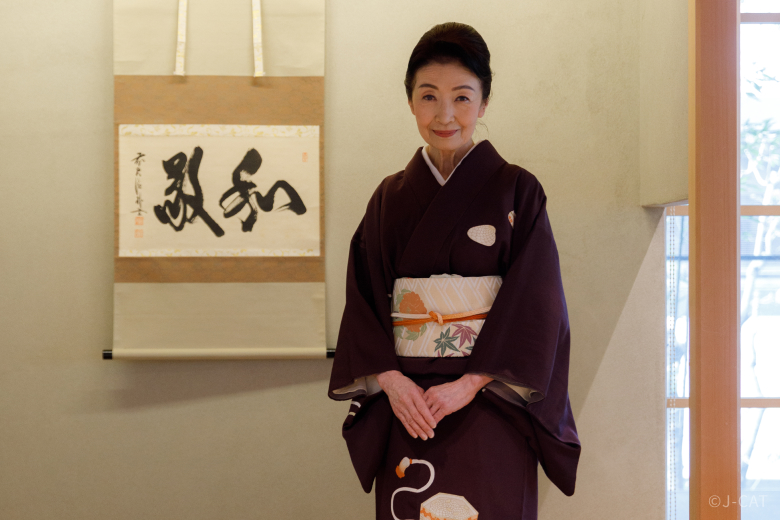
As with every tradition, the importance of passing knowledge onto future generations is paramount
Hasue Koen
Hasue Koen has been practising the art of the Japanese tea ceremony for well over 50 years, ever since the ritual first captured her imagination at the age of 18. Along with delicious, meticulously prepared tea, Hasue Koen enjoys showing guests her collection of exquisite tea utensils and ceramics, as well as other works of art made by master artisans. In doing so, she hopes to inspire others to continue the proud legacy of the Japanese tea ceremony.