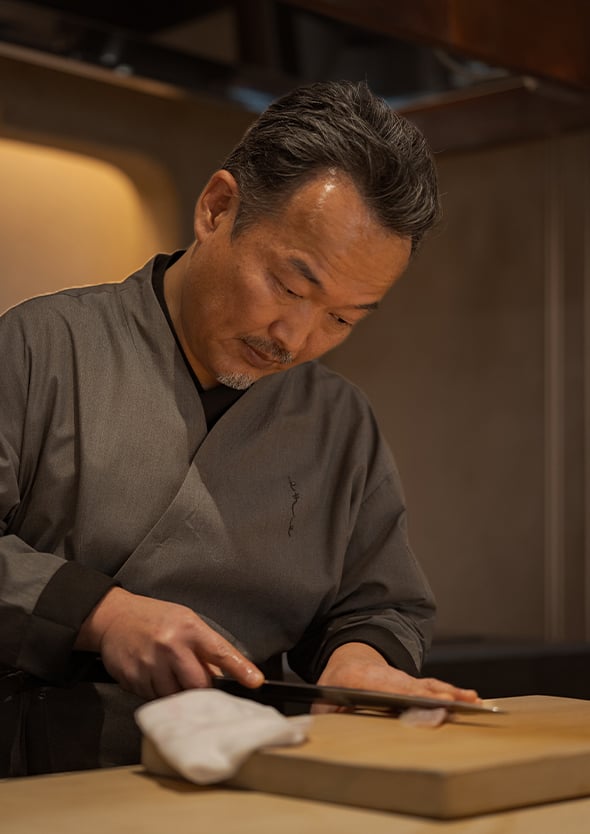
Ishii’s Journey to World-Class Chef Began with One Simple Discovery: The Joy of Delighting Others
Since he was a boy, Ishii has loved to create. Some of earliest and fondest memories are of the joy of fishing, then cooking and serving the fish he caught to family and friends. The smiles he could bring to the faces of others with the work of his own hands left an indelible impression upon him, and it fomented a powerful desire to bring joy to the faces of the people around him which has remained Ishii’s driving force to the present day.
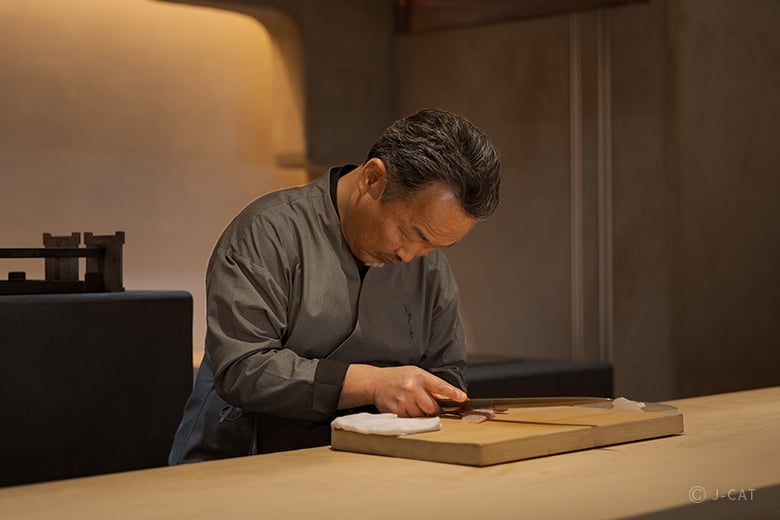
Ishii discovered a knack for preparing fish while he was still very young, which was his first step in a storied career as a chef
By the time of his high school graduation, Ishii had also discovered a love of pottery and other crafts. “I thought if I went down the road of a cook, it might also link up to these other passions,” he says, recounting his rationale for choosing culinary school. Now, with experience in pottery, flower arrangement, tea ceremony, and calligraphy, he feels comfortable saying he made the right call.
Rigorous Training and Initiation to the Cultural Context of Japanese Cuisine
After studying at a culinary arts school, Ishii took his next step in heed of a friend’s keen advice about the “importance of working at a first rate restaurant.” And so dove into the deep end, sharpening his sensibilities and work ethic at Kyoto Arashiyama Kitcho, one of Kyoto’s preeminent ryotei fine dining clubs. He chose to specialize in Japanese cuisine over other styles precisely for the perhaps counterintuitive but prescient reason that he was already vaguely interested in working overseas. A specialization in Japanese cuisine, he wisely determined, could help him to identify and express himself as a Japanese chef working in other countries.
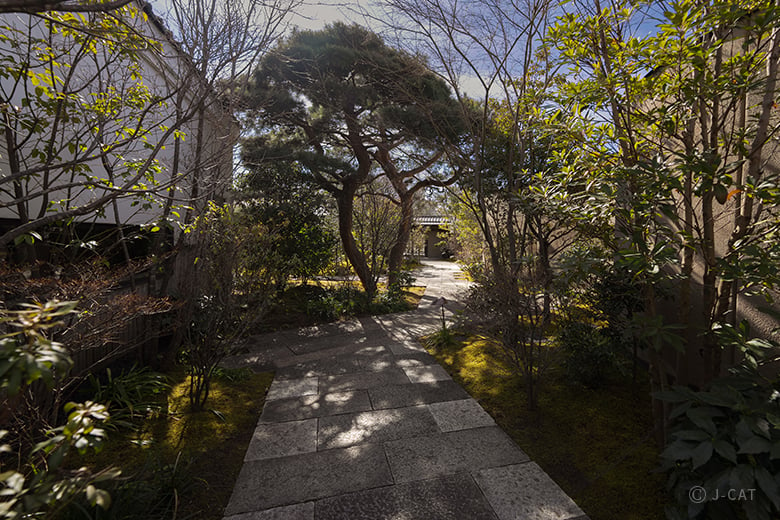
The trees in the garden are living remnants of the previous establishment, a longstanding traditional ryotei
Ishii’s time at ryotei Kitcho in Kyoto was a crucible of grinding morning-to-night work. But for the future visionary chef, it was also a time of invaluable learning and growth, for more than just a top tier restaurant, Kitcho also housed a priceless collection of pottery – sometimes even serving food on masterpieces on par with certified national treasures. While Ishii was gaining insight after insight into kaiseki cuisine in his ryotei’s kitchen, he was also cultivating a keen aesthetic sense in its tableware storerooms.
Never one to settle, Ishii’s interests branched out into gardening and flowers. “I’d finish my work and rush to help out the flower arranger and gardener,” he says. To this day, the knowledge and skills he acquired during this pivotal time in his life continue to serve him well.
The Concept of Equal Importance for Cooking and Tableware
A large amount of the tableware used at Auberge TOKITO is Ishii’s own work, thrown and fired in the buildup to opening. He has fired over a thousand pieces entirely on his own. Ishii’s love of working clay goes back to his childhood, and by the time he graduated culinary school he had already built up a solid quantity of his own finished works. Even after beginning work in the culinary world, he continued to make pilgrimages to such ceramic production meccas as Shiga and Okayama Prefectures to hone his skills and learn about their respective Shigaraki-ware and Bizen-ware styles.
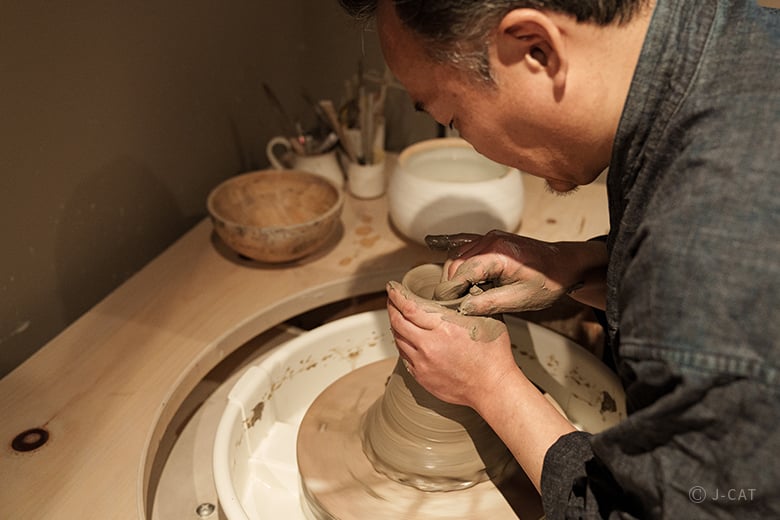
Ishii throwing an original piece of tableware with practiced hands
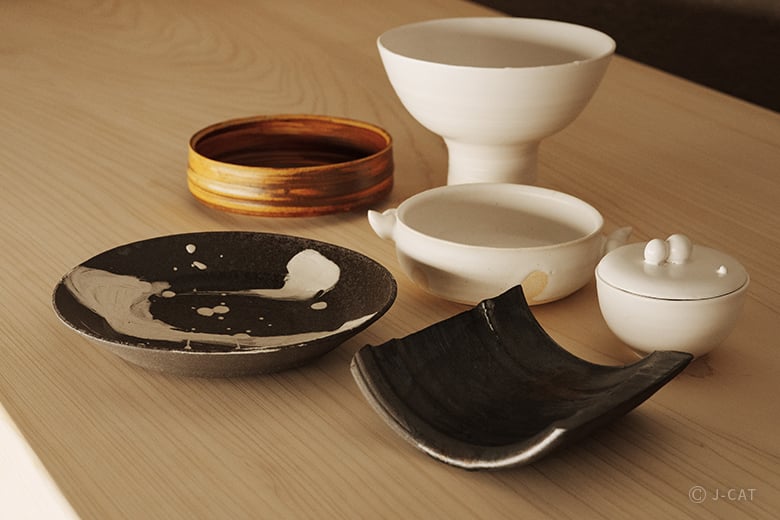
Pieces by Ishii – some of which were purpose-made for a single dish only
Experience traveling to pottery hotspots across Japan and in the wider world has taught Ishii that the properties of the local soil distinguish the various styles and give them individuality. And this is why he draws clay from the grounds of Auberge TOKITO and creates glazes using recycled kitchen charcoal and used chopstick ash to produce pottery that can truly be found nowhere else.
To Create Cuisine with Truly Local Roots, Everything Starts with the Ingredients
As UMU’s head chef in London, Ishii had a major hurdle to overcome: procuring fresh fish, the bedrock of Japanese cuisine. “Even going directly to fishing ports, I will wasn’t finding the fresh fish I needed,” he recalls, explaining the buildup to his decision to work directly with fishing crews on their boats, assiduously training them in the Japanese technique of ikejime, today recognized the world over as the fastest and most humane way to kill fish and preserve the freshness and quality of its meat. An unusually meticulous step, to be sure, but it was this that finally secured for him the supply of fresh fish he needed to serve extraordinary kaiseki cuisine that made UMU “Japanese food you can only get in London,” and earned it its second Michelin Star.
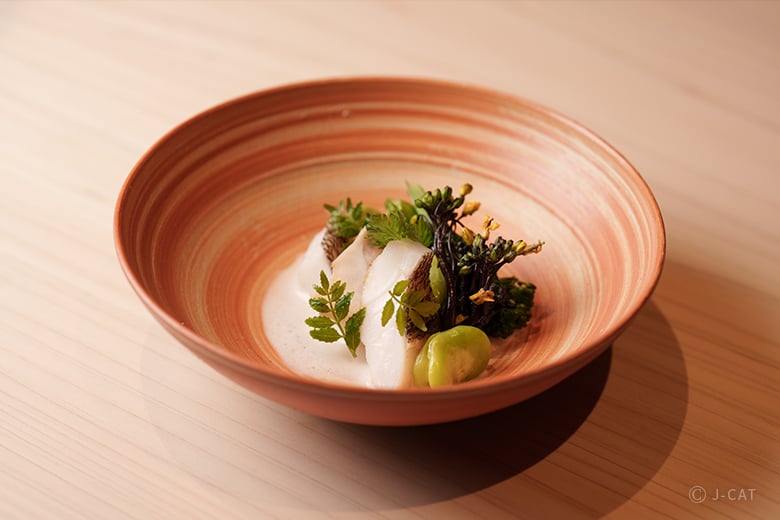
In seabound Japan, even fish caught near remote islands are thought of as local ingredients
Since returning to Japan, Ishii has come to appreciate the true regional breadth and depth of his home country, and wants to convey that in the food he serves to Japanese and international visitors alike. Ishii visits producers, as he puts it, “seeking ingredients that are in their moment rather than just in season,” – a play on the close similarity of how the words “moment” and “season” sound in Japanese. Sustainability is also always on his mind, driving him to seek out great fish that other establishments might be overlooking.
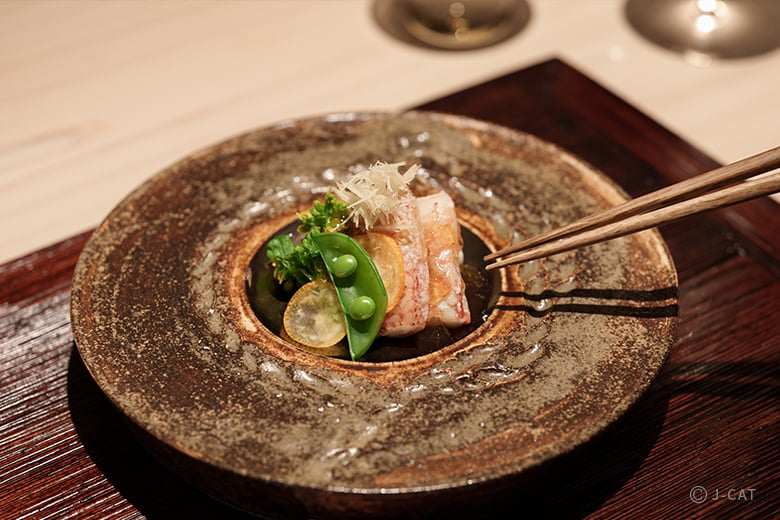
Each dish and each ingredient carries in it a fascinating story
Making Tokyo a Beacon of New Japanese Cuisine and Unique Experiences
Chef Ishii has gathered an international team of cooks from a diverse variety of backgrounds, working at the top of their game to delight guests with new Japanese cuisine befitting Tokyo as a world city. Auberge TOKITO’s kitchen draws on traditional training and international experience but is bound by neither, forging bold and creative new directions in Japanese cuisine and leaving its guests with rich unforgettable memories to last a lifetime.
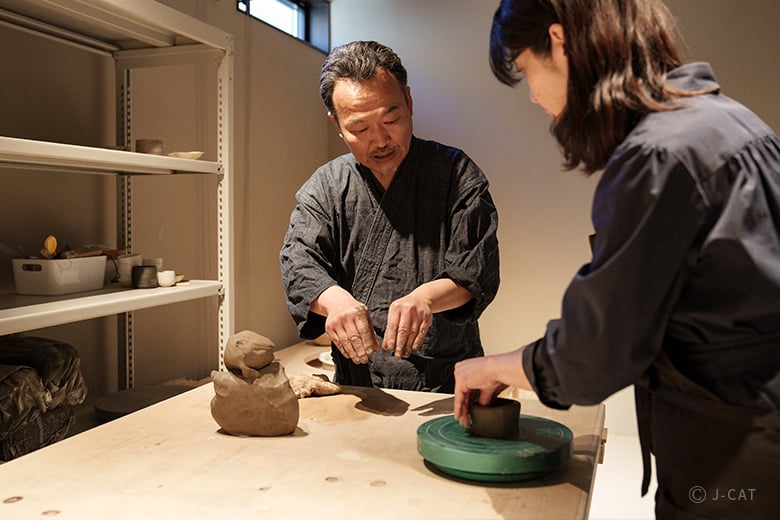
Learning pottery under Ishii’s meticulous instruction
Wabunka’s private plan, limited to a single group per day, reflects Ishii’s unique sensibilities. Where else can you learn pottery from a Michelin-starred chef before sitting down to a multi-course lunch served by the chef on his own original tableware? “When it comes to ceramics, I’m an amateur too – but I think that’s why I have some useful insights to share. Give it a whirl for yourself.”
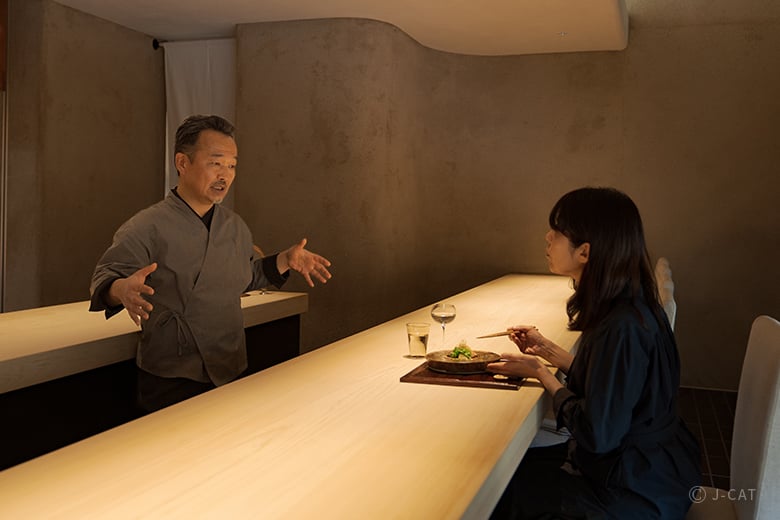
Ishii tells his story through unique dishes presented on unique tableware, which guests can enjoy alongside conversation with the master chef himself
Chef Ishii’s proposition is deceptively simple: Japanese hospitality through fine dining combining all the best of tradition and innovation. For Ishii, this means striving to say something to the world while never forgetting that to do so, you have to bring joy to the diners right in front of you – which is why he became a chef in the first place.
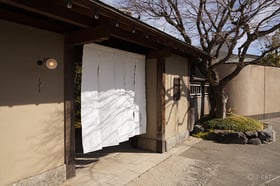
Auberge TOKITO
Auberge opened in April of 2023 in the city of Tachikawa, Tokyo, based around the concept of artisanal cuisine. Here, a globetrotting team of seasoned culinary masters at the top of their game work together to forge a bold new direction for Japanese cuisine. The sophisticated and tranquil environs play a defining role in this incredible dining experience, with Auberge having inherited part of the building and gardens previously inhabited by a long-established ryotei, or historic traditional fine dining club. Beyond the restaurant itself, its grounds also include a tea room and lodgings.


