The Joy of the Stage: How Japanese Dance Captured Shiratori’s Heart at Age 3
Shiratori has loved dancing to music since childhood. Family videos from her father's hobby capture her as a young girl jumping to the rhythm of records.
Her real introduction to dance came at age 3, when she attended a New Year's party with her mother, a practitioner and teacher of Japanese classical dance. After watching the senior students perform, Shiratori was instantly captivated and declared, “I want to try dancing too.”
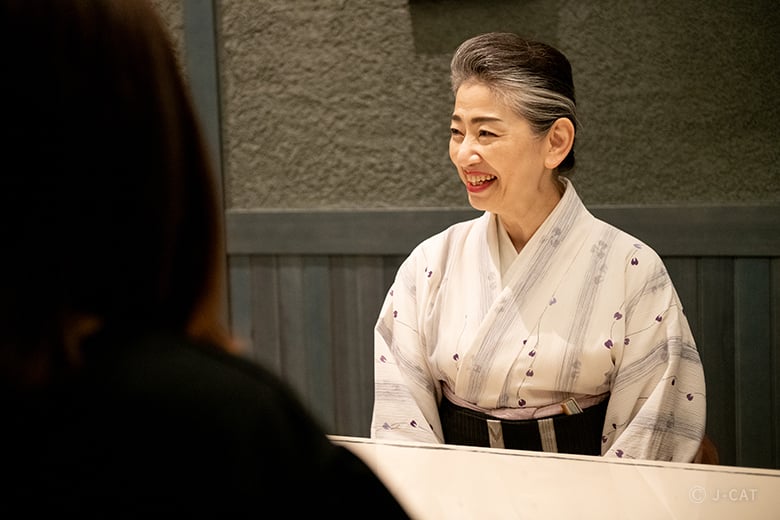
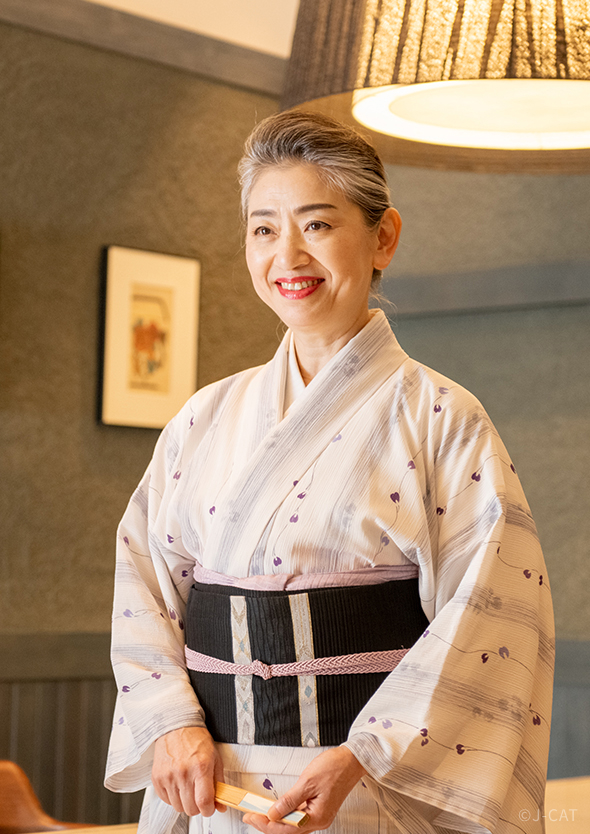
Shiratori’s graceful presence immediately draws attention
She made her stage debut at six, stepping onto the brightly lit stage from the small, dark entrance, called Toyaguchi. The laughter from the audience and the deep sense of relief after the performance left a lasting impression on her—an unforgettable mix of stage tension and post-performance comfort.
Rigorous Training at Takarazuka Music School, Entering with Top Honors
In middle school, Shiratori balanced her Japanese classical dance studies with piano lessons, dreaming of a career in the arts. But her piano teacher, noting her small hands, gently advised that it would be difficult for her to become a professional pianist and suggested she try the entrance exam for Takarazuka Music School instead.
Though she never imagined becoming a Takarazuka actress, the path suited her love for singing, dancing, and music. With her background in Japanese classical dance and piano, she was accepted into the Takarazuka Music School as the top-ranked candidate at the age of fifteen.
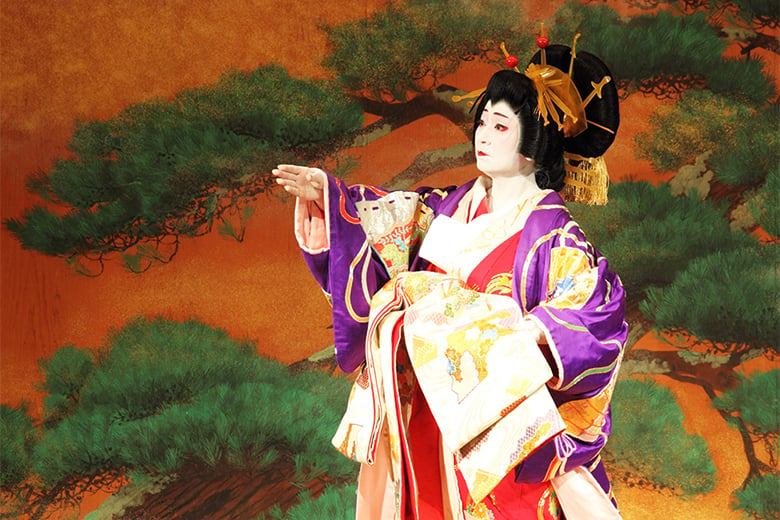
Shiratori performs the Nagauta piece "Keisei." Her passion for the stage is evident when she speaks of dance
At Takarazuka, Shiratori faced intense pressure and high expectations, with roles determined by grades. Despite the challenges, her unwavering belief that "everything would be rewarded on stage" kept her going. After two years of focused dedication to refining her performance, her debut arrived, and she still recalls the wave of applause from the 3,000-strong audience with nostalgia.
Glamorous Days as a Musical Actress and the Artist’s Dilemma
During her time with the Takarazuka Revue, Shiratori's schedule was always full. In addition to performing in popular TV shows, she worked as a model, narrator, and in commercials. Despite the chaos, she found joy in exploring various forms of stage arts, both Japanese and Western.
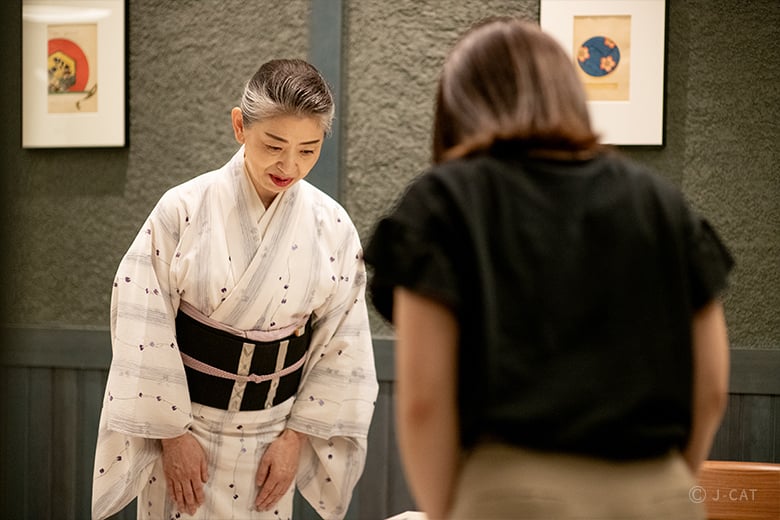
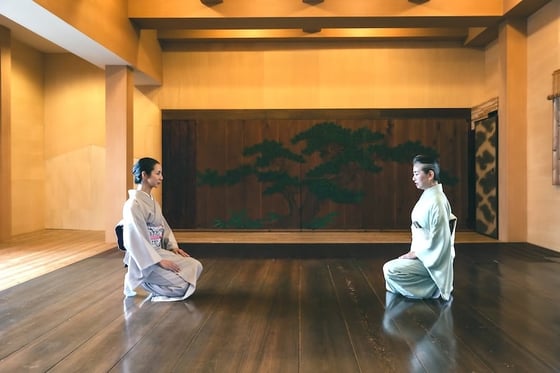
Even something as simple as a bow becomes a beautiful, heartfelt behavior when mind, technique, and body come together in perfect harmony
On the path to stardom, Shiratori began to feel conflicted. While the glamorous makeup and Western-style musicals brought her fame, she didn’t quite connect with them. However, she felt at home in performances based in Japanese classical dance, where the posture and makeup aligned with her sense of self.
A turning point came when Shiratori starred in a play choreographed by a Broadway director, and the raw power of a real musical left a deep impact. Feeling drained and uncertain of her direction, she chose to leave Takarazuka Revue, seeking to rediscover her true artistic self.
Returning to Her Roots and Rediscovering the World of Japanese Classical Dance
After leaving the Takarazuka Revue, Shiratori reflected on her future, and it was Japanese classical dance that called to her. The art form, which had been a part of her life since childhood, felt like the perfect expression of an artist’s connection to Japan’s beauty and traditions.
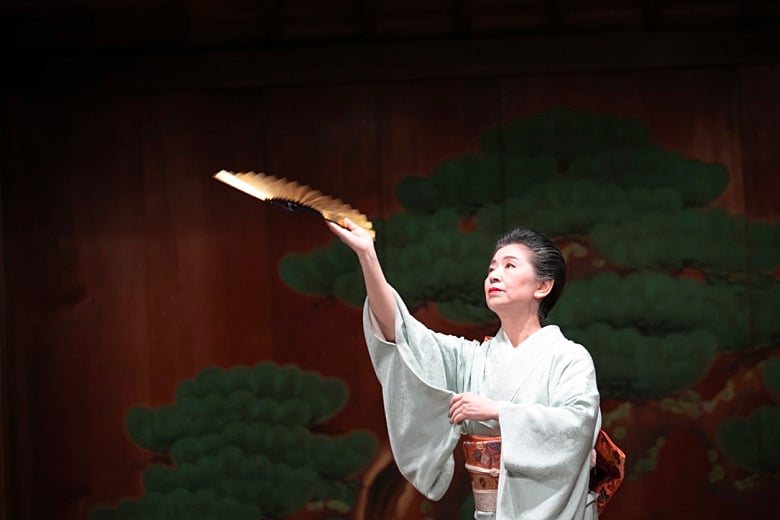
Shiratori’s graceful posture and movements were shaped by her diverse experiences in both Japanese and Western performance arts
In the early spring of 1995, while preparing to obtain a Master’s License from the Hanayagi School of Japanese Classical Dance, disaster struck: the Great Hanshin-Awaji Earthquake. Shiratori, living in Kobe, had to evacuate her home. As she drove away, clutching only her dance score, audio, and a coin purse, she witnessed the devastation of her city, now reduced to rubble.
"I remember feeling a strange contrast between the tragic destruction around me and the serene beauty of dance unfolding in my mind," she recalls. Even in the face of such destruction, she felt a sense of destiny in continuing her dance journey.
Passing on the Beauty of Japanese Culture to Future Generations
Shiratori has now become a master in her field. Initially, she focused only on refining her personal expression, not taking on apprentices. However, over time, she felt a growing frustration with the widening gap between Japanese classical dance and the modern world. Art forms like Japanese classical dance, the tea ceremony, and flower arrangement, once a part of everyday life, are now seen as extraordinary experiences, far removed from their original role in daily living.
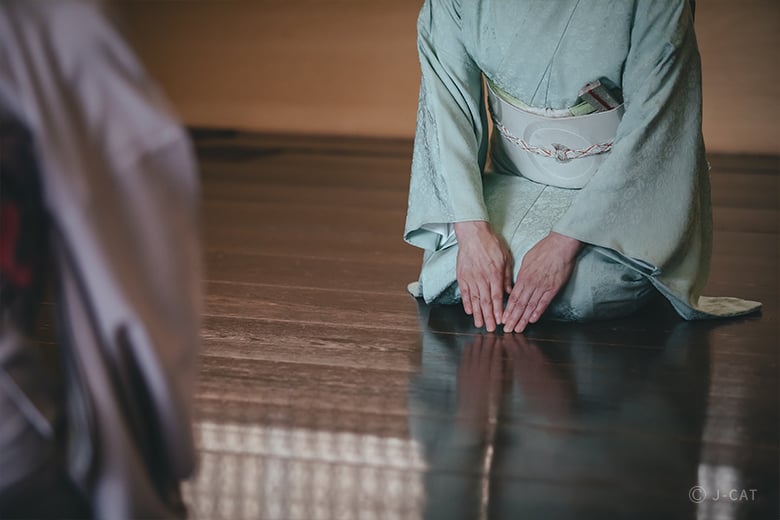
Beautiful behavior aligns the mind; a calm heart reflects in graceful behavior
“I used to feel it was presumptuous to teach others,” Shiratori reflects. “But now, I see it as my mission to share the charm of traditional culture with future generations.”
Passing on this cultural heritage has become her life’s purpose, something she balances alongside her own work as an artist. “I want to pass on things that are meaningful in today’s world,” she says.
While she teaches techniques such as shosa and manners, her approach is never rigid or formulaic. Shosa, in the context of Japanese aesthetics, refers to the grace and intention behind one’s behavior. At the heart of her teaching is the belief that mind, body, and technique must be in harmony—from how you stand to how you hold chopsticks. “Behavior and manners are techniques that require practice,” she explains. “But without sincerity, they won’t truly come across.”
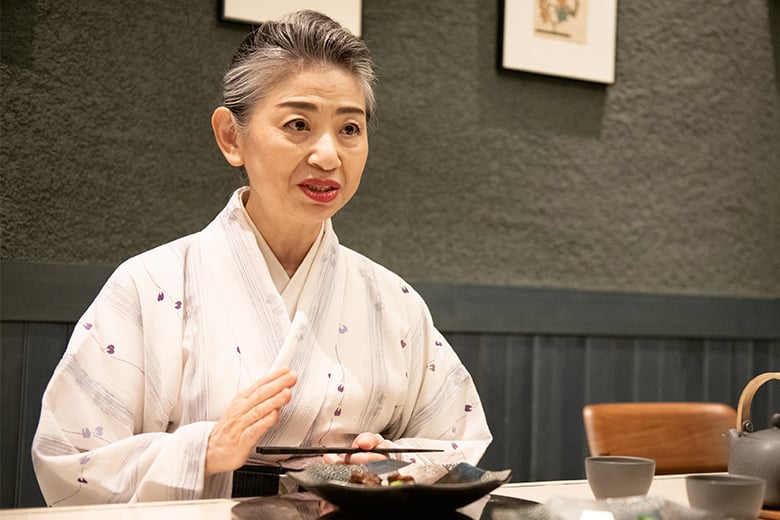
Shiratori instills the deeper meaning behind manners and behavior, ensuring they translate into everyday life
Shiratori envisions a future where Japanese culture naturally finds its place in everyday life, and she continues to devote herself to connecting tradition with the modern world.
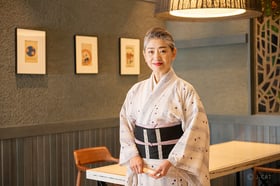
Classical Japanese Dancer Yuuka Shiratori
A master of the Hanayagi School of Japanese Classical Dance, Yuuka Shiratori is active both in Japan and abroad, dedicated to preserving and passing down the beauty of traditional Japanese culture. She leads classes in Japanese dance and hosts lectures and workshops covering a wide range of traditional arts—from tea ceremony and rakugo to kimono dressing. In 2005, she established NPO SHIKUNSHI, an organization to increase a sense of Japanese identity amongst Japanese, and continues to offer cultural experiences that connect people with Japan’s artistic heritage. In recognition of her efforts, she was awarded the Higashi-Kuninomiya International Culture Award in 2014.