Walking the Demanding Path of the Bladesmith Together
Sukehira was born in Tokyo. A lifetime fan of Japanese period piece films and the martial art of kendo, his interest led him straight from high school to an apprenticeship under master swordsmith and steelmaker Sukesada Ueta in Okayama prefecture. The national bladesmith certification exam mandates a minimum of five years apprenticeship, but Sukehira continued his for thirteen years, soaking up all of the knowledge and expertise he could.
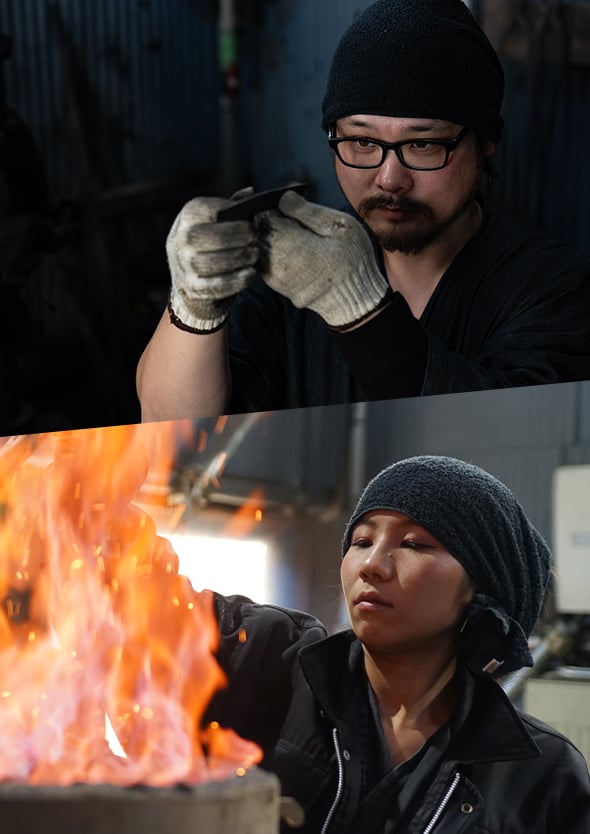
Blacksmith Sukehira Hirata
“I was young, so I didn’t exactly give it a lot of deep forethought or planning. Today I know that even most of those who pass the exam will not be able to make a living in this work. It’s a tough business.”
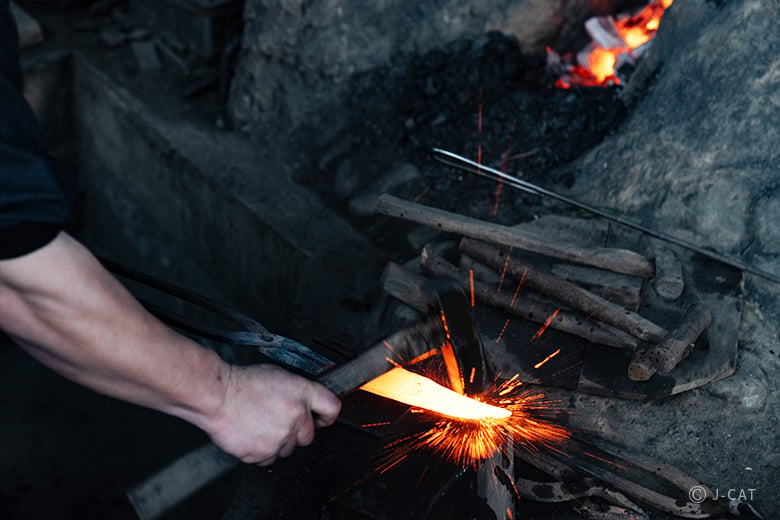
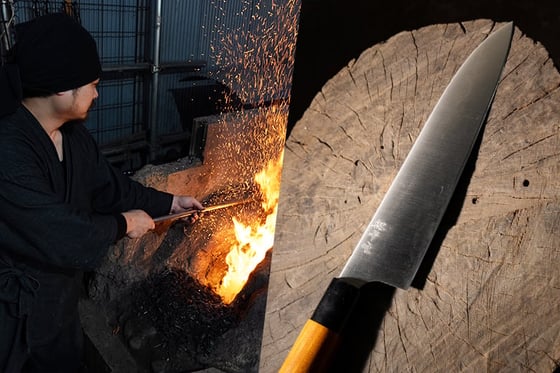
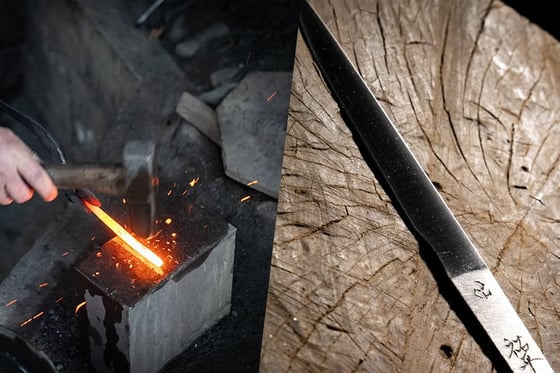
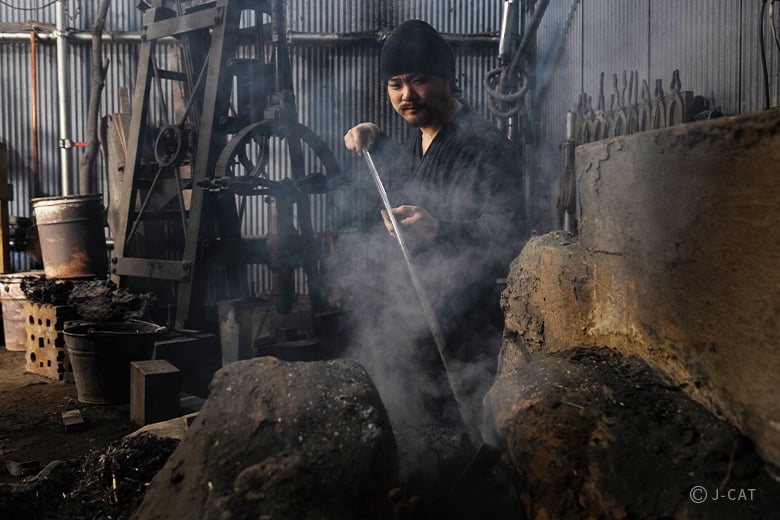
Forging a blade through heat, stretching, and hammering; a full-size katana must be continually worked for four hours straight
When his tutelage was complete, Sukehira returned to Tokyo and independently founded Hirata Sword Smith in Ome City. He remembers those early days as a sometimes rocky road. “The only reason we’re here today is because we figured out how to make it work as a business.” And it was Sukehira’s wife Nodoka who provided that essential support to allow Sukehira to focus entirely on forging top quality blades.
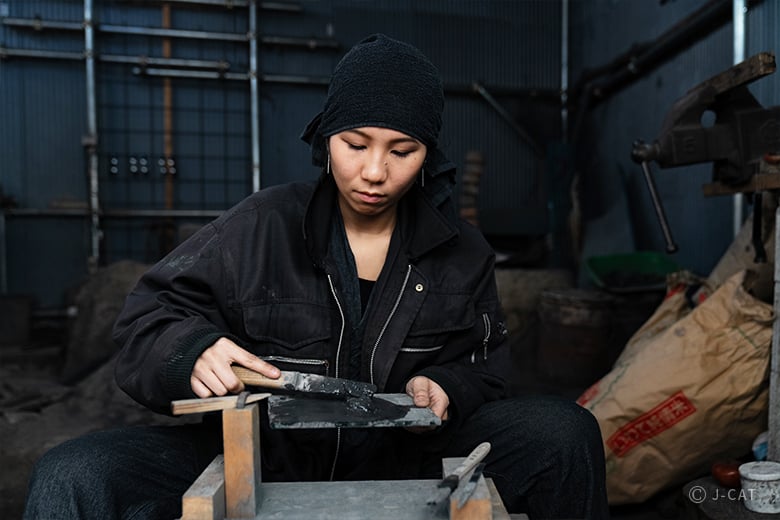
Furnace master Nodoka Hirata
After marrying Sukehira, Nodoka left her hometown of Okayama to move with him to Tokyo. The two were entirely on their own, and Nodoka did whatever she could think of to keep the smithy going. “I thought it would have been a terrible waste,” she says now of the single-minded faith with which she threw herself into marketing their blades, “to let something good wither on the vine simply because no one noticed it.”
Japan's One and Only Female Murage, Master of the Tatara Furnace
When they first opened, Nodoka kept to the office and Sukehira to the forge, dividing their respective work strictly into business and craft. Eventually Nodoka found herself wanting to contribute to smithing in some way. She began to help out with the tatara furnace, in which iron sand and charcoal are heated to molten conditions in order to smelt steel.
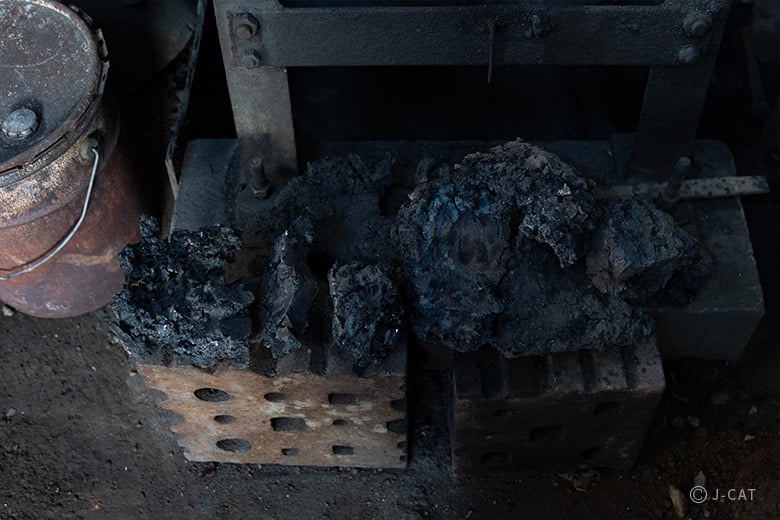
Tatara furnace tamahagane steel: the essential raw material for Japanese swords
The tatara method of steelmaking has been handed down since ancient times in Japan. While the tamahagane steel it yields is of very high quality, today only a small amount is produced, and generally only for swordsmithing. As a master blacksmith who insists on assiduously managing every aspect of his blade quality, Sukehira Hirata decided to produce his smithy’s steel in house.
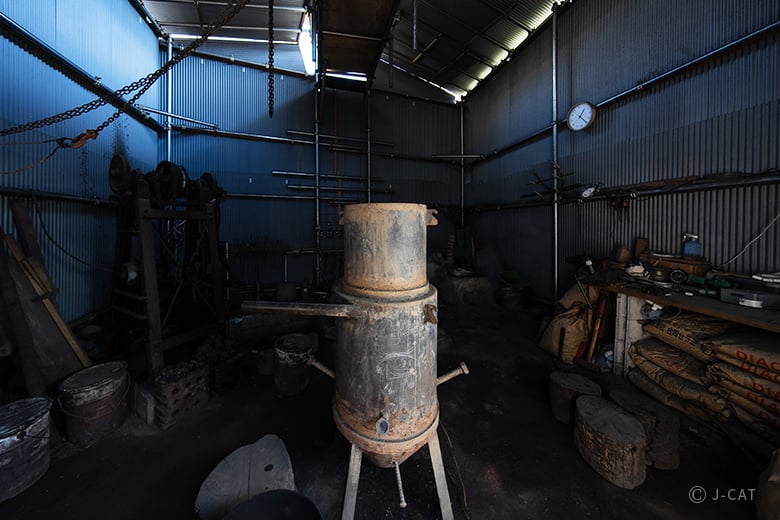
The tatara furnace, where the fire must be ceaselessly tended without rest throughout the forging process
“It seemed easy enough, so I figured I could handle it,” Nodoka recounts with amusement now. “In truth, I got off to a terrible start. I thought I was doing everything exactly like he was, but my steel kept turning out completely different. Sure, it was frustrating, but this actually entertained me and made me more curious about the details of the process. I said to myself, ‘I’m going to figure this out and make better steel than he can.’”
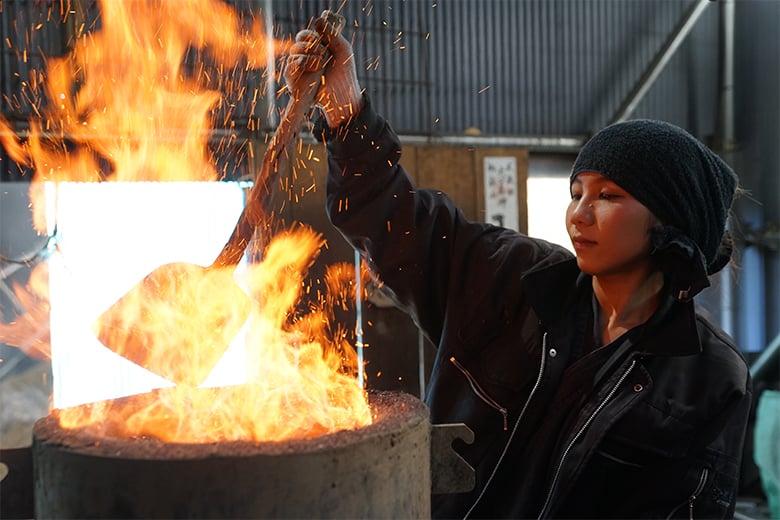
Murage Nodoka, who over the course of several years became the forge’s master of steel production
In ages past, women were wholly excluded from the entire world of swords. While these exclusions have long been lifted, there are still not many women in these fields. In fact, evidence suggests that Nodoka is Japan's only traditional murage furnace master, and her steel smelting skills today have surpassed those of her husband and instructor Sukehira. Nonetheless, she considers her training an ongoing quest to provide better and better tamahagane steel for bladesmithing.
The Overwhelming Vitality that Gives Katanas Their Appeal
Nodoka’s tamahagane steel is given form and life by Sukehira, becoming swords and knives. When asked what appeals to him so much about these things, he explains: “Swords just have this overwhelming presence and spirit to them. When you heat iron and hammer it, it naturally melds with itself. Each piece has a personality, exhibiting different hardness depending on the day – and no two pieces are the same. It is the blacksmith’s job to bring stability out of that.”
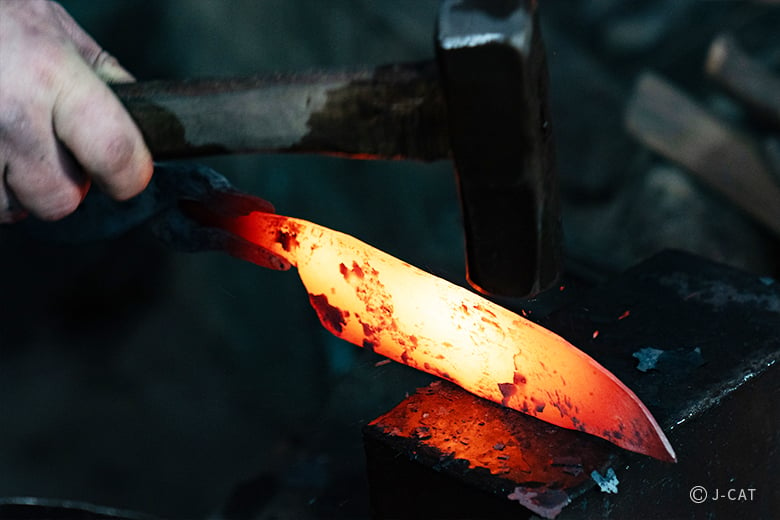
Tamahagane steel given form and life as a blade
“If you’ve got good steel, your job’s 80% done,” says Sukehira. The most crucial trait of good steel is its hardness, but no less important is its flexibility and malleability. This strength is what gives good material its vitality, and a practiced smith can easily tell the quality of steel by giving it a few taps.
“I’d Like People to Fall in Love with Japan through the Katana”
The Hiratas set up their smithy within striking distance of Tokyo because they wanted it to be highly accessible not only domestically but internationally as well. They believe that connections and communication are crucial for passing down these traditional techniques to future generations and keeping them alive, so they work to make smithy tours a mainstay of their activities.
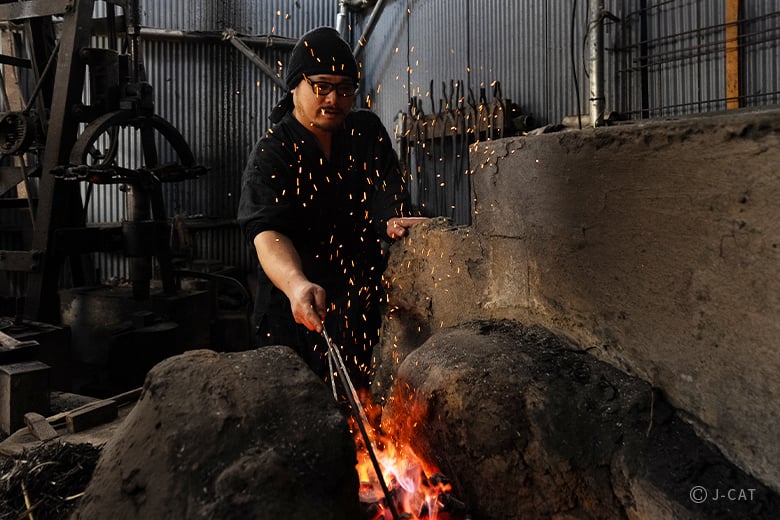
People from all over Japan and beyond visit to tour the forge, from small children to the elderly
“I’d like people to fall in love with Japan through the katana,” says Sukehira. “I want them to enjoy Japan’s nature too,” Nodoka adds. “Blades are actually the product of natural materials we see all around us, like iron from the earth, charcoal, and water. So there is a connection with Japan’s abundant nature both outside the forge and within it. I’d love it if people could bond with that nature and Japan’s culture by visiting us.”
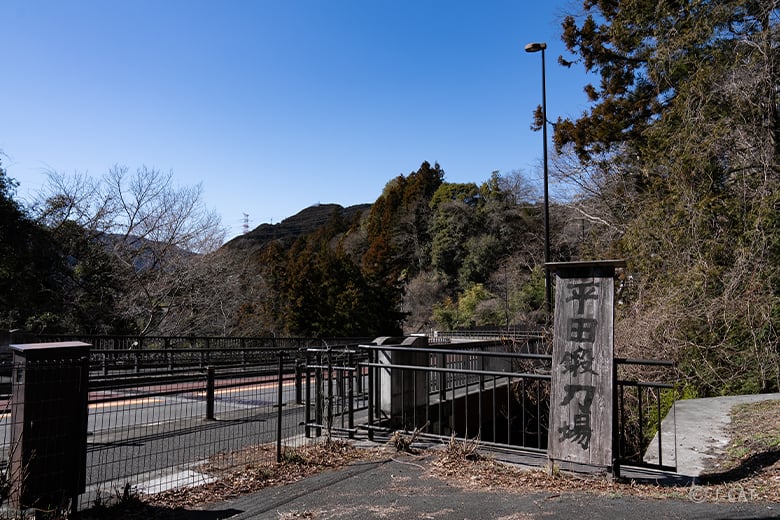
The smithy stands in verdant Ome City on the outskirts of Tokyo
Workmates and Soulmates
Sukehira and Nodoka Hirata have been running their smithy together as husband and wife since the beginning. But what does that bond mean to them? Says Sukehira: “We are like each other’s alter egos. Two aspects of the same person.” Says Nodoka: “Sukehira is like water to me. Something that’s forever part of your life but you never get tired of.”
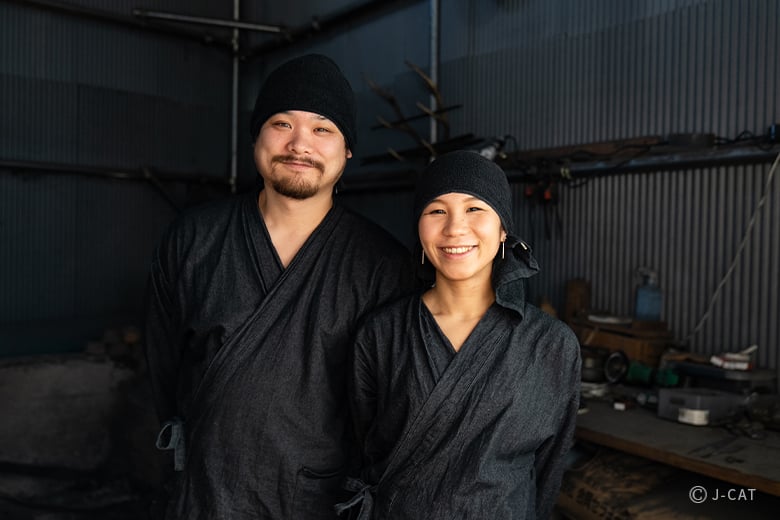
The blacksmith and the furnace master are kindred souls, two halves of a whole
While Japan’s sword traditions are iconic the world over, the reality of the industry that produces them is harsh, and the bleak truth is that many of these artisans lack the financial footing to conduct proper apprenticeships and train their successors. This is how craft traditions die out, and sadly there are countless examples of this happening the world over. Despite all that, Hirata Sword Smith is the work of two straightforward, jovial people with minds for growth and human connection: “Imagine one day gathering bladesmiths from everywhere in one place as a collective, and making a sword village.” To hear them tell it, it’s clearly a dream of genuine passion.
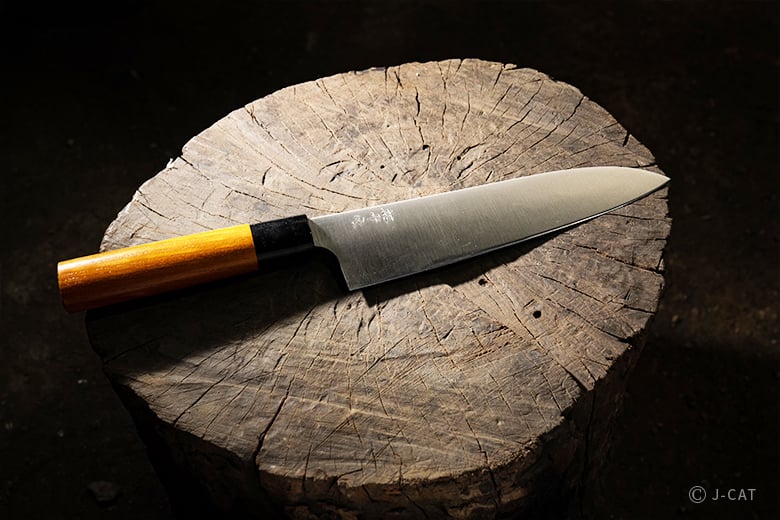
A kitchen knife such as guests can create in this Wabunka plan
This Wabunka plan offers the unique experience of creating a knife – kitchen or other – using the techniques behind Japanese swords. Join a husband and wife blacksmith team to produce a one-of-a-kind blade by your own hand.
Hirata Sword Smith
A specialty smithy operated by the Hiratas: toko blacksmith Sukehira and murage furnace master Nodoka. With their tamahagane steel, produced in house, they forge an assortment of cutlery from kitchen knives to iconic katana swords. Their artisanal blades offer unparalleled beauty, flexibility, sharpness, and durability. They also offer smithy tours and work to promote traditional Japanese bladesmithing techniques across the country and beyond.