
Katana / Knife Making in Tokyo
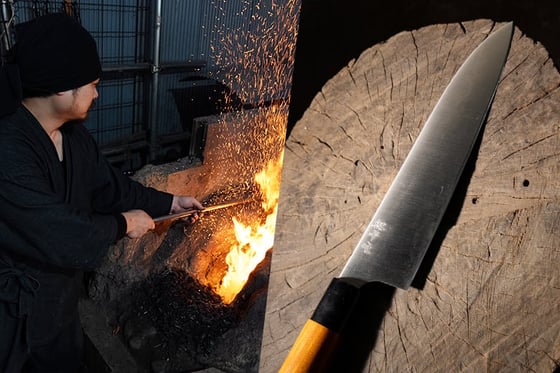
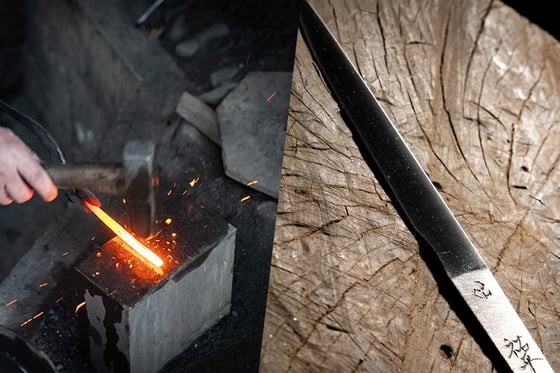
Traditional knife-making continues to thrive in Tokyo, a city with bones of steel. In artisanal workshops, sparks fly, metal glows, and edges are sharpened into existence. Whether shaped for work or decoration, each piece is a work of art.
The Forged Blades of Edo
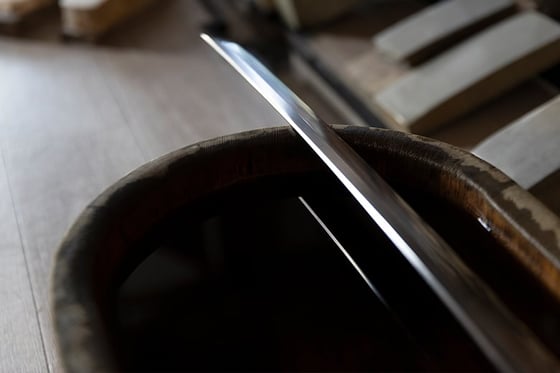
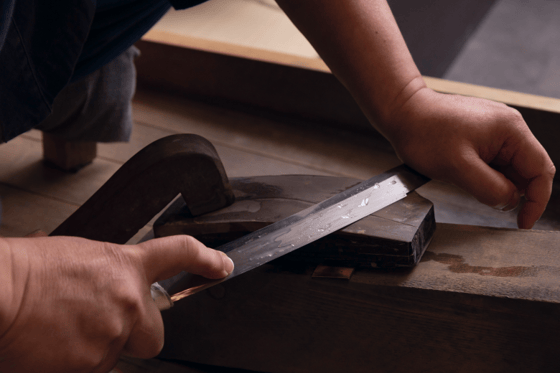
In Edo, the city now known as Tokyo, forged blades shaped both status and everyday life, from the paired swords at a samurai’s waist to the knives and tools used by merchants and artisans. Katana and fine knives are created by heating high‑carbon steel, hammering and folding it many times, then hardening and polishing it until a curve, a mirror‑like surface, and a faintly shimmering temper line appear. In the Edo period (1603–1868), as Edo grew into a vast castle town, specialist swordsmiths supplied the shogun’s government and its retainers. Their “Edo-made” swords were valued not only for cutting performance but also for their controlled patterns in the steel, and this urban demand encouraged ever more refined techniques that later influenced the making of smaller blades.
From Katana to Cutlery
The role of forged blades in Tokyo changed sharply after an 1876 government edict banned most people from wearing swords in public, and military use of the katana declined. Many craftsmen with swordsmith roots turned to kitchen knives, scissors and carpenter’s tools, applying the same method of combining hard and soft metal to create edges that were both sharp and resilient. This lineage is still visible in Tokyo’s traditional forged cutlery, where relatively few workshops continue to focus on blades for professional chefs, gardeners and woodworkers rather than mass‑produced goods. At the same time, organizations based in Tokyo preserve katana as cultural objects, train new makers and polishers, and maintain museums dedicated to the art of the Japanese sword. When you see a chef’s knife slicing cleanly through fish, or a polished sword quietly displayed under museum lights, you are encountering different faces of the same craft history. The experiences listed below offer structured opportunities to meet this living tradition in Tokyo today.
Knives & Katana experiences in Tokyo
4 experiences found

'%3e%3cpath%20d='M17.7232%2016.0003L11.5898%209.86701L12.5335%208.92334L19.6105%2016.0003L12.5335%2023.0773L11.5898%2022.1337L17.7232%2016.0003Z'%20fill='%23A48953'/%3e%3c/g%3e%3c/svg%3e)

![[Multi-Day Journey] Iconic Japan: Tokyo, Kyoto and Hiroshima](https://wabunka-lux.jp/cdn-cgi/image/format=auto,width=720,onerror=redirect/https://images.microcms-assets.io/assets/a061b71b7a084ccfa781f19d8659cbbd/8f9709309d824d87b3bc2eed8ba69b23/itinerary-long4_PCKV%20(2).jpg)
![[Multi-Day Journey] Iconic Japan: Tokyo, Kyoto and Hiroshima](https://wabunka-lux.jp/cdn-cgi/image/format=auto,width=720,onerror=redirect/https://images.microcms-assets.io/assets/a061b71b7a084ccfa781f19d8659cbbd/cef5015e4bcd43fd862a6d5aaf45dce8/itinerary-long4_SPKV%20(1).jpg)
![[Multi-Day Journey] Spirit of the Samurai Experience in Kyoto, Osaka, Hakone, Tokyo and Nikko](https://wabunka-lux.jp/cdn-cgi/image/format=auto,width=720,onerror=redirect/https://images.microcms-assets.io/assets/a061b71b7a084ccfa781f19d8659cbbd/cc7fd619bf9846e295001e2d661e0b73/itinerary-long6_PCKV.jpg)
![[Multi-Day Journey] Spirit of the Samurai Experience in Kyoto, Osaka, Hakone, Tokyo and Nikko](https://wabunka-lux.jp/cdn-cgi/image/format=auto,width=720,onerror=redirect/https://images.microcms-assets.io/assets/a061b71b7a084ccfa781f19d8659cbbd/b62eb7336ed74479a0eef533e0f7a866/itinerary-long6_SPKV.jpg)
![[Multi-Day Journey] Immersive Japanese Crafting Experience in Tokyo, Kanazawa, Kyoto, Nara & Osaka](https://wabunka-lux.jp/cdn-cgi/image/format=auto,width=720,onerror=redirect/https://images.microcms-assets.io/assets/a061b71b7a084ccfa781f19d8659cbbd/4800c2ae1c50403ab615998a32665f83/itinerary-long_pCKV.png)
![[Multi-Day Journey] Immersive Japanese Crafting Experience in Tokyo, Kanazawa, Kyoto, Nara & Osaka](https://wabunka-lux.jp/cdn-cgi/image/format=auto,width=720,onerror=redirect/https://images.microcms-assets.io/assets/a061b71b7a084ccfa781f19d8659cbbd/77306edd65104c09b8c14fce465c7812/itinerary-long_SPKV%201.png)



Our concierge team is at your service
- • Transportation arrangements
- • Organizing your experiences and itinerary
- • Additional details about specific experiences
Please contact us for any questions or requests
about our activities or service.
We will get in touch with you shortly.
Sign up to receive email updated on
new experiences, stories,
special promotions and more.